Surrealist Expressionism · 1922
Tilna (Joan Miró, 1922)
Joan Miró (1893–1983) on luonut teoksen Tilna. Se on peräisin vuodelta 1922. Se kuuluu Surrealist Expressionism-liikkeeseen. Se on valmistettu materiaalilla Öljyväri kankaalle. Koko on 132 × 147 cm.
- 1922
- Öljyväri kankaalle
- 132 × 147 cm

 Esikatselu

 Käsinmaalattu öljymaalaus
 Jaa teos
 Jaa
 Tiedot-arkki


 Lataa kuva
 Samanlaisia kohteita
 Röntgenkuvaus
 Diaesitys
 Kysymykset ja vastaukset

 Tilastot
Tilna lyhyesti
- Otsikko
- Tilna
- Taiteilija
- Joan Miró (1893–1983)
- Taiteilija syntynyt
- Barcelona, Espanja
- Päivämäärä
- 1922
- Tekniikka
- Öljyväri kankaalle
- Mitat
- 132 × 147 cm
- Tyylisuunta
- Surrealist Expressionism
- Aikakausi
- Modernismi
- Aihe
- rural life, catalan landscape, symbolism, memory, farmhouse, dreams
Mitä Tilna esittää?
Joan Miró’s “The Farm”: A Catalan Dreamscape of Memory
Joan Miró’s “The Farm,” painted in 1922, isn't merely a depiction of rural life; it’s an intensely personal and profoundly symbolic journey into the artist’s own memories and subconscious. Measuring a substantial 132 x 147 cm, this work commands attention with its vibrant colors and delightfully illogical arrangement of elements – a testament to Miró’s pioneering spirit and his rejection of rigid academic constraints. It's as if stepping into a dream woven from the landscapes and traditions of his Catalan homeland, a place deeply ingrained in his artistic DNA. The painting immediately evokes a sense of playful disorientation, inviting viewers to decipher its hidden meanings alongside the artist himself.Bridging Naive Art and Surrealism: A Unique Synthesis
Miró’s “The Farm” occupies a pivotal position in his artistic development, skillfully blending influences from both Naive art and the burgeoning Surrealist movement. Rooted in the simplified forms and bold color palettes characteristic of Naive painting – reminiscent of artists like Henri Rousseau – it simultaneously anticipates the dreamlike logic and psychological depth of Surrealism. The flattened perspective, unconventional composition, and seemingly random juxtaposition of objects—a bowler hat, a pitcher, a shoe, and the enigmatic letter “A”—create an atmosphere of delightful disorientation. This isn’t a straightforward representation; instead, Miró employs a visual language that challenges traditional notions of realism, prioritizing emotion and intuition over precise depiction. The work feels both familiar and utterly strange, mirroring the complexities of human memory itself.Subject & Symbolism: Decoding the Rural Landscape
At first glance, “The Farm” presents a recognizable rural scene – buildings, tools, and vegetation are all present. However, this is no idyllic pastoral landscape. Scattered amongst these elements are objects imbued with potential symbolic meaning, inviting endless interpretation. The dominant tree at the center, often interpreted as representing life, growth, and connection to nature, stands as a powerful focal point. The moon, a recurring motif in Miró’s work, hints at cycles of time, intuition, and the subconscious. The scattered objects – the bowler hat perhaps suggesting anonymity or social convention, the pitcher symbolizing nourishment and domesticity, the shoe representing journeys and movement—all contribute to a layered narrative that resists simple explanation. The letter “A” is particularly intriguing; it could represent Miró himself, his family, or even an abstract concept of beginning or affirmation.Technique & Palette: A Bold Expression of Color
Miró’s technique in "The Farm" is characterized by a bold and saturated color palette dominated by warm oranges and browns – reminiscent of the Catalan sun-drenched earth – contrasted with an almost artificial, yet captivating, blue sky. This deliberate use of complementary colors enhances vibrancy and contributes significantly to the painting's dreamlike quality. The brushstrokes are visible, lending a sense of immediacy and energy to the work. The application of paint is loose and expressive, reflecting Miró’s intuitive approach to composition. It’s not about meticulous detail but rather capturing a feeling, an atmosphere—a vibrant snapshot of memory and imagination. The overall effect is one of joyous chaos, suggesting that beauty can be found even in apparent disorder.A Pivotal Work in Modern Art: Legacy & Interpretation
“The Farm” remains a pivotal work in Miró’s oeuvre and a cornerstone of 20th-century art. Its exploration of memory, symbolism, and the subconscious continues to resonate with viewers today. The painting's enduring appeal lies in its refusal to offer easy answers, inviting us to engage actively in its interpretation. It is a testament to Miró’s ability to distill complex emotions and experiences into a visually arresting and emotionally resonant work of art. Reproductions of this masterpiece allow you to bring this captivating dreamscape into your own space, offering a window into the mind of one of the 20th century's most imaginative artists.Tilna korkearesoluutioiset kuvat

Protected by copyright: these files are for personal reference, not a licence to republish.
Joan Miró, Tilna (1922).
Kysymyksiä teoksesta Tilna, vastaukset
Mitä tekniikkaa Joan Miró:n "Tilna" on käytetty?
Mitkä ovat alkuperäisen Joan Miró:n "Tilna" mitat?
Mitä "Tilna" esittää?
Onko Joan Miró:n "Tilna" vapaasti käytettävissä oleva teos?
Kuka on teoksen "Tilna" taiteilija?
Mihin tyylisuuntaan "Tilna" kuuluu?
Mihin vaiheeseen Joan Miróin kehityksestä "Tilna" edustaa?
Tietoa taiteilijasta, Joan Miró
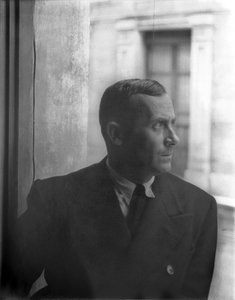
1893–1983, Espanja
Joan Miró
Joan Mirón elämä ja taide Barcelona, 20. huhtikuuta 1893. Joan Miró i Ferrà astuu maailmaan, jota hallitsevat tarkkuus ja hammasrattaat; hän syntyy kellosepän perheeseen. Tämä varhainen kasvuympäristö luo pohjan huolelliselle käsityölle, joka säilyy läpi hänen kehityksensä maalari, kuvanveistäjänä ja keramiikkataiteilijana.
Tietoa kohteesta Joan Miró Joan Mirón merkittävimpiä teoksia
Myös Joan Miró -teoksia
 Harlekiinin Karnevaali1925
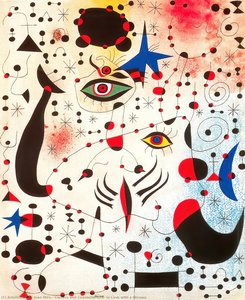 Koodit ja tähtikuvut rakastuneena naiseen1941
 Joan Mirón – Katalonialainen maisema (Metsästäjä)1924
 Vanha kenkä kanssa elävä still life1937
Esseitä teoksesta Tilna
 Spanish artworks of the 1920sSpanish Surrealism and Cubism in the 1920s come alive through the works of Salvador Dalí, Joan Miró, and Pablo Picasso. View the collection…
 Romantic Realism's Finest: 10 Masterpieces for Your Home | OriginalUniqueArtExplore 10 defining masterpieces of Romantic Realism! Discover Courbet, Millet & Daumier's powerful paintings—capturing emotion and social …
 25 Masterpieces by Joan Miró: The Ultimate Guide to the Surrealist IconJourney through the surrealist universe of Joan Miró. Explore 25 iconic masterpieces, from biomorphic shapes to vibrant abstractions. Find …