() ·

A painting made for you, by hand

Self-Portrait

Käsinmaalattu öljyvärinen jäljennös

Käsinmaalattu öljyväri kankaalle haluamassasi koossa ja kehyksissä, taiteilijoidemme valmistamana tilauksesta. ( Vaihda tulosteeseen Siirry digitaaliseen kuvaan)

Keräilykohteen kuvaus

Capture the sentimental drama of this 18th-century self-portrait by Jean-Baptiste Greuze; own a piece of French genre mastery today.

Taiteilijan elämäkerta

"meta_description": "Jean-Baptiste Greuze (1725–1805) oli ranskalainen taidemaalari, joka tunnetaan tunteellisesti voimakkaista genremaisista maalauksistaan ja nuorten naisten portreteista. Hänen tyylinsä yhdistää rococoa ja moraalisen opetuksen."

from ·

Chapter 1

How large should it be?

Slide to change the size; the picture on the left shows the frame at its real width. The proportions of the original are kept.

Vakiokoko
räätälöity
CM
INCH

Valitse valmiista mitoistamme sellaiset, jotka vastaavat teoksen alkuperäisiä mittasuhteita.

leveys
korkeus

Kirjoita tarvitsemasi leveys ja korkeus, jotta teos sopii kehyksiisi tai seinällesi. Koska kyseessä on käsinmaalattu teos, taiteilija voi maalata hieman enemmän kuvan ympärille tai rajata sitä hieman, jos haluat eri muotoisen koon — valinta on sinun. Lähetämme sinulle digitaalisen mallikuvan hyväksyttäväksi ennen kuin maalaus alkaa. Tällä sivulla näkyvä kuva ei vastaa lopullista tulosta — vain mallikuva näyttää sen.

Chapter 2

How should it arrive?

Choose the edges of the stretched canvas

Choose your frame

Corner sample of the WhiteWrap canvas edge finish, stretched on massiivipuu bars
White €1
Corner sample of the BlurSideWrap canvas edge finish, stretched on massiivipuu bars
Blurside €1
Corner sample of the ExtendedWrap canvas edge finish, stretched on massiivipuu bars
Extended €1
Corner sample of the P118B picture frame: valettu polystyreeni, 5 cm wide and 3 cm thick
P118B €10
Corner sample of the P118H picture frame: valettu polystyreeni, 5 cm wide and 3 cm thick
P118H €10
Corner sample of the P118W picture frame: valettu polystyreeni, 5 cm wide and 3 cm thick
P118W €10
Corner sample of the P438Z picture frame: valettu polystyreeni, 5.5 cm wide and 3.5 cm thick
P438Z €10
Corner sample of the P508JH picture frame: valettu polystyreeni, 7 cm wide and 3.5 cm thick
P508JH €12
Corner sample of the P508YH picture frame: valettu polystyreeni, 7 cm wide and 3.5 cm thick
P508YH €12
Corner sample of the P805H picture frame: valettu polystyreeni, 5 cm wide and 3.5 cm thick
P805H €10
Corner sample of the P805Z picture frame: valettu polystyreeni, 5 cm wide and 3.5 cm thick
P805Z €10
Corner sample of the P919BZ picture frame: valettu polystyreeni, 7 cm wide and 3.5 cm thick
P919BZ €10
Corner sample of the P919G picture frame: valettu polystyreeni, 7 cm wide and 3.5 cm thick
P919G €10
Corner sample of the P919XJ picture frame: valettu polystyreeni, 7 cm wide and 3.5 cm thick
P919XJ €10
Corner sample of the P959ZH picture frame: valettu polystyreeni, 5 cm wide and 3 cm thick
P959ZH €10
Corner sample of the P968JZ picture frame: valettu polystyreeni, 6 cm wide and 4 cm thick
P968JZ €12
Corner sample of the W106C picture frame: massiivipuu, 5 cm wide and 3 cm thick
W106C €8
Corner sample of the W218G picture frame: massiivipuu, 5 cm wide and 3 cm thick
W218G €10
Corner sample of the W218JH picture frame: massiivipuu, 5 cm wide and 3 cm thick
W218JH €8
Corner sample of the W218Y picture frame: massiivipuu, 5 cm wide and 3 cm thick
W218Y €10
Corner sample of the W307PJ picture frame: massiivipuu, 6 cm wide and 3 cm thick
W307PJ €10
Corner sample of the W316G picture frame: massiivipuu, 6 cm wide and 3 cm thick
W316G €10
Corner sample of the W316PJ picture frame: massiivipuu, 6 cm wide and 3 cm thick
W316PJ €8
Corner sample of the W316Y picture frame: massiivipuu, 6 cm wide and 3 cm thick
W316Y €10
Corner sample of the W398PJ picture frame: massiivipuu, 5 cm wide and 3 cm thick
W398PJ €8
Corner sample of the W4111J picture frame: massiivipuu, 6.5 cm wide and 3.5 cm thick
W4111J €10
Corner sample of the W500HY picture frame: massiivipuu, 7 cm wide and 5 cm thick
W500HY €15
Corner sample of the W500JH picture frame: massiivipuu, 7 cm wide and 5 cm thick
W500JH €15
Corner sample of the W692G picture frame: massiivipuu, 8 cm wide and 4 cm thick
W692G €12
Corner sample of the W849H picture frame: massiivipuu, 5 cm wide and 3 cm thick
W849H €8
Corner sample of the W940BG picture frame: massiivipuu, 7.5 cm wide and 4.5 cm thick
W940BG €15
Corner sample of the W953PJ picture frame: massiivipuu, 6 cm wide and 3.5 cm thick
W953PJ €8
Corner sample of the H24-GOLD picture frame: kaiverrettua puuta ja gessoa, 10 cm wide and 6 cm thick
H24-GOLD €30
Corner sample of the H24-SILVER picture frame: kaiverrettua puuta ja gessoa, 10 cm wide and 6 cm thick
H24-SILVER €30
Corner sample of the H36-GOLD picture frame: kaiverrettua puuta ja gessoa, 15 cm wide and 6.5 cm thick
H36-GOLD €45
Corner sample of the H36-SILVER picture frame: kaiverrettua puuta ja gessoa, 15 cm wide and 6.5 cm thick
H36-SILVER €45
Kehyksen esikatselu
Kehystetty

Moulding: . Overall size with the frame: .

Chapter 3

Who paints it, and should anything change?

Examples of what can be changed: Replace face with customer photo; Add pet (e.g., replace cat with dog); Include hidden message in background; Change background landscape or elements.
After order, OriginalUniqueArt.com team will email client for instructions and provide a mockup preview

Maailmanlaajuinen toimitus () 3–4 viikossa tavallisen 5 viikon sijaan. (1 marraskuu). Laadusta ei tingitä.

Chapter 4

The finishing touches

A nameplate, as in a museum?

Kaiverretun pronssilaatan tiedot

This elegant plaque features the artist's name and the title of the artwork, finely engraved for a timeless presentation.

It is made from bronze with a refined, elegant finish. The text is precisely laser-engraved for a sharp and permanent result. Measuring 9x2 cm, the plaque is compact yet easy to read. It's built to be durable and scratch-resistant, offering a professional, museum-quality look. Mounting is simple thanks to the included adhesive backing.

Läpinäkyvän akryylilaatan tiedot

The plaque includes essential engraved details such as the artist's name, the title of the artwork, the date it was created, the type of media used-like oil on canvas or watercolor-a brief description of the piece, and a QR code that links to the complete artwork information.

It is crafted from clear acrylic, offering a sleek, modern appearance. The text is UV-engraved in black to ensure strong visual contrast. With a size of 10x15 cm, it ensures optimal readability. It comes equipped with two metal hooks for secure wall mounting. The plaque is designed to be weather-resistant, making it suitable for various environments, and it includes interactive features that work seamlessly with smartphone scanning.

Mustan akryylilaatan tiedot

This elegant plaque includes engraved information such as the artist's name, the title of the artwork, the date it was created, the type of media used (like oil on canvas or watercolor), a short description of the artwork, and a QR code for quick access to more information.

The plaque itself is made from refined black acrylic with a premium finish. The text is laser-engraved in white for high contrast and readability. Its size is 10x15 cm, designed to be easy to read. It comes with two metal hooks for professional mounting. The design is sleek and fits any interior style. It is also weather-resistant and durable, with built-in digital integration for mobile compatibility.

A protective varnish?

When do you need it?

Chapter 5

Your painting, as you ordered it

Self-Portrait

Reproduktiotekniikka

Replikaatin koko

-

Kokenut huipputaiteilija

Lisää yksityiskohtia, hienostuneisuutta ja enemmän aikaa tuotantoon

-

Reproduktion kehystysvaihtoehdot

-

-

Teoksille tai reproduktioille, joiden mikä tahansa sivu on suurempi kuin 105 cm (noin 41 tuumaa), kehys toimitetaan osina purettuna sarjana. Tämä menetelmä varmistaa turvallisen toimituksen ja ehkäisee vaurioita kuljetuksen aikana.

Vaatii ammattimaista kokoamista – kyseessä ei ole tee-se-itse-tuote.
Sarja on koottava ja kangas kiristettävä kokeneen kehystysammattilaisen toimesta käyttäen puuliimaa (ei sisälly pakkaukseen), kangaspinnetteitä ja puristimia, jotta kehyksen kulmat pysyvät suorina liiman kuivuessa. Virheellinen kokoaminen tai epätasainen kankaan kiristys voi vaurioittaa teosta pysyvästi, eikä tällaiset vauriot ala takuun piiriin.

  • Kaikki massiivipuupalat sisältyvät, tarkasti mittojen mukaan leikattuina.

  • Kootaan mukana tulevilla ruuveilla sekä kulmaliitoksia varten tarvittavalla puuliimalla, jota ei toimiteta, joten se on hankittava kehystäjältä.

  • Vaatii ammattilaisvälineitä, jotka eivät sisälly pakkaukseen: kankaan venytyspihdit (kiristin) ja puristimet, joilla pidetään kehyksen puut suorassa liiman kuivuessa.

Tärkeää:
Kulmaliitoksissa tarvitaan puuliimaa, kehyksien osat on pidettävä puristimilla, kunnes liima on täysin kuivunut, ja koottuun kehykseen jännitettävän kankaan kiristämiseen tarvitaan kangaspenssipihti. Mikään näistä ei sisälly pakkaukseen. Suosittelemme varmistamaan kokeneen kehystäjän saatavuuden ennen tämän kokoisen kehyksen tilaamista.

Nimilaatta

-

-

Suojalakkaus

Kiiltävä lakka (syventää värejä, suojaa valolta ja kosteudelta)

-

Mukauta taideteokseni

Esimerkkejä muokattavista asioista: Vaihda kasvot asiakkaan omaan valokuvaan; Lisää lemmikki (esim. vaihda kissa koiraan); Lisää taustalle piilotettu viesti; Muuta taustan maisemaa tai elementtejä.

-

Pikatoimitus

Maailmanlaajuinen toimitus () 3–4 viikossa tavallisen 5 viikon sijaan. (1 marraskuu). Laadusta ei tingitä.

-

Pikatoimitus

Maailmanlaajuinen toimitus () 5 viikon kuluessa. (8 marraskuu).

Sisältyy hintaan

Kokonaishinta

€ 267

Kokonaishinta € 267

Lasivaihtoehto on saatavilla vain alle 110 cm kokoisille teoksille

Included with every order

  • Ilmainen pikatoimitus ympäri maailman
  • Korkealaatuinen pellavakangas
  • Kattava kuljetusvakuutus
  • Tulliveron palautustakuu
  • Takuu täydellisestä värien vastaavuudesta
  • 100 päivän palautusoikeus (vain valmistusvirheet)
  • 100% rahat takaisin -takuu
  • Määräalennus tarjolla

A Glimpse into Sentimental Life: Analyzing Greuze's Self-Portrait

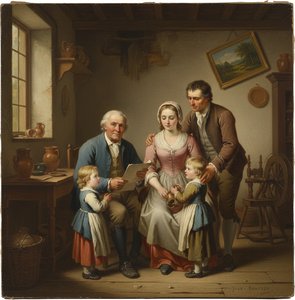
To stand before this depiction of a man with distinguished white hair, pipe held thoughtfully in his mouth, is to step directly into the emotional landscape of late eighteenth-century France. Jean-Baptiste Greuze, master chronicler of human feeling, has captured not merely a likeness, but a moment imbued with quiet contemplation. The subject gazes out, seemingly connecting with the viewer across the span of two centuries. His attire, suggesting an earlier epoch, anchors him in a time when sentimentality was becoming the dominant current in art. Yet, it is the subtle presence of the two other figures—one flanking the left, another on the right—that enriches the narrative, transforming what might be a simple portrait into a complex tableau of social interaction.

The Artistry of Sentiment and Genre

Greuze’s genius lay in his ability to elevate everyday life—the genre scene—to the level of high art. While academic painters often gravitated toward grand historical epics or mythological grandeur, Greuze found his profound resonance in the intimate dramas of ordinary people. This Self-Portrait, dated around 1780, exemplifies this focus. The technique employed speaks to a mastery of tonal subtlety; observe how the light catches the texture of the brown coat and the wisps of white hair. It is a painting that rewards close inspection, allowing the eye to wander from the direct gaze of the central figure to the muted activities unfolding around him. This careful balance between individual focus and surrounding narrative depth is characteristic of his most compelling works.

Historical Echoes: Life in the Late Enlightenment

The period surrounding 1780 was a time of profound intellectual ferment, one where emotion began to challenge rigid classical structures. Greuze’s work resonated deeply with the burgeoning sentimental taste—a cultural shift that valued empathy, domestic virtue, and relatable human struggle over sheer grandeur. The inclusion of multiple figures suggests a community moment, perhaps a gathering or an informal portrait session. These secondary characters are not mere props; they participate in the atmosphere, grounding the central figure's introspection within a tangible social reality. Owning a reproduction of this piece allows one to bring that historical resonance—that feeling of intimate, observed life—into a modern setting.

Symbolism and Emotional Resonance for the Collector

The pipe itself functions as more than just an accessory; it is a classic symbol of contemplation, reflection, and perhaps even melancholy wisdom. The man seems caught between the outward performance of his composure and the deep thoughts suggested by his posture. For the collector or designer, this painting offers immediate emotional depth. It speaks to the quiet dignity found in aging, in companionship, and in the act of simply observing life unfold. Whether placed above a mantelpiece or within a gallery setting, this artwork does not shout for attention; rather, it invites the viewer into a hushed, thoughtful conversation, making it an exquisite piece for those who appreciate art with a soulful whisper.

Kysymykset ja vastaukset

Mikä on alkuperäisen Jean-Baptiste Greuze:n "Self-Portrait" tekniikka ja koko?

Alkuperäinen Jean-Baptiste Greuze:n "Self-Portrait" on Oil On Canvas-teos, jonka mitat ovat 56 x 46 cm. Tekniikka ja koko kuvaavat alkuperäistä teosta.

Minkälaisia värejä teoksessa "Self-Portrait" käytetään?

Teoksen "Self-Portrait" värit muodostavat Earthy-väripaletin. Tämä luokitus kuvaa hallitsevia väriperheitä.

Voinko tilata öljyvärimaalauksen teoksesta "Self-Portrait"?

Voit tilata käsin maalatun jäljennöksen teoksesta Jean-Baptiste Greuze:n "Self-Portrait" suoraan sen Käsinmaalattu jäljennös -sivulta: käsinmaalattu öljyvärireproduktio pellavakankaalle, valmistetaan tilauksesta.

More about this painting

Esikatselu Esikatsele AR-tilassa Vaihda tulosteeseen Siirry digitaaliseen kuvaan Jaa teos
Tiedot Opas Lisää suosikkeihin Lataa kuva Samanlaisia kohteita Röntgenkuvaus Diaesitys Q&A Tilastot

In numbers

  • 1780the year it was painted
  • 29frames to choose from
  • standard sizes, in its own proportions
  • 5weeks to paint and deliver it
Jean-Baptiste Greuze

Jean-Baptiste Greuze

1725 - 1805, Ranska

Quick facts about Jean-Baptiste Greuze

  • Artistic Movement Or Style: Rokoko, Genrerimaus
  • Artists Or Movements Influenced By This Artist: ['Hogarth']
  • Artists Who Influenced This Artist: ['Grandon (tai Grondom)']
  • Date Of Birth: 1725
  • Date Of Death: 1805
  • Full Name: Jean-Baptiste Greuze
  • Nationality: Ranskalainen
  • Notable Artworks:
    • Le Père de famille...
    • Nuori tyttö...
    • Savoyardin tanssihämy
  • Place Of Birth: Tournus, Ranska

Taiteilijan elämäkerta

Jean-Baptiste Greuze: Elämä ja Taide Sentimentin Aikakaudella

Jean-Baptiste Greuze, syntynyt Tournuksen rauhallisessa Burgundian kylässä vuonna 1725, nousi merkittäväksi hahmoon 1700-luvun ranskalaisessa taiteessa. Hänen tarinansa on ihmeellinen nousu, joka perustuu luontaisen kyvyn tuntea ihmisten tunteita ja ymmärryksen kasvavasta sentimentaalisen maun aikakaudesta. Aluksi hänen isänsä, kattoasentaja, vastusti poikansa taiteen pyrkimyksiä, mutta riitojen jälkeen Greuze sai luvan seurata isänsä jalanjälkiä ja opiskella taidetta. Ensimmäinen mentorinsa oli Lyonissa asuva Grandon, joka tunnisti nuoren miehen lahjakkuuden ja kannusti häntä kehittämään sitä. Tämä ohjaus osoittautui ratkaisevaksi, sillä Greuze pääsi opiskelemaan ensin Lyonnaiseessa ja sitten Pariisin akatemiassa Charles-Joseph Natoiren johdolla. Juuri näissä kunniakkaissa saleissa Greuze alkoi hioa taitojaan, vaikka hän myös poikkesi akatemian yleisestä painotuksesta historiallisten ja mytologisten aiheiden suhteen.

Genre-maalauksen Synty

Greuzen läpimurto tapahtui vuonna 1755 maalauksella *Le Père de famille expliquant la Bible à ses enfants* (Isä selittää Raamattua lapsilleen). Tämä teos ei ollut pelkästään kodin elämän kuvausta; se oli valistuksen aikakauden ihanteiden ilmentymä, joka kuvasi perheen pylyvyyttä ja moraalioppia. Maalaus resonoi syvästi aikansa yleisön kanssa, vangiten porvarillisen rehellisyyden henkeä, joka oli saanut yhä enemmän jalansijaa. Teos hankittiin keräilijän Ange-Laurent de La Live de Jullyn hienoon kokoelmaan, mikä nosti Greuzen maineeseen. Hän jatkoi menestykseänsä tekemällä genre-maalauksia – intiimejä kuvauksia arkielämästä, jotka olivat täynnä tunteita ja moraalisia pohdintoja. Italiaan matka vuonna 1755, jonka hän teki abbin Louis Gougenotin kanssa, laajensi hänen taiteellisia horisonttejaan, vaikka hän lopulta löysi enemmän inspiraatiota Ranskan yhteiskunnan todellisuudesta kuin klassisen antiikin ihanteista. Hänen kykynsä herättää aitoja tunteita – iloa, surua, katumusta – erotti hänet monista aikalaistensa keskuudessa ja vakiinnutti hänen asemansa johtavana hahmona nousevassa Rokoko-tyylissä, vaikka hänellä oli myös selkeä moraalisesti ohjattu näkökulma.

Tunneiden Maalaaminen ja Moraalinen Tarinankerronta

Greuzen taiteellinen vahvuus piirtyi kykyynsä kertoa tarinoita maalauksilla. Teokset, kuten *La Jeune Fille qui pleure son oiseau mort* (Nuori tyttö itkee kuolleen lintun puolesta) ja *Savoyard with a Dancing Doll* eivät ole pelkästään lapsen kuvauksia; ne ovat ihmiskokemusten tutkimuksia, jotka käsittelevät tunteita ja moraalisia pohdintoja. Hänellä oli poikkeuksellinen lahjakkuus vangita hienovaraisia ilmeitä, välittää sisäistä kamppailua huomattavalla herkkyydellä. Teostensa kompositiot olivat usein huolellisesti suunniteltuja, hyödyntäen dramaattista valaistusta ja tunteellisesti ilmaisuvoimaisia eleitä tunteiden voimistamiseksi. Denis Diderot, Valistuksen aikakauden merkittävä filosofi ja taiteilija, kannusti Greuzen teoksia innokkaasti, kehuen hänen kykyään kuvata "moraalia maalauksessa". Tämä menestys kuitenkin loi artistille dilemman. Hän pyrki tunnistamaan itsensä historian maalaajaksi – arvostetuin luokitus akatemiassa – ja yritti siirtyä tähän suuntaan teoksella *Septimius Severus Reproaching Caracalla*. Tämä kunnianhimoinen työ kohtasi kovaa kritiikkiä, ja Greuze hyväksyttiin lopulta akatemian jäseneksi vain genre-maalareksi, päätös, joka syövytti hänen ylpeyttään.

Myöhemmät Vuodet ja Jälleenjääneet Perinnöt

Akateemisen hylkäämisen merkitsi Greuzen uran käännekohtaa. Hän vetäytyi pois Salon-näyttelyistä monien vuosien ajaksi, muuttuen yhä eristäytyvämmäksi ja vihaiseksi. Hänen myöhemmät teoksensa käsittelivät usein houkuttelua ja moraalisia rikkomuksia, joskus jopa selkeästi aistillisia aiheita. Nämä maalaukset olivat teknisesti taitavia, mutta niissä ei ollut samaa tunteellista resonanssia kuin hänen varhaisimmillaan tekemissään mestariteoksissa. Taloudelliset vaikeudet vaivattivat häntä viimeisinä vuosinaan, mikä vastasi täysin aiemman kunnian menetykseen. Hän kuoli köyhyydessä itse Louvren sisällä vuonna 1805. Vaikka hänen taiteensa oli tuottanut merkittävää omaisuutta, se oli tuhlailevan elämäntyylin seurauksena hukattu. Jean-Baptiste Greuze jätti jälkeensä teoksen, joka vangitsee edelleen katsojien huomion tunteellisen voimansa, teknisen loiston ja ajattoman merkityksensä.

Merkittävät Teokset ja Niiden Merkitys

  • Le Père de famille expliquant la Bible à ses enfants (1755): Varhainen menestys, joka kuvastaa valistuksen aikakauden ihanteita perheen pylyvyydestä.
  • La Jeune Fille qui pleure son oiseau mort (c. 1765): Näyttö Greuzen kyvystä ilmaista tunteita ja kertoa koskettavia tarinoita.
  • Savoyard with a Dancing Doll (c. 1763): Lapsetyypin kuvaus, joka osoittaa hänen taitojaan lapsikuvan tekemisessä.
  • Septimius Severus Reproaching Caracalla (1769): Epäonnistunut yritys historiallisena maalauksena, joka korosti hänen vahvuuksiaan muissa aloilla.
  • The Broken Pitcher (c. 1770s): Siirtymä selkeämpiin ja moraalisesti epävarmempiin aiheisiin myöhemmissä teoksissaan.

Pikaista tietoa

  • Notable elements or techniques: Masterful pastel technique
  • Artistic style: Elegant & Subtle
  • Year: 1780
  • Movement: Neoclassical
  • Dimensions: 56 x 46 cm
  • Artist: Jean-Baptiste Greuze

Taidevisat

Jokaisessa kysymyksessä on vain yksi oikea vastaus.

Kysymys 1:
What artistic movement is Jean-Baptiste Greuze primarily associated with?
Kysymys 2:
The image depicts a man smoking a pipe. What does this detail suggest about the artist's intention?
Kysymys 3:
Where was Jean-Baptiste Greuze initially trained as an artist?
Kysymys 4:
What is a key characteristic of Greuze's artistic style?
Kysymys 5:
The painting includes two other figures. What is their role in the scene?