 Jaa teos
 Jaa
Jaa
 Tiedot
 Opas
Opas

 Lataa kuva
 Samanlaisia kohteita
 Diaesitys
 Kysymykset ja vastaukset
 Tilastot
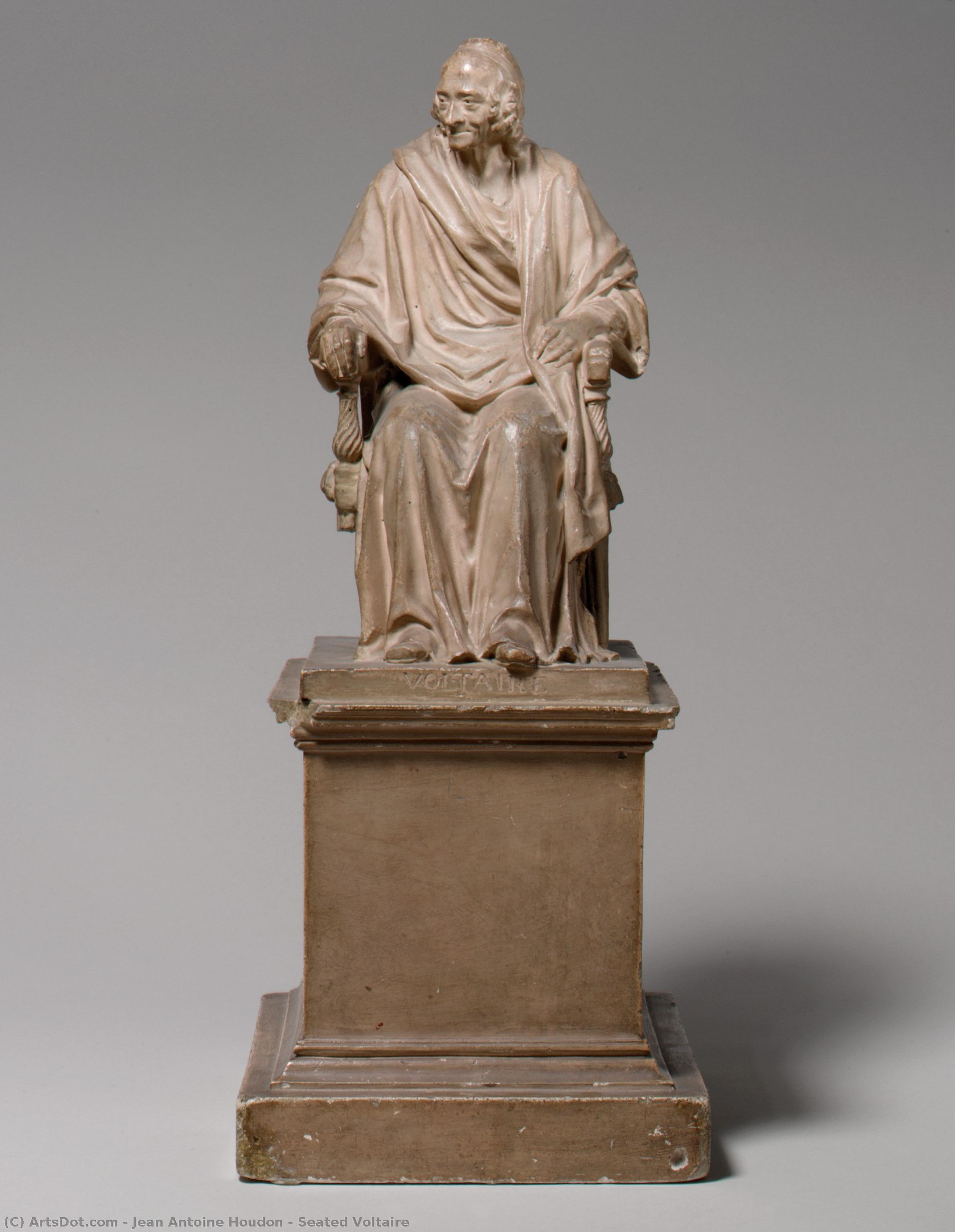
Seated Voltaire


 Lue lisää
Saat tulostusvalmiin tiedoston, jonka laatu ylittää verkkonäkymän huomattavasti. Jokainen myymämme digitaalinen kuva on peräisin arkistomme korkearesoluutioisesta mestariteoksesta — yleensä 5 000–15 000 pikselin levyisenä — joten voit tulostaa suuria kokoja, rajata tiukasti tai toistaa hienovaraiset yksityiskohdat luottavaisin mielin.
Mikään tiedosto ei lähde studiostamme muuttamatta. Digitaalinen asiantuntija vertaa värejä alkuperäiseen maalaukseen ja korjaa niitä tarvittaessa, minkä jälkeen hän parantaa kuvan selkeyttä ja yksityiskohtia ammattimaisilla retusointityökaluilla — säilyttäen aina uskollisena taiteilijan siveltimenjäljen ja tyylin. Lopputuloksena on kuva, joka näyttää maalaukselta, eikä suodatetulta skannaukselta.
Hyväksyt työn ennen valmistumistaan: asiantuntijamme lähettää kuvan tarkistettavaksi sähköpostitse 72 tunnin kuluessa. Etkö ole tyytyväinen? Pyydä parannuksia tai korjauksia, tai pyydä hyvitystä, mikäli laatu ei vastaa odotuksia.
Tämä on laatua, johon kustantamot, design-studiot, galleriat ja painotalot luottavat.
Digitaalinen kuva
Lataa korkearesoluutioinen tiedosto henkilökohtaiseen näyttelyyn, tulostamiseen ja luoviin projekteihin. ( Vaihda tulosteeseen Osta käsinmaalattu taideteos)
Sisältyy jokaiseen digitaalisen kuvan tilaukseen
Asiantunteva digitaalinen toimitus, laatu taattu
Kun valitset OriginalUniqueArt.com-palvelun, et saa vain kuvaa – saat ammattimaisesti viimeistellyn digitaalisen taideteoksen, joka on luotu tarkkuudella ja jonka takaa tulee tyytyväisyystakuu. Tässä on kaikki, mitä tilauksesi sisältää, automaattisesti:

Nopea sähköpostitoimitus
Saat korkearesoluutioisen digitaalisen kuvatiedostosi sähköpostiisi 72 tunnin kuluessa tilauksesta – valmiina käytettäväksi välittömästi.

Tekoälyllä parannettu digitaalinen tiedosto
Teoksesi on optimoitu ammattimaisesti edistyneiden tekoälytyökalujen ja manuaalisen jälkikäsittelyn avulla, mikä takaa maksimaalisen yksityiskohtaisuuden, selkeyden ja väritarkkuuden.

Ilmainen uudelleenlähetys elinikäisesti
Oletko vahingossa poistanut tai kadottanut tiedostosi? Ei hätää – lähetämme sen sinulle uudelleen milloin tahansa täysin maksutta.

Ei tuontimaksuja – koskaan
Nauti taiteestasi välittömästi ilman tullimaksuja, veroja tai toimituskuluja – digitaaliset lataukset ovat aina verovapaita.

Värintoiston tarkkuustakuu
Varmistamme, että digitaalinen kuvasi vastaa alkuperäisiä värejä mahdollisimman tarkasti käyttämällä ammattilaistason työkaluja ja värinhallintaa.

100 päivän tyytyväisyystakuu
Jos et ole tyytyväinen digitaaliseen kuvaasi, muokkaamme sitä tai palautamme 100% hinnan 100 päivän kuluessa – kysymystä ei esitetä.

100% Rahat takaisin -takuu
Et ole tyytyväinen? Saat täyden hyvityksen 100 päivän kuluessa digitaalisen tiedostosi vastaanottamisesta – kysymystä ei esitetä.

Määräalennukset
Osta 3 kuvaa, säästä 10% - Osta 5, säästä 15% - Osta 10+, säästä 20%. Erinomainen valinta luoviin projekteihin, gallerioille ja toimistoille.
The Soul in Stone: Rediscovering Houdon’s Seated Voltaire
In the quiet, hallowed halls of art history, few works capture the electric tension of an era quite like Jean-Antoine Houdon’s "Seated Voltaire." Completed in 1778, this marble masterpiece is far more than a mere anatomical study; it is a profound distillation of the Enlightenment itself. As the philosopher Voltaire sat for the sculptor, he was not merely posing for a likeness, but participating in the creation of an enduring intellectual icon. Through Houdon’s masterful hands, the cold, unyielding medium of marble is transformed into a living, breathing testament to human reason and the restless spirit of inquiry that defined the eighteenth century.
To gaze upon this sculpture is to encounter a man caught in the very act of thought. The composition centers on the legendary thinker, seated with a dignity that commands the space around him. There is an intimate, almost whispered quality to the work, as if the viewer has stumbled upon a private moment of contemplation. Houdon, a sculptor who famously bridged the gap between the ornate flourishes of the Rococo and the disciplined grandeur of Neoclassicism, utilizes every ounce of his technical prowess to convey this psychological depth. The way the light catches the subtle folds of Voltaire’s robes and the furrowed brow of his forehead creates a silent dialogue between the stone and the spectator, inviting us to share in the philosopher's profound introspection.
A Masterclass in Neoclassical Precision
The technical brilliance of "Seated Voltaire" lies in Houdon’s ability to manipulate texture and line to evoke life. Working within his workshop, Houdon employed traditional sculpting tools to achieve an astonishing level of realism that borders on the miraculous. The marble surface is polished to a luminous finish, allowing for delicate tonal variations that mimic the softness of skin and the heavy drape of fabric. Every line is intentional; the sharp, precise contours of the facial features reflect the clarity of Voltaire’s intellect, while the smoother, flowing lines of the drapery provide a sense of classical elegance and movement.
For the discerning collector or interior designer, this piece offers a sophisticated study in monochromatic harmony. The palette—a serene arrangement of beiges, creams, and soft greys inherent to fine marble—provides a neutral yet visually rich anchor for any high-end space. It possesses a timeless quality that transcends fleeting trends, making it an ideal centerpiece for a library, a formal study, or a curated gallery wall. A high-quality reproduction of this work does not merely decorate a room; it elevates the entire atmosphere, infusing the environment with a sense of historical weight and intellectual prestige.
The Enduring Legacy of Enlightenment Thought
Beyond its aesthetic splendor, the sculpture serves as a powerful symbol of the values that shaped the modern world. In an age of revolution and radical new ideas, Houdon’s portrayal of Voltaire stands as a monument to the power of the human mind. The seated posture, stable and grounded upon its pedestal, suggests the enduring nature of truth and the permanence of philosophical legacy. There is a palpable sense of gravity in the work, a weight that is both physical—due to the density of the marble—and metaphorical, representing the heavy responsibility of wisdom.
Bringing a reproduction of "Seated Voltaire" into one's collection is an act of honoring this intellectual heritage. It serves as a daily reminder of the beauty found in clarity, the strength found in reason, and the artistry required to immortalize the human spirit. Whether viewed as a triumph of Neoclassical technique or as a window into the heart of the Enlightenment, Houdon’s work continues to inspire awe, offering a sophisticated touch of history and soul to the most refined contemporary interiors.
Kysymykset ja vastaukset
Mikä hallitseva sävy lävistää teoksen Jean-Antoine Houdon:n "Seated Voltaire"?
Golden Yellow Range sävy läpi koko teoksen Jean-Antoine Houdon:n "Seated Voltaire".
Kuinka vaalea "Seated Voltaire" on kokonaisuudessaan?
Kokonaisuudessaan teoksen "Seated Voltaire" kirkkaus on kirjattu arvoon bright. Koettu kirkkaus kuvaa sitä, kuinka vaaleana tai tummana teos vaikuttaa.
Mistä "Seated Voltaire" on tehty ja millä tyylillä?
Teoksessa "Seated Voltaire" Marble-tekniikka kohtaa Neoclassical Sculpture-suuntauksen.
Taiteilijan esittely
A Sculptor of the Enlightenment
Jean-Antoine Houdon, born in Versailles in 1741, stands as a pivotal figure bridging the Rococo and Neoclassical eras—a sculptor whose work embodies the intellectual fervor and evolving aesthetic sensibilities of the eighteenth century. His life unfolded amidst dramatic shifts in French society, from the waning opulence of the monarchy through the revolutionary upheaval and Napoleonic ascendance. Yet, Houdon remained remarkably consistent in his artistic vision: to capture not merely a likeness, but the very essence of his subjects—their intellect, character, and inner lives—in enduring marble and bronze. This dedication stemmed from an early aptitude for sculpture, nurtured by formal training at the Académie Royale de Peinture et de Sculpture beginning in 1752 under esteemed sculptors like René-Michel Slodtz, Jean-Baptiste Lemoyne, and Jean-Baptiste Pigalle. His subsequent enrollment at the École Royale des Élèves Protégés from 1761 to 1764 solidified his foundation, culminating in a triumphant win of the Prix de Rome competition in 1761—an award that granted him invaluable study time with classical art firsthand in Italy, an experience profoundly shaping his aesthetic sensibilities.The Art of Verisimilitude and Psychological Insight
Houdon’s sculptures are immediately recognizable for their breathtaking realism and meticulous attention to detail. He wasn't content with simply replicating physical features; he sought to penetrate the surface, revealing the personality and intellect within. This commitment to verisimilitude arose from a deep fascination with anatomy—evident in his celebrated *Muscleman Sideview* bronze sculpture—and an unwavering dedication to observation. Unlike many contemporaries who idealized their subjects, Houdon embraced imperfections, believing they contributed to a more truthful and compelling portrayal. He employed innovative techniques, including taking casts directly from life, allowing him to capture minute details with unparalleled accuracy. This approach was particularly evident in his portrait busts, which became his signature achievement. These weren’t merely static representations; they were dynamic studies of character, imbued with psychological depth and emotional resonance. Houdon's ability to convey not just *how* someone looked, but *who* they were, set him apart. He achieved this through subtle nuances in expression, posture, and the rendering of details like the eyes—often carved with a slight concavity to capture the play of light and suggest inner thought. This meticulous attention to detail wasn’t merely stylistic; it reflected Houdon's belief that sculpture could illuminate the human condition, capturing not just appearance but also spirit and intellect.Immortalizing an Era: A Pantheon of Enlightenment Figures
The breadth of Houdon’s clientele reads as a veritable who’s who of the Enlightenment. He immortalized some of the most influential thinkers, writers, politicians, and leaders of his time. His terracotta portrait of Denis Diderot captures the philosopher’s intellectual intensity and unconventional spirit with remarkable sensitivity. Benjamin Franklin, portrayed during his diplomatic mission to France, appears as a man of wisdom and pragmatism, his gaze both shrewd and benevolent. Jean-Jacques Rousseau, sculpted with characteristic empathy, embodies both the passion and melancholy that defined his philosophy. Perhaps most famously, Houdon sculpted Voltaire—creating multiple versions of the celebrated writer, including a dynamic seated figure for the Comédie-Française that captures his wit and intellectual energy. Beyond these intellectual giants, Houdon also received commissions from royalty, notably Louis XVI, and rising political figures like Napoleon Bonaparte. However, it was his sculpture of George Washington, commissioned by the Virginia General Assembly, that secured his place in American iconography. This life-size marble statue—based on meticulous measurements and a life mask taken during Washington’s presidency—became the definitive image of the nation's first president, serving as the model for countless engravings and reproductions, even appearing on U.S. postage stamps for decades. He also sculpted Thomas Jefferson, furthering cementing his legacy across the Atlantic.Technique and Innovation: Mastering Marble and Bronze
Houdon’s sculptural method was revolutionary for its time. Rejecting traditional idealized representations, he prioritized anatomical accuracy and psychological insight above all else. His groundbreaking technique involved taking casts directly from life—a practice unheard of in France at the time—allowing him to capture the subtle nuances of human musculature and expression with astonishing precision. This meticulous process demanded an exhaustive understanding of anatomy and a profound sensitivity to observation. Houdon’s mastery extended beyond mere replication; he skillfully manipulated marble and bronze to convey emotion and character. He experimented with innovative polishing techniques, achieving surfaces that shimmered with luminosity and captured the texture of skin and fabric. Furthermore, Houdon's use of *L'Écorché*, a technique where the torso was sculpted in a partially dissected pose—revealing underlying musculature—was considered daring and groundbreaking for its time. This bold approach demonstrated Houdon’s unwavering commitment to pushing artistic boundaries and elevating sculpture to new heights of realism and expressive power.Legacy and Enduring Influence
Jean-Antoine Houdon’s impact on the world of sculpture is undeniable. He elevated portraiture to an art form capable of profound psychological insight and historical documentation. His dedication to realism, combined with his ability to capture the essence of his subjects, set a new standard for sculptural representation. Throughout his life, he received widespread recognition, being named a Chevalier de la Légion d'Honneur in 1804 and a Chevalier de l’Empire in 1809—testaments to his esteemed status within French society. Even in his later years, Houdon continued to create significant works, demonstrating an unwavering commitment to his craft until his death in Paris on July 15, 1828. His sculptures remain highly valued today, not only for their artistic merit but also for the invaluable glimpses they provide into the lives and times of the Enlightenment era. Houdon’s work serves as a powerful reminder of the enduring power of art to capture the human spirit and preserve it for generations to come. His influence can be seen in the works of countless artists who followed, solidifying his position as a master sculptor whose legacy continues to inspire awe and admiration.
Jean-Antoine Houdon
1741 - 1828 , Ranska
Pähkinänkuoressa
- Artistic Movement Or Style: Neoklassismi
- Artists Who Influenced This Artist:
- René-Michel Slodtz
- Jean-Baptiste Lemoyne
- Jean-Baptiste Pigalle
- Date Of Birth: 1741
- Date Of Death: 1828
- Full Name: Jean-Antoine Houdon
- Nationality: Ranska
- Notable Artworks:
- George Washington
- Voltaire
- Benjamin Franklin
- Place Of Birth: Versailles, France