
 Esikatselu
 Jaa teos
 Jaa
Jaa
 Tiedot
 Opas
Opas

 Lataa kuva
 Samanlaisia kohteita
 Röntgenkuvaus
 Diaesitys
 Kysymykset ja vastaukset
 Tilastot
Copernicus in the tower at Frombork, or Conversations with God

- 221.0 x 315.0 cm


 Lue lisää
Giclée- ja taideprintit
Museolaatuisia giclée- tai kankaitaulun tulosteita nopealla tuotannolla ja joustavilla viimeistelyvaihtoehdoilla. ( Osta käsinmaalattu taideteos Siirry digitaaliseen kuvaan)




P118B €10

P118H €10

P118W €10

P438Z €10

P508JH €12

P508YH €12

P805H €10

P805Z €10

P919BZ €10

P919G €10

P919XJ €10

P959ZH €10

P968JZ €12

W106C €8

W218G €10

W218JH €8

W218Y €10

W307PJ €10

W316G €10

W316PJ €8

W316Y €10

W398PJ €8

W4111J €10

W500HY €15

W500JH €15

W692G €12

W849H €8

W940BG €15

W953PJ €8




Valitse valmiista mitoistamme sellaiset, jotka vastaavat teoksen alkuperäisiä mittasuhteita.

Syötä tarvitsemasi leveys ja korkeus, jotta tuloste sopii kehyksiisi tai seinällesi. Tulostetta voidaan vain leikata, sitä ei voida koskaan suurentaa alkuperäistä kuvaa suuremmaksi, joten eri muotoinen koko aiheuttaa osan kuvasta katoamisen. Lähetämme sinulle digitaalisen mallikuvan hyväksyttäväksi ennen kuin aloitamme tulostuksen. Tällä sivulla näkyvä kuva ei näytä lopullista rajausta — vain mallikuva näyttää sen.
Maailmanlaajuinen toimitus () 2 viikossa tavallisen 4–5 viikon sijaan. (8 marraskuu)

Ilmainen pikatoimitus ympäri maailman

Korkealaatuinen pellavakangas

Kattava kuljetusvakuutus

Tulliveron palautustakuu

Takuu täydellisestä värien vastaavuudesta

100 päivän palautusoikeus (vain valmistusvirheet)

100% rahat takaisin -takuu

Määräalennus tarjolla
 Lasivaihtoehto on saatavilla vain alle 110 cm kokoisille teoksille

Copernicus in the tower at Frombork, or Conversations with God
Giclée- ja taideprintit
Replikaatin koko
-


Kokonaishinta
€ 72
The Visionary Canvas: Jan Matejko’s “Copernicus in the Tower at Frombork”
Jan Matejko's "Copernicus in the Tower at Frombork, or Conversations with God" isn’t merely a painting; it’s a potent distillation of intellectual fervor and spiritual contemplation. Completed in 1873, this monumental oil on canvas transports us to the heart of Renaissance Poland, capturing a pivotal moment not just in astronomical history but also in the nation's burgeoning sense of self-awareness. The scene unfolds within the austere yet majestic confines of Frombork Cathedral’s tower, a location imbued with both religious significance and scientific curiosity – a perfect embodiment of the painting’s central theme: the harmonious intersection of faith and reason.

A Masterpiece of Romantic Drama
Matejko, a towering figure in 19th-century Polish art, masterfully employs the tenets of Romanticism to elevate this historical subject. The painting pulsates with dramatic lighting – a chiaroscuro effect that sculpts the figures and emphasizes the solemnity of the scene. The deep blues and purples of the night sky contrast sharply with the warm hues of Copernicus’s study, creating a visual tension that mirrors the intellectual struggle he embodies. Notice how Matejko uses loose brushstrokes to convey movement and emotion, imbuing the composition with a sense of dynamism rarely found in earlier historical paintings. The figures are rendered with an almost theatrical intensity, their gestures and expressions conveying profound thought and perhaps even a touch of awe.
The Anatomy of Inquiry: Symbolism and Detail
Beyond its dramatic impact, “Copernicus” is rich in symbolic detail. Nicolaus Copernicus himself, depicted as a man of quiet contemplation, sits at his desk surrounded by the tools of his trade – astronomical instruments, charts, and open books. The globe, prominently displayed, speaks to his revolutionary heliocentric model of the universe, challenging the established geocentric view. A partially visible diagram of the solar system hints at the complex calculations he undertook. The inclusion of a skullcap suggests the weight of religious tradition alongside the pursuit of scientific truth. Even the brick wall in the background serves as a grounding element, anchoring the scene within the physical reality of Frombork and reminding us of the earthly context of this extraordinary intellectual journey.
A Legacy Forged in Faith and Reason
The painting’s creation coincided with the 400th anniversary of Copernicus' birth, a moment of national pride for Poland. Matejko’s decision to portray Copernicus not as a triumphant discoverer but as a man engaged in dialogue with something greater than himself—perhaps even God—resonates deeply within Polish cultural identity. The painting became a symbol of the nation’s intellectual and spiritual heritage, embodying the spirit of inquiry and the courage to challenge established dogma. Its eventual acquisition by the Jagiellonian University – a bastion of learning since the 14th century – underscores its enduring significance as a testament to the power of human intellect and the pursuit of knowledge. Today, this magnificent work continues to inspire contemplation on the relationship between science, faith, and the boundless mysteries of the universe.
Kysymykset ja vastaukset
Voinko nähdä teoksen Jan Matejko:n "Copernicus in the tower at Frombork, or Conversations with God" omalla seinälläni ennen ostopäätöstä?
Teoksen Jan Matejko:n "Copernicus in the tower at Frombork, or Conversations with God" Tarkastele teosta AR-tilassa sivu käyttää lisättyä todellisuutta näyttääkseen teoksen omassa tilassasi yhteensopivalla laitteella.
Kuka on luonut teoksen "Copernicus in the tower at Frombork, or Conversations with God" ja minä vuonna?
Jan Matejko on luonut teoksen "Copernicus in the tower at Frombork, or Conversations with God" vuonna 1872.
Mistä löydän oppaan teokseen "Copernicus in the tower at Frombork, or Conversations with God"?
Opas teokseen "Copernicus in the tower at Frombork, or Conversations with God" on teoksen Opas -sivu – tulostettava tietolomake, joka sisältää teoksen kuvatekstin, tekijätiedot ja tunnistetaulukon (taiteilija, päivämäärät, tekniikka, alkuperäinen koko, kokoelma).
Taiteilijan elämäkerta
Early Life and Education
Jan Alojzy Matejko, tunnettu puolalainen taidemaalari, syntyi Krakovassa 24. kesäkuuta 1838. Hänen isänsä, Franciszek Ksawery Matejko, oli tšekkiläinen opettaja ja muusikko, joka työskenteli ensin Wodzickin perheen palveluksessa Kościelnikissä ja myöhemmin Krakovassa. Janin lapsuus jäi mieleen Krakówin kapinan vuonna 1846 ja vuoden 1848 saksalaisten joukkojen piirityksen kautta, jotka muokkasivat hänen taiteellisia teemojaan syvästi. Matejko opiskeli St. Annan koulussa, mutta jätti sen kesken vuonna 1851 huonoista arvosanoista johtuen. Vaikka hän ei erityisen hyvin onnistunut akateemisissa opinnoissaan, hänen taiteellinen lahjakkuutensa oli jo varhasti havaittavissa. Hän aloitti opintonsa Krakovan Taidekoulussa vuonna 1852 ja erikoistui historiallaiseen maalaustekniikkaan, oppien Wojciech Korneli Stattlerilta ja Władysław Łuszczkiewicziltä.Artistic Career and Major Works
Matejkon ura alkoi vuonna 1853 hänen ensimmäisellä merkittävämmällä teoksellaan, *Carowie Szujscy przed Zygmuntem III* (Tsars Shuyski before Zygmunt III). Hän alkoi esitellä historiallisia maalauksiaan Krakovan Ystävien taiteen seuran näyttelyissä vuonna 1855. Hänen merkittävimpiä teoksiaan ovat:- *Rejtan* (1866): Suuri öljyvärimaalaus, joka kuvaa dramaattista hetkeä Puolan historiassa.
- *Unia Lubelska* (Union of Lublin) (1869): Tärkeä teos Matejkon taidosta kuvata historiallisia tapahtumia tarkasti ja vaikuttavasti.
- *Bitwa pod Grunwaldem* (Battle of Grunwald) (1878): Mestariosa, joka vangitsee taistelun intensiivisen tunnelman erinomaisesti. Maalaus on tunnettu yksityiskohtaisesta kuvaustaan ja voimakkaasta dynamiikastaan.
Museological Contributions and Legacy
Matejko vietti suurimman osan elämästään Krakovassa ja nousi lopulta johtoon Jan Matejko Taidekoulussa, joka oli aiemmin tunnettu Krakówin Akatemiana. Hän vaikutti merkittävästi koulun kehitykseen ja opiskelijoiden koulutukseen. Hänen oppilaansa olivat muun muassa Maurycy Gottlieb, Jacek Malczewski, Józef Mehoffer ja Stanisław Wyspiański – kaikki tunnettuja taiteilijoita, jotka jättivät jäljen Puolan taiteeseen. Matejko ei ainoastaan ollut lahjakas maalaaja, vaan myös arvostettu opettaja ja kulttuurivaikuttaja. Hänen työnsä edusti Puolan kansallista identiteettiä ja historiaa, ja hänen maalauksensa ovat edelleen suosittuja ja inspiroivia taiteilijoille ympäri maailmaa.Historical Significance
Jan Matejko tunnetaan laajalti "Puolan kansallisena maalarina". Hänen teoksensa eivät ole pelkästään historiallisia kuvauksia, vaan myös tunteiden ja ideoiden ilmaisua. Hän kuvasikin Puolan menneisyyttä dramaattisesti ja symbolisesti, mikä resonoi syvästi puolanhenkisten ihmisten kanssa. Matejkon maalaukset ovat olleet keskeisessä roolissa Puolan kansallisen identiteetin vahvistamisessa ja historian säilyttämisessä. Hänen työnsä on edelleen tärkeä osa Puolan kulttuuriperintöä, ja hänen teoksiaan voi ihailla museoissa ja taidegallerioissa ympäri maailmaa.
Jan Matejko
1838 - 1893 , Puolala
Pähkinänkuoressa
- Artistic Movement Or Style: Romantiikka
- Artists Or Movements Influenced By This Artist: ['Maurycy Gottlieb']
- Artists Who Influenced This Artist:
- Wojciech Korneli Stattler
- Władysław Łuszczkiewicz
- Date Of Birth: 24. kesäkuuta 1838
- Date Of Death: 1. marraskuuta 1893
- Full Name: Jan Alojzy Matejko
- Nationality: Puolalainen
- Notable Artworks:
- Grunwaldin taistelu
- Liittouman Lublin
- Place Of Birth: Kraków, Puola
Aiheeseen liittyvät artikkelit

The Enduring Legacy of Oil on Canvas: Technique, History & Aesthetic Impact
Explore the rich history & techniques of oil painting – from Renaissance masters to Impressionism. Discover pigments, layering methods, and why this timeless medium endures. Expert insights for artists & art enthusiasts.

Öljyvärimaalauksen kestävä perintö: tekniikka, historia ja nykyaikainen käytäntö
Tutustu öljyvärimaalauksen rikkaaseen historiaan, tekniikoihin ja merkittäviin mestareihin. Opi säilyttämään ja restauroimaan taidetta sekä löydä uudet innovaatiot tässä ajattomassa taidemuodossa.

The Enduring Power of Painting: A Historical & Contemporary Exploration of Form and Emotion
Explore the rich history & enduring techniques of oil painting with OriginalUniqueArt. Discover masterpieces, learn about art collecting, and find authentic handmade reproductions crafted by skilled artists.

Oil on Canvas: A Historical & Technical Exploration of a Timeless Artistic Medium
Explore the rich history & enduring techniques of oil painting on canvas. Discover the science behind its longevity, conservation practices, and contemporary relevance. Expert insights for art enthusiasts.
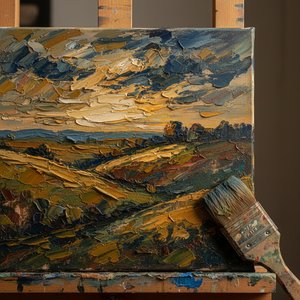
The Timeless Beauty of Oil on Canvas: A Masterclass in Texture, Impasto, and Artistic Mastery
Discover the profound allure of oil on canvas. Explore the mastery of impasto textures, the science of pigment longevity, and expert guides to selecting museum-quality reproductions that elevate your collection with timeless elegance and tactile depth.

