
 Esikatselu
 Jaa teos
 Jaa
Jaa
 Tiedot
 Opas
Opas

 Lataa kuva
 Samanlaisia kohteita
 Röntgenkuvaus
 Diaesitys
 Kysymykset ja vastaukset
 Tilastot
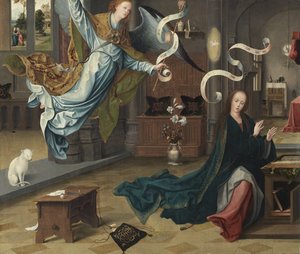
Annunciation

- 112.0 x 131.0 cm


 Lue lisää
Saat tulostusvalmiin tiedoston, jonka laatu ylittää verkkonäkymän huomattavasti. Jokainen myymämme digitaalinen kuva on peräisin arkistomme korkearesoluutioisesta mestariteoksesta — yleensä 5 000–15 000 pikselin levyisenä — joten voit tulostaa suuria kokoja, rajata tiukasti tai toistaa hienovaraiset yksityiskohdat luottavaisin mielin.
Mikään tiedosto ei lähde studiostamme muuttamatta. Digitaalinen asiantuntija vertaa värejä alkuperäiseen maalaukseen ja korjaa niitä tarvittaessa, minkä jälkeen hän parantaa kuvan selkeyttä ja yksityiskohtia ammattimaisilla retusointityökaluilla — säilyttäen aina uskollisena taiteilijan siveltimenjäljen ja tyylin. Lopputuloksena on kuva, joka näyttää maalaukselta, eikä suodatetulta skannaukselta.
Hyväksyt työn ennen valmistumistaan: asiantuntijamme lähettää kuvan tarkistettavaksi sähköpostitse 72 tunnin kuluessa. Etkö ole tyytyväinen? Pyydä parannuksia tai korjauksia, tai pyydä hyvitystä, mikäli laatu ei vastaa odotuksia.
Tämä on laatua, johon kustantamot, design-studiot, galleriat ja painotalot luottavat.
Digitaalinen kuva
Lataa korkearesoluutioinen tiedosto henkilökohtaiseen näyttelyyn, tulostamiseen ja luoviin projekteihin. ( Vaihda tulosteeseen Osta käsinmaalattu taideteos)
Sisältyy jokaiseen digitaalisen kuvan tilaukseen
Asiantunteva digitaalinen toimitus, laatu taattu
Kun valitset OriginalUniqueArt.com-palvelun, et saa vain kuvaa – saat ammattimaisesti viimeistellyn digitaalisen taideteoksen, joka on luotu tarkkuudella ja jonka takaa tulee tyytyväisyystakuu. Tässä on kaikki, mitä tilauksesi sisältää, automaattisesti:

Nopea sähköpostitoimitus
Saat korkearesoluutioisen digitaalisen kuvatiedostosi sähköpostiisi 72 tunnin kuluessa tilauksesta – valmiina käytettäväksi välittömästi.

Tekoälyllä parannettu digitaalinen tiedosto
Teoksesi on optimoitu ammattimaisesti edistyneiden tekoälytyökalujen ja manuaalisen jälkikäsittelyn avulla, mikä takaa maksimaalisen yksityiskohtaisuuden, selkeyden ja väritarkkuuden.

Ilmainen uudelleenlähetys elinikäisesti
Oletko vahingossa poistanut tai kadottanut tiedostosi? Ei hätää – lähetämme sen sinulle uudelleen milloin tahansa täysin maksutta.

Ei tuontimaksuja – koskaan
Nauti taiteestasi välittömästi ilman tullimaksuja, veroja tai toimituskuluja – digitaaliset lataukset ovat aina verovapaita.

Värintoiston tarkkuustakuu
Varmistamme, että digitaalinen kuvasi vastaa alkuperäisiä värejä mahdollisimman tarkasti käyttämällä ammattilaistason työkaluja ja värinhallintaa.

100 päivän tyytyväisyystakuu
Jos et ole tyytyväinen digitaaliseen kuvaasi, muokkaamme sitä tai palautamme 100% hinnan 100 päivän kuluessa – kysymystä ei esitetä.

100% Rahat takaisin -takuu
Et ole tyytyväinen? Saat täyden hyvityksen 100 päivän kuluessa digitaalisen tiedostosi vastaanottamisesta – kysymystä ei esitetä.

Määräalennukset
Osta 3 kuvaa, säästä 10% - Osta 5, säästä 15% - Osta 10+, säästä 20%. Erinomainen valinta luoviin projekteihin, gallerioille ja toimistoille.
A Divine Encounter: The Sacred Stillness of Jan de Beer
In the quiet, luminous atmosphere of the early sixteenth century, Jan de Beer captured a moment of profound spiritual intersection in his masterpiece, Annunciation. This painting serves as more than just a religious depiction; it is a window into a world where the celestial and the terrestrial breathe the same air. The scene unfolds with a breathtaking intimacy, centering on the Virgin Mary as she receives the divine message. An angel hovers gracefully above her, clutching a sacred scroll that signifies the unfolding of a divine prophecy. There is a palpable sense of weightlessness in the angel's presence, contrasted sharply by the grounded, domestic reality of the room, creating a tension between the eternal and the ephemeral that draws the viewer into a state of quiet contemplation.
The composition is a masterclass in Northern Renaissance storytelling, where every object placed within the frame serves as a silent witness to the miracle. As your eyes wander through the scene, you encounter a meticulously rendered interior that feels lived-in and authentic. A dining table sits in the foreground, adorned with the humble yet symbolic remnants of daily life: scattered books, a delicate wine glass, and a solitary cup. These elements are not merely decorative; they represent the intellectual and spiritual nourishment of the era. The presence of two observers in the background—figures watching from the periphery—adds a layer of human witness to the event, reminding us that even the most profound miracles occur within the fabric of human society.
Technically, de Beer employs a level of detail that is nothing short of hypnotic. The way light interacts with the various surfaces—the sheen on the glassware, the texture of the parchment, and the soft folds of the Virgin's garments—demonstrates an extraordinary command over oil painting techniques. For the discerning collector or interior designer, this piece offers a sophisticated focal point that brings a sense of historical depth and serene elegance to any space. The muted yet rich palette allows the artwork to integrate seamlessly into classical or contemporary settings, providing a conversation piece that evokes feelings of peace, reverence, and timeless beauty.
To possess a reproduction of this Annunciation is to invite a sense of historical continuity into one's home. It is an invitation to slow down and appreciate the intricate details of the human experience and the divine mysteries that surround us. Whether placed in a sunlit study or a grand formal hall, the painting radiates an emotional warmth that transcends its age, offering a sanctuary of stillness in a modern, hurried world.
Kysymykset ja vastaukset
Miten teoksen Jan De Beer:n "Annunciation" väripaletti on kuvattu?
Teoksen "Annunciation" värit muodostavat Earthy-väripaletin. Tämä luokitus kuvaa hallitsevia väriperheitä.
Millä muilla nimillä tai nimimerkeillä Jan De Beer tunnetaan?
Jan De Beer tunnetaan myös nimillä Master Of The Milan Adoration.
Mistä voin löytää teoksia, jotka muistuttavat teosta Jan De Beer:n "Annunciation"?
Teokset, jotka muistuttavat teosta "Annunciation", löytyvät sen Samankaltaisia teoksia -sivulta.
Taiteilijan esittely
The Master of Antwerp Mannerism
Jan De Beer stands as a luminous figure from the dawn of the sixteenth century, a period of profound spiritual and artistic transition in the Low Countries. Active primarily in Antwerp, he was a central protagonist in a loose but influential group of painters known as the Antwerp Mannerists. For many years, his individual identity remained shrouded in mystery, as much of his oeuvre was attributed to the Master of the Milan Adoration. It was only through the diligent efforts of art historians in the twentieth century that De Beer was rediscovered and reclaimed from the shadows of anonymity, revealing a painter of immense technical skill and profound religious devotion.
Born into an artistic lineage as the son of the painter Claes de Beer, Jan’s path was paved with the traditions of his craft. His early training under Gillis van Everen provided him with a foundation in the meticulous Netherlandish style, yet he would go on to transcend mere imitation. By 1504, he had achieved the prestigious status of master within the Antwerp Guild of Saint Luke, eventually rising to the esteemed position of dean. His professional life was deeply intertwined with the vibrant, bustling commerce and religious fervor of Antwerp, where he operated a large and productive workshop that shaped the visual language of the era.
A Symphony of Devotion and Detail
The work of Jan De Beer is characterized by a breathtaking marriage of Northern Renaissance realism and a burgeoning sense of theatricality. His compositions often serve as sacred windows, inviting the viewer into moments of divine encounter. In masterpieces such as his Annunciation, one finds a world where the celestial and terrestrial realms breathe in unison. He possessed a singular ability to render the weight of a heavy, ceremonial garment or the delicate, translucent sheen of a wine glass with such precision that the objects seem to possess a life of their own. This mastery of the oil medium allowed him to employ subtle gradations of light and shadow, creating a sense of volume and depth that pulls the observer into the heart of the narrative.
Beyond mere technical virtuosity, De Beer’s art is steeped in a rich tapestry of symbolism. Whether through the presence of birds hinting at divine grace or the architectural grandeur of Gothic arches acting as bridges to the heavens, every element of his work is imbued with meaning. His triptychs, such as those dating from approximately 1510 and 1515, demonstrate a sophisticated command over narrative flow, using multiple panels to orchestrate complex religious dramas that move between intimate indoor sanctuaries and expansive, sunlit vistas. In these works, the meticulous craftsmanship of the Northern tradition meets an emerging interest in human interaction and architectural scale.
Legacy and Historical Significance
Though his name fell into obscurity following the end of the sixteenth century, Jan De Beer’s influence endured through the lasting impact of the Antwerp Mannerist style. He was a contemporary of other great figures like Quentin Matsys and may have even collaborated with landscape innovators such as Joachim Patinir. His ability to maintain fame and respect during his lifetime—as noted by the Italian biographer Lodovico Guicciardini—speaks to the high regard in which he was held by his peers.
Today, De Beer is recognized not merely as a skilled craftsman, but as an artist who captured the very soul of a period in transition. His rediscovered legacy offers a vital link to the spiritual intensity of the early sixteenth century, reminding us of an age where art served as the primary vessel for divine communication and where every brushstroke was an act of profound faith.
Jan De Beer
1475 - 1528 , Netherlands
Pähkinänkuoressa
- Artistic Movement Or Style: Antwerp Mannerism
- Full Name: Jan De Beer
- Notable Artworks:
- Madonna and Child with a pilgrim and an angel
- Triptych
- Annunciation
- Place Of Birth: Netherlands
- Date Of Birth: 1475
- Date Of Death: 1528