Symbolist Expressionism · 1895
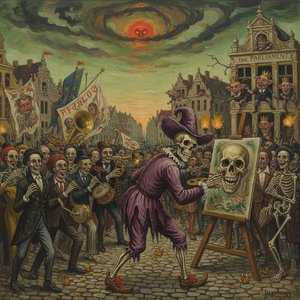
The Skeleton Painter (James Ensor, 1895)
James Ensor (1860–1949) on luonut teoksen The Skeleton Painter. Se on peräisin vuodelta 1895. Se kuuluu Symbolist Expressionism-liikkeeseen. Se on valmistettu materiaalilla Acrylic On Canvas. Teos sijaitsee Koninklijk Museum voor Schone Kunsten -museossa paikassa Antwerpen, Belgia.
- 1895
- Acrylic On Canvas
- Koninklijk Museum voor Schone Kunsten, Antwerpen

 Esikatselu

 Käsinmaalattu öljymaalaus
 Jaa teos
 Jaa
 Tiedot-arkki


 Lataa kuva
 Samanlaisia kohteita
 Röntgenkuvaus
 Diaesitys
 Kysymykset ja vastaukset

 Tilastot
The Skeleton Painter lyhyesti
- Otsikko
- The Skeleton Painter
- Taiteilija
- James Ensor (1860–1949)
- Taiteilija syntynyt
- Oostende, Belgia
- Päivämäärä
- 1895
- Tekniikka
- Acrylic On Canvas
- Missä teos on nähtävissä
- Koninklijk Museum voor Schone Kunsten, Antwerpen, Belgia
- Tyylisuunta
- Symbolist Expressionism
- Aihe
- skeleton, artist, death, masks, paintings, room
Mitä The Skeleton Painter esittää?
A Dance with Mortality: James Ensor’s “The Skeleton Painter”
James Ensor's "The Skeleton Painter," completed in 1895, is not merely a painting; it’s an unsettling plunge into the subconscious, a meticulously crafted tableau of morbidity and artistic obsession. The image, rendered with a distinctive and increasingly personal style, immediately confronts the viewer with a scene both bizarre and profoundly familiar – a room overflowing with art, dominated by a central figure: a skeleton diligently wielding a paintbrush. This isn’t a morbid spectacle intended to shock for shock's sake; rather, it’s a complex meditation on life, death, creativity, and the inescapable nature of artistic endeavor. Ensor, born in Ostend, Belgium, in 1860, cultivated an intensely individual vision, one deeply rooted in his upbringing amidst the vibrant chaos of a seaside resort town and fueled by a fascination with masks, disguise, and the theatricality of human experience.
The Artist’s Studio – A Realm of Shadows
The setting itself is crucial to understanding the painting's power. The room is crammed with canvases, each bearing witness to Ensor’s restless hand. A dining table, laden with objects—a clock, a partially consumed meal—suggests an interrupted life, a space where sustenance and creation intertwine. The presence of other skeletons, scattered amongst the chairs and leaning against walls, reinforces the pervasive theme of mortality. These aren't simply decorative elements; they are active participants in the scene, almost as if they’re observing or even contributing to the artist’s work. The inclusion of a cat, curled up near the left edge, adds an element of domesticity and perhaps a subtle critique – a creature of instinct and survival nestled within this world of intellectual pursuit.
Symbolism and Technique: A Palette of Unease
Ensor’s technique is immediately recognizable. He employed a thick, impasto application of paint, building up layers of color to create a tactile surface that seems almost sculptural. The palette is deliberately muted – browns, greys, ochres, and deep blues dominate—contributing to the painting's somber mood. The skeletal figure itself is rendered with remarkable detail, highlighting the fragility of bone while simultaneously conveying a sense of focused determination. Notice how Ensor uses strong diagonals – particularly in the arrangement of the chairs and paintings – to create a feeling of unease and instability. The use of color is not about beauty; it’s about evoking emotion, creating a visual atmosphere of melancholy and contemplation. His style evolved significantly throughout his career, moving away from academic influences towards a highly expressive, often unsettling, approach that anticipated the Symbolist movement.
Ensor's Exploration of Artistic Identity
"The Skeleton Painter" can be interpreted as an exploration of Ensor’s own artistic identity and his relationship to mortality. The skeleton artist represents not just death but also the inevitable end of creative endeavor, the fading of inspiration with time. It speaks to the paradox of the artist – someone who often seems detached from the everyday realities of life, yet is ultimately defined by their engagement with them. Ensor’s own struggles with artistic recognition and his rejection of traditional academic training likely fueled this preoccupation with themes of isolation and the ephemeral nature of existence. The painting isn't a celebration of art; it’s a questioning of its purpose and its ultimate significance in the face of oblivion. It invites us to consider what drives an artist to create, knowing that their work, like their own physical form, will eventually succumb to time.
OriginalUniqueArt offers exquisite, hand-painted reproductions of James Ensor’s “The Skeleton Painter,” allowing you to bring this haunting masterpiece into your home or office. Each reproduction is created with the same meticulous attention to detail and expressive technique as the original, capturing the painting's unique atmosphere and emotional depth. Explore our collection today and experience the unsettling beauty of Ensor’s vision.
Missä museossa teos The Skeleton Painter on?
Koninklijk Museum voor Schone Kunsten
Antwerpen, Belgia
Museon juuret ja historia Koninklijk Museum voor Schone Kunsten sai alkunsa vuonna 1810, mutta sen syvimmät juuret ulottuvat kauas menneisyyteen, Antwerpenin Pyhän Luukan veljeskunnan perintöön. Tämä vaikutusvaltainen instituutio kukoisti 1300-luvun lopulta aina vuoteen 1773 asti, ja museon kokoelma sai alkunsa juuri tämän veljeskunnan omistamista taideteoksista. Näin kaupungin kauppiaiden menneisyys ja sen taiteellinen kehitys kietoutuivat toisiinsa muodostaen suoran linkin, joka yhä tuntuu museon käytävillä.


The Skeleton Painter korkearesoluutioiset kuvat

James Ensor, The Skeleton Painter (1895), Koninklijk Museum voor Schone Kunsten. Tekijänoikeudet vapaat.
Kysymyksiä teoksesta The Skeleton Painter, vastaukset
Missä voin nähdä alkuperäisen teoksen James Ensor:n "The Skeleton Painter"?
Voit nähdä alkuperäisteoksen "The Skeleton Painter" kohteessa Koninklijk Museum voor Schone Kunsten, Antwerpen, Belgia.
Milloin teos James Ensor:n "The Skeleton Painter" on luotu?
"The Skeleton Painter" on peräisin vuodelta 1895. Teoksen valmistumisajankohta sijoittaa sen James Ensor uran ja aikakauden kontekstiin.
Mitä tekniikkaa James Ensor:n "The Skeleton Painter" on käytetty?
Teoksen James Ensor:n "The Skeleton Painter" tekniikka on Acrylic On Canvas. Vedosten tavoitteena on jäljitellä tämän tekniikan ulkoasua.
Mitä aiheita teoksessa James Ensor:n "The Skeleton Painter" esiintyy?
Teoksen James Ensor:n "The Skeleton Painter" teemoihin kuuluvat skeleton, artist, death, masks, paintings, room, cat, decay. Yhdessä ne tiivistävät teoksen aiheen.
Onko teos "The Skeleton Painter" tekijänoikeusvapaa?
Tekijänoikeuksien osalta teos "The Skeleton Painter" on vapaasti käytettävissä – tekijänoikeussuoja on päättynyt.
Kenen teokseksi "The Skeleton Painter" on merkitty?
Teos "The Skeleton Painter" on yhdistetty James Ensor.
Mihin tyylisuuntaan "The Skeleton Painter" kuuluu?
"The Skeleton Painter" on Symbolist Expressionism-tyylisuuntaan kuuluva teos. Tyylisuunta ilmaisee taiteellisen perinteen, johon teos kuuluu.
Mihin James Ensor'n uran vaiheeseen "The Skeleton Painter" kuuluu?
"The Skeleton Painter" kuuluu James Ensor uran Late Period-vaiheeseen. Tämä luokittelu yhdistää teoksen taiteilijan kehitysvaiheeseen.
Kuinka vanha James Ensor oli tehdessään "The Skeleton Painter"?
Kun "The Skeleton Painter" luotiin vuonna 1895, James Ensor (syntynyt 1860) oli 35 vuotias.
Tietoa taiteilijasta, James Ensor

1860–1949, Belgia
James Ensor
Varhaisluonnos, perhe ja taiteellinen kasvu James Ensor syntyi 13. huhtikuuta 1860 Ostendissa, Belgiassa. Hänen identiteettiään muovasi ainutlaatuinen kulttuurien risteyskohta: hänen isänsä, James Frederic Ensor, oli syntynyt Brysselissä englantilaiselle vanhemmilleen, kun taas hänen äitinsä, Maria Catherina Haegheman, oli belgialainen. Tämä kaksisuuntainen perintö loi pohjan näkökulmalle, joka sijoittui usein paikallisen perinteen kapeiden rajojen ulkopuolelle.
Tietoa kohteesta James Ensor James Ensorn merkittävimpiä teoksia
Myös James Ensor -teoksia
 Kristuksen sisäänkäynti Brysseliin1888
 Itseläätö naamioilla1899
 Kylvyt Ostendissa
 Luurankot lämmittelemässä1889

Esseitä teoksesta The Skeleton Painter
 Beauty in Mortality: Capturing the Soul of the Skull through the Luminous Lens of Impressionist ArtExplore the profound beauty of mortality through Impressionism. Discover how masters like Monet and Renoir transformed the Memento Mori tra…
 Leikkisän kuvaston psykologia: Humorististen ja mielikuvituksellisten maalausten vaikutus tunnehyvinvointiin ja sosiaaliseen yhteyteenTutustu leikkisän taiteen psykologiaan ja löydä mestariteoksia, jotka inspiroivat hyvinvointia! OriginalUniqueArt.com tarjoaa laadukkaat ta…
 James Ensor's Grotesque Visions: Social Commentary & Artistic InnovationExplore the unsettling yet captivating world of James Ensor, a pioneer of Expressionism. Discover his satirical masterpieces, symbolic imag…