Valikko
Text size

() ·

A painting made for you, by hand

Cranes Fleuris

Käsinmaalattu öljyvärinen jäljennös

Käsinmaalattu öljyväri kankaalle haluamassasi koossa ja kehyksissä, taiteilijoidemme valmistamana tilauksesta. ( Vaihda tulosteeseen Siirry digitaaliseen kuvaan)

Keräilykohteen kuvaus

Taiteilijan elämäkerta

James Ensor (1860-1949) oli belgialainen taiteilija, joka loi synkkiä ja mystisiä maalauksia naamioista, karnevaaleista ja kuolemasta. Hänen teoksensa ovat ekspressionismin varhaisia esimerkkejä.

from ·

Chapter 1

How large should it be?

Slide to change the size; the picture on the left shows the frame at its real width. The proportions of the original are kept.

Vakiokoko
räätälöity
CM
INCH

Valitse valmiista mitoistamme sellaiset, jotka vastaavat teoksen alkuperäisiä mittasuhteita.

leveys
korkeus

Kirjoita tarvitsemasi leveys ja korkeus, jotta teos sopii kehyksiisi tai seinällesi. Koska kyseessä on käsinmaalattu teos, taiteilija voi maalata hieman enemmän kuvan ympärille tai rajata sitä hieman, jos haluat eri muotoisen koon — valinta on sinun. Lähetämme sinulle digitaalisen mallikuvan hyväksyttäväksi ennen kuin maalaus alkaa. Tällä sivulla näkyvä kuva ei vastaa lopullista tulosta — vain mallikuva näyttää sen.

Chapter 2

How should it arrive?

Choose the edges of the stretched canvas

Choose your frame

Corner sample of the WhiteWrap canvas edge finish, stretched on massiivipuu bars
White €1
Corner sample of the BlurSideWrap canvas edge finish, stretched on massiivipuu bars
Blurside €1
Corner sample of the ExtendedWrap canvas edge finish, stretched on massiivipuu bars
Extended €1
Corner sample of the P118B picture frame: valettu polystyreeni, 5 cm wide and 3 cm thick
P118B €10
Corner sample of the P118H picture frame: valettu polystyreeni, 5 cm wide and 3 cm thick
P118H €10
Corner sample of the P118W picture frame: valettu polystyreeni, 5 cm wide and 3 cm thick
P118W €10
Corner sample of the P438Z picture frame: valettu polystyreeni, 5.5 cm wide and 3.5 cm thick
P438Z €10
Corner sample of the P508JH picture frame: valettu polystyreeni, 7 cm wide and 3.5 cm thick
P508JH €12
Corner sample of the P508YH picture frame: valettu polystyreeni, 7 cm wide and 3.5 cm thick
P508YH €12
Corner sample of the P805H picture frame: valettu polystyreeni, 5 cm wide and 3.5 cm thick
P805H €10
Corner sample of the P805Z picture frame: valettu polystyreeni, 5 cm wide and 3.5 cm thick
P805Z €10
Corner sample of the P919BZ picture frame: valettu polystyreeni, 7 cm wide and 3.5 cm thick
P919BZ €10
Corner sample of the P919G picture frame: valettu polystyreeni, 7 cm wide and 3.5 cm thick
P919G €10
Corner sample of the P919XJ picture frame: valettu polystyreeni, 7 cm wide and 3.5 cm thick
P919XJ €10
Corner sample of the P959ZH picture frame: valettu polystyreeni, 5 cm wide and 3 cm thick
P959ZH €10
Corner sample of the P968JZ picture frame: valettu polystyreeni, 6 cm wide and 4 cm thick
P968JZ €12
Corner sample of the W106C picture frame: massiivipuu, 5 cm wide and 3 cm thick
W106C €8
Corner sample of the W218G picture frame: massiivipuu, 5 cm wide and 3 cm thick
W218G €10
Corner sample of the W218JH picture frame: massiivipuu, 5 cm wide and 3 cm thick
W218JH €8
Corner sample of the W218Y picture frame: massiivipuu, 5 cm wide and 3 cm thick
W218Y €10
Corner sample of the W307PJ picture frame: massiivipuu, 6 cm wide and 3 cm thick
W307PJ €10
Corner sample of the W316G picture frame: massiivipuu, 6 cm wide and 3 cm thick
W316G €10
Corner sample of the W316PJ picture frame: massiivipuu, 6 cm wide and 3 cm thick
W316PJ €8
Corner sample of the W316Y picture frame: massiivipuu, 6 cm wide and 3 cm thick
W316Y €10
Corner sample of the W398PJ picture frame: massiivipuu, 5 cm wide and 3 cm thick
W398PJ €8
Corner sample of the W4111J picture frame: massiivipuu, 6.5 cm wide and 3.5 cm thick
W4111J €10
Corner sample of the W500HY picture frame: massiivipuu, 7 cm wide and 5 cm thick
W500HY €15
Corner sample of the W500JH picture frame: massiivipuu, 7 cm wide and 5 cm thick
W500JH €15
Corner sample of the W692G picture frame: massiivipuu, 8 cm wide and 4 cm thick
W692G €12
Corner sample of the W849H picture frame: massiivipuu, 5 cm wide and 3 cm thick
W849H €8
Corner sample of the W940BG picture frame: massiivipuu, 7.5 cm wide and 4.5 cm thick
W940BG €15
Corner sample of the W953PJ picture frame: massiivipuu, 6 cm wide and 3.5 cm thick
W953PJ €8
Corner sample of the H24-GOLD picture frame: kaiverrettua puuta ja gessoa, 10 cm wide and 6 cm thick
H24-GOLD €30
Corner sample of the H24-SILVER picture frame: kaiverrettua puuta ja gessoa, 10 cm wide and 6 cm thick
H24-SILVER €30
Corner sample of the H36-GOLD picture frame: kaiverrettua puuta ja gessoa, 15 cm wide and 6.5 cm thick
H36-GOLD €45
Corner sample of the H36-SILVER picture frame: kaiverrettua puuta ja gessoa, 15 cm wide and 6.5 cm thick
H36-SILVER €45
Kehyksen esikatselu
Kehystetty

Moulding: . Overall size with the frame: .

Chapter 3

Who paints it, and should anything change?

Examples of what can be changed: Replace face with customer photo; Add pet (e.g., replace cat with dog); Include hidden message in background; Change background landscape or elements.
After order, OriginalUniqueArt.com team will email client for instructions and provide a mockup preview

Maailmanlaajuinen toimitus () 3–4 viikossa tavallisen 5 viikon sijaan. (29 lokakuu). Laadusta ei tingitä.

Chapter 4

The finishing touches

A nameplate, as in a museum?

Kaiverretun pronssilaatan tiedot

This elegant plaque features the artist's name and the title of the artwork, finely engraved for a timeless presentation.

It is made from bronze with a refined, elegant finish. The text is precisely laser-engraved for a sharp and permanent result. Measuring 9x2 cm, the plaque is compact yet easy to read. It's built to be durable and scratch-resistant, offering a professional, museum-quality look. Mounting is simple thanks to the included adhesive backing.

Läpinäkyvän akryylilaatan tiedot

The plaque includes essential engraved details such as the artist's name, the title of the artwork, the date it was created, the type of media used-like oil on canvas or watercolor-a brief description of the piece, and a QR code that links to the complete artwork information.

It is crafted from clear acrylic, offering a sleek, modern appearance. The text is UV-engraved in black to ensure strong visual contrast. With a size of 10x15 cm, it ensures optimal readability. It comes equipped with two metal hooks for secure wall mounting. The plaque is designed to be weather-resistant, making it suitable for various environments, and it includes interactive features that work seamlessly with smartphone scanning.

Mustan akryylilaatan tiedot

This elegant plaque includes engraved information such as the artist's name, the title of the artwork, the date it was created, the type of media used (like oil on canvas or watercolor), a short description of the artwork, and a QR code for quick access to more information.

The plaque itself is made from refined black acrylic with a premium finish. The text is laser-engraved in white for high contrast and readability. Its size is 10x15 cm, designed to be easy to read. It comes with two metal hooks for professional mounting. The design is sleek and fits any interior style. It is also weather-resistant and durable, with built-in digital integration for mobile compatibility.

A protective varnish?

When do you need it?

Chapter 5

Your painting, as you ordered it

Cranes Fleuris

Reproduktiotekniikka

Replikaatin koko

-

Kokenut huipputaiteilija

Lisää yksityiskohtia, hienostuneisuutta ja enemmän aikaa tuotantoon

-

Reproduktion kehystysvaihtoehdot

-

-

Teoksille tai reproduktioille, joiden mikä tahansa sivu on suurempi kuin 105 cm (noin 41 tuumaa), kehys toimitetaan osina purettuna sarjana. Tämä menetelmä varmistaa turvallisen toimituksen ja ehkäisee vaurioita kuljetuksen aikana.

Vaatii ammattimaista kokoamista – kyseessä ei ole tee-se-itse-tuote.
Sarja on koottava ja kangas kiristettävä kokeneen kehystysammattilaisen toimesta käyttäen puuliimaa (ei sisälly pakkaukseen), kangaspinnetteitä ja puristimia, jotta kehyksen kulmat pysyvät suorina liiman kuivuessa. Virheellinen kokoaminen tai epätasainen kankaan kiristys voi vaurioittaa teosta pysyvästi, eikä tällaiset vauriot ala takuun piiriin.

  • Kaikki massiivipuupalat sisältyvät, tarkasti mittojen mukaan leikattuina.

  • Kootaan mukana tulevilla ruuveilla sekä kulmaliitoksia varten tarvittavalla puuliimalla, jota ei toimiteta, joten se on hankittava kehystäjältä.

  • Vaatii ammattilaisvälineitä, jotka eivät sisälly pakkaukseen: kankaan venytyspihdit (kiristin) ja puristimet, joilla pidetään kehyksen puut suorassa liiman kuivuessa.

Tärkeää:
Kulmaliitoksissa tarvitaan puuliimaa, kehyksien osat on pidettävä puristimilla, kunnes liima on täysin kuivunut, ja koottuun kehykseen jännitettävän kankaan kiristämiseen tarvitaan kangaspenssipihti. Mikään näistä ei sisälly pakkaukseen. Suosittelemme varmistamaan kokeneen kehystäjän saatavuuden ennen tämän kokoisen kehyksen tilaamista.

Nimilaatta

-

-

Suojalakkaus

Kiiltävä lakka (syventää värejä, suojaa valolta ja kosteudelta)

-

Mukauta taideteokseni

Esimerkkejä muokattavista asioista: Vaihda kasvot asiakkaan omaan valokuvaan; Lisää lemmikki (esim. vaihda kissa koiraan); Lisää taustalle piilotettu viesti; Muuta taustan maisemaa tai elementtejä.

-

Pikatoimitus

Maailmanlaajuinen toimitus () 3–4 viikossa tavallisen 5 viikon sijaan. (29 lokakuu). Laadusta ei tingitä.

-

Pikatoimitus

Maailmanlaajuinen toimitus () 5 viikon kuluessa. (5 marraskuu).

Sisältyy hintaan

Kokonaishinta

€ 265

Kokonaishinta € 265

Lasivaihtoehto on saatavilla vain alle 110 cm kokoisille teoksille

Included with every order

  • Ilmainen pikatoimitus ympäri maailman
  • Korkealaatuinen pellavakangas
  • Kattava kuljetusvakuutus
  • Tulliveron palautustakuu
  • Takuu täydellisestä värien vastaavuudesta
  • 100 päivän palautusoikeus (vain valmistusvirheet)
  • 100% rahat takaisin -takuu
  • Määräalennus tarjolla

A Portrait of Transient Beauty: Unpacking James Ensor's "Crane Fleuris"

James Ensor’s “Crane Fleuris” isn’t merely a painting; it’s an unsettling encounter. Created in the early 20th century, this arresting work plunges the viewer into a world where life and death intertwine with unnerving beauty. Born in Ostend, Belgium, to an English father and Belgian mother – a heritage that undoubtedly shaped his artistic perspective – Ensor spent his career exploring themes of identity, social commentary, and, most powerfully, the ephemeral nature of existence. “Crane Fleuris,” painted around 1896, stands as a cornerstone of his Expressionist style, a bold declaration against academic tradition and a profound meditation on mortality.

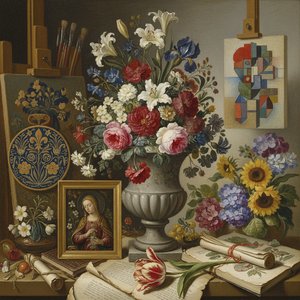
The painting immediately confronts us with its arresting central image: a woman whose head is replaced by a meticulously rendered skeleton. This isn’t a gruesome spectacle, however; rather, it's presented within an opulent tableau of flowers – roses, lilies, and other blooms – that seem to both adorn and engulf her. The blue ribbon encircling the skeletal neck adds a layer of poignant formality, suggesting a ritualistic preparation for departure. Ensor masterfully juxtaposes these elements, creating a visual paradox: death is not presented as frightening or terrifying, but rather as an integral part of life’s cycle, beautifully framed within the transient beauty of floral arrangements.

Expressionist Techniques and a Distorted Reality

Ensor's technique in “Crane Fleuris” is deliberately jarring. He employs thick, impasto brushstrokes that build up layers of color, creating a tactile surface that draws the eye into the painting’s depths. The palette is dominated by rich, saturated hues – deep reds, blues, and greens – intensified with touches of gold and silver. These colors aren't used to represent reality faithfully; instead, they are employed to evoke emotion, amplifying the sense of drama and unease that permeates the scene. The forms themselves are distorted, figures rendered with a deliberate lack of precision, contributing to the overall feeling of disorientation and psychological tension.

Notably, Ensor’s use of color and form aligns closely with the principles of Expressionism, an artistic movement that sought to convey subjective emotions rather than objective reality. He deliberately rejects naturalistic representation in favor of a more visceral and emotionally charged approach. The skeletal head, rendered with such detail, isn't simply a symbol of death; it’s a visual embodiment of vulnerability and the inevitability of decay.

Symbolism and the Weight of Mortality

Beyond its immediate visual impact, “Crane Fleuris” is laden with symbolism. The flowers themselves represent life, beauty, and the fleeting nature of earthly pleasures. Their presence around the skeleton suggests a poignant acceptance of mortality – a recognition that even in death, there can be a kind of grace or dignity. The scattered skulls and bones further reinforce this theme, creating a haunting reminder of our shared fate. The inclusion of potted plants, small pockets of life amidst the morbid setting, adds another layer of complexity, hinting at the persistence of nature’s cycle despite human mortality.

Furthermore, Ensor's background in theatrical design and his membership in the avant-garde group Les XX – a collective known for its experimentation with form and color – informed his approach to creating unsettling yet captivating imagery. “Crane Fleuris” echoes works like "Coquillages" and "Les pommes rouges," demonstrating Ensor’s consistent exploration of themes related to death, decay, and the human condition. It's a painting that invites contemplation on the fragility of existence and the beauty found within its inevitable end.

A Timeless Masterpiece: Reproduction Possibilities

OriginalUniqueArt offers meticulously crafted hand-painted reproductions of “Crane Fleuris,” allowing art lovers to experience Ensor’s masterpiece in stunning detail. Whether you're a collector, an interior designer seeking a thought-provoking statement piece, or simply someone captivated by the power of art, our reproductions capture the essence of this iconic work. Each reproduction is created using archival quality materials and techniques, ensuring that it will retain its beauty and vibrancy for generations to come. Explore our collection today and bring the haunting allure of “Crane Fleuris” into your space.

Kysymykset ja vastaukset

Miten teoksen "Cranes Fleuris" värit sointuvat yhteen?

Teoksen James Ensor:n "Cranes Fleuris" värit ilmentävät Discordant Palette harmoniaa. Harmonia kuvaa sitä, miten värit suhteutuvat toisiinsa.

Mikä selittää teoksen James Ensor:n "Cranes Fleuris" tekijänoikeustilanteen?

Teoksen "Cranes Fleuris" tekijänoikeustilanne (vapaasti käytettävissä – tekijänoikeussuoja on päättynyt) määräytyy taiteilijan kuolinvuoden 1949 perusteella.

Mikä on "Cranes Fleuris" hallitseva sävy?

"Cranes Fleuris" vivahtaa Ochre to Sepia sävyyn.

More about this painting

Esikatselu Esikatsele AR-tilassa Vaihda tulosteeseen Siirry digitaaliseen kuvaan Jaa teos
Tiedot Opas Lisää suosikkeihin Lataa kuva Samanlaisia kohteita Röntgenkuvaus Diaesitys Q&A Tilastot

In numbers

  • 29frames to choose from
  • standard sizes, in its own proportions
  • 5weeks to paint and deliver it
James Ensor

James Ensor

1860 - 1949, Belgia

Quick facts about James Ensor

  • Artistic Movement Or Style: Ilmaisut ja surrealismi
  • Artists Or Movements Influenced By This Artist:
    • Ilmaisut
    • Surrealismi
  • Artists Who Influenced This Artist:
    • Bruegel van der Velde
    • Goya
    • Whistler
  • Date Of Birth: 13. huhtikuuta 1860
  • Full Name: James Sidney Edouard Ensor
  • Nationality: Belgialainen
  • Notable Artworks:
    • Järkyttävät naamio
    • Kruunut
    • Kristus Brysselissä
  • Place Of Birth: Ostend, Belgia

Taiteilijan elämäkerta

A Life Immersed in Masks and Shadows: The World of James Ensor

James Ensor, syntynyt 13. huhtikuuta 1860 Ostendissa, oli belgialainen taidemaalari ja taidegraafikko, jolla oli merkittävä vaikutus ekspressionismiin ja surrealismiin. Hänen elämänsä ja työnsä ovat täynnä mysteeriä, groteskeja kuvia ja syvällisiä pohdintoja ihmisluonnosta. Ensorin taide syntyi hänen lapsuutensa ympäristöstä, ostendilaisesta merenrantakaupungista, jossa hän kasvoi yhdistelmässä englantilaista ja flaamilaisia vaikutteita. Hänen vanhempansa pyörittivät souvenir-liikettä, joka oli täynnä karnevaalimalleja, simpukankuoria ja muita outoja esineitä – todellinen ihmeiden arkisto, joka sytytti hänen mielikuvituksensa ja loi pohjan tulevalle taiteelleen.
  • Varhainen vaihe: Realismi ja karnevaali Ensorin varhaiset maalaukset heijastavat realistista lähestymistapaa, mutta jo näissäkin teoksissa on viitteitä myöhemmästä, epämiellyttävästä kuvastosta. *Venäläistä musiikkia* (1881) ja *Juopottelijat* (1883) ovat esimerkkejä hänen varhaisesta tyylistään, mutta jo niissäkin näkyy synkkiä sävyjä ja outoja hahmoja.
  • Maskien ja groteskien maailman synty Merkittävä muutos tapahtui, kun Ensorin värikylläisyys kasvoi ja hänen aiheensa muuttuivat yhä oudommiksi. Hän alkoi maalata karnevaaleja, aaveita, nukkeja ja allegorisia hahmoja – maailmaa, joka oli täynnä fantasiaa ja usein lähellä groteskia. Tämä ei ollut pelkkää tyylimuutosta; se oli tarkoituksellinen pyrkimys tutkia ihmisen olemassaolon synkkiä puolia, hylätä yhteiskunnallisia normeja ja omaksua irrationaalisuus.

From Somber Realism to Grotesque Visions

Ensorin taiteen kehityksessä oli useita tärkeitä vaiheita. Aluksi hän maalasi realistisia kohtauksia, mutta myöhemmin hänen teoksissaan alkoi korostua epämiellyttävää ja synkkää tunnelmaa. Hän vaikutti suuresti hänen lapsuutensa ympäristöstään: karnevaalimalleista ei ollut pelkästään koristeellisia elementtejä, vaan symboleja piilotetuille identiteeteille, sosiaaliselle kritiikille ja ulkonäön hauraudelle. Hänen maalauksissaan näkyy usein myös kuolemaa, sosiaalista kritiikkiä ja uskonnollista satiiria.
  • Maskien symboliikka Ensor käytti maskeja usein teoksissaan, ja niitä pidettiin välineenä paljastaa piilotettuja tunteita ja motiiveja.
  • Kriittinen vastaanotto alussa Ensorin maalauksia, erityisesti *Kristus saapuu Brysseliin* (1888-1889), kritisoitiin aluksi voimakkaasti, mutta myöhemmin ne arvostettiin ja tunnustettiin mestariteoksiksi.

Masterpieces of Disquiet: Key Works and Recurring Themes

Ensorin tuotannossa on useita teoksia, jotka jatkavat hänen tutkimuksiaan ihmisen olemuksesta ja yhteiskunnasta. *Skeletons Fighting over a Hanged Man* (1891) on synkkä pohdinta kuolemasta ja elämän absurdiudesta, kun taas *Tribulations of Saint Anthony* (1887) tutkii uskonnollista kamppailua ja syntiä. Hänen teoksissaan toistuvat teemat kuten kuolema, sosiaalinen kritiikki, uskonnollinen satiiri ja mielikuvituksen rajaton voima.
  • Esimerkkejä merkittävistä teoksista: *The Scandalized Masks*, *Christ's Entry into Brussels*, *Skeletons Fighting over a Hanged Man*, *Tribulations of Saint Anthony*.

A Pioneer of Modernism: Influences and Legacy

James Ensor ei ollut pelkästään jäljittelijä, vaan hän yhdisti eri vaikutteita luoden oman, ainutlaatuisen tyylinsä. Hän tunnusti vaikutteensa mestareista kuten Pieter Bruegel the Elderistä ja Francisco Goyasta, joiden teoksissa oli samankaltaisia piirteitä. Hänen taiteeseensa vaikuttivat myös Whistlerin estetiikan periaatteet. Ensor on laajalti tunnistettu modernismin varhaiseksi edustajaksi, joka haastoi taiteelliset normit ja loi pohjaa tuleville taiteilijoille. Hänen rohkea pyrkimyksensä tutkia alitajuntaa, groteskien kuvien käyttö ja akateemisten konventioiden hylkääminen ovat jättäneet pysyvän jäljen taiteen historiaan.

Historical Significance

James Ensoria pidetään yhtenä 1800-luvun merkittävimmistä taidemaalareista, ja hänen teoksiaan on esillä useissa museoissa ympäri maailmaa. Hänen vaikutuksensa voidaan nähdä monissa myöhemmissä taiteilijoissa, kuten Kleellä ja Emil Noldella. Ensorin elämä ja työ ovat inspiroineet lukemattomia taiteilijoita ja tutkijoita, ja hänen teoksiaan jatkaa herättämään keskustelua ja ihmetystä. Hänen perintönsä on todiste taiteen voimasta kohdata epämiellyttäviä totuuksia ja tutkia ihmisen olemassaolon syvyyksiä.

Pikaista tietoa

  • Subject or theme: Death, decay, life
  • Artist: James Ensor
  • Influences: Les XX
  • Medium: Oil on canvas

Taidevisat

Jokaisessa kysymyksessä on vain yksi oikea vastaus.

Kysymys 1:
What is the primary theme explored in James Ensor’s ‘Crane Fleuris’?
Kysymys 2:
Which artistic movement is ‘Crane Fleuris’ most closely associated with?
Kysymys 3:
What symbolic element is represented by the blue ribbon around the skeleton’s neck?
Kysymys 4:
The painting’s composition features a juxtaposition of life and death. What elements contribute to this contrast?