Valikko

() ·

A painting made for you, by hand

Self-portrait

Käsinmaalattu öljyvärinen jäljennös

Käsinmaalattu öljyväri kankaalle haluamassasi koossa ja kehyksissä, taiteilijoidemme valmistamana tilauksesta. ( Vaihda tulosteeseen Siirry digitaaliseen kuvaan)

Keräilykohteen kuvaus

Taiteilijan elämäkerta

James Whistler (1834-1903) oli brittiläinen taidemaalari, joka kannatti 'taiteen puolesta taiteen vuoksi' -filosofiaa. Tunnettu yöllisistä Thames-maisemista ja 'Äidin muotokuvan' kaltaisista teoksista.

from ·

Chapter 1

How large should it be?

Slide to change the size; the picture on the left shows the frame at its real width. The proportions of the original are kept.

Vakiokoko
räätälöity
CM
INCH

Valitse valmiista mitoistamme sellaiset, jotka vastaavat teoksen alkuperäisiä mittasuhteita.

leveys
korkeus

Kirjoita tarvitsemasi leveys ja korkeus, jotta teos sopii kehyksiisi tai seinällesi. Koska kyseessä on käsinmaalattu teos, taiteilija voi maalata hieman enemmän kuvan ympärille tai rajata sitä hieman, jos haluat eri muotoisen koon — valinta on sinun. Lähetämme sinulle digitaalisen mallikuvan hyväksyttäväksi ennen kuin maalaus alkaa. Tällä sivulla näkyvä kuva ei vastaa lopullista tulosta — vain mallikuva näyttää sen.

Chapter 2

How should it arrive?

Choose the edges of the stretched canvas

Choose your frame

Corner sample of the WhiteWrap canvas edge finish, stretched on massiivipuu bars
White €1
Corner sample of the BlurSideWrap canvas edge finish, stretched on massiivipuu bars
Blurside €1
Corner sample of the ExtendedWrap canvas edge finish, stretched on massiivipuu bars
Extended €1
Corner sample of the P118B picture frame: valettu polystyreeni, 5 cm wide and 3 cm thick
P118B €10
Corner sample of the P118H picture frame: valettu polystyreeni, 5 cm wide and 3 cm thick
P118H €10
Corner sample of the P118W picture frame: valettu polystyreeni, 5 cm wide and 3 cm thick
P118W €10
Corner sample of the P438Z picture frame: valettu polystyreeni, 5.5 cm wide and 3.5 cm thick
P438Z €10
Corner sample of the P508JH picture frame: valettu polystyreeni, 7 cm wide and 3.5 cm thick
P508JH €12
Corner sample of the P508YH picture frame: valettu polystyreeni, 7 cm wide and 3.5 cm thick
P508YH €12
Corner sample of the P805H picture frame: valettu polystyreeni, 5 cm wide and 3.5 cm thick
P805H €10
Corner sample of the P805Z picture frame: valettu polystyreeni, 5 cm wide and 3.5 cm thick
P805Z €10
Corner sample of the P919BZ picture frame: valettu polystyreeni, 7 cm wide and 3.5 cm thick
P919BZ €10
Corner sample of the P919G picture frame: valettu polystyreeni, 7 cm wide and 3.5 cm thick
P919G €10
Corner sample of the P919XJ picture frame: valettu polystyreeni, 7 cm wide and 3.5 cm thick
P919XJ €10
Corner sample of the P959ZH picture frame: valettu polystyreeni, 5 cm wide and 3 cm thick
P959ZH €10
Corner sample of the P968JZ picture frame: valettu polystyreeni, 6 cm wide and 4 cm thick
P968JZ €12
Corner sample of the W106C picture frame: massiivipuu, 5 cm wide and 3 cm thick
W106C €8
Corner sample of the W218G picture frame: massiivipuu, 5 cm wide and 3 cm thick
W218G €10
Corner sample of the W218JH picture frame: massiivipuu, 5 cm wide and 3 cm thick
W218JH €8
Corner sample of the W218Y picture frame: massiivipuu, 5 cm wide and 3 cm thick
W218Y €10
Corner sample of the W307PJ picture frame: massiivipuu, 6 cm wide and 3 cm thick
W307PJ €10
Corner sample of the W316G picture frame: massiivipuu, 6 cm wide and 3 cm thick
W316G €10
Corner sample of the W316PJ picture frame: massiivipuu, 6 cm wide and 3 cm thick
W316PJ €8
Corner sample of the W316Y picture frame: massiivipuu, 6 cm wide and 3 cm thick
W316Y €10
Corner sample of the W398PJ picture frame: massiivipuu, 5 cm wide and 3 cm thick
W398PJ €8
Corner sample of the W4111J picture frame: massiivipuu, 6.5 cm wide and 3.5 cm thick
W4111J €10
Corner sample of the W500HY picture frame: massiivipuu, 7 cm wide and 5 cm thick
W500HY €15
Corner sample of the W500JH picture frame: massiivipuu, 7 cm wide and 5 cm thick
W500JH €15
Corner sample of the W692G picture frame: massiivipuu, 8 cm wide and 4 cm thick
W692G €12
Corner sample of the W849H picture frame: massiivipuu, 5 cm wide and 3 cm thick
W849H €8
Corner sample of the W940BG picture frame: massiivipuu, 7.5 cm wide and 4.5 cm thick
W940BG €15
Corner sample of the W953PJ picture frame: massiivipuu, 6 cm wide and 3.5 cm thick
W953PJ €8
Corner sample of the H24-GOLD picture frame: kaiverrettua puuta ja gessoa, 10 cm wide and 6 cm thick
H24-GOLD €30
Corner sample of the H24-SILVER picture frame: kaiverrettua puuta ja gessoa, 10 cm wide and 6 cm thick
H24-SILVER €30
Corner sample of the H36-GOLD picture frame: kaiverrettua puuta ja gessoa, 15 cm wide and 6.5 cm thick
H36-GOLD €45
Corner sample of the H36-SILVER picture frame: kaiverrettua puuta ja gessoa, 15 cm wide and 6.5 cm thick
H36-SILVER €45
Kehyksen esikatselu
Kehystetty

Moulding: . Overall size with the frame: .

Chapter 3

Who paints it, and should anything change?

Examples of what can be changed: Replace face with customer photo; Add pet (e.g., replace cat with dog); Include hidden message in background; Change background landscape or elements.
After order, OriginalUniqueArt.com team will email client for instructions and provide a mockup preview

Maailmanlaajuinen toimitus () 3–4 viikossa tavallisen 5 viikon sijaan. (30 lokakuu). Laadusta ei tingitä.

Chapter 4

The finishing touches

A nameplate, as in a museum?

Kaiverretun pronssilaatan tiedot

This elegant plaque features the artist's name and the title of the artwork, finely engraved for a timeless presentation.

It is made from bronze with a refined, elegant finish. The text is precisely laser-engraved for a sharp and permanent result. Measuring 9x2 cm, the plaque is compact yet easy to read. It's built to be durable and scratch-resistant, offering a professional, museum-quality look. Mounting is simple thanks to the included adhesive backing.

Läpinäkyvän akryylilaatan tiedot

The plaque includes essential engraved details such as the artist's name, the title of the artwork, the date it was created, the type of media used-like oil on canvas or watercolor-a brief description of the piece, and a QR code that links to the complete artwork information.

It is crafted from clear acrylic, offering a sleek, modern appearance. The text is UV-engraved in black to ensure strong visual contrast. With a size of 10x15 cm, it ensures optimal readability. It comes equipped with two metal hooks for secure wall mounting. The plaque is designed to be weather-resistant, making it suitable for various environments, and it includes interactive features that work seamlessly with smartphone scanning.

Mustan akryylilaatan tiedot

This elegant plaque includes engraved information such as the artist's name, the title of the artwork, the date it was created, the type of media used (like oil on canvas or watercolor), a short description of the artwork, and a QR code for quick access to more information.

The plaque itself is made from refined black acrylic with a premium finish. The text is laser-engraved in white for high contrast and readability. Its size is 10x15 cm, designed to be easy to read. It comes with two metal hooks for professional mounting. The design is sleek and fits any interior style. It is also weather-resistant and durable, with built-in digital integration for mobile compatibility.

A protective varnish?

When do you need it?

Chapter 5

Your painting, as you ordered it

Self-portrait

Reproduktiotekniikka

Replikaatin koko

-

Kokenut huipputaiteilija

Lisää yksityiskohtia, hienostuneisuutta ja enemmän aikaa tuotantoon

-

Reproduktion kehystysvaihtoehdot

-

-

Teoksille tai reproduktioille, joiden mikä tahansa sivu on suurempi kuin 105 cm (noin 41 tuumaa), kehys toimitetaan osina purettuna sarjana. Tämä menetelmä varmistaa turvallisen toimituksen ja ehkäisee vaurioita kuljetuksen aikana.

Vaatii ammattimaista kokoamista – kyseessä ei ole tee-se-itse-tuote.
Sarja on koottava ja kangas kiristettävä kokeneen kehystysammattilaisen toimesta käyttäen puuliimaa (ei sisälly pakkaukseen), kangaspinnetteitä ja puristimia, jotta kehyksen kulmat pysyvät suorina liiman kuivuessa. Virheellinen kokoaminen tai epätasainen kankaan kiristys voi vaurioittaa teosta pysyvästi, eikä tällaiset vauriot ala takuun piiriin.

  • Kaikki massiivipuupalat sisältyvät, tarkasti mittojen mukaan leikattuina.

  • Kootaan mukana tulevilla ruuveilla sekä kulmaliitoksia varten tarvittavalla puuliimalla, jota ei toimiteta, joten se on hankittava kehystäjältä.

  • Vaatii ammattilaisvälineitä, jotka eivät sisälly pakkaukseen: kankaan venytyspihdit (kiristin) ja puristimet, joilla pidetään kehyksen puut suorassa liiman kuivuessa.

Tärkeää:
Kulmaliitoksissa tarvitaan puuliimaa, kehyksien osat on pidettävä puristimilla, kunnes liima on täysin kuivunut, ja koottuun kehykseen jännitettävän kankaan kiristämiseen tarvitaan kangaspenssipihti. Mikään näistä ei sisälly pakkaukseen. Suosittelemme varmistamaan kokeneen kehystäjän saatavuuden ennen tämän kokoisen kehyksen tilaamista.

Nimilaatta

-

-

Suojalakkaus

Kiiltävä lakka (syventää värejä, suojaa valolta ja kosteudelta)

-

Mukauta taideteokseni

Esimerkkejä muokattavista asioista: Vaihda kasvot asiakkaan omaan valokuvaan; Lisää lemmikki (esim. vaihda kissa koiraan); Lisää taustalle piilotettu viesti; Muuta taustan maisemaa tai elementtejä.

-

Pikatoimitus

Maailmanlaajuinen toimitus () 3–4 viikossa tavallisen 5 viikon sijaan. (30 lokakuu). Laadusta ei tingitä.

-

Pikatoimitus

Maailmanlaajuinen toimitus () 5 viikon kuluessa. (6 marraskuu).

Sisältyy hintaan

Kokonaishinta

€ 266

Kokonaishinta € 266

Lasivaihtoehto on saatavilla vain alle 110 cm kokoisille teoksille

Included with every order

  • Ilmainen pikatoimitus ympäri maailman
  • Korkealaatuinen pellavakangas
  • Kattava kuljetusvakuutus
  • Tulliveron palautustakuu
  • Takuu täydellisestä värien vastaavuudesta
  • 100 päivän palautusoikeus (vain valmistusvirheet)
  • 100% rahat takaisin -takuu
  • Määräalennus tarjolla

A Study in Shadow and Silence: Whistler’s Self-Portrait of 1858

James Abbott McNeill Whistler's "Self-portrait," etched in 1858, isn’t merely a likeness; it’s a carefully constructed meditation on perception, light, and the very nature of artistic expression. This deceptively simple image, rendered in stark black and white, immediately draws the viewer into a world of quiet contemplation – a world that reflects Whistler's burgeoning aesthetic philosophy. The portrait depicts a man with short hair, gazing downward, his features etched with a subtle melancholy. A neatly trimmed mustache adds to an air of restrained formality, while the tie suggests a connection to the social conventions of the time, yet he subtly resists their full embrace.

  • The Etching Technique: Whistler was a pioneer in etching, meticulously controlling every line and tonal value. The delicate lines of this portrait demonstrate his mastery of the medium, creating an astonishingly detailed surface despite its monochrome palette. Notice how he uses hatching – closely spaced parallel lines – to build up areas of shadow, suggesting depth and volume with remarkable subtlety.
  • Compositional Restraint: The subject occupies a significant portion of the frame, anchoring the image while allowing ample negative space around him. This deliberate emptiness invites the viewer to focus entirely on the figure itself, fostering a sense of intimacy and solitude.

Echoes of Aestheticism

Whistler’s “Self-portrait” is deeply rooted in the aesthetic movement that was gaining momentum throughout Europe during this period. Rejecting the prevailing Victorian emphasis on moralistic narratives and historical subject matter, aesthetes like Whistler sought to elevate art to its purest form – an end in itself. They believed that art should be judged solely on its beauty and sensory impact, divorced from didactic or narrative content. This portrait embodies that philosophy perfectly; it’s not a story being told, but rather an experience of visual contemplation.

The year 1858 was pivotal for Whistler. He was beginning to establish his artistic identity, experimenting with tonal values and exploring the interplay between light and shadow – techniques he would later refine into his signature “Nocturnes.” This self-portrait can be seen as a preliminary study for these future works, a focused investigation of how color (represented here through value) could evoke mood and atmosphere.

Symbolism in Subtlety

While the portrait avoids overt symbolism, there are subtle clues that enrich its meaning. The downward gaze suggests introspection, perhaps even a degree of sadness or weariness. It’s not a triumphant or assertive pose; rather, it conveys a sense of quiet observation and self-awareness. The tie, while present, isn't overly emphasized – it hints at societal expectations without demanding adherence to them. Whistler was deliberately blurring the lines between art and life, suggesting that beauty could be found in the everyday, even in the act of simply looking.

Furthermore, consider the stark contrast between light and shadow. Whistler masterfully uses chiaroscuro – the dramatic interplay of light and dark – to sculpt the man’s face and create a sense of three-dimensionality. This technique not only enhances the visual impact but also contributes to the overall mood of quiet contemplation.

A Timeless Reflection

Whistler's "Self-portrait" of 1858 remains a powerfully evocative work, offering a glimpse into the mind of an artist grappling with his own identity and artistic vision. It’s a testament to Whistler’s innovative approach to etching and his commitment to aesthetic principles. A reproduction of this piece offers more than just a visual representation; it provides a window into a pivotal moment in art history – a moment when the pursuit of beauty was championed above all else. Its quiet intensity continues to resonate with viewers today, inviting us to pause, reflect, and appreciate the subtle power of a carefully crafted image.

Kysymykset ja vastaukset

Kuinka kylläisiä James McNeill Whistler:n "Self-portrait" -teoksen värit ovat?

Teoksen James McNeill Whistler:n "Self-portrait" värikylläisyys on Muted.

Millä muilla nimillä James McNeill Whistler tunnetaan?

James McNeill Whistler tunnetaan myös nimellä Whistler.

Missä teosta James McNeill Whistler:n "Self-portrait" voidaan tällä hetkellä nähdä?

Alkuperäinen James McNeill Whistler:n "Self-portrait" on osa The Smithsonian’s National Museum of Asian Art, Washington, D.C., Yhdysvallat-museon kokoelmaa. Reproduktio mahdollistaa teoksen näyttämisen kotona.

More about this painting

Esikatselu Esikatsele AR-tilassa Vaihda tulosteeseen Siirry digitaaliseen kuvaan Jaa teos
Tiedot Opas Lisää suosikkeihin Lataa kuva Samanlaisia kohteita Röntgenkuvaus Diaesitys Q&A Tilastot

In numbers

  • 1858the year it was painted
  • 29frames to choose from
  • standard sizes, in its own proportions
  • 5weeks to paint and deliver it
James McNeill Whistler

James McNeill Whistler

1834 - 1903, Yhdysvallat

Quick facts about James McNeill Whistler

  • Artistic Movement Or Style: Tonalismi, Estetiikka
  • Artists Or Movements Influenced By This Artist:
    • Estetiikan liike
    • Modernismi
  • Artists Who Influenced This Artist:
    • Velázquez
    • Japanilaiset printit
  • Date Of Birth: 10.7.1834
  • Date Of Death: 17.7.1903
  • Full Name: James Abbott McNeill Whistler
  • Nationality: Amerikkalainen
  • Notable Artworks:
    • Äidin muotokuva
    • Yö: Sininen ja Hopea
    • Valontanssi
  • Place Of Birth: Lowell, USA

Taiteilijan elämäkerta

James Abbott McNeill Whistler: Taiteilijan elämä estetiikan valossa

James Abbott McNeill Whistler, syntynyt Lowellissa, Massachusettssa vuonna 1834, oli taidehistoriassa aina hieman poikkeuksellinen hahmo – maalari, joka puolusti “taidetta taiteensa puolesta” aikakaudella, jolloin taiteen piti palvella moraalisia tai opetuksellisia tarkoituksia. Hänen varhaislebennsensä, johon vaikuttivat useat perheensä muutot isänsä rautatieinsinöörityön vuoksi, muokkasi hänet sopeutuvaksi ja altistui monenlaisten ympäristöjen äärelle. Lyhyt ja epämiellyttävä kokemus West Pointissa osoittautui sopimattomaksi hänen taiteelliseen luonteeseensa, minkä jälkeen hän työskenteli Yhdysvaltain rannikkotieturistiin kuuluvassa palveluksessa – vaikka tämäkin viivästikin hänen taiteellista polkuaan, se ei kuitenkaan tukahduttanut hänen kasvavaa intohimoaan taiteeseen. Nämä varhaiset vuodet olivat täynnä luontaista piirtämiskykyä ja päättäväistä halua tulla ammattitaiteilijaksi, pyrkimys joka lopulta johti hänet yli-Atlantin rannalle ja Euroopan avantgarde-piireihin. Whistlerin taiteellinen kapina alkoi sikiä varhain, se sai kasvot henkisestä vastarinnasta konventioille ja estetiikan tutkimiselle kaiken muun edellä.

Pariisin alkuvaiheet ja tyylin kehittyminen

Whistlerin taiteellisen matkan käännekohta oli hänen siirtymisensä Pariisiin vuonna 1855. Siellä hän hioi taitojaan Sébastien Bourén johdolla öljvärimaalauksessa, akvarellissa ja printtikunnosta, imien sisäänsä Ranskan realismia ja Barbizon-maalareiden vaikutteita. Whistler ei kuitenkaan tyytynyt pelkkään jäljittelyyn vaan kehitti oman, tunnistettavan tyylinsä, joka perustui sävyharmonioihin ja tunnelman luomiseen. Hän ei ollut kiinnostunut toistamaan todellisuutta; hänen tavoitteenaan oli pikemminkin vangita sen *essenssi*, hetkelliset mielialat ja hienovaraiset vivahteet. Tämä ajanjakso merkitsi ratkaisevaa muutosta esittävästä tarkkuudesta puhtaasti esteettiseen muotoon pyrkimykseen. Hänen varhaisimmillaan tekemänsä teokset antoivat jo vihiä herkälle tasapainolle havainnoinnin ja abstraktion välillä, mikä määrittelisi hänen kypsän tyylinsä. Pariisin kaupunki oli paikka, jossa Whistler alkoi ilmaista uskonsa siihen, että taiteen tulisi arvostaa sitä itsessään, ilman moraalisia tai opetuksellisia tarkoituksia. Tämä filosofia muotosi hänen taiteellista käytäntöään ja määritteli estetiikan liikkeen keskeisen idean.

Nocturnet, portretit ja harmonian tavoittelu

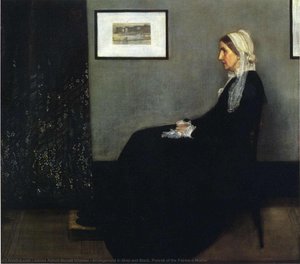
Whistlerin taiteellinen visio kiteytyi useisiin avainteemoihin ja tyylivalintoihin. Hän puolusti “taidetta taiteensa puolesta” -ajattelua, hyläten tarinoita, jotka olivat täynnä moraalisia tai sosiaalisia kommentteja. Hänen teoksensa muuttuivat harjoituksiksi valon, värin ja tunnelman hienovaraisten vivahteiden vangitsemiseksi – pyrkimys, joka johti hänen ikonisiin *nocturneihin*. Nämä tunnelmallisia maalauksia aamunkoittoisista maisemista, usein Thames-joen kuvauksista yöllä, ei ollut tarkoitettu realistisiksi esityksiksi vaan pikemminkin tunteiden ja mielialojen evästeiksi. Whistlerin tyyli oli minimalistinen, hän käytti rajoitettuja väripaletteja ja hienostuneita siveltimenvetoja luodakseen aavemaisen kauniin ja hiljaisen tunnelman. Hän maalasi myös portretteja, jotka olivat keskeisessä asemassa hänen taiteellisessa käytännössään, mutta hän lähestyi niitä ainutlaatuisella tavalla. Whistler ei ollut kiinnostunut vangitsemaan täydellisiä muotokuvia; pikemminkin hän keskittyi muodollisiin järjestelyihin ja sävyharmonioihin, pitäen mallinsa osana huolellisesti suunniteltua esteettistä kokonaisuutta. Teokset kuten *Arrangement in Grey and Black No. 1* – paremmin tunnettu nimellä *Whistler’s Mother* – osoittavat tätä lähestymistapaa täydellisesti, muuttaen perheenmuotokuvan ikoniseksi kuvaksi viktoriaanisen äidin elämästä.

Kiistaa, vaikutusta ja ikuisuuden perintöä

Whistlerin ura ei ollut ilman vastustusta. Hänen ja kriitikko John Ruskinin välillä 1878 vuonna käyty maineettomuus-jutun aiheuttama kiista oli merkittävä hetki taiteen historiassa. *Nocturne in Black and Gold – The Falling Rocket* -maalaus, joka sai paljon huomiota, johti pitkään oikeustaisteluun. Whistler voitti oikeudenmukaisuuden, koska hän puolusti taiteellista vapauttaan ja hänen teoksensa arvostusta. Tämä tapaus nosti hänen profiilinsa ja käynnisti tärkeitä keskusteluja taiteen kritiikin luonteesta ja taiteellisen itsenäisyyden merkityksestä. Whistlerin vaikutus ulottui kuitenkin paljon tämän oikeudenkäynnin ulkopuolelle. Hän oli syvästi vaikuttunut japanilaisista printeistä (ukiyo-e), jotka muokkasivat hänen muodollisia periaatteitaan ja korostivat koristeellisuutta, sekä espanjalaisten maalareiden, kuten Velázquezin, vaikutusta. Hänen “taidetta taiteensa puolesta” -ajattelunsa vaikutti syvästi estetiikan liikkeeseen Englannissa ja Yhdysvalloissa, avaten tien modernismille ja haastaen perinteiset käsitykset taiteen tarkoituksesta. Hän jätti jäljen amerikkalaiseen taiteeseen inspiroimalla sukupolvia taiteilijoita omaksumaan formalistisia lähestymistapoja ja tutkimaan värin ja muodon ilmaisun potentiaalia.
  • Merkittävät teokset: *The Forge* (1861), *Charles Lang Freer’s portretti* (1873), *Brown and Gold: The Gold Girl – Connie Gilchrist* (1876-77), *Arrangement in Grey and Black No. 1 (Whistler’s Mother)* (1871), *Nocturne in Black and Gold – The Falling Rocket* (1875).
  • Vaikuttajat: Japanilaiset printit, Velázquez.

Pikaista tietoa

  • Artist: James Whistler
  • Medium: Etching
  • Title: Self-Portrait
  • Year: 1858
  • Artistic style: Symbolic, tonal

Taidevisat

Jokaisessa kysymyksessä on vain yksi oikea vastaus.

Kysymys 1:
James Abbott McNeill Whistler is most closely associated with which artistic movement?
Kysymys 2:
The etching 'Self-Portrait' by Whistler primarily exemplifies what artistic philosophy?
Kysymys 3:
What is a key characteristic of Whistler's etching technique as demonstrated in this work?
Kysymys 4:
Considering Whistler's background, which of the following best describes his early career path?
Kysymys 5:
The downward gaze of the subject in the etching suggests which possible interpretation?