- Etusivu

- Tuloste kankaalle
- Jacopo Ripanda
- Neptune ja Amphitrite

 Tilaa maalaus Osta kuva
 Jaa
Jaa
 Jaa
Jaa
 Tarkemmat tiedot
 Lisää suosikkeihin

 Lataa
Lataa
 Samanlaisia
 Röntgenkuva
 Diaesitys
Neptune ja Amphitrite


 Näytä lisää
Giclée-printit ja taideprintit
Museolaatuisia giclée- tai kankaitaulun tulosteita nopealla tuotannolla ja joustavilla viimeistelyvaihtoehdoilla.




P118B $10

P118H $10

P118W $10

P438Z $10

P508JH $12

P508YH $12

P805H $10

P805Z $10

P919BZ $10

P919G $10

P919XJ $10

P959ZH $10

P968JZ $12

W106C $8

W218G $10

W218JH $8

W218Y $10

W307PJ $10

W316G $10

W316PJ $8

W316Y $10

W398PJ $8

W4111J $10

W500HY $15

W500JH $15

W692G $12

W849H $8

W940BG $15

W953PJ $8




Valitse valmiista mitoistamme sellaiset, jotka vastaavat teoksen alkuperäisiä mittasuhteita.

Voit syöttää omat mitat sopiaksesi tiettyyn kehykseen tai tilaan. Jos valittu koko ei vastaa alkuperäisen kuvan mittasuhteita, rajaamme teosta tai laajennamme kuvaa peilatulla tai yhtenäisellä reunalla. Digitaalinen mallikuva lähetetään hyväksyttäväksi ennen tuotannon aloittamista.
Huomaathan, että näytöllä näkyvä esikatselu ei vastaa lopullista rajausta tai laajennusta. Vain mallikuva näyttää lopullisen sommittelun tarkasti.
Vaikka räätälöityjä kokoja on saatavilla, suosittelemme valitsemaan mitat valmiista listasta alkuperäisten mittasuhteiden säilyttämiseksi.
Toimitus maailmanlaajuisesti () kahdessa viikossa tavallisen 4–5 viikon sijaan. (20 heinäkuu)

Ilmainen pikatoimitus ympäri maailman

Korkealaatuinen pellavakangas

Kattava kuljetusvakuutus

Tulliveron palautustakuu

Täydellinen värien vastaavuustakuu

60 päivän palautusoikeus (vain valmistusvirheet)

100% rahat takaisin -takuu

Määräalennus tarjous
 Lasivaihtoehto on saatavilla vain alle 110 cm kokoisina teoksina

Neptune ja Amphitrite
Giclée-printit ja taideprintit
Replikaatin koko
-


Kokonaishinta
-
Teoksen kuvaus
Jacopo Ripanda: Renaissance Visionary Through Observation
Renaissance artist Jacopo Ripanda remains an enigma—a figure whose genius blossomed primarily through his unparalleled ability to meticulously record the splendor of antiquity, leaving behind a legacy far exceeding the mere surfaces of his paintings. Biographical details are scarce, yet surviving evidence unveils an exceptionally gifted Bolognese painter who captivated papal patronage and solidified his position as one of the era’s foremost visual innovators. His singular contribution wasn't merely in crafting canvases but in devising a revolutionary instrument—a deceptively simple device that fundamentally altered artistic practice and profoundly impacted how Roman monuments were perceived: a stereoscope, allowing for three-dimensional viewing of architectural models. This ingenious invention speaks volumes about Ripanda’s intellectual curiosity and his desire to transcend traditional representation.The Fresco's Dramatic Narrative: Neptune and Amphitrite
“Neptune and Amphitrite,” housed in the Palazzo dei Conservatori in Rome, exemplifies Ripanda’s distinctive style—characterized by a breathtaking realism achieved through painstaking detail and an unwavering commitment to capturing the essence of classical grandeur. Executed circa 1505, this fresco depicts the mythological marriage of Neptune, god of the sea, and Amphitrite, his consort, offering a captivating glimpse into Roman artistic conventions of the time. The composition is masterful, employing perspective to create depth and conveying a palpable sense of movement—a hallmark of Ripanda’s oeuvre. Observe how he skillfully renders the musculature of Neptune's body and the serene beauty of Amphitrite’s countenance, demonstrating an astonishing command of anatomical accuracy.Technique & Material: The Fresco Method
Ripanda’s technique is rooted in the fresco method—a process involving applying pigment directly onto wet plaster walls. This demanding approach necessitated meticulous planning and execution, requiring artists to prepare the surface carefully and apply colors in successive layers over time. The resulting image possesses remarkable durability and luminosity, preserving its vibrancy for centuries. Note the visible brushstrokes—evidence of Ripanda’s deliberate artistic choices—which contribute to the fresco's textural richness and imbue it with a sense of immediacy. The pigments themselves were derived from natural sources—mineral oxides mixed with binders like lime—resulting in hues that resonate with authenticity and capturing the subtle nuances of light and shadow.Symbolism & Context: Echoes of Antiquity
“Neptune and Amphitrite” transcends mere visual representation; it embodies profound symbolic meaning rooted in classical mythology. Neptune’s trident symbolizes his dominion over the oceans, while Amphitrite's serene gaze reflects her role as protector of marriage and domestic tranquility. The seascape backdrop underscores the fresco’s thematic focus—the sea—and serves as a reminder of Rome’s maritime heritage during the Renaissance. Ripanda’s work aligns seamlessly with the broader artistic currents of his era—a period marked by an ardent revival of interest in Greek and Roman art and literature, fueled by humanist scholarship and papal patronage. He sought to emulate the achievements of antiquity, demonstrating a deep understanding of artistic principles and conveying a reverence for classical ideals.Emotional Impact: A Moment of Divine Harmony
Ultimately, “Neptune and Amphitrite” evokes an emotional response characterized by awe and contemplation—a testament to Ripanda’s ability to capture not only visual accuracy but also the intangible essence of beauty. The harmonious interplay between Neptune and Amphitrite conveys a sense of serenity and intimacy, inviting viewers to immerse themselves in a scene of idealized romance. Consider how the fresco's luminous colors and masterful composition contribute to its emotional resonance—creating an experience that transcends mere observation and touches upon deeper human sensibilities. It stands as a poignant reminder of the Renaissance’s fascination with classical grandeur and Ripanda’s enduring legacy as one of art history’s most perceptive chroniclers.Taiteilijan elämäkerta
Jacopo Ripanda: The Roman Eye
Jacopo Ripanda (c. 1401 – Rome, c. 1516) remains a figure shrouded in mystery—a Renaissance artist whose brilliance shone primarily through his meticulous observation and unparalleled skill in documenting the grandeur of antiquity. While biographical details are scarce, surviving evidence paints a portrait of an exceptionally gifted Bolognese painter who captivated papal patronage and cemented his place as one of the era’s foremost visual innovators. His legacy resides not merely in the canvases he created but also in the revolutionary device he devised—a simple yet ingenious instrument that fundamentally altered artistic practice and profoundly impacted how Roman monuments were perceived.- Early Life & Training: Precise information regarding Ripanda's birthdate and formative years is elusive. He emerged from Bologna’s vibrant artistic milieu, absorbing influences from masters like Ercole Grandi and Lorenzo Costa—artists known for their masterful depictions of classical themes and humanist ideals. However, unlike many Bolognese painters of his time who focused on devotional subjects, Ripanda possessed an unwavering fascination with Roman ruins and the vestiges of imperial grandeur.
- The Trajan’s Column Apparatus: Ripanda's fame ascended dramatically during Pope Alexander VI’s reign when he constructed a viewing device—a carefully calibrated eyepiece—to aid in the detailed study of Trajan’s Column. This instrument, remarkably accurate for its time, allowed him to resolve distant friezes with unprecedented clarity, capturing minute details previously inaccessible to human vision. The invention sparked considerable debate amongst scholars and artists alike, demonstrating Ripanda's intellectual curiosity and his commitment to advancing scientific observation within the artistic realm.
- Papal Commissions & Frescoes: Alexander VI recognized Ripanda’s exceptional talent and entrusted him with monumental commissions for frescoes in Rome’s Palazzo dei Conservatori—specifically, four rooms dedicated to portraying scenes from classical history. The Sala di Annibale and Sala della Lupa stand as enduring testaments to his artistic prowess, showcasing masterful compositions and vibrant color palettes that embody the humanist spirit of the Renaissance. These paintings continue to inspire admiration for their technical brilliance and expressive power.
- Style & Technique: Ripanda’s style is characterized by a distinctive blend of Emilian tradition and Roman influence—a synthesis reflected in his meticulous attention to detail, masterful use of chiaroscuro (light and shadow), and profound understanding of perspective. He skillfully employed techniques honed through observation of Trajan's Column, translating the precision of scientific inquiry into artistic execution. His works exemplify the humanist ideal of combining erudition with artistic skill.
- Legacy & Influence: Although Ripanda’s later Vatican commissions were cancelled by Pope Julius II—a setback that tragically curtailed his creative output—his groundbreaking invention and enduring frescoes secured his place in art history. Girolamo Muziano published engravings of his Trajan's Column drawings in 1576, disseminating Ripanda’s innovative approach to visual representation across Europe. Furthermore, he exerted considerable influence on subsequent artists like Baldassare Peruzzi and Michelangelo—artists who adopted Ripanda’s meticulous observational methods and embraced the challenge of accurately depicting monumental architecture.

Jacopo Ripanda
1516 , Italy
Pikatiedot
- Artistic Movement Or Style: Emilian Renaissance
- Artists Or Movements Influenced By This Artist: ['Baldassare Peruzzi']
- Artists Who Influenced This Artist:
- Ercole Grandi
- Lorenzo Costa
- Date Of Death: 1516
- Full Name: Jacopo Ripanda
- Nationality: Italian
- Notable Artworks:
- St Peter Consacrates Stephen
- Neptune and Amphitrite
- Place Of Birth: Bologna, Italy
Liittyvät artikkelit

The Flourishing of Humanism: A Comprehensive Exploration of the Italian Renaissance Art Movement
Explore the Italian Renaissance! Discover humanist ideals, iconic masterpieces by Leonardo, Michelangelo & Raphael, and lasting artistic innovations. A comprehensive guide for art enthusiasts.

The Revival of Antiquity: Exploring the Neoclassical Movement & its Enduring Legacy
Explore the revival of classical art with our deep dive into Neoclassicism! Discover key artists like Jacques-Louis David, Enlightenment influences & lasting impact on art history. High-quality reproductions at OriginalUniqueArt.

The Revival of Antiquity: Exploring Neoclassical Art's Ideals & Enduring Legacy
Explore the revival of classical ideals in Neoclassical art! Discover Jacques-Louis David & the movement's impact on painting, sculpture & architecture. Expert insights & high-quality reproductions at OriginalUniqueArt.

Bartolomeo Pinelli: Neoclassical Linearity & Roman Topography of Memory
Explore the captivating world of Bartolomeo Pinelli, a master Italian engraver renowned for his evocative Roman scenes & historical narratives. Discover his art and legacy with OriginalUniqueArt.
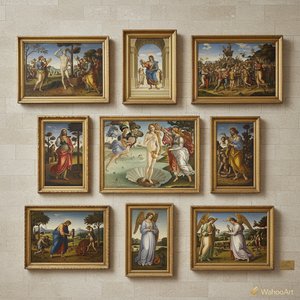
Varhaisen renessanssin 10 mestariteosta: Taidetta kotiin OriginalUniqueArtilta
Tutustu varhaisen renessanssin 10 ikonisinta mestariteosta! Leonardo da Vinci, Michelangelo ja Botticelli – taideteokset, jotka muuttivat maailmaa. Löydä inspiraatiota kotiisi OriginalUniqueArtilta. Tutki kokoelma verkossa!


