

 Esikatselu
 Jaa
Jaa Jaa
Jaa
 Tarkemmat tiedot

 Lataa
Lataa
 Samanlaisia
 Röntgenkuva
 Diaesitys
 Stats
StatsThe Enforcer
 Lithograph
- Art Singulier
 1972
1972- Modern
 77.0 x 61.0 cm
 Näytä lisää
Giclée-printit ja taideprintit
Museolaatuisia giclée- tai kankaitaulun tulosteita nopealla tuotannolla ja joustavilla viimeistelyvaihtoehdoilla. ( Osta käsintehty maalaus Switch to Digital Image)




P118B $10

P118H $10

P118W $10

P438Z $10

P508JH $12

P508YH $12

P805H $10

P805Z $10

P919BZ $10

P919G $10

P919XJ $10

P959ZH $10

P968JZ $12

W106C $8

W218G $10

W218JH $8

W218Y $10

W307PJ $10

W316G $10

W316PJ $8

W316Y $10

W398PJ $8

W4111J $10

W500HY $15

W500JH $15

W692G $12

W849H $8

W940BG $15

W953PJ $8




Valitse valmiista mitoistamme sellaiset, jotka vastaavat teoksen alkuperäisiä mittasuhteita.

Voit syöttää omat mitat sopiaksesi tiettyyn kehykseen tai tilaan. Jos valittu koko ei vastaa alkuperäisen kuvan mittasuhteita, rajaamme teosta tai laajennamme kuvaa peilatulla tai yhtenäisellä reunalla. Digitaalinen mallikuva lähetetään hyväksyttäväksi ennen tuotannon aloittamista.
Huomaathan, että näytöllä näkyvä esikatselu ei vastaa lopullista rajausta tai laajennusta. Vain mallikuva näyttää lopullisen sommittelun tarkasti.
Vaikka räätälöityjä kokoja on saatavilla, suosittelemme valitsemaan mitat valmiista listasta alkuperäisten mittasuhteiden säilyttämiseksi.
Toimitus maailmanlaajuisesti () kahdessa viikossa tavallisen 4–5 viikon sijaan. (8 syyskuu)

Ilmainen pikatoimitus ympäri maailman

Korkealaatuinen pellavakangas

Kattava kuljetusvakuutus

Tulliveron palautustakuu

Täydellinen värien vastaavuustakuu

100 päivän palautusoikeus (vain valmistusvirheet)

100% rahat takaisin -takuu

Määräalennus tarjous
 Lasivaihtoehto on saatavilla vain alle 110 cm kokoisina teoksina

The Enforcer
Giclée-printit ja taideprintit
Replikaatin koko
-


Kokonaishinta
$ 80
The Enforcer: A Study in Power and Restraint
Jacob Kainen's "The Enforcer," created in 1972, is more than just a lithograph; it’s a compelling visual narrative exploring themes of authority, control, and the complexities of human nature. Housed within the esteemed Smithsonian American Art Museum, this piece (measuring 77 x 61 cm) exemplifies Kainen's unique ability to blend dramatic realism with abstract expressionism, creating an artwork that resonates long after initial viewing.
Artistic Style and Influences
Kainen’s artistic journey was deeply rooted in the study of masters. His work reveals a profound understanding of Rembrandt's chiaroscuro, Velázquez's masterful use of light and shadow, and Cézanne's exploration of form and structure. However, Kainen wasn't merely replicating these influences; he synthesized them with the burgeoning expressionist movements sweeping Europe and America in the 20th century. "The Enforcer" stands as a testament to this synthesis – a work that honors tradition while forging its own distinct path. The lithograph’s stark black and white palette, combined with layered brushstrokes, evokes a sense of drama reminiscent of German Expressionism, yet retains a compositional clarity influenced by the earlier masters.
Decoding the Imagery: Symbolism and Composition
The central figure in "The Enforcer" is immediately striking. The individual, depicted wearing a shirt emblazoned with a prominent circle, becomes an enigmatic symbol within the composition. This circular motif could represent various interpretations – unity, completeness, or even cyclical power dynamics. The surrounding chaotic brushwork, rendered in stark black and white, creates a sense of tension and unrest, suggesting the pressures and responsibilities inherent in the role of "the enforcer." The deliberate use of negative space further emphasizes the figure's isolation within this turbulent environment. Kainen’s technique involves layering multiple lithographic stones to achieve depth and complexity, resulting in a visual texture that mimics the multifaceted nature of authority.
Historical Context and Emotional Impact
Created during a period of social upheaval and political unrest in the 1970s, "The Enforcer" can be viewed as a reflection of anxieties surrounding law enforcement and power structures. The artwork doesn't offer easy answers or simplistic portrayals; instead, it invites viewers to contemplate the burdens carried by those tasked with upholding order. The lithograph’s monochromatic palette amplifies its emotional impact, conveying a sense of seriousness and introspection. It evokes feelings of tension, restraint, and perhaps even a touch of melancholy, prompting reflection on the complexities of power and responsibility.
Kainen's Legacy and Further Exploration
“The Enforcer” is just one example of Jacob Kainen’s significant contribution to American art. Other notable works by Kainen, such as "Fabrizio" and “No Dominion,” further showcase his artistic range and intellectual depth. The Smithsonian American Art Museum holds a substantial collection of Kainen's work, providing ample opportunity for deeper exploration of his oeuvre. For those interested in understanding the broader context of Kainen’s artistic development, exploring the Art Singulier Movement can provide valuable insights into his unique approach to artmaking.
Taiteilijan elämäkerta
Jacob Kainen: Elämä taiteen ja tutkimuksen äärellä
- Syntynyt: Waterbury, Yhdysvallat (1909)
- Kuollut: 2002
Jacob Kainen oli monitaitoinen amerikkalainen taiteilija, joka tunnetaan sekä maalarina, grafiikan mestarina, taidehistorioitsijana että keräilijänä. Hänen vuosikymmeniä kestänyt uransa oli jatkuvaa tyylillistä kehitystä, älyllistä uteliaisuutta ja merkittäviä panoksia taidemaailmaan – sekä omien luomustensa että tieteellisen tutkimustyönsä kautta.
Varhaiset vuodet ja taiteelliset ensiaskeleet
- Taustaperintö: Kainen syntyi venäläisperheiseen Waterburyyn, Connecticutiiin, ja hänen kasvuympäristönsä vaalsi syvää kulttuurista arvostusta. Isän keksijämäinen henki sekä äidin rakkaus musiikkiin ja kirjallisuuteen ruokkivat hänen taiteellisia taipumuksiaan jo varhaisesta lapsuudesta lähtien.
- Varhaiset opinnot: Muutto New Yorkiin vuonna 1918 avasi ovet maailmanluokan instituutioille, kuten Metropolitan Museum of Artille ja New Yorkin julkiselle kirjastolle, mikä syvensi hänen intohimoaan taidehistoriaan. Hän opiskeli Art Students Leaguessa, missä Kimon Nicolaides korosti vapauden ja itsevarmuuden merkitystä taiteellisessa ilmaisussa.
- Varhaiset kapinat: Vaikka Kainen osoitti suurta lahjakkuutta Pratt Institutessa, hänen itsenäinen luonteensa johti erottamiseen vain kolme viikkoa ennen valmistumistaan, seurauksena instituutin konservatiivisesta opetussuunnitelmasta. Tästä tapahtumasta tuli käännekohta, joka työnsi hänet kohti avantgarde-liikkeitä.
Tyylin kehitys ja taiteelliset vaikutteet
- Alkuvaiheen vaikutteet: Aluksi vanhoihin mestareihin vetoutunut Kainen koki suuren muutoksen 1930-luvulla, kun hän omaksui saksalaisen ekspressionismin ja sosiaalisen realismin. Tänä aikana hän työskenteli muun muassa Stuart Davisin ja Arshile Gorkyn kaltaisten taiteilijoiden parissa, jotka kannustivat häntä tutkimaan alitajuntaa ja klassisten teosten jäljittelyä.
- WPA-vuodet: Osallistuminen WPA:n grafiikkaohjelmaan hioi hänen grafiikan taitojaan ja tarjosi hänelle mahdollisuuden käsitellä yhteiskunnallisia teemoja taiteen keinoin.
- Abstraktio ja sen tuolla puolen: Arshile Gorkyn vaikutuksesta Kainen siirtyi vähitellen kohti abstraktiota. Hän ei kuitenkaan koskaan hylännyt humanismia tai historiallista tietoisuutta, vaan pyrki täyttämään jopa abstraktit muodot eletyn kokemuksen tunteella.
- Uskollisuustutkinta ja psykologinen vaikutus: 1940-luvun poliittiset tarkastelut, jotka liittyivät hänen menneisyyden toimintoihinsa, jättivät syvän jäljen hänen työhönsä. Tämä johti voimakkaisiin ja psykologisesti latautuneisiin abstraktioihin, kuten teoksiin "Exorcist" ja "Unmoored #2".
- Paluu figurationiin: Kun selvitys viranomaisilta oli ohi, Kainen kääntyi takaisin figuratiiviseen taiteeseen hyläten abstraktin ekspressionismin ja palaten edustavampiin muotoihin.
Kuraattoritoiminta ja panos Smithsonianille
- Smithsonianin kuraattori: Vuosina 1942–1970 Kainen toimi grafiikan osaston kuraattorina Smithsonianin kansallisessa museossa. Hän elvytti kokoelmia näyttelyiden ja uusien hankintojen avulla. :
- Vaikutus Washington Color Field -maalaukseen: Kainenilla oli keskeinen rooli taideyhteisön verkostoitumisessa; hän esitteli Morris Louisin Kenneth Nolandille, mikä edisti merkittävästi Washington Color School -liikkeen kehitystä.
- Ura Smithsonianin jälkeen: Eläköitytyään Kainen omistautui kokonaan maalaamiselle ja grafiikalle, palaten puhtaaseen abstraktioon ja jatkaen taiteellista tutkimusmatkaansa.
Perintö ja historiallinen merkitys
- Keräilijä ja filantrooppi: Kainen ja hänen vaimonsa Ruth Cole olivat saksalaisen ekspressionismin intohimoisia keräilijöitä, ja he lahjoittivat merkittävän osan kokoelmastaan National Gallery of Artille vuonna 1985.
- Tieteellinen työ: Kainenin panos taidehistorioitsijana on huomattava; hänen teoksensa John Baptist Jacksonista ja Canaletton etsauksista osoittavat hänen syvän tietämyksensä ja intohimonsa taidehistoriaan.
- Ikuinen taiteellinen visio: Jacob Kainenin perintö lepää teoksessa, joka heijastaa hänen älyllistä uteliaisuuttaan, tyylillistä evoluutiotaan ja järkähtämätöntä sitoutumistaan ihmisyyden tutkimiseen eri medioiden kautta. Hänen vaikutuksensa ulottuu omien luomustensa ulkopuolelle, kattaen hänen kuraattorityönsä ja omistautumisensa taiteellisen dialogin edistämiselle.

Jacob Kainen
1909 - 2002 , Yhdysvallat
Pikatiedot
- Artistic Movement Or Style:
- Expressionismi
- Sosiaalinen realism
- Artists Who Influenced This Artist:
- Rembrandt
- Velázquez
- John Constable
- Ernst Ludwig Kirchner
- Edvard Munch
- Date Of Birth: 1909
- Date Of Death: 2001
- Full Name: Jacob Kainen
- Nationality: Amerikkalainen
- Notable Artworks:
- Anacharsis
- Flightmaster
- The Enforcer
- Pastorale
- Back
- Place Of Birth: Waterbury, United States
Liittyvät artikkelit
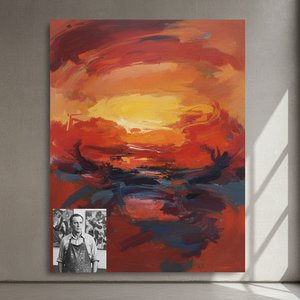
Jacob Kainen: A Pioneer of American Color Field Painting & Abstract Expressionism
Explore the life & work of Jacob Kainen, a pivotal figure in American Abstract Expressionism and Color Field painting. Discover his journey from Social Realism to vibrant abstraction and lasting influence on 20th-century art.

Grant Wood & American Regionalism: Identity, Myth & the Rural Landscape
Explore the world of Grant Wood & American Regionalism with OriginalUniqueArt. Discover the symbolism behind 'American Gothic', recurring themes, and the movement's lasting impact on art history. High-quality reproductions available.

Amerikkalaisen realismin mestariteokset: Taidetta ja tarinoita kotiisi
Tutustu amerikkalaisen realismin 10 mestariteokseen! Andrew Wyethistä Edward Hopperiin – taidetta, tarinoita ja inspiraatiota kotiisi. Laadukkaat taideprintit OriginalUniqueArt.comissa. Tutustu kokoelmaan verkossa!

Alfred Jacob Miller: Chronicling the American West Through Artistic Observation & Narrative
Explore the captivating art of Alfred Jacob Miller, chronicler of the American West. Discover his iconic paintings, techniques & lasting legacy – a valuable addition to any serious collection. Learn more at OriginalUniqueArt.
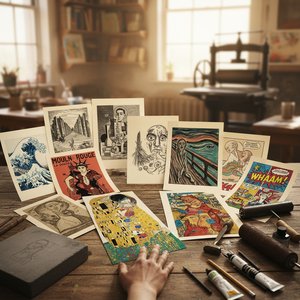
10 legendaarista litografiateosta, jotka mullistivat taiteen – OriginalUniqueArt.com
Tutustu 10 legendaariseen litografiateokseen, jotka mullistivat taiteen! Picasso, Matisse, Munch ja muut mestarit. Taidehistorian helmet OriginalUniqueArt.com:ssa – löydä täydellinen seinätaide kotiisi. Tutki kokoelma verkossa!