Tekstin koko

() ·

Sinulle käsin tehty maalaus

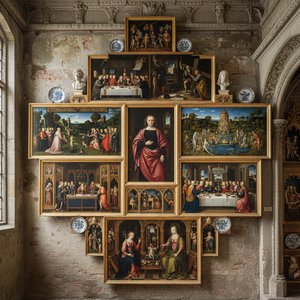
Portinari Triptych (11)

Käsinmaalattu öljyvärinen jäljennös

Käsinmaalattu öljyväri kankaalle haluamassasi koossa ja kehyksissä, taiteilijoidemme valmistamana tilauksesta. ( Vaihda tulosteeseen Siirry digitaaliseen kuvaan)

Keräilykohteen kuvaus

Discover Hugo van der Goes's masterpiece, the Portinari Triptych! This iconic Flemish painting showcases stunning realism & emotional depth, influencing Renaissance art with its intricate details and profound symbolism.

Taiteilijan elämäkerta

"meta_description": "Hugo van der Goes (1440-1482) oli vallankumouksellinen flaamilainen renessanssimaalari, tunnettu dramaattisesta realismistaan ja syvällisestä psykologisesta tulkinnasta. Hänen kuuluisin teoksensa on Portinari-altariteos, joka vaikutti merkittävästi italialaiseen taiteeseen."

alkaen ·

Luku 1

Kuinka suuren sen tulisi olla?

Vedä liukusäädintä vaihtaaksesi kokoa; vasemmalla oleva kuva näyttää kehyksen todellisen leveyden. Alkuperäiset mittasuhteet säilyvät.

Vakiokoko
räätälöity
CM
INCH

Valitse valmiista mitoistamme sellaiset, jotka vastaavat teoksen alkuperäisiä mittasuhteita.

leveys
korkeus

Kirjoita tarvitsemasi leveys ja korkeus, jotta teos sopii kehyksiisi tai seinällesi. Koska kyseessä on käsinmaalattu teos, taiteilija voi maalata hieman enemmän kuvan ympärille tai rajata sitä hieman, jos haluat eri muotoisen koon — valinta on sinun. Lähetämme sinulle digitaalisen mallikuvan hyväksyttäväksi ennen kuin maalaus alkaa. Tällä sivulla näkyvä kuva ei vastaa lopullista tulosta — vain mallikuva näyttää sen.

Luku 2

Miten teoksen tulisi saapua?

Valitse kangaspinnan reunat

Valitse kehys

Corner sample of the WhiteWrap canvas edge finish, stretched on massiivipuu bars
Valkoinen reuna €1
Corner sample of the BlurSideWrap canvas edge finish, stretched on massiivipuu bars
pehmennetty reuna €1
Corner sample of the ExtendedWrap canvas edge finish, stretched on massiivipuu bars
Jatkuva reuna €1
Corner sample of the P118B picture frame: valettu polystyreeni, 5 cm wide and 3 cm thick
P118B €10
Corner sample of the P118H picture frame: valettu polystyreeni, 5 cm wide and 3 cm thick
P118H €10
Corner sample of the P118W picture frame: valettu polystyreeni, 5 cm wide and 3 cm thick
P118W €10
Corner sample of the P438Z picture frame: valettu polystyreeni, 5.5 cm wide and 3.5 cm thick
P438Z €10
Corner sample of the P508JH picture frame: valettu polystyreeni, 7 cm wide and 3.5 cm thick
P508JH €12
Corner sample of the P508YH picture frame: valettu polystyreeni, 7 cm wide and 3.5 cm thick
P508YH €12
Corner sample of the P805H picture frame: valettu polystyreeni, 5 cm wide and 3.5 cm thick
P805H €10
Corner sample of the P805Z picture frame: valettu polystyreeni, 5 cm wide and 3.5 cm thick
P805Z €10
Corner sample of the P919BZ picture frame: valettu polystyreeni, 7 cm wide and 3.5 cm thick
P919BZ €10
Corner sample of the P919G picture frame: valettu polystyreeni, 7 cm wide and 3.5 cm thick
P919G €10
Corner sample of the P919XJ picture frame: valettu polystyreeni, 7 cm wide and 3.5 cm thick
P919XJ €10
Corner sample of the P959ZH picture frame: valettu polystyreeni, 5 cm wide and 3 cm thick
P959ZH €10
Corner sample of the P968JZ picture frame: valettu polystyreeni, 6 cm wide and 4 cm thick
P968JZ €12
Corner sample of the W106C picture frame: massiivipuu, 5 cm wide and 3 cm thick
W106C €8
Corner sample of the W218G picture frame: massiivipuu, 5 cm wide and 3 cm thick
W218G €10
Corner sample of the W218JH picture frame: massiivipuu, 5 cm wide and 3 cm thick
W218JH €8
Corner sample of the W218Y picture frame: massiivipuu, 5 cm wide and 3 cm thick
W218Y €10
Corner sample of the W307PJ picture frame: massiivipuu, 6 cm wide and 3 cm thick
W307PJ €10
Corner sample of the W316G picture frame: massiivipuu, 6 cm wide and 3 cm thick
W316G €10
Corner sample of the W316PJ picture frame: massiivipuu, 6 cm wide and 3 cm thick
W316PJ €8
Corner sample of the W316Y picture frame: massiivipuu, 6 cm wide and 3 cm thick
W316Y €10
Corner sample of the W398PJ picture frame: massiivipuu, 5 cm wide and 3 cm thick
W398PJ €8
Corner sample of the W4111J picture frame: massiivipuu, 6.5 cm wide and 3.5 cm thick
W4111J €10
Corner sample of the W500HY picture frame: massiivipuu, 7 cm wide and 5 cm thick
W500HY €15
Corner sample of the W500JH picture frame: massiivipuu, 7 cm wide and 5 cm thick
W500JH €15
Corner sample of the W692G picture frame: massiivipuu, 8 cm wide and 4 cm thick
W692G €12
Corner sample of the W849H picture frame: massiivipuu, 5 cm wide and 3 cm thick
W849H €8
Corner sample of the W940BG picture frame: massiivipuu, 7.5 cm wide and 4.5 cm thick
W940BG €15
Corner sample of the W953PJ picture frame: massiivipuu, 6 cm wide and 3.5 cm thick
W953PJ €8
Corner sample of the H24-GOLD picture frame: kaiverrettua puuta ja gessoa, 10 cm wide and 6 cm thick
H24-GOLD €30
Corner sample of the H24-SILVER picture frame: kaiverrettua puuta ja gessoa, 10 cm wide and 6 cm thick
H24-SILVER €30
Corner sample of the H36-GOLD picture frame: kaiverrettua puuta ja gessoa, 15 cm wide and 6.5 cm thick
H36-GOLD €45
Corner sample of the H36-SILVER picture frame: kaiverrettua puuta ja gessoa, 15 cm wide and 6.5 cm thick
H36-SILVER €45
Kehyksen esikatselu
Kehystetty

Kehystys: . Kokonaismitat kehyksen kanssa: .

Luku 3

Kuka sen maalaa, ja pitäisikö mitään muuttaa?

Esimerkkejä muutettavista asioista: Vaihda kasvot asiakkaan valokuvaan; Lisää lemmikki (esim. vaihda kissa koiraksi); Lisää piilotettu viesti taustalle; Vaihda taustan maisemaa tai elementtejä.

Tilauksen jälkeen OriginalUniqueArt.com -tiimi lähettää asiakkaalle sähköpostia ohjeita varten ja toimittaa luonnoksen esikatselun

Maailmanlaajuinen toimitus () 3–4 viikossa tavallisen 5 viikon sijaan. (4 marraskuu). Laadusta ei tingitä.

Luku 4

Viimeiset silaukset

Nimikyltti, kuten museossa?

Kaiverretun pronssilaatan tiedot

This elegant plaque features the artist's name and the title of the artwork, finely engraved for a timeless presentation.

It is made from bronze with a refined, elegant finish. The text is precisely laser-engraved for a sharp and permanent result. Measuring 9x2 cm, the plaque is compact yet easy to read. It's built to be durable and scratch-resistant, offering a professional, museum-quality look. Mounting is simple thanks to the included adhesive backing.

Läpinäkyvän akryylilaatan tiedot

The plaque includes essential engraved details such as the artist's name, the title of the artwork, the date it was created, the type of media used-like oil on canvas or watercolor-a brief description of the piece, and a QR code that links to the complete artwork information.

It is crafted from clear acrylic, offering a sleek, modern appearance. The text is UV-engraved in black to ensure strong visual contrast. With a size of 10x15 cm, it ensures optimal readability. It comes equipped with two metal hooks for secure wall mounting. The plaque is designed to be weather-resistant, making it suitable for various environments, and it includes interactive features that work seamlessly with smartphone scanning.

Mustan akryylilaatan tiedot

This elegant plaque includes engraved information such as the artist's name, the title of the artwork, the date it was created, the type of media used (like oil on canvas or watercolor), a short description of the artwork, and a QR code for quick access to more information.

The plaque itself is made from refined black acrylic with a premium finish. The text is laser-engraved in white for high contrast and readability. Its size is 10x15 cm, designed to be easy to read. It comes with two metal hooks for professional mounting. The design is sleek and fits any interior style. It is also weather-resistant and durable, with built-in digital integration for mobile compatibility.

Suojaava lakka?

Milloin tarvitset sen?

Luku 5

Maalauksesi juuri niin kuin tilasit

Portinari Triptych (11)

Reproduktiotekniikka

Replikaatin koko

-

Kokenut huipputaiteilija

Lisää yksityiskohtia, hienostuneisuutta ja enemmän aikaa tuotantoon

-

Reproduktion kehystysvaihtoehdot

-

-

Teoksille tai reproduktioille, joiden mikä tahansa sivu on suurempi kuin 105 cm (noin 41 tuumaa), kehys toimitetaan osina purettuna sarjana. Tämä menetelmä varmistaa turvallisen toimituksen ja ehkäisee vaurioita kuljetuksen aikana.

Vaatii ammattimaista kokoamista – kyseessä ei ole tee-se-itse-tuote.
Sarja on koottava ja kangas kiristettävä kokeneen kehystysammattilaisen toimesta käyttäen puuliimaa (ei sisälly pakkaukseen), kangaspinnetteitä ja puristimia, jotta kehyksen kulmat pysyvät suorina liiman kuivuessa. Virheellinen kokoaminen tai epätasainen kankaan kiristys voi vaurioittaa teosta pysyvästi, eikä tällaiset vauriot ala takuun piiriin.

  • Kaikki massiivipuupalat sisältyvät, tarkasti mittojen mukaan leikattuina.

  • Kootaan mukana tulevilla ruuveilla sekä kulmaliitoksia varten tarvittavalla puuliimalla, jota ei toimiteta, joten se on hankittava kehystäjältä.

  • Vaatii ammattilaisvälineitä, jotka eivät sisälly pakkaukseen: kankaan venytyspihdit (kiristin) ja puristimet, joilla pidetään kehyksen puut suorassa liiman kuivuessa.

Tärkeää:
Kulmaliitoksissa tarvitaan puuliimaa, kehyksien osat on pidettävä puristimilla, kunnes liima on täysin kuivunut, ja koottuun kehykseen jännitettävän kankaan kiristämiseen tarvitaan kangaspenssipihti. Mikään näistä ei sisälly pakkaukseen. Suosittelemme varmistamaan kokeneen kehystäjän saatavuuden ennen tämän kokoisen kehyksen tilaamista.

Nimilaatta

-

-

Suojalakkaus

Kiiltävä lakka (syventää värejä, suojaa valolta ja kosteudelta)

-

Mukauta taideteokseni

Esimerkkejä muokattavista asioista: Vaihda kasvot asiakkaan omaan valokuvaan; Lisää lemmikki (esim. vaihda kissa koiraan); Lisää taustalle piilotettu viesti; Muuta taustan maisemaa tai elementtejä.

-

Pikatoimitus

Maailmanlaajuinen toimitus () 3–4 viikossa tavallisen 5 viikon sijaan. (4 marraskuu). Laadusta ei tingitä.

-

Pikatoimitus

Maailmanlaajuinen toimitus () 5 viikon kuluessa. (11 marraskuu).

Sisältyy hintaan

Kokonaishinta

€ 268

Kokonaishinta € 268

Lasivaihtoehto on saatavilla vain alle 110 cm kokoisille teoksille

Sisältyy jokaiseen tilaukseen

  • Ilmainen pikatoimitus ympäri maailman
  • Korkealaatuinen pellavakangas
  • Kattava kuljetusvakuutus
  • Tulliveron palautustakuu
  • Takuu täydellisestä värien vastaavuudesta
  • 100 päivän palautusoikeus (vain valmistusvirheet)
  • 100% rahat takaisin -takuu
  • Määräalennus tarjolla

A Masterpiece of Emotional Depth: The Portinari Triptych

Hugo van der Goes’s Portinari Triptych, completed around 1475, isn't merely a painting; it’s an immersive experience. This monumental work, now residing in the Uffizi Gallery in Florence, transcends its physical dimensions to offer a profound glimpse into the heart of late fifteenth-century Flanders and the burgeoning artistic currents flowing towards Italy. More than just portraits of a wealthy Florentine family – Tommaso and Maria Portinari – it’s a carefully constructed narrative brimming with symbolism, reflecting the couple's status, aspirations, and connection to the powerful Medici banking dynasty. The triptych format itself—a hinged panel revealing multiple scenes—was favored for its ability to create a sense of intimacy and devotion, transforming a private prayer space into a visual sanctuary.

Van der Goes’s genius lies in his masterful manipulation of light and shadow, creating an astonishingly realistic depiction of human emotion. The figures aren't idealized; they possess a palpable vulnerability and quiet dignity. Notice the subtle nuances of expression – Maria’s contemplative gaze, Tommaso’s slightly furrowed brow—that speak volumes about their inner lives. This wasn’t simply a commission for a wealthy merchant; it was an investment in legacy, a declaration of family pride, and a testament to the artist's unparalleled skill.

The Flemish Realism Revolution

Van der Goes stands as a pivotal figure in the transition from the stylized conventions of earlier Netherlandish painting to the groundbreaking realism that would define the era. Prior to his work, Flemish art often adhered to established formulas—precise detail, flattened perspective, and a focus on decorative elements. Van der Goes shattered these traditions by imbuing his paintings with an unprecedented psychological depth and dramatic intensity. He wasn’t interested in merely representing outward appearances; he sought to capture the very essence of human experience.

  • Attention to Detail: Observe the meticulous rendering of fabrics—the rich velvet, shimmering brocade, and delicate lace—that convey both luxury and texture.
  • Chiaroscuro: Van der Goes’s masterful use of light and shadow (chiaroscuro) creates a sense of volume and drama, drawing the viewer's eye to key elements within the composition.
  • Emotional Resonance: The figures are not static; they seem caught in moments of quiet contemplation, inviting viewers to share their inner thoughts and feelings.

The influence of Van der Goes extended far beyond Flanders. His innovations—particularly his emphasis on realism and psychological depth—resonated deeply with Italian Renaissance artists like Domenico Ghirlandaio, who famously adapted elements of the Portinari Triptych in his own masterpiece, *The Adoration of the Shepherds*. This exchange of artistic ideas exemplifies the dynamic interplay between Northern and Southern European art during this transformative period.

Symbolism and Context: A Florentine Tapestry

Beyond its immediate depiction of Tommaso and Maria Portinari, the triptych is rich in symbolic meaning. The setting—a richly decorated chamber—suggests their elevated social status and connection to the powerful Medici family. The inclusion of architectural elements, such as columns and arches, reinforces this sense of grandeur and authority. Furthermore, the painting’s commission by a Florentine banker highlights the growing economic and cultural ties between Flanders and Italy during the 15th century.

Interestingly, the triptych's arrival in Florence coincided with a period of significant social and political upheaval. The Medici family was consolidating its power, and the city was experiencing rapid growth and transformation. The *Portinari Triptych*, therefore, can be seen as a reflection of these broader historical forces—a testament to wealth, ambition, and the enduring allure of beauty.

A Legacy of Emotional Power

The Portinari Triptych remains one of the most captivating works in the Uffizi Gallery. Its profound emotional depth, masterful technique, and rich symbolism continue to resonate with viewers centuries after its creation. It’s a powerful reminder of the transformative potential of art—its ability to capture not only outward appearances but also the innermost thoughts and feelings of humanity. Reproductions offer a chance to experience this masterpiece's impact on a smaller scale, bringing a touch of Renaissance drama into any space.

Kysymykset ja vastaukset

Kenelle Hugo van der Goes:n "Portinari Triptych (11)" sopii lahjaksi?

Hugo van der Goes:n "Portinari Triptych (11)" on erinomainen lahja Wedding, ja se sopii erityisen hyvin Reflective-tarkoitukseen. Teoksen reproduktio on kaunis lahjavaihtoehto.

Missä Hugo van der Goes:n "Portinari Triptych (11)" -teoksen reproduktio kannattaisi ripustaa?

Panoramic-muotoisena "Portinari Triptych (11)"-teoksen reproduktio sopii erinomaisesti Living Room-tilaan.

Mihin käyttöön Hugo van der Goes:n "Portinari Triptych (11)" on suositeltu?

Hugo van der Goes:n "Portinari Triptych (11)"-teoksen suositeltu käyttötarkoitus on Reflective. Se soveltuu kuitenkin myös muihin tarkoituksiin.

Lisää tästä teoksesta

Esikatselu Esikatsele AR-tilassa Vaihda tulosteeseen Siirry digitaaliseen kuvaan Jaa teos
Tiedot Opas Lisää suosikkeihin Lataa kuva Samanlaisia kohteita Röntgenkuvaus Diaesitys Kysymykset ja vastaukset Tilastot

Lukuina

  • 1476teosvuosi
  • 29valittavissa olevat kehykset
  • standardikoot, omissa mittasuhteissaan
  • 5viikkoja maalaamiseen ja toimitukseen
Hugo van der Goes

Hugo van der Goes

1440 - 1482, Belgia

Pikaaakkaukset taiteilijasta Hugo van der Goes

  • Artistic Movement Or Style: Varhainen Hollantilainen
  • Artists Or Movements Influenced By This Artist:
    • Domenico Ghirlandaio
    • Italian Renaissance
  • Artists Who Influenced This Artist:
    • Jan van Eyck
    • Dirk Bouts
  • Date Of Birth: c. 1440
  • Date Of Death: 1482
  • Full Name: Hugo van der Goes
  • Nationality: Flemish
  • Notable Artworks:
    • Portinari-alttari
    • Monforten alttari
    • Paimenetilan ihailu
  • Place Of Birth: Ghent, Belgia

Taiteilijan elämäkerta

Hugo van der Goes: A Revolutionary Vision of the Northern Renaissance

Hugo van der Goes, a name synonymous with both mystery and brilliance, stands as one of the most pivotal figures in the history of Flemish painting. Born around 1440 in the vibrant city of Ghent, Belgium, he emerged during a period of profound artistic transformation – the late 15th century – challenging established conventions and forging a new path for Northern European art. While details of his early life remain shrouded in some obscurity, his impact on subsequent generations of artists is undeniable, particularly his influence on Italian Renaissance painting. Van der Goes wasn’t merely a painter; he was an innovator who infused religious scenes with an unprecedented level of immediacy and emotional depth, forever altering the course of artistic expression. His journey from a skilled craftsman to a master whose work continues to captivate audiences today is a testament to his extraordinary talent and vision.

Innovation and Artistic Style: Breaking with Tradition

Van der Goes’s artistic signature lies in his daring departure from the stylized conventions that had dominated Flemish painting for centuries. Prior to his arrival, much of the art produced in Flanders often adhered to rigid formulas, prioritizing technical skill over emotional resonance. Van der Goes, however, possessed a unique ability to imbue his works with a startling sense of immediacy and psychological depth. He moved beyond mere representation, striving instead to capture the inner states of his subjects – their awe, sorrow, reverence, and even their vulnerability. His use of color was deliberate and often somber, creating a powerful atmosphere that heightened the emotional impact of each scene. His monumental style, characterized by large-scale compositions and imposing figures, further amplified this effect, drawing viewers into the heart of the narrative. Crucially, Van der Goes didn’t shy away from portraying imperfections; his figures often possessed a raw, almost unsettling realism that distinguished them from the idealized representations favored by earlier artists. This commitment to depicting humanity in all its complexity—its beauty and its flaws—was revolutionary for its time, influencing artists who sought to move beyond technical mastery and explore the depths of human experience. The influence of Jan van Eyck’s meticulous detail is evident in his work, but Van der Goes transcends imitation, forging a style uniquely his own – one that prioritized emotional truth over strict adherence to established rules.

Masterpieces and Lasting Influence: The Portinari Altarpiece and Beyond

Perhaps the most iconic testament to Van der Goes’s genius is the Portinari Altarpiece, commissioned by Tommaso Portinari, an Italian banker residing in Bruges. Completed around 1475, this magnificent triptych—now housed in the Uffizi Gallery in Florence—is a landmark achievement in art history. The scene depicting the Nativity, with its exquisitely rendered figures and dramatic lighting, is particularly striking. But beyond the technical brilliance of the work, it’s the altarpiece's psychological insight that truly sets it apart. Van der Goes masterfully captures the emotions of the Virgin Mary and St. Joseph, conveying their awe, tenderness, and devotion with remarkable subtlety. The altarpiece’s arrival in Italy had a profound effect on Florentine artists, including Domenico Ghirlandaio, who were captivated by its innovative realism and emotional power. Another significant work is the Adoration of the Magi (Monforte Altarpiece), currently residing in Berlin's Gemäldegalerie. This piece showcases his skill in creating dynamic scenes filled with intricate detail and symbolic meaning. Beyond these iconic works, Van der Goes contributed to numerous civic projects, including heraldic decorations for Charles the Bold’s ceremonial entries into Ghent, demonstrating his versatility as an artist. His influence extended beyond painting; he impacted the development of book illustration through his designs which were disseminated by artists like Alexander Bening.

A Life Transformed: From Workshop to Monastery

In a surprising and poignant turn of events, at the height of his artistic success in 1477, Van der Goes abruptly closed his bustling workshop and entered the Roode Klooster monastery near Auderghem. This decision remains something of an enigma, though it’s believed to have been driven by a deep spiritual yearning or perhaps a struggle with mental health. Despite taking religious vows as a lay brother, he continued to accept painting commissions, even undertaking the task of evaluating unfinished works by Dieric Bouts for the city of Leuven. However, his final years were marked by increasing bouts of depression and psychological distress. Accounts suggest that he suffered a severe breakdown in 1482, tragically taking his own life shortly thereafter. This poignant end to a brilliant career adds another layer of complexity to the legacy of Hugo van der Goes—a man whose art explored the depths of human emotion while grappling with inner turmoil. The circumstances surrounding his death have fueled speculation for centuries, adding to the mystique that surrounds this remarkable artist.

A Legacy Enduring Through Time

Hugo van der Goes’s influence extended far beyond his relatively short lifetime. His innovative techniques and profound psychological insights paved the way for future generations of artists, both in Flanders and Italy. His work can be found today in prestigious museums such as the Musées royaux des Beaux-Arts in Brussels, offering a glimpse into the genius of this pioneering Flemish master. He remains a compelling figure—a testament to the power of art to capture the complexities of the human condition and to transcend cultural boundaries. His legacy continues to inspire awe and admiration, solidifying his place as one of the most important artists of the Northern Renaissance.
  • His emphasis on realism influenced subsequent generations.
  • The Portinari Altarpiece remains a landmark achievement in art history.
  • His exploration of psychological depth set a new standard for portraiture and religious painting.

Pikaista tietoa

  • Artist: Hugo van der Goes
  • Notable elements or techniques: Realism, detail
  • Title: Portinari Triptych (11)
  • Year: 1475-1482
  • Movement: Early Netherlandish
  • Location: Uffizi, Florence

Taidevisat

Jokaisessa kysymyksessä on vain yksi oikea vastaus.

Kysymys 1:
What is the primary subject depicted in Hugo van der Goes’s ‘Portinari Triptych’?
Kysymys 2:
The ‘Portinari Triptych’ is considered significant for its influence on which artistic movement?
Kysymys 3:
Approximately when was the ‘Portinari Triptych’ painted?
Kysymys 4:
What is a key characteristic of Hugo van der Goes’s style that contributed to the triptych's impact?
Kysymys 5:
The ‘Portinari Triptych’ was originally commissioned by Tommaso Portinari, who was a prominent figure in which field?