

 Katso seinällä
 Lähetä
 Jaa
Jaa
 Tarkemmat tiedot
 Guide
Guide

 Lataa kuva
 Samanlaisia kohteita
 Röntgenkuvaus
 Diaesitys
 Tilastot
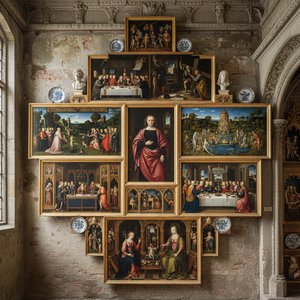
Monforte Altarpiece (10)
 Oil On Canvas
- WallArt
- Early Netherlandish Renaissance
 1470
1470 150.0 x 247.0 cm
 Staatliche Museen zu Berlin
 Lue lisää
Käsinmaalattu öljyvärinen jäljennös
Käsinmaalattu öljyväri kankaalle haluamassasi koossa ja kehyksissä, taiteilijoidemme valmistamana tilauksesta. ( Vaihda tulosteeseen Siirry digitaaliseen kuvaan)




P118B $10

P118H $10

P118W $10

P438Z $10

P508JH $12

P508YH $12

P805H $10

P805Z $10

P919BZ $10

P919G $10

P919XJ $10

P959ZH $10

P968JZ $12

W106C $8

W218G $10

W218JH $8

W218Y $10

W307PJ $10

W316G $10

W316PJ $8

W316Y $10

W398PJ $8

W4111J $10

W500HY $15

W500JH $15

W692G $12

W849H $8

W940BG $15

W953PJ $8




Valitse valmiista mitoistamme sellaiset, jotka vastaavat teoksen alkuperäisiä mittasuhteita.

Voit syöttää omat mitat sopimaan tiettyyn kehykseen tai tilaan. Jos valitsemasi koko ei vastaa alkuperäisen kuvan mittasuhteita, rajaamme taideteoksen tai jatkamme maalausta käsin maalatuilla elementeillä. Digitaalinen esikatselu lähetetään hyväksyttäväksi ennen tuotannon aloittamista.
Huomioithan, että näytöllä oleva esikatselu ei vastaa todellista rajausta tai jatkamista. Vain digitaalinen mallikuva näyttää lopullisen sommittelun tarkasti.
Vaikka mittatilaustyöt ovat mahdollisia, suosittelemme valitsemaan mitan ennalta määritetystä listasta alkuperäisten mittasuhteiden säilyttämiseksi.
Tilauksen jälkeen OriginalUniqueArt.com -tiimi lähettää asiakkaalle sähköpostitse ohjeet ja esikatselukuvan.
Maailmanlaajuinen toimitus () 3–4 viikossa tavallisen 5 viikon sijaan. (21 syyskuu). Laadusta ei tingitä.

Ilmainen pikatoimitus ympäri maailman

Korkealaatuinen pellavakangas

Kattava kuljetusvakuutus

Tulliveron palautustakuu

Takuu täydellisestä värien vastaavuudesta

100 päivän palautusoikeus valmistusvirhetapauksissa

100% rahat takaisin -takuu

Määräalennus saatavilla
 Lasivaihtoehto on saatavilla vain alle 110 cm kokoisille teoksille

Monforte Altarpiece (10)
Reproduktiotapa
Replikaatin koko
-


Kokonaishinta
$ 300
A Masterpiece of Emotional Depth: The Monforte Altarpiece by Hugo van der Goes
The Monforte Altarpiece, painted around 1470 by the pioneering Flemish artist Hugo van der Goes, is more than just a religious depiction; it’s a profound exploration of human emotion and spiritual yearning. This monumental work, currently housed in the Gemäldegalerie in Berlin, stands as a testament to Van der Goes' revolutionary approach to painting – one that moved beyond the stylized formality of earlier Netherlandish art towards a startlingly realistic and psychologically astute portrayal of figures. The altarpiece’s power lies not just in its technical brilliance but also in its ability to evoke a deep sense of empathy and contemplation, inviting viewers into a world where faith, humanity, and the divine converge.
A Revolutionary Style: Van der Goes' Artistic Innovations
Hugo van der Goes was a true innovator, pushing the boundaries of artistic expression during a pivotal period in European art history. Unlike his contemporaries who often adhered to established conventions, Van der Goes embraced a dramatic realism that imbued his paintings with an unprecedented sense of immediacy and emotional depth. His use of color is particularly striking – rich, vibrant hues layered with subtle gradations create a luminous quality that seems to emanate from the canvas itself. He meticulously rendered textures, from the velvet folds of royal garments to the rough grain of wood, demonstrating a remarkable attention to detail. But perhaps his most significant contribution was his ability to capture the psychological states of his subjects. The figures in the Monforte Altarpiece are not simply representations of biblical characters; they are individuals grappling with profound emotions – awe, reverence, and even a hint of sorrow.
Symbolism and Narrative: Unpacking the Depiction
The altarpiece’s narrative unfolds with captivating detail. At its heart is the adoration of the infant Jesus by the Magi, representing the three wise men from the East who followed a star to bring gifts. The composition is carefully structured, drawing the viewer's eye through a complex interplay of figures and gestures. Note the deliberate positioning of Joseph, holding out his hands in a gesture of protection and guidance; Mary, radiating maternal love as she cradles her child; and the Magi themselves, each offering their unique treasures – gold, frankincense, and myrrh – symbolizing spiritual wisdom, purity, and earthly riches. The inclusion of a horse in the background adds an intriguing layer of symbolism, potentially representing royalty, power, or even the connection between humanity and the divine.
The Emotional Resonance: A Window into the Human Soul
What truly distinguishes the Monforte Altarpiece is its profound emotional resonance. Van der Goes masterfully captures the vulnerability and tenderness of the Virgin Mary, her gaze filled with a mixture of love, concern, and quiet contemplation. The faces of the Magi are etched with reverence and humility, reflecting their awe at witnessing the birth of Christ. The painting’s luminous quality and masterful use of light further enhance its emotional impact, creating an atmosphere of serenity and spiritual grace. It's a work that invites viewers to connect with the story on a deeply personal level, prompting reflection on themes of faith, family, and the enduring mysteries of life.
Reproductions of this masterpiece offer a remarkable opportunity to bring its beauty and emotional depth into any space. Consider commissioning a hand-painted reproduction – a faithful recreation that captures the essence of Van der Goes’ revolutionary style and ensures that this iconic artwork continues to inspire for generations to come.
Taiteilijan elämäkerta
Hugo van der Goes: A Revolutionary Vision of the Northern Renaissance
Hugo van der Goes, a name synonymous with both mystery and brilliance, stands as one of the most pivotal figures in the history of Flemish painting. Born around 1440 in the vibrant city of Ghent, Belgium, he emerged during a period of profound artistic transformation – the late 15th century – challenging established conventions and forging a new path for Northern European art. While details of his early life remain shrouded in some obscurity, his impact on subsequent generations of artists is undeniable, particularly his influence on Italian Renaissance painting. Van der Goes wasn’t merely a painter; he was an innovator who infused religious scenes with an unprecedented level of immediacy and emotional depth, forever altering the course of artistic expression. His journey from a skilled craftsman to a master whose work continues to captivate audiences today is a testament to his extraordinary talent and vision.Innovation and Artistic Style: Breaking with Tradition
Van der Goes’s artistic signature lies in his daring departure from the stylized conventions that had dominated Flemish painting for centuries. Prior to his arrival, much of the art produced in Flanders often adhered to rigid formulas, prioritizing technical skill over emotional resonance. Van der Goes, however, possessed a unique ability to imbue his works with a startling sense of immediacy and psychological depth. He moved beyond mere representation, striving instead to capture the inner states of his subjects – their awe, sorrow, reverence, and even their vulnerability. His use of color was deliberate and often somber, creating a powerful atmosphere that heightened the emotional impact of each scene. His monumental style, characterized by large-scale compositions and imposing figures, further amplified this effect, drawing viewers into the heart of the narrative. Crucially, Van der Goes didn’t shy away from portraying imperfections; his figures often possessed a raw, almost unsettling realism that distinguished them from the idealized representations favored by earlier artists. This commitment to depicting humanity in all its complexity—its beauty and its flaws—was revolutionary for its time, influencing artists who sought to move beyond technical mastery and explore the depths of human experience. The influence of Jan van Eyck’s meticulous detail is evident in his work, but Van der Goes transcends imitation, forging a style uniquely his own – one that prioritized emotional truth over strict adherence to established rules.Masterpieces and Lasting Influence: The Portinari Altarpiece and Beyond
Perhaps the most iconic testament to Van der Goes’s genius is the Portinari Altarpiece, commissioned by Tommaso Portinari, an Italian banker residing in Bruges. Completed around 1475, this magnificent triptych—now housed in the Uffizi Gallery in Florence—is a landmark achievement in art history. The scene depicting the Nativity, with its exquisitely rendered figures and dramatic lighting, is particularly striking. But beyond the technical brilliance of the work, it’s the altarpiece's psychological insight that truly sets it apart. Van der Goes masterfully captures the emotions of the Virgin Mary and St. Joseph, conveying their awe, tenderness, and devotion with remarkable subtlety. The altarpiece’s arrival in Italy had a profound effect on Florentine artists, including Domenico Ghirlandaio, who were captivated by its innovative realism and emotional power. Another significant work is the Adoration of the Magi (Monforte Altarpiece), currently residing in Berlin's Gemäldegalerie. This piece showcases his skill in creating dynamic scenes filled with intricate detail and symbolic meaning. Beyond these iconic works, Van der Goes contributed to numerous civic projects, including heraldic decorations for Charles the Bold’s ceremonial entries into Ghent, demonstrating his versatility as an artist. His influence extended beyond painting; he impacted the development of book illustration through his designs which were disseminated by artists like Alexander Bening.A Life Transformed: From Workshop to Monastery
In a surprising and poignant turn of events, at the height of his artistic success in 1477, Van der Goes abruptly closed his bustling workshop and entered the Roode Klooster monastery near Auderghem. This decision remains something of an enigma, though it’s believed to have been driven by a deep spiritual yearning or perhaps a struggle with mental health. Despite taking religious vows as a lay brother, he continued to accept painting commissions, even undertaking the task of evaluating unfinished works by Dieric Bouts for the city of Leuven. However, his final years were marked by increasing bouts of depression and psychological distress. Accounts suggest that he suffered a severe breakdown in 1482, tragically taking his own life shortly thereafter. This poignant end to a brilliant career adds another layer of complexity to the legacy of Hugo van der Goes—a man whose art explored the depths of human emotion while grappling with inner turmoil. The circumstances surrounding his death have fueled speculation for centuries, adding to the mystique that surrounds this remarkable artist.A Legacy Enduring Through Time
Hugo van der Goes’s influence extended far beyond his relatively short lifetime. His innovative techniques and profound psychological insights paved the way for future generations of artists, both in Flanders and Italy. His work can be found today in prestigious museums such as the Musées royaux des Beaux-Arts in Brussels, offering a glimpse into the genius of this pioneering Flemish master. He remains a compelling figure—a testament to the power of art to capture the complexities of the human condition and to transcend cultural boundaries. His legacy continues to inspire awe and admiration, solidifying his place as one of the most important artists of the Northern Renaissance.- His emphasis on realism influenced subsequent generations.
- The Portinari Altarpiece remains a landmark achievement in art history.
- His exploration of psychological depth set a new standard for portraiture and religious painting.

Hugo van der Goes
1440 - 1482 , Belgia
Tietoa taiteilijasta
- Artistic Movement Or Style: Varhainen Hollantilainen
- Artists Or Movements Influenced By This Artist:
- Domenico Ghirlandaio
- Italian Renaissance
- Artists Who Influenced This Artist:
- Jan van Eyck
- Dirk Bouts
- Date Of Birth: c. 1440
- Date Of Death: 1482
- Full Name: Hugo van der Goes
- Nationality: Flemish
- Notable Artworks:
- Portinari-alttari
- Monforten alttari
- Paimenetilan ihailu
- Place Of Birth: Ghent, Belgia
Aiheeseen liittyvät artikkelit

Rogier van der Weyden: Emotion, Innovation & the Early Netherlandish Renaissance
Explore the revolutionary art of Rogier van der Weyden, a pivotal figure of the Early Netherlandish Renaissance. Discover his emotional realism, innovative compositions, and lasting impact on painting history.

Rembrandtin mestariteokset: 25 taideteosta valokuvapainatuksina kotiisi | OriginalUniqueArt
Tutustu Rembrandtin 25 mestariteokseen – valokuvapainatuksina kotiisi! Uppoudu hollantilaisen kultakauden taiteeseen, varjoihin ja valoon. Löydä ikonisia muotokuvia ja historiallisia maalauksia OriginalUniqueArt.comista. Tutustu kokoelma!

Alkuflaamilaisen maalauksen 10 mestariteosta – Taidetta kotiisi OriginalUniqueArtilta
Tutustu alkuflaamilaisen maalauksen 10 mestariteokseen – Jan van Eyckistä Hieronymus Boschiin. Taidetta, historiaa ja inspiraatiota kotiisi OriginalUniqueArtilta. Laadukkaat öljyvärimaalaukset ja sisustusehdotukset odottavat! Tutki kokoelma verkossa.
Alkuflaamin taiteen mestariteokset: 10 teosta, jotka määrittelivät renessanssin – OriginalUniqueArt.fi
Tutustu alkuflaamin renessanssin 10 mestariteokseen! Jan van Eyckin, Rogier van der Weydenin ja muiden taiteilijoiden ikonisia maalauksia. Öljyvärimaalauksen huippua – löydä inspiraatiota kotiisi OriginalUniqueArt.comista. Tutustu kokoelma!

Hugo van der Goes: Devotion, Innovation & the Psychological Depth of Early Netherlandish Painting
Explore the revolutionary art of Hugo van der Goes – a master of Early Netherlandish painting renowned for his dramatic realism, psychological depth & profound influence on Renaissance artists. Discover his iconic works and lasting legacy.


