
 Esikatselu
 Jaa
Jaa Jaa
Jaa
 Tarkemmat tiedot

 Lataa
Lataa
 Samanlaisia
 Röntgenkuva
 Diaesitys
Cristobal candle
 Näytä lisää
Osta korkearesoluutioinen, parannettu digitaalikuva, joka on laadultaan huomattavasti parempi kuin verkkosivuston esikatselu.
Jokainen tiedosto valmistellaan huolellisesti omien asiantuntijoidemme toimesta käyttäen edistyneitä työkaluja ja ammattitaitoista manuaalista retusointia. Varmistamme, että jokaisessa kuvassa on poikkeuksellinen selkeys, tarkka värintoisto ja hienovaraiset yksityiskohdat.
Lopputiedosto toimitetaan sähköpostitse 72 tunnin kuluessa, ja se on optimoitu välittömään käyttöön ammattimaisissa, toimituksellisissa ja painoympäristöissä. Laatu on sama, johon huipputason suunnittelustudiot, kustantajat ja galleriat luottavat.
Digitaalinen kuva
Lataa korkearesoluutioinen tiedosto henkilökohtaiseen näyttelyyn, tulostamiseen ja luoviin projekteihin. ( Osta printti Osta käsintehty maalaus)
Sisältyy jokaiseen digitaalisen kuvan tilaukseen
Asiantunteva digitaalinen toimitus, taattuun laatuun
Kun valitset OriginalUniqueArt.com-palvelun, et saa vain kuvaa – saat ammattimaisesti parannetun digitaalisen taideteoksen, joka on luotu tarkkuudella ja jonka takaa tulee tyytyväisyystakuu. Tässä on kaikki, mitä tilauksesi sisältää, automaattisesti:

Nopea digitaalinen toimitus
Korkearesoluutioinen digitaalinen kuvatiedostosi lähetetään sähköpostiisi 72 tunnin kuluessa tilauksesta – valmiina käytettäväksi välittömästi.

Tekoälyllä parannettu digitaalinen tiedosto
Taiteilijasi teos on optimoitu ammattimaisesti edistyneiden tekoälytyökalujen ja manuaalisen muokkauksen avulla, mikä takaa maksimaalisen yksityiskohtaisuuden, selkeyden ja väritarkkuuden.

Ilmainen elinikäinen uudelleenlähetyspalvelu
Oletko vahingossa poistanut tai kadottanut tiedostosi? Ei hätää – lähetämme sen sinulle uudelleen milloin tahansa täysin maksutta.

Ei tuontimaksuja – koskaan
Nauti taiteestasi välittömästi ilman tulleja, veroja tai toimitusmaksuja – digitaaliset lataukset ovat aina verovapaita.

Värintoiston tarkkuustakuu
Varmistamme, että digitaalinen kuvasi vastaa alkuperäisiä värejä mahdollisimman tarkasti käyttämällä ammattilaistason työkaluja ja värinhallintaa.

60 päivän tyytyväisyystakuu
Jos et ole tyytyväinen digitaaliseen kuvaasi, muokkaamme sitä tai palautamme 100% takaisin 60 päivän kuluessa – ilman kysymyksiä.

100% Rahat takaisin -takuu
Etkö ole tyytyväinen? Saat täyden hyvityksen 60 päivän kuluessa digitaalisen tiedostosi vastaanottamisesta – ilman kyselyitä.

Suurtilaaja-alennukset
Osta 3 kuvaa, säästä 10% - Osta 5, säästä 15% - Osta 10+, säästä 20%. Erinomainen valinta luoviin projekteihin, gallerioille ja toimistoille.
Taiteilijan elämäkerta
The Master of the Intricate Line: The Life of Hieronymus Wierix
In the bustling, vibrant heart of sixteenth-century Antwerp, a period defined by both immense artistic flourishing and profound religious upheaval, the name Hieronymus Wierix emerged as a hallmark of technical perfection. Born in 1553 into a lineage of celebrated engravers, Wierich was not merely an artist but a scion of a formidable dynasty. His brothers, Jan and Antoine, were equally vital to the Antwerp printmaking tradition, yet Hieronymus possessed a singular ability to translate complex theological narratives into miniature masterpieces of unparalleled precision. His early training under Jerome Manacker provided him with a rigorous foundation in the classical ideals of the Renaissance, but it was his immersion in the industrious atmosphere of the Plantin Press that truly forged his destiny. Joining the prestigious workshop of Christophe Plantin at the tender age of seventeen, Wierix began a prolific journey that would see him produce hundreds of engravings, each serving as a window into the spiritual and political soul of the Low Countries.
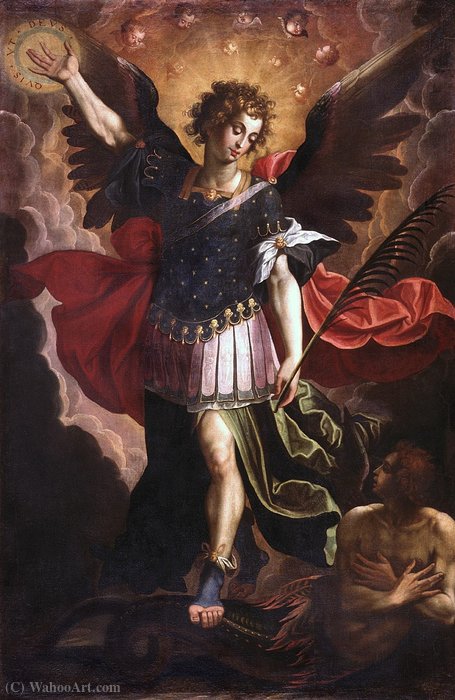
The artistry of Wierix is characterized by an almost hypnotic level of detail, often executed on a remarkably small scale. This intimacy requires the viewer to lean in, discovering a world where every cross-hatch and fine line contributes to a larger, more profound symbolic language. His work serves as a bridge between the meticulous, structured compositions of the Northern Renaissance—reminiscent of the legendary Albrecht Dürer—and the burgeoning emotional drama of the Baroque era. In works such as St Michael Slaying the Dragon, one can witness this transition; the composition possesses the structural integrity of the earlier masters, yet it is infused with a dynamic energy and a sense of divine struggle that anticipates the theatricality of the seventeenth century.
Symbolism, Sin, and the Sacred Narrative
Beyond mere technical virtuosity, Wierix was a master storyteller who utilized the medium of engraving to explore the deepest recesses of the human condition. His prints often functioned as visual sermons, designed to provoke contemplation on morality, virtue, and the eternal struggle between good and evil. This is perhaps most strikingly evident in his allegorical explorations of the Seven Deadly Sins. In his depiction of Acedia, Wierix employs a captivating visual narrative to illustrate the paralyzing nature of sloth and spiritual apathy. Through carefully orchestrated symbolism, he transforms a psychological state into a tangible, haunting image that resonates with both theological depth and artistic grace.
The artist’s repertoire also extended into the profound mysteries of the Christian faith, where he sought to render the divine in a way that was both accessible and awe-inspiring. His Earthly and Heavenly Trinity stands as a testament to his ability to weave complex theological concepts into a cohesive, textured visual experience. In these works, the interplay of light and shadow—achieved through masterful control of the burin—creates a sense of depth that makes the sacred figures appear almost tactile. This capacity to marry the intellectual rigor of humanist thought with the visceral impact of religious devotion allowed his prints to circulate widely across Europe, making him a vital agent in the dissemination of both art and ideology during the Dutch Revolt.
Legacy of an Antwerp Master
The historical significance of Hieronymus Wierix lies not only in the beauty of his individual plates but in his role as a cornerstone of the Flemish printmaking tradition. His career, spanning from the late sixteenth century into the early seventeenth, coincided with some of the most transformative decades in European history. As a member of the Wierix family, he helped establish Antwerp as the preeminent center for the production and distribution of high-quality prints, a legacy that influenced generations of engravers to follow. His ability to navigate the shifting political landscapes of his time—incorporating allegorical and even political themes into his work—demonstrates an artist who was deeply attuned to the pulse of his era.
Today, when we examine the works of Wierix, we see more than just relics of a bygone age; we see the pinnacle of a craft where the hand of the artist and the edge of the tool work in perfect harmony. His contributions can be summarized through several enduring achievements:
- Technical Mastery: The refinement of fine-line engraving techniques that allowed for unprecedented detail on a miniature scale.
- Cultural Influence: A significant role in the global dissemination of religious and humanist ideas through the medium of print.
- Stylistic Synthesis: The successful integration of Renaissance precision with Baroque emotional intensity.
- Dynastic Contribution: Strengthening the prestige of the Antwerp school of engraving through his collaboration with the Plantin Press.

Hieronymus Wierix
1553 - 1619

