
 Esikatselu
 Jaa
Jaa Jaa
Jaa
 Tarkemmat tiedot

 Lataa
Lataa
 Samanlaisia
 Röntgenkuva
 Diaesitys
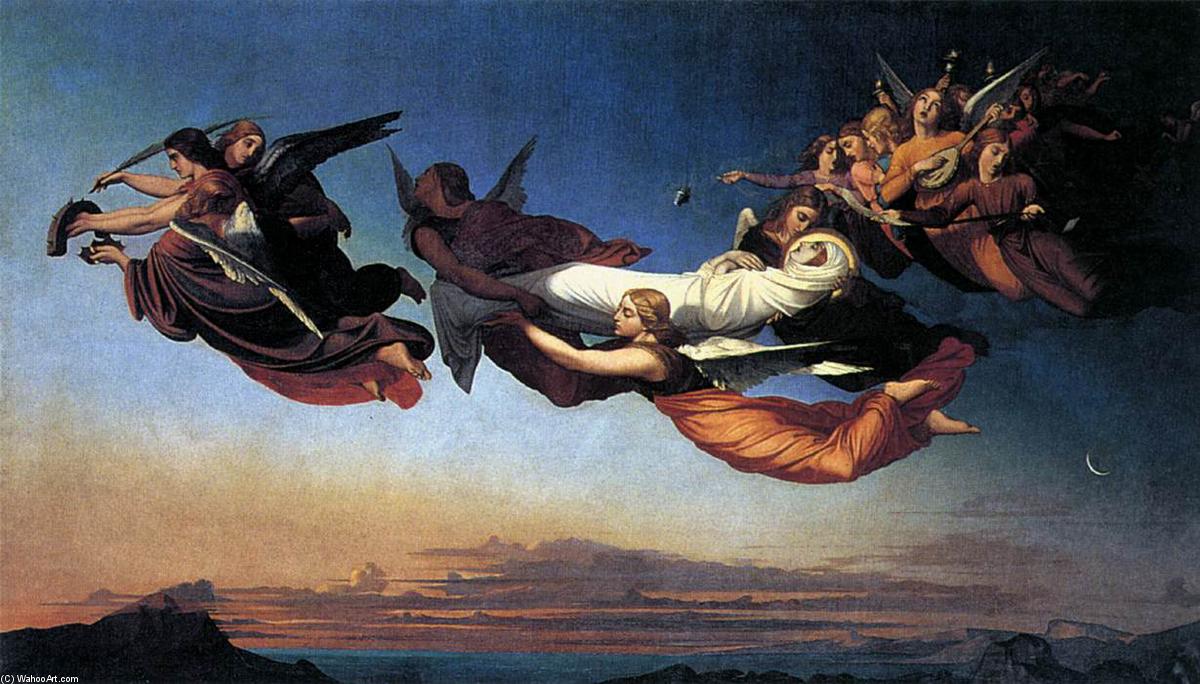
Pyhä Katarina Aleksandrian
 Akryyli kankaalle
- Seinätaide
- Neoclassicism
 1839
1839 152.0 x 262.0 cm
 Musée Fabre
 Näytä lisää
Käsinmaalattu öljykopio
Käsinmaalattu öljyväri kankaalle haluamassasi koossa ja kehyksissä, taiteilijoidemme valmistamana tilauksesta. ( Osta printti Osta kuva)




P118B $10

P118H $10

P118W $10

P438Z $10

P508JH $12

P508YH $12

P805H $10

P805Z $10

P919BZ $10

P919G $10

P919XJ $10

P959ZH $10

P968JZ $12

W106C $8

W218G $10

W218JH $8

W218Y $10

W307PJ $10

W316G $10

W316PJ $8

W316Y $10

W398PJ $8

W4111J $10

W500HY $15

W500JH $15

W692G $12

W849H $8

W940BG $15

W953PJ $8




Valitse valmiista mitoistamme sellaiset, jotka vastaavat teoksen alkuperäisiä mittasuhteita.

Voit syöttää omat mitat sopimaan tiettyyn kehykseen tai tilaan. Jos valitsemasi koko ei vastaa alkuperäisen kuvan mittasuhteita, rajaamme taideteoksen tai jatkamme maalausta käsin maalatuilla elementeillä. Digitaalinen esikatselu lähetetään hyväksyttäväksi ennen tuotannon aloittamista.
Huomioithan, että näytöllä oleva esikatselu ei vastaa todellista rajausta tai jatkamista. Vain digitaalinen mallikuva näyttää lopullisen sommittelun tarkasti.
Vaikka mittatilaustyöt ovat mahdollisia, suosittelemme valitsemaan mitan ennalta määritetystä listasta alkuperäisten mittasuhteiden säilyttämiseksi.
Tilauksen jälkeen OriginalUniqueArt.com -tiimi lähettää asiakkaalle ohjeet ja esikatselukuvan.
Maailmanlaajuinen toimitus () 3–4 viikossa tavallisen 5 viikon sijaan. (18 elokuu). Laadusta ei tingitä.

Ilmainen pikatoimitus ympäri maailman

Korkealaatuinen pellavakangas

Kattava kuljetusvakuutus

Tulliveron palautustakuu

Täydellinen värien vastaavuustakuu

60 päivän palautusoikeus (vain valmistusvirheet)

100% rahat takaisin -takuu

Määräalennus tarjous
 Lasivaihtoehto on saatavilla vain alle 110 cm kokoisina teoksina

Pyhä Katarina Aleksandrian
Reproduktiotekniikka
Replikaatin koko
-


Kokonaishinta
$ 300
Teoksen kuvaus
St Catherine of Alexandria: Een Symbool van Wijsheid en Geloof in de Schoonheid van Henri Lehmann
Henri Lehmann (1814–1882) staat als een belangrijke figuur in de Duitse kunstgeschiedenis, vooral bekend om zijn prachtige portretten en zijn krachtige afbeeldingen van Bijbelse thema’s. Geboren Heinrich Salem Lehmann in Kiel, Duitsland, begon hij zijn artistieke reis aangemoedigd door zijn familie en gevoed door vormende opleiding onder zijn vader, Leo Lehmann—een gerespecteerde Hamburg schilder—en Jean Auguste Dominique Ingres zelf. Deze laatste relatie bleek cruciaal, omdat Lehmann een toegewijd leerling werd en Ingres voor altijd als een hoeksteen van zijn stijl ontwikkelde. Zijn persoonlijke leven was gekenmerkt door een liefdesgeschiedenis met Marie Louise von Bayern, waarmee hij een prominente plaats verworven heeft in het sociale leven van Parijs.Een Onderwerp Voor De Geschiedenis
De kunstenaar Henri Lehmann schilderde St Catherine van Alexandrië rond 1839 en het werk werd gehuisvest bij het Musée Fabre in Montpellier, Frankrijk. Het beeld wordt beschouwd als een hoogtepunt van de Neoclassicistische stijl en een prachtige illustratie van de tijd waarin het ontstond. De afbeelding toont St Catherine van Alexandrië, een heilige die bekend staat om haar marteling, terwijl hij een boek en een zwaard vasthoudt – symbolen die vaak geassocieerd worden met haar legende. Omringd door engelen en cherubs, die elk verschillende activiteiten uitvoeren, zoals het spelen van muziekinstrumenten of het vasthouden van boeken en perkamentrollen, wordt St Catherine afgebeeld in een serene omgeving onder een blauwe hemel, wat contrasteert met de dramatische scène rondom haar figuur.De Kunstenaar’s Visie: Een Neoclassieke Aanpak
Lehmann's stijl werd sterk beïnvloed door het Neoclassicisme, een beweging die de schoonheid en orde van klassieke kunst wilde terugbrengen naar de kunstpraktijk van zijn tijd. Hij gebruikte licht en schaduw om een gevoel van diepte en drie-dimensionaliteit te creëren, waardoor hij een prachtige afbeelding kon maken die zowel technisch onderlegd als emotioneel aangrijpend was. Zijn aandacht voor detail en zijn beheersing van compositie waren kenmerken die hem onderscheidden van andere kunstenaars van zijn generatie. Hij werkte nauw samen met Ingres, wat leidde tot een stijl die zowel elegant als gedetailleerd is. Lehmann’s werk werd erkend door het publiek en hij verwierf internationale reputatie voor zijn prachtige portretten en zijn kunstzinnige interpretaties van religieuze thema's. Een bijzonder belangrijk werk is zijn afbeelding van St Catherine van Alexandrië, die een symbool staat voor wijsheid en geloof en een blijvende inspiratiebron vormt voor kunstenaars en liefhebbers wereldwijd.Een Laat Erfgoed
Henri Lehmann’s nalatenschap leeft voort in zijn prachtige kunstwerken en zijn invloed op latere kunstenaars. Zijn stijl blijft een bron van inspiratie voor kunstenaars die streven naar schoonheid, precisie en emotionele kracht. Een hoogwaardige reproductie van St Catherine van Alexandrië kan een prachtige aanvulling vormen op elke kunstcollectie en een mooie manier zijn om de schoonheid van deze klassieke kunstwerk te waarderen. Een kunstenaar als Lehmann weet een verhaal te vertellen door middel van visuele elementen, waardoor het werk niet alleen technisch hoogstaand is maar ook emotioneel resonerende ervaring biedt voor wie het aanschouwt.Taiteilijan elämäkerta
The Legacy of Henri Lehmann: A Master of Line and Devotion
In the grand tapestry of nineteenth-century French art, few threads are as finely woven as those left by Henri Lehmann. Born Heinrich Salem Lehmann in the quiet dignity of Kiel, Germany, his journey from a student in Hamburg to a celebrated figure in the Parisian salons is a testament to the enduring power of classical discipline. His early years were shaped by the intimate guidance of his father, Leo Lehmann, a respected portraitist, which provided him with a foundational mastery of detail and a deep respect for the human form. However, it was his arrival in Paris in 1831 that would irrevocably alter the course of his life, as he entered the studio of the legendary Jean Auguste Dominique Ingres. This encounter was more than mere mentorship; it was a spiritual and technical initiation into the heart of Neoclassicism.
As a devoted pupil of Ingres, Lehmann did not merely mimic his master’s style but became an essential collaborator in the realization of monumental visions. Their partnership flourished during Lehmann's time in Rome between 1838 and 1841, where the presence of the French Academy allowed him to absorb the grandeur of High Renaissance masters and the stark beauty of classical monuments. This period of Roman study infused his work with a profound sense of historical weight and an architectural precision in draftsmanship. Whether he was working on large-scale religious compositions or intimate portraits, Lehmann’s hand remained guided by that quintessential Ingres-inspired commitment to pure line and idealized grace.
A Versatile Vision: From Sacred Narratives to Secular Elegance
Lehmann’s oeuvre is a remarkable study in versatility, spanning the sacred and the profane with equal command. He possessed a rare ability to navigate the demanding requirements of religious commissions, imbuing biblical scenes with a palpable sense of drama and spiritual clarity. His works for prestigious venues such as the Sainte-Clothilde Church and various judicial palaces demonstrate his capacity to handle complex allegories and theological narratives through a lens of academic excellence. Yet, simultaneously, he was a master of the portrait, capturing the very essence of the nineteenth-century cultural elite. His portraits were not merely likenesses but psychological windows into the era, featuring luminaries such as Franz Liszt and the spirited Marie d'Agoult.
Beyond the religious and the portraiture, Lehmann drew boundless inspiration from the literary and mythological realms. He found profound meaning in the works of Shakespeare and classical mythology, translating poetic themes into visual realities that resonated with the Romantic sensibilities of his time. His ability to blend the rigorous structure of academic painting with the emotive depth of literary subjects allowed him to transcend the label of a "dry" academician. Instead, he emerged as an artist capable of profound elegance, where every brushstroke served to elevate the subject matter toward a state of timeless beauty.
Recognition and Lasting Academic Influence
The trajectory of Lehmann’s career was marked by consistent triumph within the competitive arena of the Paris Salon. His early success, winning a second-class medal in 1835, served as a prelude to a series of prestigious first-class medals in 1840, 1848, and 1855. These accolades were not merely personal victories but affirmations of his standing within the French artistic hierarchy. His integration into the highest echelons of society was complete; he became a French citizen and a respected member of the Institut, embodying the very pinnacle of academic achievement.
Lehmann’s contribution to art extended far beyond the canvas through his role as an educator. As a professor at the École des Beaux-Arts, he sought to pass on the rigorous standards of his training to the next generation of painters. His commitment to excellence was so profound that he established the Lehmann Prize, a legacy designed to recognize and nurture academic distinction in young artists. Today, we remember Henri Lehmann not just as a follower of Ingres, but as a master in his own right—an artist who bridged the gap between German precision and French elegance, leaving behind a body of work that remains a cornerstone of nineteenth-century historical and portrait painting.

Henri Lehmann
1814 - 1882 , Germany
Pikatiedot
- Artistic Movement Or Style: Historical Painting; Portraiture
- Artists Or Movements Influenced By This Artist: Romanticism
- Artists Who Influenced This Artist: Jean Auguste Dominique Ingres
- Date Of Birth: April 14, 1814
- Date Of Death: March 30, 1882
- Full Name: Henri Lehmann
- Nationality: German-French
- Notable Artworks:
- St Catherine of Alexandria
- Lille Lehmann le Repos
- Faustine Léo
- Place Of Birth: Kiel, Germany
Liittyvät artikkelit
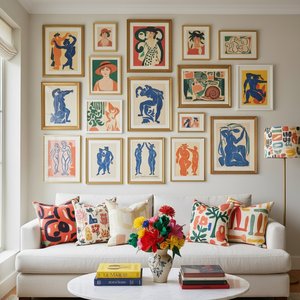
Henri Matissen 25 mestariteosta: Värien ja muodon lumo taidekokoelmissa | OriginalUniqueArt
Tutustu Henri Matissen 25 mestariteokseen – värien ja muodon lumoava maailma! Lue taiteen historiaa, fauvismin syntyä ja löydä inspiraatiota sisustukseesi. Korkealaatuiset taideprintit OriginalUniqueArt.com:ssa.

El Grecon 25 mestariteosta: Taidetta, historiaa ja inspiraatiota kotiisi
Tutustu El Grecon 25 vaikuttavimpaan mestariteokseen! Uppoudu espanjalaisen renessanssin ja manierismin maailmaan. Taidehistoriaa, uskonnollisia maalauksia ja inspiraatiota kotiisi – löydä upeat taidevedokset OriginalUniqueArt.comista.
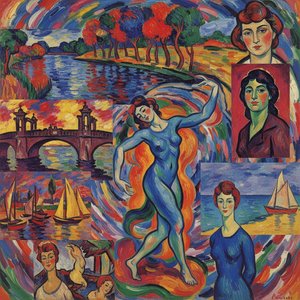
Fauvismin 10 mestariteosta: Värien vallankumous taiteessa – OriginalUniqueArt.com
Tutustu fauvismin 10 mestariteokseen! Uppoudu Henri Matissen, André Derainin ja muiden taiteilijoiden värien vallankumoukseen. Löydä inspiraatiota kotiisi – korkealaatuiset taideprintit OriginalUniqueArt.comista. Tutustu kokoelmaan verkossa!
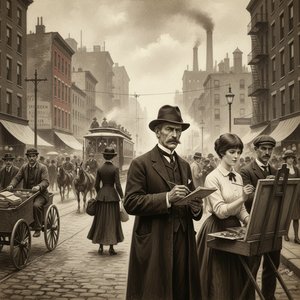
Robert Henri & the Spirit of American Realism: A Legacy of Urban Life and Artistic Independence
Explore the life & legacy of Robert Henri, a pivotal figure in American Realism. Discover his captivating portraits, influence on the Ashcan School, and enduring impact on art history. Learn more at OriginalUniqueArt.
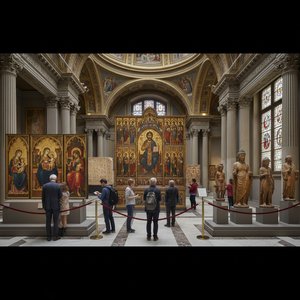
Sacred Narratives Embodied: A Comprehensive Exploration of Religious Iconography in Art History
Explore the rich history of religious iconography in art! Discover symbolism, movements & masterpieces from Byzantine to Renaissance periods. Expert insights for collectors and enthusiasts at OriginalUniqueArt.


