

 Katso seinällä
 Lähetä
 Jaa
Jaa
 Tarkemmat tiedot
 Opas
Opas

 Lataa kuva
 Samanlaisia kohteita
 Röntgenkuvaus
 Diaesitys
 Tilastot
Mercurius
 Oil On Canvas
- WallArt
- Northern Mannerism
 1611
1611 214.0 x 120.0 cm
 Frans Halsin museo
 Lue lisää
Giclée- ja taideprintit
Museolaatuisia giclée- tai kankaitaulun tulosteita nopealla tuotannolla ja joustavilla viimeistelyvaihtoehdoilla. ( Tilaa käsinmaalattu jäljennös Siirry digitaaliseen kuvaan)




P118B €10

P118H €10

P118W €10

P438Z €10

P508JH €12

P508YH €12

P805H €10

P805Z €10

P919BZ €10

P919G €10

P919XJ €10

P959ZH €10

P968JZ €12

W106C €8

W218G €10

W218JH €8

W218Y €10

W307PJ €10

W316G €10

W316PJ €8

W316Y €10

W398PJ €8

W4111J €10

W500HY €15

W500JH €15

W692G €12

W849H €8

W940BG €15

W953PJ €8




Valitse valmiista mitoistamme sellaiset, jotka vastaavat teoksen alkuperäisiä mittasuhteita.

Kirjoita tarvitsemasi leveys ja korkeus, jotta tuloste sopii kehyskokoon tai seinällesi. Tulostetta voidaan vain leikata, sitä ei voi koskaan tehdä suuremmaksi kuin alkuperäinen kuva, joten eri muotoinen koko aiheuttaa osan kuvasta katoamisen. Lähetämme sinulle digitaalisen mallikuvan hyväksyttäväksi ennen kuin aloitamme tulostuksen. Tällä sivulla näkyvä kuva ei näytä lopullista leikkausta — vain mallikuva näyttää sen.
Maailmanlaajuinen toimitus () 2 viikossa tavallisen 4–5 viikon sijaan. (22 lokakuu)

Ilmainen pikatoimitus ympäri maailman

Korkealaatuinen pellavakangas

Kattava kuljetusvakuutus

Tulliveron palautustakuu

Takuu täydellisestä värien vastaavuudesta

100 päivän palautusoikeus valmistusvirhetapauksissa

100% rahat takaisin -takuu

Määräalennus saatavilla
 Lasivaihtoehto on saatavilla vain alle 110 cm kokoisille teoksille

Mercurius
Giclée- ja taideprintit
Replikaatin koko
-


Kokonaishinta
€ 70
The Enigmatic Trio: Mercurius by Hendrik Goltzius
For centuries, the painting “Mercurius” – alongside its companions, Minerva and Hercules – existed as an inseparable trio, a testament to the humanist ideals of knowledge, skill, and virtue. Created in 1611 by the masterful Dutch printmaker Hendrick Goltzius, this work transcends mere portraiture; it’s a carefully constructed allegory, a visual embodiment of intellectual pursuits and their practical application. The painting, now residing at the Frans Hals Museum in Haarlem, offers a captivating glimpse into the artistic and philosophical landscape of early Baroque Netherlands.
Goltzius, born in Braunschweig (modern-day Germany) around 1558, was a pivotal figure in the transition from Mannerism to Baroque art. His training under Dirck Volckertszoon Coornhert instilled in him a profound understanding of engraving technique, but it was his own innovative approach – particularly his “swelling line” – that truly set him apart. This subtle manipulation of the burin allowed him to create lines of varying thickness and density, imbuing his prints with an unprecedented sense of depth and tonal complexity. "Mercurius," therefore, is a prime example of Goltzius’s technical brilliance, showcasing his mastery of line and shadow.
A Mythological Trinity: Symbolism and Interpretation
The painting's subject matter – the figures of Mercury, Minerva, and Hercules – draws directly from classical mythology. Mercury, the swift-footed messenger god, is depicted holding a paintbrush, instantly establishing his association with the arts. His caduceus, entwined with a snake, subtly references both commerce (the serpent’s tail) and healing—a potent symbol of knowledge and its transformative power. Minerva, the goddess of wisdom and strategic warfare, stands as a pillar of intellect and authority, her helmet and shield representing reason and defense against ignorance. Finally, Hercules, the hero renowned for his strength and virtue, embodies practical skill and the triumph over adversity – a direct reflection of the humanist ideal that linked theoretical knowledge with tangible achievement.
The arrangement of these figures is deliberate and symbolic. Minerva’s upright posture and commanding presence suggest leadership and guidance, while Hercules' youthful vigor represents the application of learned principles to real-world challenges. The inclusion of the young Johan Colterman Junior, likely modeled for Hercules, underscores the painting’s connection to the educational aspirations of its commissioning family – a lineage dedicated to both intellectual pursuits and civic responsibility.
A Window into Haarlem's Artistic World
“Mercurius” was created during a period of remarkable artistic flourishing in Haarlem, a vibrant center for printmaking and painting. The Colterman family’s patronage played a crucial role in fostering this environment, attracting artists like Goltzius and contributing to the city's reputation as a hub of innovation. The painting itself reflects the prevailing humanist values of the era – an emphasis on classical learning, civic engagement, and the pursuit of virtue through both intellectual understanding and practical action.
Interestingly, the painting’s history is intertwined with its physical dimensions. Slightly smaller than the earlier Minerva and Mercury works, it suggests a deliberate shift in scale or perhaps a variation in the model's proportions. The original frame also differed slightly from later iterations, adding another layer of intrigue to this already compelling artwork.
A Legacy of Skill and Symbolism
“Mercurius” by Hendrick Goltzius is more than just a beautiful painting; it’s a profound meditation on the relationship between knowledge, skill, and virtue. Through his masterful technique and carefully considered symbolism, Goltzius created an enduring image that continues to resonate with viewers today. Its presence at the Frans Hals Museum serves as a reminder of Haarlem's rich artistic heritage and the lasting impact of this remarkable trio of figures – Mercury, Minerva, and Hercules.
Kysymykset ja vastaukset
Onko teos "Mercurius" yleisvaikutelmaltaan enemmän vaalea vai tumma?
Teoksen Hendrik Goltzius:n "Mercurius" kirkkaus on shadow ja luminanssi Soft Shadow.
Kuinka vanha Hendrik Goltzius oli luodessaan "Mercurius" vuonna 1611?
Kun "Mercurius" luotiin vuonna 1611, Hendrik Goltzius (syntynyt 1558) oli 53 vuotias.
Onko teos "Mercurius" tekijänoikeusvapaa?
Tekijänoikeustiedot teokselle Hendrik Goltzius:n "Mercurius": teos on tekijänoikeusvapaa – sen tekijänoikeussuoja on päättynyt. Tämä määrittää, voidaanko kuvasta tehdä vapaasti jäljennöksiä.
Taiteilijan elämäkerta
Hendrik Goltzius: Mannerist Master of the Dutch Print
Hendrik Goltzius, syntynyt Braunszeugin kaupungissa vuonna 1558 ja kuollut Haarlemissa 1617, oli merkittävä hahmo varhaisen barokin taiteessa. Hän oli tunnettu erityisesti varhaisen barokki-kauden johtava hollantilainen painokuvan tekijä ja piirtäjä, jonka taitavuus ja luovat ideat olivat arvostettuja. Goltziuksen ura alkoi hänen opiskeluajanaan lasimaalarina isänsä johdolla, mutta hän löysi intohimonsa painokuvauksesta, josta hänestä tuli erittäin tunnettu. Hänen taiteellinen kehityksensä oli erityisen merkittävää hänen oikean kätensä vaurioitumisensa vuoksi lapsuudessa, mikä vaikutti hänen piirustustekniikkaansa ja antoi hänelle ainutlaatuisen tyylin. Goltzius muutti Haarlemiin vuonna 1577, jossa hän perusti oman painotalonsa ja sai merkittävää vaikutusta paikalliseen taideyhteisöön. Hän työskenteli myös filippi Gallen palveluksessa luoden Lucretian tarinan kuvauksia. Hänen varhaiset teoksensa heijastavat Mannerismiin kuuluvaa dramaattisuutta ja monimutkaisuutta, mutta hänen matkansa Italiaan 1590 muutti hänen tyyliään merkittävästi.Italia ja Klassinen Inspiraatio
Italiaan matka oli Goltziuksen taiteelliselle kehitykselle ratkaiseva. Hän vieraili Roomassa, Napolissa, Venetsiassa ja Firenzessä, ja tutustui antiikin roomalaisten monumenttien ja taideteosten ihmeelliseen maailmaan. Matkalla hän piirsi lukuisia kuvauksia, mukaan lukien merkittäviä patsaita ja arkkitehtonisia rakennelmia. Nämä kokemukset inspiroivat häntä ottamaan käyttöön klassisia elementtejä omissa teoksissaan, mikä näkyi hänen myöhemmissä painokuvissaan. Goltzius oli erityisen vaikuttunut Bartholomeus Sprangerin tyylistä ja pyrki jäljittelemään hänen dramaattista ja tunteellista tyyliään.Tekniikka ja Tyylilliset Ominaisuudet
Goltziuksen piirustustekniikka oli erittäin kehittynyt, ja hän oli tunnettu "swelling line" -tekniikastaan, jossa hän manipuloi buriinia luodakseen muuttuvia viivojen paksuuksia ja ohuuksia. Tämä tekniikka mahdollisti hänelle luoda syvyyttä ja varjoja painokuvissa tavalla, joka oli aivan uusi tuolloin. Hän oli myös pioneerina "dot and lozenge" -tekniikassa, jossa hän loi tarkkoja sävyjä käyttämällä pisteitä ja lohikäärmeitä ristikkäispiirustuksen avulla. Goltzius oli tunnettu myös kyvystään jäljitellä muiden taiteilijoiden tyyliä, erityisesti Dürerin ja Sprangerin, mikä lisäsi hänen omaa mainettaan ja vaikutustaan.Teokset ja Perintö
Goltziuksen tuotannossa oli noin 500 piirustusta ja noin 50 painokuvaa. Hänen tunnetuimpia teoksiaan ovat "Jupiter", "Minerva", "Prophet Baruch" ja "The Fall of Phaeton". Hän myös piirsi Lucretian tarinan kuvauksia, jotka olivat erittäin suosittuja tuolloin. Goltziuksen painokuvat olivat arvostettuja koko Euroopassa, ja hänellä oli monia kuninkaallisia ja vaikutusvaltaisia asiakkaita. Hänen työnsä on edelleen esillä useissa museoissa ympäri maailmaa, kuten Los Angelesin maakuntamuseossa, Philadelphiaan maakuntamuseossa ja Lontoon British Museumissa. Goltziuksen perintö elää hänen innovatiivisena tyylinsä ja vaikutuksensa taiteen historiaan.Yhteenveto
Hendrik Goltzius oli monipuolinen ja lahjakas taiteilija, joka jätti pysyvän jäljen varhaisen barokin taiteeseen. Hänen taitonsa, luovuutensa ja innovatiiviset tekniikkansa tekevät hänestä yhden hollantilaisen taiteen merkittävimmistä hahmoista. Goltziuksen painokuvat ovat edelleen arvostettuja ja inspiroivia taiteilijoille ympäri maailmaa. Hänen työnsä on todiste siitä, kuinka taide voi ylittää aikojen rajat ja jatkaa vaikuttamasta ihmisten elämään ja ajatteluun.
Hendrik Goltzius
1558 - 1617 , Saksa
Tietoa taiteilijasta
- Artistic Movement Or Style: Mannerismi & Barokkprintti
- Artists Or Movements Influenced By This Artist: ['Bellange, Jacques']
- Artists Who Influenced This Artist: ['Coornhert, Dirck']
- Date Of Birth: Tammi/helmikuu 1558
- Date Of Death: Tammikuu 1617
- Full Name: Hendrik Goltzius
- Nationality: Alankomaalainen
- Notable Artworks:
- Jupiter
- Minerva
- Prop. Baruch
- Place Of Birth: Braunschweig, Italia
Aiheeseen liittyvät artikkelit

Barokin loisto: Kuinka tuoda ylellisyyttä ja tunnetta nykyaikaiseen sisustukseen
Tutustu barokki sisustuksen loistoon! Opi luomaan ylellistä ja tunnelmallista kotia historiallisen tyylin inspiroimana. Vinkkejä, esimerkkejä ja in apua.
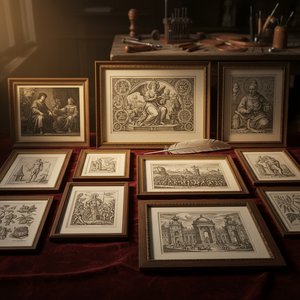
10 legendaarista mestariprinttiä, jotka mullistivat taiteen – OriginalUniqueArt.com
Tutustu 10 legendaariseen mestariprinttiin, jotka muuttivat taiteen suuntaa! Albrecht Dürerin, Rembrandtin ja Goyan teoksia – tarinat, tekniikat & inspiraatio sisustukseen. Löydä kaikki mestariteokset OriginalUniqueArt.com:sta.

Drama and Distortion: A Definitive Guide to the Mastery of Mannerism and Baroque Art
Explore the dramatic evolution from Mannerist distortion to Baroque grandeur. Discover how light, shadow, and emotion redefined art history through a masterclass in technical mastery and religious fervor.

Hendrick Goltzius: Master Engraver & the Flourishing of Dutch Mannerism
Explore the life & art of Hendrick Goltzius, a master engraver of Dutch Mannerism. Discover his innovative techniques, iconic engravings like 'Jahel', and lasting influence on Baroque art. Learn about collecting Goltzius today.

Engraving: A Historical Survey of Technique, Artistic Expression & Enduring Legacy
Explore the rich history of engraving with OriginalUniqueArt. Discover techniques, iconic artists like Dürer & Callot, collecting tips, and expert guidance for preserving your art investment. Learn about intaglio printing & more!

