

 Esikatselu
 Jaa
Jaa Jaa
Jaa
 Tarkemmat tiedot

 Lataa
Lataa
 Samanlaisia
 Röntgenkuva
 Diaesitys
Fishermen by Moonlight
 Acrylic On Canvas
- WallArt
- Baroque Netherlands
 1620
1620 144.0 x 195.0 cm
 Rijksmuseum
 Näytä lisää
Giclée-printit ja taideprintit
Museolaatuisia giclée- tai kankaitaulun tulosteita nopealla tuotannolla ja joustavilla viimeistelyvaihtoehdoilla. ( Osta käsintehty maalaus Osta kuva)




P118B $10

P118H $10

P118W $10

P438Z $10

P508JH $12

P508YH $12

P805H $10

P805Z $10

P919BZ $10

P919G $10

P919XJ $10

P959ZH $10

P968JZ $12

W106C $8

W218G $10

W218JH $8

W218Y $10

W307PJ $10

W316G $10

W316PJ $8

W316Y $10

W398PJ $8

W4111J $10

W500HY $15

W500JH $15

W692G $12

W849H $8

W940BG $15

W953PJ $8




Valitse valmiista mitoistamme sellaiset, jotka vastaavat teoksen alkuperäisiä mittasuhteita.

Voit syöttää omat mitat sopiaksesi tiettyyn kehykseen tai tilaan. Jos valittu koko ei vastaa alkuperäisen kuvan mittasuhteita, rajaamme teosta tai laajennamme kuvaa peilatulla tai yhtenäisellä reunalla. Digitaalinen mallikuva lähetetään hyväksyttäväksi ennen tuotannon aloittamista.
Huomaathan, että näytöllä näkyvä esikatselu ei vastaa lopullista rajausta tai laajennusta. Vain mallikuva näyttää lopullisen sommittelun tarkasti.
Vaikka räätälöityjä kokoja on saatavilla, suosittelemme valitsemaan mitat valmiista listasta alkuperäisten mittasuhteiden säilyttämiseksi.
Toimitus maailmanlaajuisesti () kahdessa viikossa tavallisen 4–5 viikon sijaan. (29 elokuu)

Ilmainen pikatoimitus ympäri maailman

Korkealaatuinen pellavakangas

Kattava kuljetusvakuutus

Tulliveron palautustakuu

Täydellinen värien vastaavuustakuu

60 päivän palautusoikeus (vain valmistusvirheet)

100% rahat takaisin -takuu

Määräalennus tarjous
 Lasivaihtoehto on saatavilla vain alle 110 cm kokoisina teoksina

Fishermen by Moonlight
Giclée-printit ja taideprintit
Replikaatin koko
-


Kokonaishinta
$ 80
A Serene Vision of Dutch Winter: Hendrick Avercamp’s *Fishermen by Moonlight*
Hendrick Avercamp's *Fishermen by Moonlight*, painted in 1620, is more than just a depiction of a winter scene; it’s a poignant window into the soul of the Dutch Golden Age. Measuring 144 x 195 cm, this remarkable canvas captures a moment of quiet industry and profound beauty – a testament to Avercamp's unique perspective and masterful technique. The painting immediately draws the viewer in with its luminous quality, achieved through Avercamp’s skillful use of light and shadow, particularly the ethereal glow of the moon reflecting upon the dark waters.
- Subject Matter: The scene unfolds with a group of fishermen diligently at work under the watchful eye of the moon. Several boats are scattered across the water, each occupied by individuals engaged in their trade – a quintessential representation of Dutch coastal life during the 17th century.
- Composition: Avercamp’s compositional choices contribute significantly to the painting's impact. The arrangement of the boats and figures creates a sense of depth and movement, while the central placement of the moon serves as a focal point, guiding the viewer’s gaze across the scene.
The Artist’s Unique Vision: Avercamp and His Silence
Hendrick Avercamp (1585-1634), born in Amsterdam, was a truly singular figure in Dutch art history. His early life, marked by mutism and likely deafness – earning him the affectionate nickname “de Stomme van Kampen” – profoundly shaped his artistic approach. Rather than viewing this as a limitation, Avercamp seemingly honed his observational skills to an extraordinary degree, meticulously recording the details of the world around him with remarkable precision. This is particularly evident in *Fishermen by Moonlight*, where every element—from the texture of the boats’ hulls to the expressions on the fishermen's faces—is rendered with astonishing realism. His training under Pieter Isaacsz and possible influences from David Vinckboons are subtly interwoven into his distinctive style, creating a harmonious blend of portraiture and landscape painting.
Technique and Style: A Masterclass in Dutch Realism
Avercamp’s technique is characterized by its meticulous detail and atmospheric perspective. He employed oil paints with remarkable control, layering thin glazes to achieve the luminous effects so characteristic of his work. The use of cool blues and greens dominates the palette, reflecting the cold light of the moon and creating a sense of stillness and tranquility. Notice the subtle gradations in tone that define the water’s surface, conveying the movement of the waves and the reflection of light. This attention to detail extends to the figures themselves, who are depicted with a naturalism rarely seen in contemporary art. The painting exemplifies the Dutch Golden Age's commitment to realism, yet it transcends mere representation through Avercamp's profound understanding of light and atmosphere.
Symbolism and Emotional Impact
*Fishermen by Moonlight* is not simply a record of a winter scene; it’s imbued with symbolic meaning. The fishermen represent the industrious spirit of the Dutch people, their livelihoods inextricably linked to the sea. The moon itself symbolizes hope, guidance, and perhaps even divine protection. The inclusion of a dog – a common sight in Dutch coastal communities – adds a touch of domesticity and warmth to the otherwise austere scene. The overall effect is one of quiet contemplation and serene beauty, inviting viewers to reflect on the relationship between humanity and nature, and the enduring spirit of the Dutch people. This painting evokes a sense of nostalgia for a simpler time, capturing the essence of a bygone era with remarkable sensitivity.
Taiteilijan elämäkerta
A Pioneer of Dutch Winter: The Life and Art of Hendrick Avercamp
Hendrik Avercamp, a name inextricably linked to the shimmering, frozen landscapes of the Dutch Golden Age, was born in Amsterdam on January 27, 1585. His life story is as captivating as his art—a tale woven with threads of artistic innovation, personal resilience, and a unique connection to the rhythms of nature. From an early age, it became evident that Avercamp existed within a world perceived differently than most; he was mute, and likely deaf, earning him the affectionate yet defining moniker “de Stomme van Kampen” – the Mute of Kampen. This perceived limitation, however, did not stifle his artistic voice but perhaps sharpened his observational skills, allowing him to translate the nuances of the Dutch winter onto canvas with an unparalleled clarity and charm. Initially studying under Pieter Isaacsz, a portrait painter in Amsterdam, Avercamp’s early influences likely extended to David Vinckboons, whose style—characterized by a focus on atmospheric perspective and dynamic compositions—can be discerned in some of his earlier works. In 1608, he made the momentous decision to relocate to Kampen, a small town in Overijssel province, where he would spend the majority of his life and establish himself as a truly singular and celebrated artist.Capturing a Frozen World: Artistic Style and Innovation
Avercamp stands apart as one of the first dedicated landscape painters of the 17th-century Dutch school—a period traditionally dominated by portraiture, history painting, and still life. He carved his niche by specializing in winter scenes—a subject rarely explored with such consistent focus before him. His paintings aren’t merely depictions of cold weather; they are vibrant, almost theatrical snapshots of Dutch life unfolding on the ice. Figures skate with joyous abandon, sleds carve through snowdrifts, *kolf* (a form of golf played on ice) is enjoyed by gentlemen in elaborate attire, and families simply revel in the beauty of a winter wonderland—creating a lively tapestry of human activity against the stark, breathtaking backdrop of the frozen landscape. Avercamp’s skill lies not only in his technical mastery but also in his ability to convey both the biting chill of the season and the warmth of communal enjoyment. He masterfully employed aerial perspective, subtly shifting colors and details to create a convincing sense of depth—drawing the viewer into these icy worlds as if they were standing right there on the frozen riverbank. His technique often involved applying watercolor washes over meticulously drawn pen-and-ink outlines, creating delicate, luminous effects that captured the ethereal quality of winter light. These smaller works, frequently sold as finished pieces intended for inclusion in collectors’ albums, were particularly prized for their intimate scale and captivating charm.Influences and Development: From Bruegel to Dutch Realism
While Avercamp forged his own distinctive style, he wasn't working entirely in isolation. The influence of Flemish masters like Pieter Bruegel the Elder is undeniably present in his early compositions—the bustling scenes filled with numerous figures engaged in everyday activities, reminiscent of Bruegel’s depictions of peasant life. However, Avercamp moved beyond mere imitation, developing a uniquely Dutch sensibility characterized by meticulous detail and a keen observation of light and atmosphere. He embraced the growing trend towards realism within Dutch painting, accurately portraying the clothing, tools, and customs of his time—reflecting the practical realities of life in Kampen. His work also subtly reflects the climatic conditions of the Little Ice Age, a period of unusually cold winters in Europe during which Avercamp was born, undoubtedly fueling his fascination with frozen landscapes and the human capacity to endure hardship with resilience and humor. Unlike some contemporaries who might idealize their subjects, Avercamp presented a realistic—and often delightfully humorous—view of life, including playful details that hint at human foibles and everyday occurrences.A Life Shaped by Silence: The Significance of “De Stomme”
Hendrick’s inability to speak profoundly shaped his artistic vision. While some might have viewed this as a limitation, it arguably sharpened his observational skills, forcing him to rely on visual cues and an acute awareness of the world around him. His nickname, "de Stomme van Kampen" (the Mute of Kampen), reflects both his physical condition and his somewhat isolated existence in the small town. It’s believed that Avercamp's silence fostered a deep connection with nature—a silent observer of the changing seasons and the rhythms of rural life. This intimate relationship is powerfully conveyed in his paintings, where he captures not just the visual appearance of winter but also its emotional resonance—the sense of quiet contemplation, the warmth of human companionship, and the enduring beauty of the natural world. The fact that he continued to produce such vibrant and detailed works despite this significant personal challenge speaks volumes about his artistic dedication and inner strength.Legacy and Historical Significance
Hendrick Avercamp’s impact on Dutch painting is considerable. He not only popularized the winter landscape as a legitimate subject for artistic exploration but also helped to define a distinctly Dutch approach to landscape painting—one that emphasized realism, atmospheric effects, and the depiction of everyday life. His work provided inspiration for later generations of artists, influencing painters like Jacob van Ruisdael and even Rembrandt van derlyn. Avercamp’s legacy extends beyond his artistic achievements; he represents a triumph over adversity, demonstrating that creative expression can flourish even in the face of personal challenges. He died in Kampen on May 15, 1634, leaving behind a remarkable body of work—a testament to his unique vision and enduring appeal. His paintings are now housed in major museums around the world, including the Rijksmuseum in Amsterdam and the Mauritshuis in The Hague, ensuring that his vibrant winter landscapes continue to captivate audiences for generations to come.Notable Works
- Winter Landscape with Skaters: Perhaps his most iconic work, this painting exemplifies Avercamp’s mastery of capturing the energy and atmosphere of a Dutch winter scene.
- Street in Delfi: A rare example of Avercamp venturing beyond landscapes, showcasing his skill in depicting town life.
- Enjoying the Ice near a Town: Demonstrates his ability to create dynamic compositions filled with numerous figures engaged in various activities.

Hendrik Avercamp
1585 - 1634 , Alankomaat
Pikatiedot
- Artistic Movement Or Style: Dutch Golden Age painting
- Artists Who Influenced This Artist:
- Pieter Isaacsz
- David Vinckboons
- Date Of Birth: 1585
- Full Name: Hendrick Avercamp
- Nationality: Dutch
- Notable Artworks:
- Winter Landscape with Skaters
- Street in Delfi
- Place Of Birth: Amsterdam, Netherlands
Liittyvät artikkelit

Golden Light & Dutch Skies: The Timeless Magic of Dutch Golden Age Landscapes
Discover the breathtaking beauty of Dutch Golden Age landscapes. Explore the mastery of light, chiaroscuro, and 17th-century realism through an expert art history lens, celebrating the enduring legacy of the Dutch Masters for discerning collectors and art lovers.
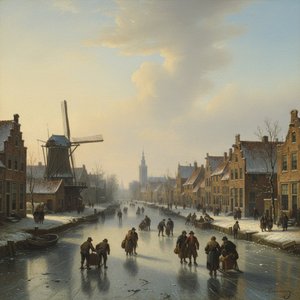
Charles Leickert: Capturing the Dutch Golden Age Light – A Comprehensive Study of Technique, Context, and Legacy
Explore the captivating winter landscapes of Charles Leickert, a master of Dutch Golden Age light & atmosphere. Discover his techniques, symbolism, and lasting legacy – a comprehensive study for art enthusiasts and collectors.

Hollantilaisen kultakauden 10 mestariteosta – Taidetta kotiisi OriginalUniqueArt.com
Uppoudu hollantilaisen kultakauden taiteen maailmaan! Tutustu Rembrandtin, Vermeerin ja muiden mestareiden ikonisiin maalauksiin. Löydä inspiraatiota kotiisi OriginalUniqueArt.com:ista – laadukkaat taidevedokset ja sisustustaulut jokaiseen tilaan. Explore the full collection online!

Golden Light & Dutch Skies: Bringing the Magic of Dutch Golden Age Landscapes into Your Home
Transform your home with the breathtaking light of Dutch Golden Age landscapes. Discover how hand-painted oil reproductions of masterworks like Ruisdael and Vermeer bring timeless elegance, atmosphere, and soulful texture to modern interiors. Elevate your space with museum-quality art.
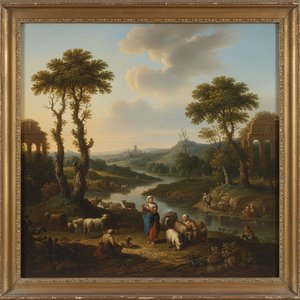
Nicolaes Berchem: Dutch Golden Age Pastoralism & the Evolution of Landscape Painting
Explore the captivating world of Nicolaes Berchem, a leading Dutch Golden Age painter. Discover his idyllic landscapes, masterful technique & lasting influence on art history. Learn more at OriginalUniqueArt.



