
 Esikatselu
 Jaa teos
 Jaa
Jaa
 Tiedot
 Opas
Opas

 Lataa kuva
 Samanlaisia kohteita
 Röntgenkuvaus
 Diaesitys
 Kysymykset ja vastaukset
 Tilastot
Christus before Pilate (detail)


 Lue lisää
Saat tulostusvalmiin tiedoston, jonka laatu ylittää verkkonäkymän huomattavasti. Jokainen myymämme digitaalinen kuva on peräisin arkistomme korkearesoluutioisesta mestariteoksesta — yleensä 5 000–15 000 pikselin levyisenä — joten voit tulostaa suuria kokoja, rajata tiukasti tai toistaa hienovaraiset yksityiskohdat luottavaisin mielin.
Mikään tiedosto ei lähde studiostamme muuttamatta. Digitaalinen asiantuntija vertaa värejä alkuperäiseen maalaukseen ja korjaa niitä tarvittaessa, minkä jälkeen hän parantaa kuvan selkeyttä ja yksityiskohtia ammattimaisilla retusointityökaluilla — säilyttäen aina uskollisena taiteilijan siveltimenjäljen ja tyylin. Lopputuloksena on kuva, joka näyttää maalaukselta, eikä suodatetulta skannaukselta.
Hyväksyt työn ennen valmistumistaan: asiantuntijamme lähettää kuvan tarkistettavaksi sähköpostitse 72 tunnin kuluessa. Etkö ole tyytyväinen? Pyydä parannuksia tai korjauksia, tai pyydä hyvitystä, mikäli laatu ei vastaa odotuksia.
Tämä on laatua, johon kustantamot, design-studiot, galleriat ja painotalot luottavat.
Digitaalinen kuva
Lataa korkearesoluutioinen tiedosto henkilökohtaiseen näyttelyyn, tulostamiseen ja luoviin projekteihin. ( Vaihda tulosteeseen Osta käsinmaalattu taideteos)
Sisältyy jokaiseen digitaalisen kuvan tilaukseen
Asiantunteva digitaalinen toimitus, laatu taattu
Kun valitset OriginalUniqueArt.com-palvelun, et saa vain kuvaa – saat ammattimaisesti viimeistellyn digitaalisen taideteoksen, joka on luotu tarkkuudella ja jonka takaa tulee tyytyväisyystakuu. Tässä on kaikki, mitä tilauksesi sisältää, automaattisesti:

Nopea sähköpostitoimitus
Saat korkearesoluutioisen digitaalisen kuvatiedostosi sähköpostiisi 72 tunnin kuluessa tilauksesta – valmiina käytettäväksi välittömästi.

Tekoälyllä parannettu digitaalinen tiedosto
Teoksesi on optimoitu ammattimaisesti edistyneiden tekoälytyökalujen ja manuaalisen jälkikäsittelyn avulla, mikä takaa maksimaalisen yksityiskohtaisuuden, selkeyden ja väritarkkuuden.

Ilmainen uudelleenlähetys elinikäisesti
Oletko vahingossa poistanut tai kadottanut tiedostosi? Ei hätää – lähetämme sen sinulle uudelleen milloin tahansa täysin maksutta.

Ei tuontimaksuja – koskaan
Nauti taiteestasi välittömästi ilman tullimaksuja, veroja tai toimituskuluja – digitaaliset lataukset ovat aina verovapaita.

Värintoiston tarkkuustakuu
Varmistamme, että digitaalinen kuvasi vastaa alkuperäisiä värejä mahdollisimman tarkasti käyttämällä ammattilaistason työkaluja ja värinhallintaa.

100 päivän tyytyväisyystakuu
Jos et ole tyytyväinen digitaaliseen kuvaasi, muokkaamme sitä tai palautamme 100% hinnan 100 päivän kuluessa – kysymystä ei esitetä.

100% Rahat takaisin -takuu
Et ole tyytyväinen? Saat täyden hyvityksen 100 päivän kuluessa digitaalisen tiedostosi vastaanottamisesta – kysymystä ei esitetä.

Määräalennukset
Osta 3 kuvaa, säästä 10% - Osta 5, säästä 15% - Osta 10+, säästä 20%. Erinomainen valinta luoviin projekteihin, gallerioille ja toimistoille.
A Divine Encounter in the Northern Renaissance
In the quiet intensity of Hans Multscher’s 1437 masterpiece, Christus before Pilate (detail), we are invited to witness one of the most profound confrontations in human history. This exquisite detail from the Wurzach Altar does not merely depict a biblical event; it captures the very breath held between two worlds: the eternal and the temporal. As Jesus Christ stands before the Roman governor, the canvas vibrates with the tension of a trial that would alter the course of civilization. Multscher, a pioneer of German realism, moves beyond the flat, symbolic gestures of the Gothic era to present a scene where every furrowed brow and heavy fold of fabric tells a story of spiritual weight and earthly consequence.
The artistry of this piece lies in its breathtaking commitment to Northern Renaissance Realism. Utilizing the delicate medium of oil paint on fir wood, Multscher achieved a level of textural nuance that was revolutionary for his time. One can almost feel the heavy, tactile quality of the garments worn by the gathered crowd—the rougher textures of commoners contrasted against the more refined attire of those in positions of authority. This meticulous attention to detail serves a higher purpose than mere decoration; it grounds the divine narrative in a palpable, physical reality, making the miraculous feel disturbingly present and human.
Symbolism and the Language of Light
Every element within this composition is imbued with deep theological significance, designed to guide the viewer toward spiritual contemplation. The central figure of Christ is marked by a subtle yet unmistakable halo, a luminous emblem of his divine nature that pierces through the surrounding earthly chaos. Around him, the faces of the onlookers form a mosaic of human emotion—fear, doubt, skepticism, and apprehension. These expressions serve as a mirror for the viewer's own soul, reflecting the universal struggle to recognize truth amidst the noise of worldly judgment.
The interplay of light and shadow, or chiaroscuro, plays a vital role in directing the narrative flow. Light falls upon Christ with a clarity that suggests an inner radiance, while the deeper shadows enveloping the periphery represent the uncertainty and moral ambiguity of Pilate’s court. For the collector or the interior designer, this painting offers more than just visual beauty; it provides a focal point of profound intellectual and emotional depth. It is a piece that commands attention, inviting long periods of study and reflection, making it an ideal centerpiece for spaces dedicated to thought, heritage, and the appreciation of fine classical art.
A Legacy of Faith and Humanism
To look upon this work is to step into the cultural heart of 15th-century Ulm. Created during a period of intense religious fervor and the burgeoning movement of Northern Humanism, Multscher’s work embodies the era's desire to find the sacred within the natural world. His travels through France and the Netherlands clearly left an indelible mark on his technique, allowing him to bring a sophisticated, international realism to the German landscape. This painting is not just a relic of the past; it is a living testament to the moment when art began to look more closely at the human condition.
Whether displayed in a private gallery or as a sophisticated element of a curated interior, a high-quality reproduction of this detail allows the timeless drama of Multscher’s vision to inhabit modern spaces. It brings with it an atmosphere of historical gravity and artistic excellence, offering anyone who appreciates the masters a window into a period where every brushstroke was an act of devotion.
Kysymykset ja vastaukset
Miten teoksen Hans Multscher:n "Christus before Pilate (detail)" värikompositio on rakennettu?
Hans Multscher:n "Christus before Pilate (detail)" teoksen väriyhdistelmä yhdistää Statement kontrastin ja Softly Mixed Palette harmonian.
Millainen tunnelma teoksella "Christus before Pilate (detail)" on?
"Christus before Pilate (detail)"-teoksessa on Dramatic tunnelma.
Mitä "Christus before Pilate (detail)" esittää?
Hans Multscher:n "Christus before Pilate (detail)" esittää: religious art, medieval painting, christian iconography, pilate trial, crucifixion scene, renaissance style, german sculpture.
Taiteilijan esittely
A Pioneer of German Realism: The Life and Art of Hans Multscher
Hans Multscher, a name often overshadowed by the towering figures of his contemporaries, nevertheless stands as a crucial bridge between the late Gothic and burgeoning Renaissance in Germany. Born around 1400 in the small Bavarian town of Reichenhofen – now part of Leutkirch im Allgäu – he possessed an inquisitive spirit and a keen eye for artistic innovation that propelled him beyond the stylistic confines of his time. Multscher wasn’t merely a passive recipient of prevailing trends; he actively sought out new influences, embarking on journeys that profoundly shaped his distinctive aesthetic vision. These travels likely took him to the vibrant artistic centers of northern France and the Netherlands, exposing him to the burgeoning realism and meticulous detail characteristic of Early Netherlandish painting – a style that would become inextricably linked with his own work. His life was not one of grand courtly patronage but rather one rooted in the industrious spirit of Ulm, where he established himself as a free citizen in 1427, marking a pivotal moment in his career and solidifying his position within the thriving commercial hub of the Danube River. There, alongside his brother Heinrich, he founded a workshop that quickly gained renown for its innovative sculptures and paintings, becoming a significant force in shaping artistic production throughout Swabia.The Workshop and Artistic Development
The Multscher workshop wasn’t simply a factory churning out art; it was a dynamic environment of experimentation and collaboration. Hans oversaw a substantial team – records indicate as many as sixteen assistants at times – fostering an atmosphere where the traditions of late Gothic forms were gradually infused with the naturalism he had absorbed during his travels. This blending is particularly evident in his sculptural work, which moved away from the elongated figures and stylized drapery typical of the late Gothic period towards more anatomically accurate representations and a greater sense of emotional depth. The faces of his subjects weren’t idealized; they possessed a tangible humanity, reflecting a growing interest in portraying individual character and psychological states. His paintings, though fewer in number than his sculptures, demonstrate an equally compelling shift. The *Wurzacher Altar*, begun in 1437, stands as a testament to this evolving style – a monumental undertaking intended for the church of St. James in Wurzach. This ambitious project, originally conceived as a series of panels depicting scenes from the life of Christ and the Virgin Mary, showcases Multscher’s mastery of oil painting – a relatively new medium at the time – and his remarkable ability to render textures, light, and shadow with breathtaking precision. The altar's panels are not merely decorative; they are imbued with a palpable sense of drama and emotion, reflecting the devotional fervor of the era. It’s important to note that Multscher wasn’t solely focused on religious subjects; his commissions also included secular works, such as the group of emperors adorning the eastern window of Ulm's city hall – a testament to his versatility and appeal to a broad clientele. The workshop’s success was built not just on individual talent but on a systematic approach to training apprentices, ensuring that Multscher’s artistic principles were disseminated throughout Swabia.Key Works and Lasting Legacy
Beyond the *Wurzacher Altar*, several other works cemented Multscher’s reputation as one of Germany's most important artists. The sculpture of *Holy Mary Magdalen*, now housed in Frankfurt’s Liebieghaus, is a particularly poignant example of his ability to convey profound emotion through sculpted form. Her sorrowful expression and the delicate rendering of her hair and clothing reveal a deep understanding of human psychology – a characteristic that distinguishes his work from earlier, more stylized depictions of the Virgin Mary. Another notable piece is the *Man of Sorrows* – copies of which can be found at Ulm Minster – a powerful depiction of Christ’s suffering that reflects the devotional fervor of the era. These pieces, along with his contributions to the Ulm city hall, demonstrate Multscher's skill in both sculpture and painting, as well as his ability to adapt his style to different contexts and patrons. His influence extended far beyond his own lifetime; the workshop he established continued to thrive after his death in 1467, disseminating his artistic principles throughout Swabia and beyond. The legacy of Multscher lies not only in the beauty and technical skill of his art but also in his role as a catalyst for change – a pioneer who helped usher in a new era of realism and naturalism in German art.Influences and Artistic Style
Multscher’s artistic style was shaped by a complex interplay of influences. As mentioned, he drew heavily from the vibrant artistic scene of northern France and the Netherlands, particularly the meticulous detail and realistic portrayal of figures characteristic of Early Netherlandish painting. However, he didn't simply imitate these styles; rather, he synthesized them with his own innate talent and the traditions of late Gothic art. His work retains a certain solemnity and formality reminiscent of the Gothic period, but it is infused with a newfound sense of naturalism and human emotion. The use of light and shadow – *chiaroscuro* – becomes increasingly sophisticated in his later works, creating dramatic effects and adding depth to his compositions. He was also influenced by the humanist movement, which emphasized the study of classical antiquity and promoted a more rational and scientific approach to art. This influence can be seen in his careful attention to anatomical detail and his desire to represent the human form with accuracy and grace.Historical Significance
Hans Multscher’s significance lies not just in the beauty of his individual works but also in his role as a pivotal figure bridging the stylistic transition from the late Gothic period to the burgeoning Renaissance in Germany. He wasn't merely a follower of trends; he actively shaped them, laying the groundwork for subsequent generations of German artists. His work represents a crucial moment in the development of German art – a departure from the stylized conventions of the Gothic period towards a more humanistic and observational approach. While he didn’t entirely abandon traditional forms – elements of Gothic ornamentation can still be detected in his work – he skillfully integrated them with new techniques and aesthetic sensibilities, creating a unique artistic language that resonated deeply with his contemporaries and continues to captivate audiences today. He stands as a testament to the power of artistic exchange and the enduring legacy of those who dare to challenge convention.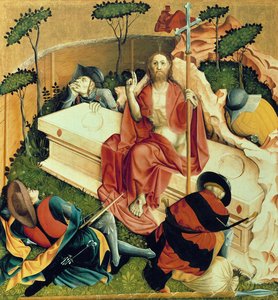
Hans Multscher
1400 - 1467 , Saksa
Pähkinänkuoressa
- Artistic Movement Or Style: Myöhäinen Goottilainen/Renessanssi
- Artists Or Movements Influenced By This Artist: ['Myöhäinen Goottilainen']
- Artists Who Influenced This Artist:
- Pohjois-Frankfurtiin tyylit
- Alankomaiden tyylit
- Date Of Birth: c. 1400
- Date Of Death: 1467
- Full Name: Hans Multscher
- Nationality: Saksa
- Notable Artworks:
- Pyhä Maria Magdalena
- Surujen mies
- Keisarien ryhmä
- Place Of Birth: Reichenbach, Saksa