Esikatselu
 Jaa
Jaa Jaa
Jaa
 Tarkemmat tiedot

 Lataa
Lataa
 Samanlaisia
 Röntgenkuva
 Diaesitys
After the Storm
 Oil On Panel
- Realism
 1872
1872 26.0 x 40.0 cm
 Näytä lisää
Giclée-printit ja taideprintit
Museolaatuisia giclée- tai kankaitaulun tulosteita nopealla tuotannolla ja joustavilla viimeistelyvaihtoehdoilla. ( Osta käsintehty maalaus Osta kuva)




P118B $10

P118H $10

P118W $10

P438Z $10

P508JH $12

P508YH $12

P805H $10

P805Z $10

P919BZ $10

P919G $10

P919XJ $10

P959ZH $10

P968JZ $12

W106C $8

W218G $10

W218JH $8

W218Y $10

W307PJ $10

W316G $10

W316PJ $8

W316Y $10

W398PJ $8

W4111J $10

W500HY $15

W500JH $15

W692G $12

W849H $8

W940BG $15

W953PJ $8




Valitse valmiista mitoistamme sellaiset, jotka vastaavat teoksen alkuperäisiä mittasuhteita.

Voit syöttää omat mitat sopiaksesi tiettyyn kehykseen tai tilaan. Jos valittu koko ei vastaa alkuperäisen kuvan mittasuhteita, rajaamme teosta tai laajennamme kuvaa peilatulla tai yhtenäisellä reunalla. Digitaalinen mallikuva lähetetään hyväksyttäväksi ennen tuotannon aloittamista.
Huomaathan, että näytöllä näkyvä esikatselu ei vastaa lopullista rajausta tai laajennusta. Vain mallikuva näyttää lopullisen sommittelun tarkasti.
Vaikka räätälöityjä kokoja on saatavilla, suosittelemme valitsemaan mitat valmiista listasta alkuperäisten mittasuhteiden säilyttämiseksi.
Toimitus maailmanlaajuisesti () kahdessa viikossa tavallisen 4–5 viikon sijaan. (23 elokuu)

Ilmainen pikatoimitus ympäri maailman

Korkealaatuinen pellavakangas

Kattava kuljetusvakuutus

Tulliveron palautustakuu

Täydellinen värien vastaavuustakuu

60 päivän palautusoikeus (vain valmistusvirheet)

100% rahat takaisin -takuu

Määräalennus tarjous
 Lasivaihtoehto on saatavilla vain alle 110 cm kokoisina teoksina

After the Storm
Giclée-printit ja taideprintit
Replikaatin koko
-


Kokonaishinta
$ 80
Teoksen kuvaus
A Dramatic Symphony of Light and Water – “After the Storm”
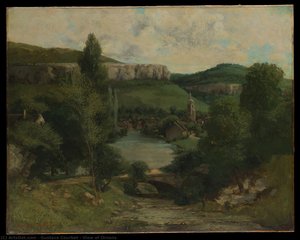
Gustave Courbet’s "After the Storm," painted in 1872, isn't merely a depiction of an ocean scene; it’s a visceral experience. This oil on panel captures a moment of profound transition—the immediate aftermath of a violent storm, where nature’s fury has yielded to a fragile serenity. The painting immediately commands attention with its dramatic palette: the sky explodes in a furious crimson and ochre, mirroring the turbulent energy still lingering within the churning sea below. This isn't a romanticized view of nature; Courbet presents it with unflinching realism, showcasing the raw power and unpredictable beauty inherent in the natural world.
(Image of After the Storm by Gustave Courbet - WikiArt)
The Realist Vision – A Departure from Tradition
“After the Storm” stands as a cornerstone of the Realism movement, a bold rejection of the idealized landscapes and mythological subjects favored by previous generations. Courbet, deeply influenced by his own experiences observing the working class and rural life in France, sought to portray the world as he saw it – unvarnished and authentic. He deliberately eschewed academic techniques, opting for direct observation and an emphasis on capturing the essence of a scene rather than creating a polished imitation. The painting’s composition—the jagged rocks dominating the foreground, the vast expanse of the ocean, and the subtle hints of a distant tree—reflects this commitment to portraying reality without embellishment.
Light, Shadow, and Texture – A Technical Masterclass
Courbet's masterful use of light and shadow is central to the painting’s impact. The dramatic red sky isn’t simply painted; it’s built up through layers of thick impasto—a technique where paint is applied thickly, creating a tactile surface that captures the movement and energy of the storm. The interplay between light and dark defines the forms, particularly in the rocks, which appear to jut out from the canvas with remarkable solidity. The artist skillfully employs *chiaroscuro*, using strong contrasts between light and shadow to create depth and drama. Furthermore, Courbet’s attention to texture—the rough surface of the rocks, the turbulent waves—adds a crucial layer of realism, inviting the viewer to almost feel the spray of the ocean.
Symbolism and Emotional Resonance – A Reflection on Power
Beyond its technical brilliance, “After the Storm” resonates with profound symbolism. The storm itself represents chaos, disruption, and the forces beyond human control. Yet, as the painting progresses towards a calmer horizon, there’s an undeniable sense of hope—a suggestion that even after the most violent upheaval, nature will ultimately restore balance. The lone tree on the left side of the composition could be interpreted as a symbol of resilience, standing firm against the elements. The overall effect is one of awe and contemplation, prompting viewers to consider their own relationship with the power and unpredictability of the natural world. It’s a painting that speaks not just to the eye but also to the soul.
Discovering “After the Storm” – Reproduction Options
OriginalUniqueArt offers meticulously crafted, hand-painted reproductions of Gustave Courbet's "After the Storm," allowing you to bring this iconic masterpiece into your home or office. Our artists replicate Courbet’s distinctive style and technique with exceptional accuracy, ensuring that every detail—from the vibrant colors to the textured brushstrokes—is faithfully reproduced. Available in a range of sizes and materials, our reproductions provide an authentic representation of this seminal work of Realism. To explore options and commission your own reproduction, visit OriginalUniqueArt.com.
Taiteilijan elämäkerta
A Rebel’s Brush: The Life and Legacy of Gustave Courbet
Jean Désiré Gustave Courbet (1819-1877) was a transformative figure in the history of art, recognized as one of the foremost champions of Realism and an uncompromising voice for artistic liberty. His journey from humble beginnings in Ornans, France, to international acclaim wasn’t merely about mastering brushstrokes; it was fueled by a profound conviction that art should reflect the realities of everyday life – unidealized, honest, and imbued with social significance. Growing up amidst a burgeoning bourgeois family instilled in him a certain appreciation for material comfort, yet his artistic spirit demanded something more substantial: an unflinching gaze upon the world as it truly existed.Early Influences and Artistic Training
Courbet’s formative years were marked by encouragement from his mother to pursue his passions for drawing and painting – a nurturing that would prove pivotal in shaping his artistic trajectory. Unlike many artists of his time who received aristocratic patronage, Courbet benefited from modest familial support, allowing him to enroll at the École des Beaux-Arts in Paris in 1839. However, he quickly recognized the limitations imposed by the academy’s rigid academic conventions and Romantic idealism. While acknowledging influences from Eugène Delacroix and Théodore Géricault – artists who explored dramatic narratives and emotional intensity – Courbet deliberately distanced himself from these approaches, prioritizing observation over imagination and striving for accuracy above all else. He sought to capture the essence of his subjects with meticulous detail, rejecting the embellishments characteristic of earlier artistic traditions.The Birth of Realism: Challenging Artistic Conventions
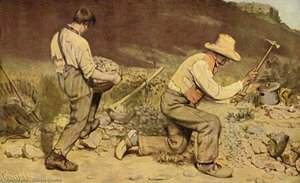
Courbet’s artistic breakthrough arrived through a rejection of prevailing aesthetic standards. He wasn't captivated by mythological tales or heroic portrayals; instead, he turned his attention to the lives of ordinary people – laborers, peasants, and rural artisans – subjects largely ignored by the art establishment. This decision wasn’t merely stylistic; it represented a fundamental assertion about the dignity inherent in these marginalized communities. His early canvases explored landscapes and portraits, but soon focused on scenes depicting working-class life on an ambitious scale previously reserved for monumental historical paintings. Critics initially scorned his uncompromising realism, perceiving it as vulgar and lacking in artistic merit. Yet, Courbet steadfastly defended his vision, arguing that art should serve as a mirror to society – reflecting its complexities and contradictions without resorting to sentimental illusions. The Stone Breakers (1849), tragically destroyed during World War II, stands as an enduring emblem of this commitment to portraying the harsh realities of labor with unflinching honesty.Major Works and Artistic Philosophy
Courbet’s artistic philosophy extended beyond subject matter to encompass technique. He championed a direct approach – applying paint thickly onto the canvas (impasto) – that emphasized the materiality of the medium itself. This method allowed him to convey texture and depth, capturing the physicality of his subjects with remarkable precision. His monumental canvases like A Burial at Ornans (1850-51), depicting a solemn funeral procession in his hometown, provoked considerable controversy due to their sheer size and lack of emotional grandeur. Courbet deliberately eschewed idealized representations, presenting the mourners as ordinary individuals grappling with grief – a bold departure from prevailing artistic conventions. He famously declared that he wanted “to paint what I see,” rejecting the notion that art should strive for beauty or moral upliftment. The Painter’s Studio (1855), an allegorical depiction of his own creative process, further solidified his conviction that art should reflect the artist's inner world and engage with broader social concerns.Legacy and Influence
Gustave Courbet’s impact on subsequent artistic movements is undeniable. He profoundly influenced Impressionists and Post-Impressionists by liberating them from academic constraints and encouraging experimentation with new visual languages. His unwavering dedication to realism paved the way for artists who sought to depict the world authentically, prioritizing observation over imagination. Though initially dismissed as a provocateur, Courbet’s legacy endures as a testament to the transformative power of art – its ability to challenge conventions, provoke debate, and ultimately enrich our understanding of human experience. He died in 1877, leaving behind an unparalleled body of work that continues to inspire artists and scholars alike—a cornerstone of Realism and a beacon for artistic integrity.
Gustave Courbet
1819 - 1877 , Ranska
Pikatiedot
- Artistic Movement Or Style: Realismi
- Artists Or Movements Influenced By This Artist:
- Impressionismi
- Postimpressionismi
- Artists Who Influenced This Artist:
- Eugène Delacroix
- Théodore Géricault
- Caravaggio
- Date Of Birth: 31. heinäkuuta 1819
- Date Of Death: 29. huhtikuuta 1877
- Full Name: Gustave Courbet
- Nationality: Ranskalainen
- Notable Artworks:
- Kivenhakkaajat
- Kuolinmessu Ornansissa
- Place Of Birth: Ornans, Ranska
Liittyvät artikkelit
Romantic Realism's Finest: 10 Masterpieces for Your Home | OriginalUniqueArt
Explore 10 defining masterpieces of Romantic Realism! Discover Courbet, Millet & Daumier's powerful paintings—capturing emotion and social realities. Find museum-quality reproductions for your home at OriginalUniqueArt.com.

Romanttisen maisemamaalauksen mestariteokset: Taidetta ja inspiraatiota kotiin
Uppoudu romanttisen maisemamaalauksen maailmaan! Tutustu Caspar David Friedrichin, Turnerin ja muiden mestareiden ikonisiin teoksiin. Löydä inspiraatiota kotiisi taiteen avulla OriginalUniqueArt.comista – laadukkaat taideprintit ja sisustusideoita.

Evocations of Place: A Historical Journey Through Landscape Art
Explore the rich history of landscape art with OriginalUniqueArt. Discover renowned artists, movements like Impressionism & Romanticism, and expert guidance for collecting timeless pieces. Find your perfect serene escape today!

John Constablein 25 mestariteosta: Taidetta ja tunnelmaa kotiisi – OriginalUniqueArt.com
Tutustu John Constable'n 25 mestariteokseen – romanttisia maisemamaalauksia, jotka vangitsevat englantilaisen luonnon tunnelman. Taidehistoriaa ja inspiraatiota kotiisi OriginalUniqueArt.com:ssa. Löydä kaikki taideteokset verkossa!

Evoking Nature's Sublime: A Comprehensive Exploration of 19th-Century Landscape Painting
Explore the captivating world of 19th-century landscape painting! Discover renowned artists like Friedrich & Monet, key movements, and find the perfect artwork to bring nature's serenity into your home. Expert insights at OriginalUniqueArt.