

 Katso seinällä
 Lähetä
 Jaa
Jaa
 Tarkemmat tiedot
 Opas
Opas

 Lataa kuva
 Samanlaisia kohteita
 Röntgenkuvaus
 Diaesitys
 Tilastot
Lovers Walking

 Lue lisää
Käsinmaalattu öljyvärinen jäljennös
Käsinmaalattu öljyväri kankaalle haluamassasi koossa ja kehyksissä, taiteilijoidemme valmistamana tilauksesta. ( Vaihda tulosteeseen Siirry digitaaliseen kuvaan)




































Valitse valmiista mitoistamme sellaiset, jotka vastaavat teoksen alkuperäisiä mittasuhteita.

Kirjoita tarvitsemasi leveys ja korkeus, jotta teos sopii kehyskehyksiisi tai seinällesi. Koska kyseessä on käsinmaalattu teos, taiteilija voi maalata hieman enemmän kuvan ympärille tai rajata sitä hieman, jos haluat eri muotoisen koon — valinta on sinun. Lähetämme sinulle digitaalisen mallikuvan hyväksyttäväksi ennen kuin maalaus alkaa. Tällä sivulla näkyvä kuva ei vastaa lopullista tulosta — vain mallikuva näyttää sen.
Tilauksen jälkeen OriginalUniqueArt.com -tiimi lähettää asiakkaalle sähköpostitse ohjeet ja esikatselukuvan.
Maailmanlaajuinen toimitus () 3–4 viikossa tavallisen 5 viikon sijaan. (27 lokakuu). Laadusta ei tingitä.

Ilmainen pikatoimitus ympäri maailman

Korkealaatuinen pellavakangas

Kattava kuljetusvakuutus

Tulliveron palautustakuu

Takuu täydellisestä värien vastaavuudesta

100 päivän palautusoikeus valmistusvirhetapauksissa

100% rahat takaisin -takuu

Määräalennus saatavilla
 Lasivaihtoehto on saatavilla vain alle 110 cm kokoisille teoksille

Lovers Walking
Reproduktiotapa
Replikaatin koko
-


Kokonaishinta
€ 264
Taiteilijan elämäkerta
The Luminous Vision of Giuseppe Pellizza da Volpedo
Giuseppe Pellizza da Volpedo stands as a singular figure in the tapestry of Italian art history, a painter who masterfully fused technical innovation with a profound sense of social consciousness. Born in 1868 in the small village of Volpedo, within the Piedmont region, his journey from a wealthy peasant family to the forefront of the Divisionist movement is a testament to his dedication to both aesthetic excellence and progressive ideals. His life, though tragically cut short by suicide at the age of 39, left behind an oeuvre that continues to resonate with its uncompromising realism and symbolic depth, capturing the very heartbeat of a changing era.
The foundations of Pellizza’s artistry were laid under the guidance of Pio Sanquirico, a mentor who instilled in him a rigorous commitment to observing the natural world. This early training emphasized meticulous rendering and an acute sensitivity to light, principles that would later evolve into his signature style. Unlike many of his contemporaries who sought the grandeur of mythic narratives, Pellizza found profound beauty in the mundane. He turned his gaze toward the everyday lives of the working class, finding dignity in rural landscapes and the quiet rhythms of labor. This focus on the tangible reality of human existence was deeply informed by the burgeoning influences of Impressionism and Neo-Impressionism, yet he infused these movements with a uniquely Italian soul and a political urgency.
The Science of Light and the Divisionist Revolution
Pellizza’s most significant contribution to the art world was his sophisticated embrace of Divisionism. Inspired by the pioneering methods of Georges Seurat and Paul Signac, Pellizza moved away from the traditional blending of pigments on a palette. Instead, he adopted a revolutionary technique of juxtaposing small dots or strokes of pure, unmixed color directly onto the canvas. This method relied on the science of optical mixing, where the viewer's eye performs the work of blending the colors at a distance. The result was an ethereal luminosity, an almost vibrating quality of light that captured the subtleties of atmosphere and sun-drenched landscapes with unprecedented precision.
This technique was far more than a mere stylistic choice; for Pellizza, it was a philosophical stance. Through the meticulous application of color, he sought to achieve a clarity of vision that mirrored his desire for social truth. In works such as Washing in the Sun, one can witness this mastery, where the warmth of the light and the texture of drying laundry are rendered with a brilliance that feels both physically present and spiritually uplifting. His ability to manipulate light allowed him to transform simple scenes of domesticity into monumental studies of existence, where every stroke of pigment contributed to a larger, more luminous whole.
Social Consciousness and a Lasting Legacy
Beyond the technical brilliance of his brushwork, Pellizza da Volpedo is remembered as an artist of deep political and social conviction. His work often served as a visual manifesto for the progressive ideals of his time, most notably in his iconic masterpiece, The Fourth Estate (Il Quarto Stato). This painting, which depicts a resolute group of workers advancing forward, became a powerful symbol of the rising consciousness of the proletariat. Through his art, Pellizza elevated the struggles and triumphs of the common people to the level of high art, demanding that the viewer acknowledge the strength and agency of the working class.
The historical significance of Pellizza’s work lies in this rare intersection of scientific technique and social realism. He did not merely document the world; he interpreted it through a lens of hope and structural change. His influence extended far beyond the canvas, as his works were frequently reproduced in socialist magazines, reaching a wide audience and cementing his role as a voice for the marginalized. Today, we remember Giuseppe Pellizza da Volpedo not just as a master of light and color, but as a visionary who used the very particles of paint to illuminate the path toward social justice and human dignity.
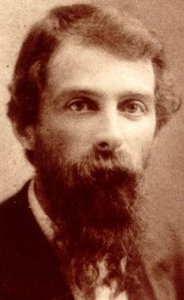
Giuseppe Pellizza da Volpedo
1868 - 1907
Tietoa taiteilijasta
- Artistic Movement Or Style: Divisionism
- Artists Who Influenced This Artist: ['Pio Sanquirico']
- Date Of Birth: 1868
- Date Of Death: 1907
- Full Name: Giuseppe Pellizza da Volpedo
- Nationality: Italian
- Notable Artworks:
- The Fourth Estate
- Portrait of a Man
- The Statue of Villa Borghese
- Love of Life
- Place Of Birth: Volpedo, Piedmont