() ·

A painting made for you, by hand

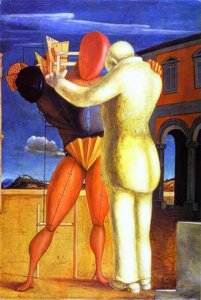
Self Portrait

Käsinmaalattu öljyvärinen jäljennös

Käsinmaalattu öljyväri kankaalle haluamassasi koossa ja kehyksissä, taiteilijoidemme valmistamana tilauksesta. ( Vaihda tulosteeseen Siirry digitaaliseen kuvaan)

Keräilykohteen kuvaus

Experience Giorgio de Chirico’s enigmatic ‘Self Portrait,’ a captivating dreamscape painting from 1911 showcasing a thoughtful man contemplating time and space through a window, embodying the artist's unique surrealist style – discover this iconic artwork.

Taiteilijan elämäkerta

Giorgio de Chirico (1888-1978) oli italialainen taiteilija, jonka metafyysiset maalaukset luovat unenomaisia kaupunkiympäristöjä ja tutkivat ihmisen olemassaolon mysteereitä. Hänen vaikutuksensa surrealismiin on merkittävä.

from ·

Chapter 1

How large should it be?

Slide to change the size; the picture on the left shows the frame at its real width. The proportions of the original are kept.

Vakiokoko
räätälöity
CM
INCH

Valitse valmiista mitoistamme sellaiset, jotka vastaavat teoksen alkuperäisiä mittasuhteita.

leveys
korkeus

Kirjoita tarvitsemasi leveys ja korkeus, jotta teos sopii kehyksiisi tai seinällesi. Koska kyseessä on käsinmaalattu teos, taiteilija voi maalata hieman enemmän kuvan ympärille tai rajata sitä hieman, jos haluat eri muotoisen koon — valinta on sinun. Lähetämme sinulle digitaalisen mallikuvan hyväksyttäväksi ennen kuin maalaus alkaa. Tällä sivulla näkyvä kuva ei vastaa lopullista tulosta — vain mallikuva näyttää sen.

Chapter 2

How should it arrive?

Choose the edges of the stretched canvas

Choose your frame

Corner sample of the WhiteWrap canvas edge finish, stretched on massiivipuu bars
White €1
Corner sample of the BlurSideWrap canvas edge finish, stretched on massiivipuu bars
Blurside €1
Corner sample of the ExtendedWrap canvas edge finish, stretched on massiivipuu bars
Extended €1
Corner sample of the P118B picture frame: valettu polystyreeni, 5 cm wide and 3 cm thick
P118B €10
Corner sample of the P118H picture frame: valettu polystyreeni, 5 cm wide and 3 cm thick
P118H €10
Corner sample of the P118W picture frame: valettu polystyreeni, 5 cm wide and 3 cm thick
P118W €10
Corner sample of the P438Z picture frame: valettu polystyreeni, 5.5 cm wide and 3.5 cm thick
P438Z €10
Corner sample of the P508JH picture frame: valettu polystyreeni, 7 cm wide and 3.5 cm thick
P508JH €12
Corner sample of the P508YH picture frame: valettu polystyreeni, 7 cm wide and 3.5 cm thick
P508YH €12
Corner sample of the P805H picture frame: valettu polystyreeni, 5 cm wide and 3.5 cm thick
P805H €10
Corner sample of the P805Z picture frame: valettu polystyreeni, 5 cm wide and 3.5 cm thick
P805Z €10
Corner sample of the P919BZ picture frame: valettu polystyreeni, 7 cm wide and 3.5 cm thick
P919BZ €10
Corner sample of the P919G picture frame: valettu polystyreeni, 7 cm wide and 3.5 cm thick
P919G €10
Corner sample of the P919XJ picture frame: valettu polystyreeni, 7 cm wide and 3.5 cm thick
P919XJ €10
Corner sample of the P959ZH picture frame: valettu polystyreeni, 5 cm wide and 3 cm thick
P959ZH €10
Corner sample of the P968JZ picture frame: valettu polystyreeni, 6 cm wide and 4 cm thick
P968JZ €12
Corner sample of the W106C picture frame: massiivipuu, 5 cm wide and 3 cm thick
W106C €8
Corner sample of the W218G picture frame: massiivipuu, 5 cm wide and 3 cm thick
W218G €10
Corner sample of the W218JH picture frame: massiivipuu, 5 cm wide and 3 cm thick
W218JH €8
Corner sample of the W218Y picture frame: massiivipuu, 5 cm wide and 3 cm thick
W218Y €10
Corner sample of the W307PJ picture frame: massiivipuu, 6 cm wide and 3 cm thick
W307PJ €10
Corner sample of the W316G picture frame: massiivipuu, 6 cm wide and 3 cm thick
W316G €10
Corner sample of the W316PJ picture frame: massiivipuu, 6 cm wide and 3 cm thick
W316PJ €8
Corner sample of the W316Y picture frame: massiivipuu, 6 cm wide and 3 cm thick
W316Y €10
Corner sample of the W398PJ picture frame: massiivipuu, 5 cm wide and 3 cm thick
W398PJ €8
Corner sample of the W4111J picture frame: massiivipuu, 6.5 cm wide and 3.5 cm thick
W4111J €10
Corner sample of the W500HY picture frame: massiivipuu, 7 cm wide and 5 cm thick
W500HY €15
Corner sample of the W500JH picture frame: massiivipuu, 7 cm wide and 5 cm thick
W500JH €15
Corner sample of the W692G picture frame: massiivipuu, 8 cm wide and 4 cm thick
W692G €12
Corner sample of the W849H picture frame: massiivipuu, 5 cm wide and 3 cm thick
W849H €8
Corner sample of the W940BG picture frame: massiivipuu, 7.5 cm wide and 4.5 cm thick
W940BG €15
Corner sample of the W953PJ picture frame: massiivipuu, 6 cm wide and 3.5 cm thick
W953PJ €8
Corner sample of the H24-GOLD picture frame: kaiverrettua puuta ja gessoa, 10 cm wide and 6 cm thick
H24-GOLD €30
Corner sample of the H24-SILVER picture frame: kaiverrettua puuta ja gessoa, 10 cm wide and 6 cm thick
H24-SILVER €30
Corner sample of the H36-GOLD picture frame: kaiverrettua puuta ja gessoa, 15 cm wide and 6.5 cm thick
H36-GOLD €45
Corner sample of the H36-SILVER picture frame: kaiverrettua puuta ja gessoa, 15 cm wide and 6.5 cm thick
H36-SILVER €45
Kehyksen esikatselu
Kehystetty

Moulding: . Overall size with the frame: .

Chapter 3

Who paints it, and should anything change?

Examples of what can be changed: Replace face with customer photo; Add pet (e.g., replace cat with dog); Include hidden message in background; Change background landscape or elements.
After order, OriginalUniqueArt.com team will email client for instructions and provide a mockup preview

Maailmanlaajuinen toimitus () 3–4 viikossa tavallisen 5 viikon sijaan. (3 marraskuu). Laadusta ei tingitä.

Chapter 4

The finishing touches

A nameplate, as in a museum?

Kaiverretun pronssilaatan tiedot

This elegant plaque features the artist's name and the title of the artwork, finely engraved for a timeless presentation.

It is made from bronze with a refined, elegant finish. The text is precisely laser-engraved for a sharp and permanent result. Measuring 9x2 cm, the plaque is compact yet easy to read. It's built to be durable and scratch-resistant, offering a professional, museum-quality look. Mounting is simple thanks to the included adhesive backing.

Läpinäkyvän akryylilaatan tiedot

The plaque includes essential engraved details such as the artist's name, the title of the artwork, the date it was created, the type of media used-like oil on canvas or watercolor-a brief description of the piece, and a QR code that links to the complete artwork information.

It is crafted from clear acrylic, offering a sleek, modern appearance. The text is UV-engraved in black to ensure strong visual contrast. With a size of 10x15 cm, it ensures optimal readability. It comes equipped with two metal hooks for secure wall mounting. The plaque is designed to be weather-resistant, making it suitable for various environments, and it includes interactive features that work seamlessly with smartphone scanning.

Mustan akryylilaatan tiedot

This elegant plaque includes engraved information such as the artist's name, the title of the artwork, the date it was created, the type of media used (like oil on canvas or watercolor), a short description of the artwork, and a QR code for quick access to more information.

The plaque itself is made from refined black acrylic with a premium finish. The text is laser-engraved in white for high contrast and readability. Its size is 10x15 cm, designed to be easy to read. It comes with two metal hooks for professional mounting. The design is sleek and fits any interior style. It is also weather-resistant and durable, with built-in digital integration for mobile compatibility.

A protective varnish?

When do you need it?

Chapter 5

Your painting, as you ordered it

Self Portrait

Reproduktiotekniikka

Replikaatin koko

-

Kokenut huipputaiteilija

Lisää yksityiskohtia, hienostuneisuutta ja enemmän aikaa tuotantoon

-

Reproduktion kehystysvaihtoehdot

-

-

Teoksille tai reproduktioille, joiden mikä tahansa sivu on suurempi kuin 105 cm (noin 41 tuumaa), kehys toimitetaan osina purettuna sarjana. Tämä menetelmä varmistaa turvallisen toimituksen ja ehkäisee vaurioita kuljetuksen aikana.

Vaatii ammattimaista kokoamista – kyseessä ei ole tee-se-itse-tuote.
Sarja on koottava ja kangas kiristettävä kokeneen kehystysammattilaisen toimesta käyttäen puuliimaa (ei sisälly pakkaukseen), kangaspinnetteitä ja puristimia, jotta kehyksen kulmat pysyvät suorina liiman kuivuessa. Virheellinen kokoaminen tai epätasainen kankaan kiristys voi vaurioittaa teosta pysyvästi, eikä tällaiset vauriot ala takuun piiriin.

  • Kaikki massiivipuupalat sisältyvät, tarkasti mittojen mukaan leikattuina.

  • Kootaan mukana tulevilla ruuveilla sekä kulmaliitoksia varten tarvittavalla puuliimalla, jota ei toimiteta, joten se on hankittava kehystäjältä.

  • Vaatii ammattilaisvälineitä, jotka eivät sisälly pakkaukseen: kankaan venytyspihdit (kiristin) ja puristimet, joilla pidetään kehyksen puut suorassa liiman kuivuessa.

Tärkeää:
Kulmaliitoksissa tarvitaan puuliimaa, kehyksien osat on pidettävä puristimilla, kunnes liima on täysin kuivunut, ja koottuun kehykseen jännitettävän kankaan kiristämiseen tarvitaan kangaspenssipihti. Mikään näistä ei sisälly pakkaukseen. Suosittelemme varmistamaan kokeneen kehystäjän saatavuuden ennen tämän kokoisen kehyksen tilaamista.

Nimilaatta

-

-

Suojalakkaus

Kiiltävä lakka (syventää värejä, suojaa valolta ja kosteudelta)

-

Mukauta taideteokseni

Esimerkkejä muokattavista asioista: Vaihda kasvot asiakkaan omaan valokuvaan; Lisää lemmikki (esim. vaihda kissa koiraan); Lisää taustalle piilotettu viesti; Muuta taustan maisemaa tai elementtejä.

-

Pikatoimitus

Maailmanlaajuinen toimitus () 3–4 viikossa tavallisen 5 viikon sijaan. (3 marraskuu). Laadusta ei tingitä.

-

Pikatoimitus

Maailmanlaajuinen toimitus () 5 viikon kuluessa. (10 marraskuu).

Sisältyy hintaan

Kokonaishinta

€ 267

Kokonaishinta € 267

Lasivaihtoehto on saatavilla vain alle 110 cm kokoisille teoksille

Included with every order

  • Ilmainen pikatoimitus ympäri maailman
  • Korkealaatuinen pellavakangas
  • Kattava kuljetusvakuutus
  • Tulliveron palautustakuu
  • Takuu täydellisestä värien vastaavuudesta
  • 100 päivän palautusoikeus (vain valmistusvirheet)
  • 100% rahat takaisin -takuu
  • Määräalennus tarjolla

A Portrait of Disquiet: De Chirico’s ‘Self Portrait’ (1911)

Giorgio de Chirico's “Self Portrait,” painted in 1911, is not merely a depiction of an artist; it’s a meticulously crafted evocation of the anxieties and intellectual currents that defined the early years of modernism. This striking image, rendered with a precision born from his training in Athens and honed further in Munich, immediately arrests the viewer with its unsettling stillness. The subject, a man with a thoughtful gaze framed by spectacles and a neatly trimmed beard, stands before a window, lost in contemplation. His clasped hands suggest a profound introspection, while the distant look in his eyes hints at a world beyond immediate perception – a key element of de Chirico’s artistic vision.

The Genesis of Metaphysical Painting

Created during a pivotal moment in art history, “Self Portrait” exemplifies de Chirico's emergence as a leading figure in the movement he termed "metaphysical painting." Influenced profoundly by the philosophical writings of Nietzsche and Schopenhauer, de Chirico sought to depict not reality as it appears, but rather the subjective experience of reality – the unsettling feeling that lies beneath the surface of everyday life. This is achieved through a deliberate manipulation of perspective, scale, and atmosphere, creating an almost dreamlike quality. The painting’s power resides in its ability to evoke a sense of unease and disorientation, mirroring the anxieties of a rapidly changing world.

  • Technique: De Chirico masterfully employs oil paint with a meticulous attention to detail, particularly evident in the rendering of textures – the fabric of the man’s clothing, the glass of his spectacles, and the weathered surface of the wall.
  • Composition: The use of receding planes and ambiguous spatial relationships is central to the work's impact. The window acts as a portal, drawing the viewer into an indeterminate space, while the clock on the wall subtly reinforces the theme of time’s relentless passage and its potential for distortion.

Symbolism and the Fragmented Self

Beyond its technical brilliance, “Self Portrait” is laden with symbolic meaning. The boat glimpsed through the window – a recurring motif in de Chirico’s work – represents both escape and entrapment, suggesting a yearning for freedom intertwined with an awareness of confinement. The man's pose itself speaks to themes of isolation and alienation, reflecting the artist’s own feelings about his place in the world. The overall effect is one of psychological depth, inviting viewers to confront their own anxieties and uncertainties.

Historical Context and Lasting Influence

Painted in 1911, “Self Portrait” predates de Chirico’s later association with the Surrealists, yet it anticipates many of their key concerns. It stands as a crucial bridge between early modernism and the dreamlike imagery that would come to define the Surrealist movement. De Chirico's influence can be seen in the works of artists such as René Magritte and Max Ernst, demonstrating the enduring power of his vision. This piece continues to resonate with contemporary audiences, offering a poignant meditation on the nature of perception, identity, and the unsettling beauty of the subconscious.

Kysymykset ja vastaukset

Mistä maasta Metaphysical Surrealism-tyylinen teos "Self Portrait" on peräisin?

Self Portrait on Giorgio de Chirico tekemä teos, joka on syntynyt Metaphysical Surrealism-suuntauksen vaikutuksesta; taiteilija on kotoisin Suomi. Taiteilijan alkuperä yhdistää teoksen Metaphysical Surrealism-tyyliin, jota Suomi-maasta kotoisin olevat taiteilijat edustavat.

Onko Giorgio de Chirico:n "Self Portrait" tunnettu teos?

"Self Portrait" on luokiteltu kategoriaan Recognized.

Miltä historialliselta aikakaudelta Giorgio de Chirico:n "Self Portrait" on peräisin?

Teoksen Giorgio de Chirico:n "Self Portrait" historiallinen aikakausi on 19th Century. Tämä luokitus sijoittaa teoksen taidehistoriaan.

More about this painting

Esikatselu Esikatsele AR-tilassa Vaihda tulosteeseen Siirry digitaaliseen kuvaan Jaa teos
Tiedot Opas Lisää suosikkeihin Lataa kuva Samanlaisia kohteita Röntgenkuvaus Diaesitys Q&A Tilastot

In numbers

  • 1911the year it was painted
  • 29frames to choose from
  • standard sizes, in its own proportions
  • 5weeks to paint and deliver it

About the original

Giorgio de Chirico

Giorgio de Chirico

1888 - 1978, Suomi

Quick facts about Giorgio de Chirico

  • Artistic Movement Or Style: Metafyysisinen taide
  • Artists Or Movements Influenced By This Artist:
    • Surrealismi
    • Magritte
  • Artists Who Influenced This Artist:
    • Böcklin
    • Klinger
  • Date Of Birth: 10.7.1888
  • Date Of Death: 20.11.1978
  • Full Name: Giorgio de Chirico
  • Nationality: Italian
  • Notable Artworks:
    • Vexationsin ajattelija
    • Syksyn ilta mysteerinä
    • Rakkauden laulu
  • Place Of Birth: Volos, Kreikka

Taiteilijan elämäkerta

Giorgio de Chirico: Unraveling the Mysteries of a Dreamscape

Giorgio de Chirico, syntynyt 10. heinäkuuta 1888 Volossa Kreikassa ja italialaisissa vanhemmissaan – geneeseisessä äidissä ja sikhiläisessä isässä – oli taiteilija, jonka ura oli täynnä sekä klassisen perinnön että modernin eristyneisyyden tunnetta. Varhainen koulutuksensa Ateenan polyteknillisessä oppilaitoksessa antoi hänelle perustan perinteisille tekniikoille, mutta hänen myöhempi opintonsa Münchenissä sytytti todellakin luovuuden tulipalon. Siellä, ennen-sodan ajattelun keskuspaikassa, hän kohtasi Arnold Böcklinin ja Max Klingerin töitä – taiteilijoita, joiden symboliset maisemat ja kummitusmainen kuvasto resonoi syvästi hänen oman kehittyvän estetiikkansa kanssa. Samoin vaikuttavina olivat ajankohtaiset filosofiset virrat – Friedrich Nietzschen, Arthur Schopenhauerin ja Otto Weiningerin kirjoitukset, jotka tutkivat eksistentialismin, ihmisen toiveiden irrationaalisuuden ja todellisuuden subjektiivisuutta. Nämä ideat muuttuivat de Chiricon uraauurtavan taiteellisen näkemyksen keskeisiksi elementeiksi.

Metaphysical Taiteen Synty

Vuonna 1909 alkoi ainutlaatuinen tyyli kehittyä de Chiricon tutkimuksissa – tyyli, jota hän itse nimitti “metafyysiseksi” taideksi. Tämä ei ollut pelkästään tyylillinen innovaatio; se oli syvällinen yritys vangita piilossa olevat todellisuudet arkipäivän elämän alla, paljastaa häiritsevää runoutta tuttuissa tiloissa. Merkittävä hetki tapahtui vierailun aikana Firenzessä ja kokemuksen Piazza Santa Crocessa, joka inspiroi hänen ikonista ‘Metaphysical Town Square’ -sarjaansa. Nämä maalaukset ovat tunnettuja kummituksellisesta hiljaisuudestaan, pitkistä dramaattisista varjoistaan, loogisesti epäloogisista perspektiiveistään ja klassisen arkkitehtuurin olemuksesta yhdistettynä häiritseviin elementteihin, kuten ilmeettömiin nukkeihimme ja uhkaaviin patsaisiin. Vaikutus on syvästi häiritsevää, herättäen nostalgiaa, eristyneisyyttä ja lähes sietämätöntä kaipuuta kadonnutta tai saavuttamattomaan. De Chirico perusti Scuola Metafisica -oppikoulun, joka vaikutti syvällisesti surrealismiin, vaikka hän myöhemmin etääntyi sen tulkinnoista. Hänen maalauksensa eivät olleet tarkoitettu unien kuvauksiksi, vaan pikemminkin yrityksiä vangita todellisuus näkyvän maailman ulkopuolelta – alue, jossa aika ja tila ovat nesteitä ja jossa tietoisuuden ja alitajunnan rajat hämärtyvät. Merkittäviä teoksia, kuten *The Vexations of the Thinker*, *The Enigma of an Autumn Afternoon* ja *The Song of Love* esittelee tämä kummituksellinen esteettikka, kutsuen katsojia pohdiskelemaan olemassaolon mysteereitä ja ihmisen havainnon haurautta.

Tyylin Muutos ja Perinnön Jättäminen

Ensimmäisen maailmansodan jälkeen, noin vuonna 1919, de Chiricon taiteellinen polku kääntyi yllättävästi. Hän hylkäsi varhaisemman metafyysisen lähestymistapansa ja omaksui sen sijaan perinteisempää neoklassista tai neobarokkityyliä. Tämä muutos kohtasi huomattavaa vastustusta; monet kriitikot valittivat menetetyntä innovatiivisuutta ja syyttivät häntä jättämästä taiteellisen tulipalon, joka oli määrittänyt hänen varhaisen tyylinsä. Kuitenkin de Chirico pysyi lujasti taiteellisissa valinnoissaan, palasi teemoihin menneisyydestä, mutta renderöi ne eri estetiikan avulla. Hän jatkoi maalauksen ja näyttelyjen järjestämistä tuottaen intensiivisen teknisen taitonsa ja sitoutumisensa. Vaikka kritiikki oli olemassa, hänen vaikutuksensa myöhemmän sukupolven taiteilijoihin ei ole kiistettävissä. Hänen tilan, perspektiivin ja symbolismin innovatiivinen käyttö haastoi perinteiset taiteelliset normit ja loi uusia ilmaisumuotoja.

Vaikutukset ja Kestävän Vaikutuksen Jättäminen

De Chiricon työ on ratkaiseva silta 1800-luvun lopun symbolistiliikkeelle ja varhaisen 20. vuosisadan surrealismin nousulle. Hän oli suoraan vaikuttanut taiteilijoihin, kuten Arnold Böckliniin ja Max Klingeriin, joiden lumoavat kuvat resonoi hänen oman intohimonsa mytologian ja alitajunnan kanssa. Filosofit, kuten Nietzsche ja Schopenhauer, tarjosivat hänelle kehyksen tutkia teemoja eksistentialismin, eristyneisyyden ja merkityksettömyyden tavoittelun näennäisesti merkityksettömässä maailmassa. Kuitenkin de Chiricon vaikutus ulottui paljon surrealismiin. Taiteilijat, kuten René Magritte ja Salvador Dalí, inspiroituivat hänen metafyysisistä maalauksistaan ottamalla käyttöön hänen yhdistelmien, epäloogisen perspektiivin ja symbolisen kuvaston tekniikoita luodakseen omat unimaailmansa. Hänen työnsä vaikutti myös myöhempiin liikkeisiin, kuten Magic Realismiin, joka pyrki esittämään arkipäivän todellisuuden lisääntynyttä mysteeriä ja psykologista syvyyttä. Tänä päivänä de Chiricon maalauksia esitellään suurissa museoissa ympäri maailmaa, mukaan lukien Museo, jonka hän on perustanut hänen teoksilleen Rooman Espanjalankadulla, varmistaen että hänen maineensa yhden merkittävimmistä 20. vuosisadan taiteilijoista säilyy vahvana. Hän jätti jälkeensä ei vain taideteosten kokoelman, vaan myös uuden tavan nähdä – tavan havainnoida maailmaa piilotettujen merkitysten, häiritsevän kauneuden ja kestävän mysteerin kautta.

Avainvaikutukset & Taiteellinen Sukupolvi

  • Vaikutti: Arnold Böcklin, Max Klinger, Friedrich Nietzsche, Arthur Schopenhauer
  • Vaikuttanut: Surrealismi, erityisesti taiteilijoita kuten René Magritte ja Salvador Dalí. Hänen työnsä vaikutti myös myöhempiin liikkeisiin, kuten Magic Realismiin.

Pikaista tietoa

  • Year: 1911
  • Subject or theme: Self-reflection
  • Artist: Giorgio de Chirico
  • Influences:
    • Böcklin
    • Klinger
    • Nietzsche
  • Movement: Italo-Futurism