() ·
Sinulle käsin tehty maalaus
Käsinmaalattu öljyvärinen jäljennös
Käsinmaalattu öljyväri kankaalle haluamassasi koossa ja kehyksissä, taiteilijoidemme valmistamana tilauksesta. ( Vaihda tulosteeseen Siirry digitaaliseen kuvaan)
Taiteilijan elämäkerta
Explore Gioacchino Assereto’s dramatic Baroque paintings! Genoa's history painter mastered chiaroscuro & Caravaggism, depicting religious scenes & portraits.
 Lue lisää
alkaen ·
Luku 1
Kuinka suuren sen tulisi olla?
Vedä liukusäädintä vaihtaaksesi kokoa; vasemmalla oleva kuva näyttää kehyksen todellisen leveyden. Alkuperäiset mittasuhteet säilyvät.
Valitse valmiista mitoistamme sellaiset, jotka vastaavat teoksen alkuperäisiä mittasuhteita.

Kirjoita tarvitsemasi leveys ja korkeus, jotta teos sopii kehyksiisi tai seinällesi. Koska kyseessä on käsinmaalattu teos, taiteilija voi maalata hieman enemmän kuvan ympärille tai rajata sitä hieman, jos haluat eri muotoisen koon — valinta on sinun. Lähetämme sinulle digitaalisen mallikuvan hyväksyttäväksi ennen kuin maalaus alkaa. Tällä sivulla näkyvä kuva ei vastaa lopullista tulosta — vain mallikuva näyttää sen.
Luku 2
Miten teoksen tulisi saapua?
Valitse kangaspinnan reunat
Valitse kehys

Valkoinen reuna €1

pehmennetty reuna €1

Jatkuva reuna €1

P118B €10

P118H €10

P118W €10

P438Z €10

P508JH €12

P508YH €12

P805H €10

P805Z €10

P919BZ €10

P919G €10

P919XJ €10

P959ZH €10

P968JZ €12

W106C €8

W218G €10

W218JH €8

W218Y €10

W307PJ €10

W316G €10

W316PJ €8

W316Y €10

W398PJ €8

W4111J €10

W500HY €15

W500JH €15

W692G €12

W849H €8

W940BG €15

W953PJ €8

H24-GOLD €30

H24-SILVER €30

H36-GOLD €45

H36-SILVER €45
Kehystetty
Kehystys: . Kokonaismitat kehyksen kanssa: .
Luku 3
Kuka sen maalaa, ja pitäisikö mitään muuttaa?
Tilauksen jälkeen OriginalUniqueArt.com -tiimi lähettää asiakkaalle sähköpostia ohjeita varten ja toimittaa luonnoksen esikatselun
Maailmanlaajuinen toimitus () 3–4 viikossa tavallisen 5 viikon sijaan. (5 marraskuu). Laadusta ei tingitä.
Luku 4
Viimeiset silaukset
Nimikyltti, kuten museossa?
Kaiverretun pronssilaatan tiedot
This elegant plaque features the artist's name and the title of the artwork, finely engraved for a timeless presentation.
It is made from bronze with a refined, elegant finish. The text is precisely laser-engraved for a sharp and permanent result. Measuring 9x2 cm, the plaque is compact yet easy to read. It's built to be durable and scratch-resistant, offering a professional, museum-quality look. Mounting is simple thanks to the included adhesive backing.
Läpinäkyvän akryylilaatan tiedot
The plaque includes essential engraved details such as the artist's name, the title of the artwork, the date it was created, the type of media used-like oil on canvas or watercolor-a brief description of the piece, and a QR code that links to the complete artwork information.
It is crafted from clear acrylic, offering a sleek, modern appearance. The text is UV-engraved in black to ensure strong visual contrast. With a size of 10x15 cm, it ensures optimal readability. It comes equipped with two metal hooks for secure wall mounting. The plaque is designed to be weather-resistant, making it suitable for various environments, and it includes interactive features that work seamlessly with smartphone scanning.
Mustan akryylilaatan tiedot
This elegant plaque includes engraved information such as the artist's name, the title of the artwork, the date it was created, the type of media used (like oil on canvas or watercolor), a short description of the artwork, and a QR code for quick access to more information.
The plaque itself is made from refined black acrylic with a premium finish. The text is laser-engraved in white for high contrast and readability. Its size is 10x15 cm, designed to be easy to read. It comes with two metal hooks for professional mounting. The design is sleek and fits any interior style. It is also weather-resistant and durable, with built-in digital integration for mobile compatibility.
Suojaava lakka?
Milloin tarvitset sen?
Luku 5
Maalauksesi juuri niin kuin tilasit

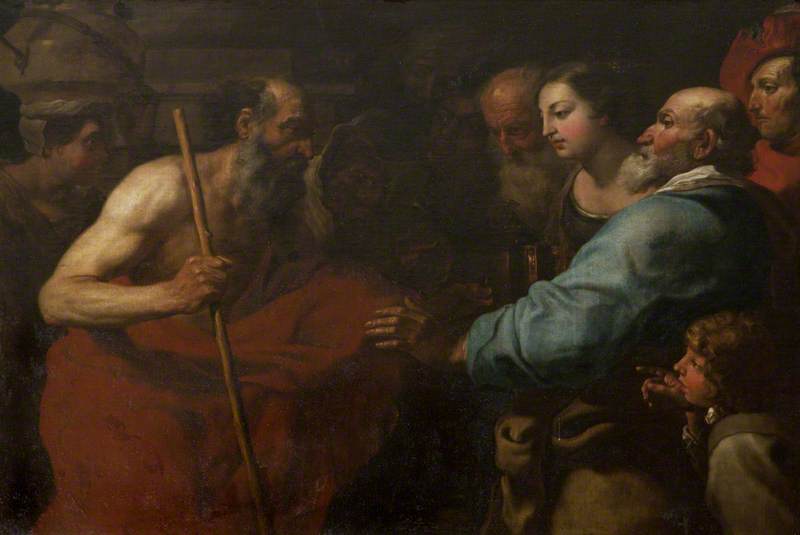
Diogenes with His Lantern
Reproduktiotekniikka
Replikaatin koko
-

Kokenut huipputaiteilija
Lisää yksityiskohtia, hienostuneisuutta ja enemmän aikaa tuotantoon
-

Reproduktion kehystysvaihtoehdot
-
-
Teoksille tai reproduktioille, joiden mikä tahansa sivu on suurempi kuin 105 cm (noin 41 tuumaa), kehys toimitetaan osina purettuna sarjana. Tämä menetelmä varmistaa turvallisen toimituksen ja ehkäisee vaurioita kuljetuksen aikana.
Vaatii ammattimaista kokoamista – kyseessä ei ole tee-se-itse-tuote.
Sarja on koottava ja kangas kiristettävä kokeneen kehystysammattilaisen toimesta käyttäen puuliimaa (ei sisälly pakkaukseen), kangaspinnetteitä ja puristimia, jotta kehyksen kulmat pysyvät suorina liiman kuivuessa. Virheellinen kokoaminen tai epätasainen kankaan kiristys voi vaurioittaa teosta pysyvästi, eikä tällaiset vauriot ala takuun piiriin.
 Teoksille tai reproduktioille, joiden mikä tahansa sivu on suurempi kuin 105 cm (noin 41 tuumaa), kehys toimitetaan osina purettuna sarjana. Tämä menetelmä varmistaa turvallisen toimituksen ja ehkäisee vaurioita kuljetuksen aikana.
Kaikki massiivipuupalat sisältyvät, tarkasti mittojen mukaan leikattuina.
Kootaan mukana tulevilla ruuveilla sekä kulmaliitoksia varten tarvittavalla puuliimalla, jota ei toimiteta, joten se on hankittava kehystäjältä.
Vaatii ammattilaisvälineitä, jotka eivät sisälly pakkaukseen: kankaan venytyspihdit (kiristin) ja puristimet, joilla pidetään kehyksen puut suorassa liiman kuivuessa.
Tärkeää:
Kulmaliitoksissa tarvitaan puuliimaa, kehyksien osat on pidettävä puristimilla, kunnes liima on täysin kuivunut, ja koottuun kehykseen jännitettävän kankaan kiristämiseen tarvitaan kangaspenssipihti. Mikään näistä ei sisälly pakkaukseen. Suosittelemme varmistamaan kokeneen kehystäjän saatavuuden ennen tämän kokoisen kehyksen tilaamista.

Nimilaatta
-
-

Suojalakkaus
Kiiltävä lakka (syventää värejä, suojaa valolta ja kosteudelta)
-

Mukauta taideteokseni
Esimerkkejä muokattavista asioista: Vaihda kasvot asiakkaan omaan valokuvaan; Lisää lemmikki (esim. vaihda kissa koiraan); Lisää taustalle piilotettu viesti; Muuta taustan maisemaa tai elementtejä.
-

Pikatoimitus
Maailmanlaajuinen toimitus () 3–4 viikossa tavallisen 5 viikon sijaan. (5 marraskuu). Laadusta ei tingitä.
-
Pikatoimitus
Maailmanlaajuinen toimitus () 5 viikon kuluessa. (12 marraskuu).
Sisältyy hintaan
Kokonaishinta
€ 267
Lasivaihtoehto on saatavilla vain alle 110 cm kokoisille teoksille
Sisältyy jokaiseen tilaukseen
- Ilmainen pikatoimitus ympäri maailman
- Korkealaatuinen pellavakangas
- Kattava kuljetusvakuutus
- Tulliveron palautustakuu
- Takuu täydellisestä värien vastaavuudesta
- 100 päivän palautusoikeus (vain valmistusvirheet)
- 100% rahat takaisin -takuu
- Määräalennus tarjolla


 Esikatselu
 Jaa teos
 Jaa
Jaa
 Tiedot
 Opas
Opas

 Lataa kuva
 Samanlaisia kohteita
 Röntgenkuvaus
 Diaesitys
 Kysymykset ja vastaukset
 Tilastot
Lukuina
- 29valittavissa olevat kehykset
- standardikoot, omissa mittasuhteissaan
- 5viikkoja maalaamiseen ja toimitukseen
Tietoa alkuperäisteoksesta

- 115.0 x 163.0 cm


Gioacchino Assereto
1600 - 1649
Pikaaakkaukset taiteilijasta Gioacchino Assereto
- Artistic Movement Or Style: Baroque, Caravaggism
- Artists Or Movements Influenced By This Artist: ['Giuseppe Assereto']
- Artists Who Influenced This Artist:
- Luciano Borzone
- Giovanni Andrea Ansaldo
- Date Of Birth: 1600
- Date Of Death: 1649
- Full Name: Gioacchino Assereto
- Nationality: Italian
- Notable Artworks: ['The Lamentation']
- Place Of Birth: Genoa, Italy