

 Katso seinällä
 Lähetä
 Jaa
Jaa
 Tarkemmat tiedot
 Opas
Opas

 Lataa kuva
 Samanlaisia kohteita
 Röntgenkuvaus
 Diaesitys
 Tilastot
Reading the Bible
 Acrylic On Canvas
- WallArt
- Dutch Golden Age Painting
 1645
1645 60.0 x 46.0 cm
 Louvren museo
 Lue lisää
Käsinmaalattu öljyvärinen jäljennös
Käsinmaalattu öljyväri kankaalle haluamassasi koossa ja kehyksissä, taiteilijoidemme valmistamana tilauksesta. ( Vaihda tulosteeseen Siirry digitaaliseen kuvaan)




P118B €10

P118H €10

P118W €10

P438Z €10

P508JH €12

P508YH €12

P805H €10

P805Z €10

P919BZ €10

P919G €10

P919XJ €10

P959ZH €10

P968JZ €12

W106C €8

W218G €10

W218JH €8

W218Y €10

W307PJ €10

W316G €10

W316PJ €8

W316Y €10

W398PJ €8

W4111J €10

W500HY €15

W500JH €15

W692G €12

W849H €8

W940BG €15

W953PJ €8




Valitse valmiista mitoistamme sellaiset, jotka vastaavat teoksen alkuperäisiä mittasuhteita.

Type the width and the height you need, to fit your frame or your wall. This is hand-painted, so for a size with a different shape the artist can paint a bit more around the picture, or cut a bit — you choose. We send you a digital mockup to approve before the painting starts. The picture shown on this page does not show the real result — only the mockup does.
Tilauksen jälkeen OriginalUniqueArt.com -tiimi lähettää asiakkaalle sähköpostitse ohjeet ja esikatselukuvan.
Maailmanlaajuinen toimitus () 3–4 viikossa tavallisen 5 viikon sijaan. (14 lokakuu). Laadusta ei tingitä.

Ilmainen pikatoimitus ympäri maailman

Korkealaatuinen pellavakangas

Kattava kuljetusvakuutus

Tulliveron palautustakuu

Takuu täydellisestä värien vastaavuudesta

100 päivän palautusoikeus valmistusvirhetapauksissa

100% rahat takaisin -takuu

Määräalennus saatavilla
 Lasivaihtoehto on saatavilla vain alle 110 cm kokoisille teoksille

Reading the Bible
Reproduktiotapa
Replikaatin koko
-


Kokonaishinta
€ 260
A Moment of Quiet Contemplation: Unveiling Gerrit Dou’s “Reading the Bible”
Gerrit Dou's "Reading the Bible," painted in 1645, isn’t merely a portrait; it’s a carefully constructed tableau of domestic piety and profound introspection. The scene unfolds within a modestly furnished room – a chair, a potted plant, two vases, and a simple bowl offering a glimpse into the everyday life of a Dutch family. Yet, it's the central figures, a man absorbed in scripture and a woman seated beside him, that immediately draw the eye, radiating an aura of serene engagement. Dou’s masterful manipulation of light and shadow, characteristic of his “fijnschilder” style, elevates this intimate moment to something far more resonant – a meditation on faith, family, and the quiet power of shared devotion.
Dou's technique is remarkably detailed, almost obsessively so. He employs a meticulous layering of glazes, building up color gradually to achieve an astonishing level of realism and luminosity. Notice how the light streams through the window, illuminating the man’s face and hands as he pores over the Bible, while casting subtle shadows across the woman's features. This chiaroscuro effect isn’t simply decorative; it serves to emphasize the drama within the scene – the intensity of his concentration juxtaposed with her quiet attentiveness. The textures are equally convincing: the rough weave of the chair upholstery, the delicate leaves of the plant, and the sheen on the woman's dress all contribute to a palpable sense of presence.
The Leiden Fijnschilder and the Pursuit of Perfection
Gerrit Dou was a pivotal figure in the Dutch Golden Age, belonging to the esteemed group known as the “Leiden fijnschilders.” This collective of artists distinguished themselves through their commitment to painstaking detail, refined technique, and an almost photographic realism. Unlike many of their contemporaries who favored grand historical or mythological subjects, the fijnschilders focused on intimate genre scenes – everyday moments of domestic life, portraits of ordinary people, and still lifes brimming with subtle nuances. Dou’s work embodies this ethos perfectly; he sought not to simply depict reality but to capture its essence with unparalleled precision and emotional depth.
Born in Leiden in 1613, Dou's artistic journey was shaped by his apprenticeship under Rembrandt van Rijn. While absorbing the master’s innovative use of light and shadow, Dou quickly developed a distinct style – one characterized by an extraordinary level of polish and a meticulous attention to detail that bordered on obsessive. He famously employed a unique method for achieving this precision: using a concave lens and convex mirror to create a magnified image of his subject, allowing him to render every minute detail with astonishing accuracy.
Symbolism and the Values of Early Modern Dutch Society
Beyond its technical brilliance, “Reading the Bible” is rich in symbolic meaning. The act of reading scripture represents a cornerstone of early modern Dutch society – a time when religious observance was deeply ingrained in daily life. The couple’s quiet contemplation suggests a shared commitment to faith and family values. The woman's presence isn’t merely decorative; she embodies domesticity, piety, and the nurturing role within the household. The room itself, though modest, speaks volumes about their status – a comfortable space dedicated to intellectual and spiritual pursuits.
Furthermore, the inclusion of objects like the potted plant and the vases hints at the importance of nature and beauty in Dutch culture. These elements contribute to a sense of harmony and balance within the scene, reflecting the ideals of the Golden Age. The painting, therefore, offers a window into the values and beliefs that shaped 17th-century Holland – a society deeply committed to faith, family, and the pursuit of excellence.
Bringing “Reading the Bible” Home: A Reproduction for Today
OriginalUniqueArt is proud to offer high-quality reproductions of Gerrit Dou’s "Reading the Bible," capturing the artist's remarkable skill and evocative atmosphere. Whether you are an art collector, interior designer, or simply someone seeking a piece that embodies quiet contemplation and timeless beauty, this reproduction provides a stunning tribute to one of the Dutch Golden Age’s most accomplished painters. Available in various sizes and on premium archival paper, it is a perfect addition to any home or office – a reminder of the enduring power of faith, family, and artistic mastery.
Kysymykset ja vastaukset
Voinko käyttää lisättyä todellisuutta nähdäkseni teoksen Gerrit Dou:n "Reading the Bible" omassa huoneessani?
Teoksella "Reading the Bible" on lisätyn todellisuuden esikatselu: teoksen AR-esikatselu -sivu näyttää sen omassa tilassasi yhteensopivalla laitteella.
Kuka on luonut teoksen "Reading the Bible" ja mikä sen tyylisuunta on?
Teoksen "Reading the Bible" takana ovat Gerrit Dou ja Dutch Golden Age Painting-suuntaus.
Mitä tunnetta Dutch Golden Age Painting-tyylisuunnan teos "Reading the Bible" välittää?
Dutch Golden Age Painting-suuntauksen sisällä teos "Reading the Bible" on tallennettu Reflective sävyllä.
Taiteilijan elämäkerta
tuotteliaan taidemaalarin elämäkerta
gerrit (gérard) dou, hollantilaisen kultakauden maalauksen merkittävä hahmo, syntyi 7. huhtikuuta 1613 Leidenissä, Alankomaissa. Hän kuoli 9. helmikuuta 1675 jättäen jälkeensä vaikuttavan perinnön äärimmäisen viimeisteltyjä maalauksia, jotka lumoavat taiteen ystäviä ympäri maailmaa edelleen.taiteellinen tyyli ja erikoistuminen
gerrit dou'n taiteellista tyyliä leimaa pikkutarkka ja yksityiskohtainen käsittely, joka usein ilmentyy genremaisina kohtauksina sekä trompe l'oeil -tyylisissä "niche"-maalauksissa. Hänen mestarillinen kykynsä hallita chiaroscuro-tekniikkaa on erityisen huomionarvoista, mikä näkyy selvästi hänen kynttilänvalon valaisemissa yökohtauksissaan. Tämä ainutlaatuinen taitojen yhdistelmä on liittänyt hänet Leidenin fijnschilder-maalareihin.merkittäviä teoksia ja kokoelmia
the astronomer by candlelight on maalaus, joka osoittaa dou'n asiantuntemuksen valon hienovaraisuuden vangitsemisessa, ja se on löydettävissä osoitteesta OriginalUniqueArt.com. Tunnettu taidemuseo Leiden Collection, New York esittelee gerrit dou'n teoksia muiden merkittävien taiteilijoiden rinnalla. Lisätietoja kokoelmasta löydät sivustolta the leiden collection, new york: a comprehensive guide OriginalUniqueArt.com-palvelussa.vaikutus ja perintö
gerrit dou'n vaikutus näkyy hänen oppilaissaan, kuten frans van mieris van van van mieris van van mieris the elder ja gabriël metsu. Hänen teoksensa ovat esillä myös useissa museoissa, kuten Haagissa sijaitsevassa Museum Huis ten Bosch -museossa Alankomaissa, joka kätkee sisäänsä upean kokoelman eurooppalaista taidetta 1500-luvulta 1700-luvulle.- tärkeimmät faktat:
* syntynyt: 7. huhtikuuta 1613, Leiden, Alankomaat
* kuollut: 9. helmikuuta 1675
* merkittäviä teoksia: the astronomer by candlelight, genremalaukset ja kynttilänvalon yökohtaukset
* vaikutus: frans van mieris the elder, gabriel metsu ja muut - suositeltua luettavaa:
* gerrit (gérard) dou OriginalUniqueArt.com-sivustolla
* dutch golden age painting Wikipediassa
johtopäätös
gerrit (gérard) dou'n poikkeukselliset panostukset hollantilaisen kultakauden maalaustaiteeseen ovat jättäneet peruuttamattoman jäljen taidemaailmaan. Hänen lumoavat maalauksensa, jotka tunnetaan monimutkaisista yksityiskohdistaan ja mestarillisesta valon käytöstä, jatkavat inspiroimaan taiteilijoita ja taiteen harrastajia samalla tavalla. Tutustuaksesi lisää hänen teoksiinsa sekä muiden merkittävien taiteilijoiden tuotantoon, vieraile OriginalUniqueArt.com-sivustolla.
Gerrit Dou
1613 - 1675 , Alankomaat
Tietoa taiteilijasta
- Artistic Movement Or Style: Fijnschilder
- Artists Or Movements Influenced By This Artist: ['Leiden Fijnschilders']
- Artists Who Influenced This Artist: ['Rembrandt van Rijn']
- Date Of Birth: 7 huhtikuuta 1613
- Date Of Death: 9 helmikuuta 1675
- Full Name: Gerrit Dou
- Nationality: Alankomaalainen
- Notable Artworks:
- Astronomi kynttilänvalossa
- Nuori tyttö pianolla
- Place Of Birth: Leiden, Alankomaat
Aiheeseen liittyvät artikkelit

Golden Age Reflections: Dutch Baroque Painting & Cultural Innovation
Explore the Dutch Golden Age of painting! Discover key artists like Vermeer & ter Borch, their innovative techniques, and the rich cultural context behind these Baroque masterpieces. Learn about collecting & appreciating this iconic art period.
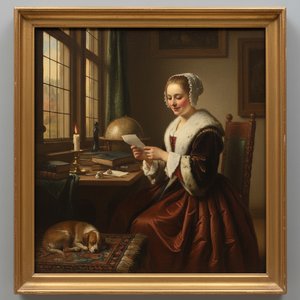
Gerrit Dou: Intimacy & Light in the Dutch Golden Age
Explore the exquisite world of Gerrit Dou, a master of Dutch Golden Age painting. Discover his intimate genre scenes, signature use of light, and lasting legacy. Learn about collecting Dou's works & their value.

Hollantilaisen kultakauden 10 mestariteosta – Taidetta kotiisi OriginalUniqueArt.com
Uppoudu hollantilaisen kultakauden taiteen maailmaan! Tutustu Rembrandtin, Vermeerin ja muiden mestareiden ikonisiin maalauksiin. Löydä inspiraatiota kotiisi OriginalUniqueArt.com:ista – laadukkaat taidevedokset ja sisustustaulut jokaiseen tilaan. Explore the full collection online!
Illuminating Realism: Exploring the Dutch Golden Age of Painting (1600-1700)
Explore the Dutch Golden Age of painting (1600-1700) with OriginalUniqueArt. Discover Rembrandt, Vermeer & other masters. Learn about techniques, history & find museum-quality reproductions.

Golden Light & Dutch Skies: The Timeless Magic of Dutch Golden Age Landscapes
Discover the breathtaking beauty of Dutch Golden Age landscapes. Explore the mastery of light, chiaroscuro, and 17th-century realism through an expert art history lens, celebrating the enduring legacy of the Dutch Masters for discerning collectors and art lovers.


