

 Katso seinällä
 Lähetä
 Jaa
Jaa
 Tarkemmat tiedot
 Opas
Opas

 Lataa kuva
 Samanlaisia kohteita
 Röntgenkuvaus
 Diaesitys
 Tilastot
Neitsyt ja lapsi
 Akryyli kankaalle
- Seinätaide
- Alennederlandilainen maalaustaide
 1523
1523 16.0 x 11.0 cm
 Metropolitanin museo
 Lue lisää
Giclée- ja taideprintit
Museolaatuisia giclée- tai kankaitaulun tulosteita nopealla tuotannolla ja joustavilla viimeistelyvaihtoehdoilla. ( Tilaa käsinmaalattu jäljennös Siirry digitaaliseen kuvaan)




P118B €10

P118H €10

P118W €10

P438Z €10

P508JH €12

P508YH €12

P805H €10

P805Z €10

P919BZ €10

P919G €10

P919XJ €10

P959ZH €10

P968JZ €12

W106C €8

W218G €10

W218JH €8

W218Y €10

W307PJ €10

W316G €10

W316PJ €8

W316Y €10

W398PJ €8

W4111J €10

W500HY €15

W500JH €15

W692G €12

W849H €8

W940BG €15

W953PJ €8




Valitse valmiista mitoistamme sellaiset, jotka vastaavat teoksen alkuperäisiä mittasuhteita.

Kirjoita tarvitsemasi leveys ja korkeus, jotta tuloste sopii kehyskokoon tai seinällesi. Tulostetta voidaan vain leikata, sitä ei voi koskaan tehdä suuremmaksi kuin alkuperäinen kuva, joten eri muotoinen koko aiheuttaa osan kuvasta katoamisen. Lähetämme sinulle digitaalisen mallikuvan hyväksyttäväksi ennen kuin aloitamme tulostuksen. Tällä sivulla näkyvä kuva ei näytä lopullista leikkausta — vain mallikuva näyttää sen.
Maailmanlaajuinen toimitus () 2 viikossa tavallisen 4–5 viikon sijaan. (21 lokakuu)

Ilmainen pikatoimitus ympäri maailman

Korkealaatuinen pellavakangas

Kattava kuljetusvakuutus

Tulliveron palautustakuu

Takuu täydellisestä värien vastaavuudesta

100 päivän palautusoikeus valmistusvirhetapauksissa

100% rahat takaisin -takuu

Määräalennus saatavilla
 Lasivaihtoehto on saatavilla vain alle 110 cm kokoisille teoksille

Neitsyt ja lapsi
Giclée- ja taideprintit
Replikaatin koko
-


Kokonaishinta
€ 70
A Divine Intimacy: The Soul of Gerard David’s Virgin and Child
In the quiet corners of art history, few works capture the profound tenderness of the human spirit quite like Gerard David’s Virgin and Child. Created in 1523, this exquisite panel painting serves as a luminous window into the heart of Early Netherlandish devotion. At first glance, the viewer is drawn into an incredibly intimate encounter; the composition is tightly framed, stripping away the distractions of the outside world to focus entirely on the sacred bond between Mary and her infant son. There is a palpable sense of stillness, a moment frozen in time where the divine meets the deeply human. The dark, indistinct blue background acts as a velvet void, pushing the figures forward and creating an atmosphere of deep, meditative solitude that invites the observer to linger in silent contemplation.
The mastery of David’s technique is nothing short of breathtaking, showcasing the pinnacle of Flemish oil painting. Through the meticulous layering of pigments on a wooden panel, the artist achieves a texture that feels almost tactile. One can trace the soft, velvety folds of Mary’s robes and the delicate, lifelike musculature of the Christ child with remarkable clarity. David was a virtuoso of light; he employed a diffused, unseen light source that bathes the faces of the holy figures in a gentle, ethereal glow. This subtle illumination does more than just define form—it breathes life into the skin tones and highlights the intricate, sculpted detail of Mary’s hair, lending the piece a sense of three-dimensional presence that remains captivating centuries later.
Symbolism and the Legacy of Flemish Devotion
Beyond its technical brilliance, the painting is a rich tapestry of symbolic meaning, designed to evoke piety and emotional resonance. Every gesture carries weight; the way the Virgin holds the child is not merely an act of maternal care, but a representation of the protection of the sacred. The organic, flowing curves of the figures suggest a natural, divine harmony, while the precision of the lines reflects the disciplined faith of the era. For the contemporary collector or interior designer, this piece offers more than just aesthetic beauty; it provides a focal point of serenity and grace. It embodies the transition from the rigid structures of the late Middle Ages to the burgeoning humanism of the Renaissance, where religious subjects were rendered with an unprecedented level of emotional accessibility.
To possess a reproduction of such a masterpiece is to bring a piece of Bruges’ golden age into the modern home. Whether placed in a curated gallery setting or used as a soulful accent in a sophisticated living space, the Virgin and Child radiates an aura of timelessness. It serves as a reminder of the enduring power of art to bridge the gap between the earthly and the divine, offering a sanctuary of peace and beauty in an ever-changing world.
Kysymykset ja vastaukset
Mikä on teoksen Gerard David:n "Neitsyt ja lapsi" yleinen tunnelma?
Teoksen Gerard David:n "Neitsyt ja lapsi" yleinen tunnelma on Seesteinen. Tunnelma kuvaa teoksen yleistä ilmapiiriä.
Onko "Neitsyt ja lapsi" yksi Gerard David'n suosituimmista teoksista?
Teoksella Gerard David:n "Neitsyt ja lapsi" on Ikoninen suosioaste. Tämä luokitus heijastaa teoksen tunnettuutta.
Miten "Neitsyt ja lapsi" sijoittuu Gerard David'n toistuvien aiheiden joukkoon?
"Neitsyt ja lapsi" esittää aiheita neitsyt maria, jeesus-lapsi, perheen rakkaus, uskonnollinen taide, keskiaikainen maalaustaide, brugelainen taiteilija, intiimi kohtaus, harras paneelimaalaus, kun taas Gerard David tunnetaan teemoistaan van eyckin realismi, keskiaikainen hartaus ja usko, bruggen kauppiaskulttuuri, harras paneelitaide, davidin värimestaruus, varhaisrenessanssin tyyli, ikoninen äiti-lapsi-teema, paja-tuotantosarja. Näiden kahden vertaaminen osoittaa, miten teos liittyy taiteilijan tavallisiin aiheisiin.
Taiteilijan elämäkerta
A Master of Flemish Light: The Enigmatic World of Gerard David
Gerard David, a name that resonates with the brilliance of early Netherlandish painting, remains an artist shrouded in intriguing mystery. Born around 1460 in Oudewater, Netherlands, his life story is pieced together from fragmented archival records and the eloquent testimony of his art. Unlike some contemporaries whose lives are richly documented, David’s personal narrative is sparse, allowing his paintings to speak volumes where biographical details fall silent. What is known suggests a remarkably successful career, likely managing workshops in both Antwerp and Bruges – centers of artistic innovation during the Renaissance. His reputation experienced an ebb in the 17th century, only to be gloriously resurrected by 19th-century art historians who recognized his unique contributions to the Northern Renaissance. He was inducted as a free master into the Corporation of Imagemakers and Saddlers in Bruges in 1484, marking a pivotal moment in his ascent. His later involvement with the Antwerp guild in 1515 further solidifies his standing within the artistic community.Formative Influences and Artistic Development
David’s artistic journey began under influences that shaped the very foundation of his style. Early works reveal a clear debt to painters like Jacob Janszoon, Dieric Bouts, and Geertgen tot Sint Jans – masters who instilled in him a meticulous attention to detail and a sensitivity to religious narrative. It is believed he spent time in Haarlem absorbing these lessons before relocating to Bruges, a vibrant hub of artistic exchange attracting talent from across Europe. Here, David encountered the masterpieces of Jan van Eyck, Rogier van der Weyden, and Hans Memling, absorbing their techniques while forging his own distinct path. He didn’t merely imitate; he synthesized these influences into something uniquely his own – a style characterized by luminous color, serene compositions, and an increasingly sophisticated understanding of landscape. His early paintings demonstrate this evolution, moving from the doll-like figures reminiscent of Haarlem traditions towards more sculptural forms grounded in their environment. Consider *Christ Nailed to the Cross*; it’s not simply a depiction of suffering but a study in human anatomy and emotional expression, reflecting Bouts' influence while retaining David’s own distinctive color palette. This transition is visible in works like *The Marriage of St. Catherine*, where the influence of Bouts’ spatial construction blends with David’s emerging coloristic sensibility.Innovation in Landscape and Religious Narrative
Gerard David’s artistic signature lies in his innovative approach to both landscape and religious subject matter. He wasn't simply depicting backgrounds; he was creating immersive environments that enhanced the emotional resonance of his scenes. His landscapes are not merely decorative, but integral components of the narrative, often imbued with symbolic meaning. This fascination with natural settings – dense forests, rolling hills, expansive skies – set him apart from many of his contemporaries and foreshadowed the development of landscape painting as an independent genre. Consider *View in a Forest*, outer wing of a triptych; it’s not simply a backdrop but a world unto itself, rendered with meticulous detail and atmospheric perspective. Within his religious works, David demonstrated a remarkable ability to convey both profound spirituality and human emotion. Paintings like *The Marriage of St. Catherine* exemplify this skill. The scene is rendered with exquisite detail, yet it's the subtle expressions on the figures’ faces – their piety, contemplation, or gentle joy – that truly captivate the viewer. He possessed a gift for imbuing his sacred subjects with a sense of quiet dignity and relatable humanity. The *Triptych of the Madonna Enthroned and Saints* in Genoa showcases this mastery, presenting a harmonious composition filled with vibrant color and delicate detail. His *Virgin Among the Virgins*, donated to the Carmelite nuns of Sion at Bruges, is another testament to his skill, featuring a self-portrait within the painting itself – a rare and intimate gesture from an artist of his time. This self-portrait, subtly integrated into the scene, speaks volumes about David’s confidence and artistic ambition.Major Achievements and Artistic Style
David's most celebrated works include *The Marriage of St. Catherine*, renowned for its dramatic composition and emotional intensity; *The Adoration of the Magi*, a complex and richly detailed depiction of the biblical event; and *The Virgin Among the Virgins*, a groundbreaking painting that broke with traditional conventions by including a self-portrait within the scene. His style is characterized by several key elements: an exceptional command of color, creating luminous and atmospheric effects; a meticulous attention to detail, evident in his rendering of fabrics, textures, and facial features; and a masterful use of perspective, particularly in his landscapes. He was also one of the first Northern Renaissance painters to incorporate realistic details into his depictions of nature, moving beyond stylized representations towards more naturalistic portrayals. His work reflects a deep understanding of human psychology and emotion, as evidenced by the expressive faces and gestures of his figures. David’s ability to seamlessly blend religious symbolism with psychological realism cemented his place as one of the leading artists of his time.Legacy and Enduring Influence
Though his fame waned for a period after his death in 1523, Gerard David’s influence on subsequent generations of artists is undeniable. His innovative use of color, his masterful handling of light and shadow, and his pioneering approach to landscape all left an indelible mark on the development of Flemish painting. He paved the way for artists who would further explore the expressive potential of natural settings, such as Jacob Patinir and Jacob van Ruisdael.- A Bridge Between Traditions: David successfully bridged the gap between the late medieval tradition and the emerging Renaissance style.
- Influence on Landscape Painting: His detailed and atmospheric landscapes foreshadowed the development of landscape as a distinct genre.
- Masterful Colorist: He was renowned for his vibrant palette and skillful use of color to create emotional impact.
Exploring Further
- OriginalUniqueArt.com: Discover an extensive collection of Gerard David’s paintings, including *The Adoration of the Magi*.
- View in a Forest: Explore this stunning Northern Renaissance landscape painting.
- The Early Netherlandish Art Movement: Delve deeper into the artistic context of David’s work.

Gerard David
1450 - 1523 , Alankomaat
Tietoa taiteilijasta
- Artistic Movement Or Style: Varhinen Hollannin taide
- Artists Or Movements Influenced By This Artist:
- Jan van Eyck
- Rogier van der Weyden
- Artists Who Influenced This Artist:
- Jacob Janszoon
- Dieric Bouts
- Geertgen tot Sint Jans
- Date Of Birth: c. 1460
- Date Of Death: 1523
- Full Name: Gerard David
- Nationality: Alankomainen
- Notable Artworks:
- Avioliitto Katriinan kanssa
- Madonäytävä Pyhä Neitsyt
- Metsänäkymä
- Place Of Birth: Oudewater, Alankomaat
Aiheeseen liittyvät artikkelit

Oil on Canvas: A Historical & Technical Exploration of a Timeless Artistic Medium
Explore the rich history & enduring techniques of oil painting on canvas. Discover the science behind its longevity, conservation practices, and contemporary relevance. Expert insights for art enthusiasts.

The Enduring Power of Painting: A Historical & Contemporary Exploration of Form and Emotion
Explore the rich history & enduring techniques of oil painting with OriginalUniqueArt. Discover masterpieces, learn about art collecting, and find authentic handmade reproductions crafted by skilled artists.
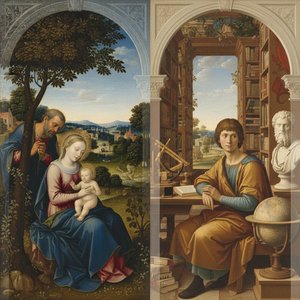
Gerard David: Bridging Late Medieval Tradition with Early Renaissance Humanism
Explore the captivating world of Gerard David, a pivotal figure bridging late medieval artistry with the Early Renaissance. Discover his innovative techniques, religious masterpieces, and enduring legacy – a must-read for discerning art collectors.

Öljyvärimaalauksen kestävä perintö: tekniikka, historia ja nykyaikainen käytäntö
Tutustu öljyvärimaalauksen rikkaaseen historiaan, tekniikoihin ja merkittäviin mestareihin. Opi säilyttämään ja restauroimaan taidetta sekä löydä uudet innovaatiot tässä ajattomassa taidemuodossa.

The Enduring Legacy of Oil on Canvas: Technique, History & Aesthetic Impact
Explore the rich history & techniques of oil painting – from Renaissance masters to Impressionism. Discover pigments, layering methods, and why this timeless medium endures. Expert insights for artists & art enthusiasts.


