Analytical Cubism · 1929
The Round Table (Georges Braque, 1929)
Georges Braque (1882–1963) on luonut teoksen The Round Table. Se on peräisin vuodelta 1929. Se kuuluu Analytical Cubism-liikkeeseen. Se on valmistettu materiaalilla Acrylic. Koko on 144 × 114 cm.
- 1929
- Acrylic
- 144 × 114 cm

 Esikatselu

 Käsinmaalattu öljymaalaus
 Jaa teos
 Jaa
 Tiedot-arkki


 Lataa kuva
 Samanlaisia kohteita
 Röntgenkuvaus
 Diaesitys
 Kysymykset ja vastaukset

 Tilastot
The Round Table lyhyesti
- Otsikko
- The Round Table
- Taiteilija
- Georges Braque (1882–1963)
- Taiteilija syntynyt
- Argenteuil, Ranska
- Päivämäärä
- 1929
- Tekniikka
- Acrylic
- Mitat
- 144 × 114 cm
- Tyylisuunta
- Analytical Cubism
- Aihe
- bookshelf composition, table setting, fruit symbolism, geometric forms, artist's gesture, spatial illusion
Mitä The Round Table esittää?
Georges Braque’s “The Round Table”: A Dialogue Between Tradition and Innovation
- Subject Matter and Composition:
- Cubist Style and Technique:
- Historical Context – The Birth of Cubism:
- Symbolic Resonance – Apples, Books, and Spatial Illusion:
- Emotional Impact – Quiet Contemplation and Artistic Exploration
Cubist Style and Technique
Braque, alongside Pablo Picasso, spearheaded the development of Analytical Cubism, characterized by its radical fragmentation of form and simultaneous depiction of multiple viewpoints. Unlike Impressionists who sought to capture fleeting moments of light and color, Cubists aimed to represent objects as they appear to the eye when viewed from various angles simultaneously. In “The Round Table,” this is achieved through meticulous geometric reduction—the table surface and books are broken down into interlocking planes that overlap and intersect, creating a disconcerting yet captivating illusion of depth. The artist’s use of muted earthy tones – browns, ochres, and creams – reinforces the sense of stillness and contemplation inherent in the scene. Careful layering of paint contributes to textural richness without resorting to overtly expressive brushstrokes; Braque prioritizes precision and intellectual rigor over emotive gesture.Historical Context – The Birth of Cubism
The genesis of Cubism can be traced back to Picasso’s groundbreaking “Les Demoiselles d'Avignon” (1907), which shattered established artistic norms by depicting figures rendered in fractured planes and incorporating influences from African sculpture. Braque responded swiftly, furthering the exploration of spatial ambiguity and geometric abstraction. The painting emerged during a period of intense intellectual ferment—the burgeoning influence of Einstein’s theory of relativity challenged Newtonian conceptions of space and time, mirroring the Cubists' desire to dismantle traditional perspectival representations. This artistic rebellion was fueled by a broader cultural shift toward questioning accepted truths and embracing new modes of perception.Symbolic Resonance – Apples, Books, and Spatial Illusion
The inclusion of an apple—a motif frequently revisited in Surrealist art—introduces a subtle element of visual paradox. Traditionally associated with knowledge, temptation, and immortality, the apple’s placement on the table subtly disrupts the geometric order established by Braque's technique. Simultaneously, the books symbolize intellectual pursuit and contemplation – mirroring the figure’s posture and gaze. More importantly, the overall spatial arrangement contributes to a feeling of disorientation—the viewer is invited to consider multiple perspectives simultaneously, reflecting the Cubist preoccupation with challenging conventional visual experience. The careful positioning of objects reinforces the idea that reality itself is multifaceted and elusive.Emotional Impact – Quiet Contemplation and Artistic Exploration
Ultimately, “The Round Table” transcends mere formal innovation; it communicates a profound sense of quiet contemplation. Despite its complex geometric structure, the painting exudes an atmosphere of stillness—suggesting a moment of introspection rather than dramatic action. Braque’s masterful control over color and texture invites viewers to engage in a dialogue with the artwork itself, prompting reflection on themes of knowledge, perception, and artistic endeavor. It stands as a testament to Braque's ability to distill complex ideas into a deceptively simple visual form—a lasting legacy of Cubist artistry that continues to inspire admiration and contemplation today.The Round Table korkearesoluutioiset kuvat
Protected by copyright: these files are for personal reference, not a licence to republish.
Georges Braque, The Round Table (1929).
Kysymyksiä teoksesta The Round Table, vastaukset
Milloin teos Georges Braque:n "The Round Table" on luotu?
"The Round Table" on peräisin vuodelta 1929. Teoksen valmistumisajankohta sijoittaa sen Georges Braque uran ja aikakauden kontekstiin.
Mitä tekniikkaa Georges Braque:n "The Round Table" on käytetty?
"The Round Table" on toteutettu tekniikalla Acrylic.
Mitkä ovat alkuperäisen Georges Braque:n "The Round Table" mitat?
Teoksen Georges Braque:n "The Round Table" mitat ovat 144 x 114 cm. Vedoksia voi tilata muissa koossa säilyttäen samat mittasuhteet.
Mitä "The Round Table" esittää?
Teoksen Georges Braque:n "The Round Table" teemoihin kuuluvat bookshelf composition, table setting, fruit symbolism, geometric forms, artist's gesture, spatial illusion, color palette. Yhdessä ne tiivistävät teoksen aiheen.
Onko Georges Braque:n "The Round Table" vapaasti käytettävissä oleva teos?
Georges Braque:n "The Round Table" on on edelleen tekijänoikeuden alainen. Tämä tila määrittää, miten teoksen kuvaa saa käyttää uudelleen.
Kenen teokseksi "The Round Table" on merkitty?
"The Round Table" on Georges Braque:n luoma teos. Tällä sivulla olevat tiedot kuvaavat Georges Braque:n alkuperäistä työtä.
Mihin tyylisuuntaan "The Round Table" kuuluu?
Teoksen Georges Braque:n "The Round Table" tyylisuunta on Analytical Cubism. Tämä luokittelu sijoittaa teoksen muiden samankaltaisten taiteilijoiden ja teosten joukkoon.
Mihin Georges Braque'n uran vaiheeseen "The Round Table" kuuluu?
"The Round Table" kuuluu Georges Braque uran Analytical Cubism-vaiheeseen. Tämä luokittelu yhdistää teoksen taiteilijan kehitysvaiheeseen.
Kuinka vanha Georges Braque oli tehdessään "The Round Table"?
Georges Braque loi teoksen "The Round Table" ollessaan 47 vuotias. Taiteilija on syntynyt vuonna 1882 ja teos on ajoitettu vuodelle 1929.
Tietoa taiteilijasta, Georges Braque
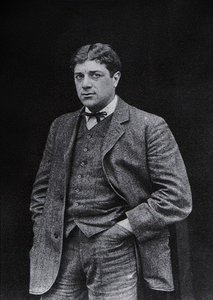
1882–1963, Ranska
Georges Braque
Nuoruus, perhe ja taiteellinen koulutus Georges Braque syntyi vuonna 1882 Argenteuilissa, Ranskassa. Hänen varhaislapsuutensa kietoutui Le Havren kaupunkiin, kotiin, jota määrittivät koristelun ja värin käytännönläheisyys. Kasvaessaan talonmaalareiden ja sisustajien perheessä hän uppoutui ammattinsa aineellisiin todellisuuksiin jo hyvin nuorena. Tämä kasvuympäristö loi teknisen käsityötaidon pohjan, joka muovasi myöhemmin hänen tapaansa kohdata kangas ja taiteellinen ilmeneminen.
Tietoa kohteesta Georges Braque Georges Braquen merkittävimpiä teoksia
Myös Georges Braque -teoksia
 Mandola1910
 Mies kitaralla1914
 Talot L'estaquessa
 Harbour in Normandy1909
Esseitä teoksesta The Round Table
 Mastering Cubism: The Top 25 Georges Braque ArtworksJourney through the revolutionary world of Georges Braque. Explore 25 iconic Cubist masterpieces, from geometric abstractions to timeless s…
 Deconstructing Reality: Cubism's Revolutionary Impact on 20th-Century ArtExplore the revolutionary world of Cubism with OriginalUniqueArt. Discover Picasso & Braque's groundbreaking techniques, its philosophical …
 Understanding the Difference Between Analytical and Synthetic CubismMaster the differences between Analytical and Synthetic Cubism with our expert guide. Learn to identify these iconic art movements now.