

 Katso seinällä
 Lähetä
 Jaa
Jaa
 Tarkemmat tiedot
 Opas
Opas

 Lataa kuva
 Samanlaisia kohteita
 Röntgenkuvaus
 Diaesitys
 Tilastot
Swiss Landscape
 Romanticism
 1819
1819 29.0 x 45.0 cm
 New Walk Museum - Art Gallery
 Lue lisää
Giclée- ja taideprintit
Museolaatuisia giclée- tai kankaitaulun tulosteita nopealla tuotannolla ja joustavilla viimeistelyvaihtoehdoilla. ( Tilaa käsinmaalattu jäljennös Siirry digitaaliseen kuvaan)




































Valitse valmiista mitoistamme sellaiset, jotka vastaavat teoksen alkuperäisiä mittasuhteita.

Voit syöttää omat mitat sopiaksesi tiettyyn kehykseen tai tilaan. Jos valittu koko ei vastaa alkuperäisen kuvan mittasuhteita, rajaamme teosta tai laajennamme kuvaa peilatulla tai yhtenäisellä reunalla. Digitaalinen mallikuva lähetetään hyväksyttäväksi ennen tuotannon aloittamista.
Huomaathan, että näytöllä näkyvä esikatselu ei vastaa lopullista rajausta tai laajennusta. Vain mallikuva näyttää lopullisen sommittelun tarkasti.
Vaikka räätälöityjä kokoja on saatavilla, suosittelemme valitsemaan mitat valmiista listasta alkuperäisten mittasuhteiden säilyttämiseksi.
Maailmanlaajuinen toimitus () 2 viikossa tavallisen 4–5 viikon sijaan. (26 syyskuu)

Ilmainen pikatoimitus ympäri maailman

Korkealaatuinen pellavakangas

Kattava kuljetusvakuutus

Tulliveron palautustakuu

Takuu täydellisestä värien vastaavuudesta

100 päivän palautusoikeus valmistusvirhetapauksissa

100% rahat takaisin -takuu

Määräalennus saatavilla
 Lasivaihtoehto on saatavilla vain alle 110 cm kokoisille teoksille

Swiss Landscape
Giclée- ja taideprintit
Replikaatin koko
-


Kokonaishinta
$ 80
A Glimpse into the Painting's Details
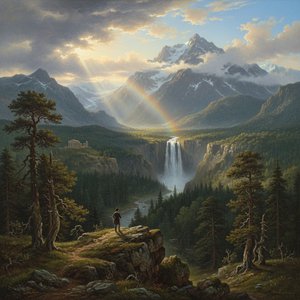
The painting features a serene forest filled with trees, some of which have fallen over, creating a sense of movement and energy. In the background, snow-capped mountains rise majestically, adding depth and grandeur to the scene. A horse is visible near the center of the painting, possibly grazing on the lush green grass that covers the ground. The overall atmosphere of the painting conveys a sense of tranquility and appreciation for nature's beauty. Key Features of the Swiss Landscape painting include:- Oil on panel, measuring 29 x 45 cm
- Created in 1819 by George Howland Beaumont
- Housed at the New Walk Museum - Art Gallery in Leicester, United Kingdom
Exploring the Artist's Style
George Howland Beaumont was a British artist known for his landscape paintings. His style is characterized by attention to detail and a deep appreciation for nature. The Swiss Landscape painting is a prime example of his work, showcasing his ability to capture the beauty and serenity of the natural world. To learn more about George Howland Beaumont and his works, visit https://OriginalUniqueArt.com and explore their collection of handmade oil paintings reproductions. You can also find more information on Wikipedia about the New Walk Museum - Art Gallery and its extensive collection of art pieces.The Swiss Landscape painting is a must-see for anyone who appreciates landscape art and the beauty of nature. With its stunning depiction of the Swiss Alps, it is sure to captivate audiences and inspire a sense of wonder and awe.
Taiteilijan elämäkerta
A Life Dedicated to Art: The World of George Howland Beaumont
Sir George Howland Beaumont, born in 1753 amidst the tranquil Essex countryside of Great Dunmow, was a figure whose life embodied the evolving tastes and passions of late 18th and early 19th-century Britain. Inheriting both a baronetcy and an estate at a young age, Beaumont’s path wasn't immediately destined for artistic pursuits. However, his education at Eton College included initial training in landscape painting under Alexander Cozens, sparking a lifelong fascination with the visual arts—a fascination that would ultimately define his entire existence. This early exposure served as a crucial catalyst, preparing him for the transformative experience of the Grand Tour undertaken in 1782 alongside his wife, Margaret. Italy and its rich artistic heritage proved pivotal; Beaumont’s eyes were opened to the masterpieces of the Old Masters, igniting within him not only an appreciation but also a fervent desire to collect and understand these works—a passion that would consume much of his later life. This journey laid the foundation for a life dedicated to art—both as a discerning collector and a committed, though often self-critical, painter.Cultivating Taste: Collection, Patronage, and Artistic Development
Upon his return to England, Beaumont embarked on building an impressive collection of Old Master paintings, driven by genuine enthusiasm despite considerable financial constraints. Central to this collection was Claude Lorrain’s *A Landscape with Hagar and the Angel*, a painting that held particular significance for him—a visual embodiment of his aesthetic ideals. He wasn't merely acquiring objects; he was assembling a visual library, meticulously documenting and analyzing artistic excellence. Simultaneously, Beaumont actively pursued artistic expression through painting, honing his skills under influential mentors like Richard Wilson and Thomas Hearne, aligning himself with the burgeoning Romantic movement. His canvases often depicted serene landscapes—particularly those inspired by Keswick—reflecting the profound impact of Wordsworth’s poetry on his sensibilities. Beaumont's social life flourished alongside his artistic endeavors, centered around his residence at 34 Grosvenor Square and a distinguished service as Tory MP for Beer Alston (1790-1796), where he engaged in debates concerning artistic patronage and the role of government in supporting cultural institutions. He championed the cause of John Julius Angerstein, recognizing the importance of public access to art—a conviction that would ultimately propel him toward a monumental achievement.A Vision for Public Access: The Founding of the National Gallery
Beaumont’s unwavering belief in the transformative power of art culminated in his groundbreaking proposal to establish the National Gallery in 1823. Recognizing the urgent need for a public institution dedicated to showcasing Old Master paintings, he championed an audacious idea—one that would reshape British cultural life forever. He offered to donate sixteen paintings from his personal collection on the condition that Parliament procure John Julius Angerstein’s holdings and secure suitable premises—a bold gesture demonstrating his conviction in fostering artistic appreciation amongst all citizens. This initiative galvanized parliamentary debate and ultimately resulted in the Gallery's triumphant opening in May 1824, cementing Beaumont’s legacy as a visionary reformer and securing his place among Britain’s most influential cultural figures. His contribution wasn’t merely philanthropic; it was an affirmation of his profound understanding that art possessed the capacity to elevate society and enrich the human experience—a conviction he carried throughout his life.Notable Works: Landscapes and Artistic Style
Beaumont's artistic output encompassed a diverse range of landscapes, reflecting his meticulous observation of nature and his mastery of Romantic painting techniques. Among his most celebrated canvases is *View near Keswick*, commissioned by Wordsworth himself—a poignant portrayal capturing the sublime beauty of Lakeland scenery and embodying Beaumont’s stylistic allegiance to Wilson and Hearne. His paintings are characterized by atmospheric perspective, subtle tonal gradations, and a masterful depiction of light and shadow—elements that convey both grandeur and intimacy simultaneously. Furthermore, Beaumont's dedication extended beyond his own creations; he generously supported the young John Constable, fostering a relationship that resulted in Constable’s evocative painting of the Cenotaph to Sir Joshua Reynolds at Coleorton Hall—a testament to Beaumont’s discerning eye and his commitment to nurturing artistic talent.Legacy and Historical Significance
Sir George Howland Beaumont passed away peacefully in 1827, leaving behind a legacy that transcends his artistic accomplishments. His unwavering advocacy for the National Gallery fundamentally altered British cultural history, democratizing access to art and establishing a cornerstone of national identity. More than simply a collector or painter, Beaumont was an intellectual force—a champion of Enlightenment ideals who recognized the importance of fostering creativity and promoting beauty within society. He remains a compelling figure—a gentleman amateur whose profound conviction in art’s transformative potential continues to inspire admiration and scholarly inquiry today.
George Howland Beaumont
1753 - 1827 , Iso-Britannia
Tietoa taiteilijasta
- Artistic Movement Or Style: Romanttisuus
- Artists Or Movements Influenced By This Artist: ['John Constable']
- Artists Who Influenced This Artist:
- Richard Wilson
- Thomas Hearne
- Date Of Birth: 1753
- Date Of Death: 1827
- Full Name: George Howland Beaumont
- Nationality: Brittiläinen
- Notable Artworks:
- Metsämaisema
- Maisema
- Coleorton Hallin muistomerkki
- Place Of Birth: Dunmow, Iso-Britannia
Aiheeseen liittyvät artikkelit
Evoking Nature's Sublime: A Comprehensive Exploration of 19th-Century Landscape Painting
Explore the captivating world of 19th-century landscape painting! Discover renowned artists like Friedrich & Monet, key movements, and find the perfect artwork to bring nature's serenity into your home. Expert insights at OriginalUniqueArt.

Romanttisen maisemamaalauksen mestariteokset: Taidetta ja inspiraatiota kotiin
Uppoudu romanttisen maisemamaalauksen maailmaan! Tutustu Caspar David Friedrichin, Turnerin ja muiden mestareiden ikonisiin teoksiin. Löydä inspiraatiota kotiisi taiteen avulla OriginalUniqueArt.comista – laadukkaat taideprintit ja sisustusideoita.

Georges Seurat: 25 mestariteosta – Valon ja värin lumoa taidossa | OriginalUniqueArt
Tutustu Georges Seuratin 25 mestariteokseen! Uppoudu pointillismia, valomaalausta ja väriteoriaa hyödyntävään taidemaailmaan. Löydä A Sunday on La Grande Jatte ja muut ikonit OriginalUniqueArt.comista – korkealaatuiset taidekopiot kotiisi.

Georges Braquen 25 mestariteosta: Taidetta kotiin OriginalUniqueArtilta
Tutustu Georges Braquen 25 mestariteokseen ja kubismin lumoihin! Taidehistoriaa, värejä ja inspiraatiota kotiisi. Laadukkaat taulut OriginalUniqueArtilta – löydä täydellinen seinätaulu nyt!

Evocations of Place: A Historical Journey Through Landscape Art
Explore the rich history of landscape art with OriginalUniqueArt. Discover renowned artists, movements like Impressionism & Romanticism, and expert guidance for collecting timeless pieces. Find your perfect serene escape today!