() ·

Sinulle käsin tehty maalaus

Landscape

Käsinmaalattu öljyvärinen jäljennös

Käsinmaalattu öljyväri kankaalle haluamassasi koossa ja kehyksissä, taiteilijoidemme valmistamana tilauksesta. ( Vaihda tulosteeseen Siirry digitaaliseen kuvaan)

Keräilykohteen kuvaus

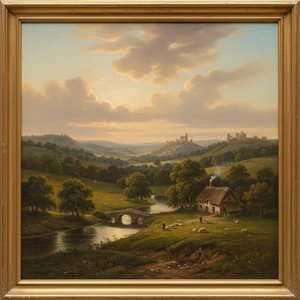
George Howland Beaumont's 'Landscape' (1825) captures a serene rural scene with vibrant colors and detailed brushwork, reflecting Romantic ideals. Explore this beautiful painting by a British art patron.

Taiteilijan elämäkerta

Sir George Beaumont (1753-1827) oli brittiläinen taidekeräilijä ja amatöörinäyttelijä, joka perustaa Kansallisen Gallerian. Tutustu hänen maisemaansa, klassikkoihin sekä hänen työnsä jälkimaineeseen!

alkaen ·

Luku 1

Kuinka suuren sen tulisi olla?

Vedä liukusäädintä vaihtaaksesi kokoa; vasemmalla oleva kuva näyttää kehyksen todellisen leveyden. Alkuperäiset mittasuhteet säilyvät.

Vakiokoko
räätälöity
CM
INCH

Valitse valmiista mitoistamme sellaiset, jotka vastaavat teoksen alkuperäisiä mittasuhteita.

leveys
korkeus

Kirjoita tarvitsemasi leveys ja korkeus, jotta teos sopii kehyksiisi tai seinällesi. Koska kyseessä on käsinmaalattu teos, taiteilija voi maalata hieman enemmän kuvan ympärille tai rajata sitä hieman, jos haluat eri muotoisen koon — valinta on sinun. Lähetämme sinulle digitaalisen mallikuvan hyväksyttäväksi ennen kuin maalaus alkaa. Tällä sivulla näkyvä kuva ei vastaa lopullista tulosta — vain mallikuva näyttää sen.

Luku 2

Miten teoksen tulisi saapua?

Valitse kangaspinnan reunat

Valitse kehys

Corner sample of the WhiteWrap canvas edge finish, stretched on massiivipuu bars
Valkoinen reuna €1
Corner sample of the BlurSideWrap canvas edge finish, stretched on massiivipuu bars
pehmennetty reuna €1
Corner sample of the ExtendedWrap canvas edge finish, stretched on massiivipuu bars
Jatkuva reuna €1
Corner sample of the P118B picture frame: valettu polystyreeni, 5 cm wide and 3 cm thick
P118B €10
Corner sample of the P118H picture frame: valettu polystyreeni, 5 cm wide and 3 cm thick
P118H €10
Corner sample of the P118W picture frame: valettu polystyreeni, 5 cm wide and 3 cm thick
P118W €10
Corner sample of the P438Z picture frame: valettu polystyreeni, 5.5 cm wide and 3.5 cm thick
P438Z €10
Corner sample of the P508JH picture frame: valettu polystyreeni, 7 cm wide and 3.5 cm thick
P508JH €12
Corner sample of the P508YH picture frame: valettu polystyreeni, 7 cm wide and 3.5 cm thick
P508YH €12
Corner sample of the P805H picture frame: valettu polystyreeni, 5 cm wide and 3.5 cm thick
P805H €10
Corner sample of the P805Z picture frame: valettu polystyreeni, 5 cm wide and 3.5 cm thick
P805Z €10
Corner sample of the P919BZ picture frame: valettu polystyreeni, 7 cm wide and 3.5 cm thick
P919BZ €10
Corner sample of the P919G picture frame: valettu polystyreeni, 7 cm wide and 3.5 cm thick
P919G €10
Corner sample of the P919XJ picture frame: valettu polystyreeni, 7 cm wide and 3.5 cm thick
P919XJ €10
Corner sample of the P959ZH picture frame: valettu polystyreeni, 5 cm wide and 3 cm thick
P959ZH €10
Corner sample of the P968JZ picture frame: valettu polystyreeni, 6 cm wide and 4 cm thick
P968JZ €12
Corner sample of the W106C picture frame: massiivipuu, 5 cm wide and 3 cm thick
W106C €8
Corner sample of the W218G picture frame: massiivipuu, 5 cm wide and 3 cm thick
W218G €10
Corner sample of the W218JH picture frame: massiivipuu, 5 cm wide and 3 cm thick
W218JH €8
Corner sample of the W218Y picture frame: massiivipuu, 5 cm wide and 3 cm thick
W218Y €10
Corner sample of the W307PJ picture frame: massiivipuu, 6 cm wide and 3 cm thick
W307PJ €10
Corner sample of the W316G picture frame: massiivipuu, 6 cm wide and 3 cm thick
W316G €10
Corner sample of the W316PJ picture frame: massiivipuu, 6 cm wide and 3 cm thick
W316PJ €8
Corner sample of the W316Y picture frame: massiivipuu, 6 cm wide and 3 cm thick
W316Y €10
Corner sample of the W398PJ picture frame: massiivipuu, 5 cm wide and 3 cm thick
W398PJ €8
Corner sample of the W4111J picture frame: massiivipuu, 6.5 cm wide and 3.5 cm thick
W4111J €10
Corner sample of the W500HY picture frame: massiivipuu, 7 cm wide and 5 cm thick
W500HY €15
Corner sample of the W500JH picture frame: massiivipuu, 7 cm wide and 5 cm thick
W500JH €15
Corner sample of the W692G picture frame: massiivipuu, 8 cm wide and 4 cm thick
W692G €12
Corner sample of the W849H picture frame: massiivipuu, 5 cm wide and 3 cm thick
W849H €8
Corner sample of the W940BG picture frame: massiivipuu, 7.5 cm wide and 4.5 cm thick
W940BG €15
Corner sample of the W953PJ picture frame: massiivipuu, 6 cm wide and 3.5 cm thick
W953PJ €8
Corner sample of the H24-GOLD picture frame: kaiverrettua puuta ja gessoa, 10 cm wide and 6 cm thick
H24-GOLD €30
Corner sample of the H24-SILVER picture frame: kaiverrettua puuta ja gessoa, 10 cm wide and 6 cm thick
H24-SILVER €30
Corner sample of the H36-GOLD picture frame: kaiverrettua puuta ja gessoa, 15 cm wide and 6.5 cm thick
H36-GOLD €45
Corner sample of the H36-SILVER picture frame: kaiverrettua puuta ja gessoa, 15 cm wide and 6.5 cm thick
H36-SILVER €45
Kehyksen esikatselu
Kehystetty

Kehystys: . Kokonaismitat kehyksen kanssa: .

Luku 3

Kuka sen maalaa, ja pitäisikö mitään muuttaa?

Esimerkkejä muutettavista asioista: Vaihda kasvot asiakkaan valokuvaan; Lisää lemmikki (esim. vaihda kissa koiraksi); Lisää piilotettu viesti taustalle; Vaihda taustan maisemaa tai elementtejä.


Tilauksen jälkeen OriginalUniqueArt.com -tiimi lähettää asiakkaalle sähköpostia ohjeita varten ja toimittaa luonnoksen esikatselun

Maailmanlaajuinen toimitus () 3–4 viikossa tavallisen 5 viikon sijaan. (4 marraskuu). Laadusta ei tingitä.

Luku 4

Viimeiset silaukset

Nimikyltti, kuten museossa?

Kaiverretun pronssilaatan tiedot

This elegant plaque features the artist's name and the title of the artwork, finely engraved for a timeless presentation.

It is made from bronze with a refined, elegant finish. The text is precisely laser-engraved for a sharp and permanent result. Measuring 9x2 cm, the plaque is compact yet easy to read. It's built to be durable and scratch-resistant, offering a professional, museum-quality look. Mounting is simple thanks to the included adhesive backing.

Läpinäkyvän akryylilaatan tiedot

The plaque includes essential engraved details such as the artist's name, the title of the artwork, the date it was created, the type of media used-like oil on canvas or watercolor-a brief description of the piece, and a QR code that links to the complete artwork information.

It is crafted from clear acrylic, offering a sleek, modern appearance. The text is UV-engraved in black to ensure strong visual contrast. With a size of 10x15 cm, it ensures optimal readability. It comes equipped with two metal hooks for secure wall mounting. The plaque is designed to be weather-resistant, making it suitable for various environments, and it includes interactive features that work seamlessly with smartphone scanning.

Mustan akryylilaatan tiedot

This elegant plaque includes engraved information such as the artist's name, the title of the artwork, the date it was created, the type of media used (like oil on canvas or watercolor), a short description of the artwork, and a QR code for quick access to more information.

The plaque itself is made from refined black acrylic with a premium finish. The text is laser-engraved in white for high contrast and readability. Its size is 10x15 cm, designed to be easy to read. It comes with two metal hooks for professional mounting. The design is sleek and fits any interior style. It is also weather-resistant and durable, with built-in digital integration for mobile compatibility.

Suojaava lakka?

Milloin tarvitset sen?

Luku 5

Maalauksesi juuri niin kuin tilasit

Landscape

Reproduktiotekniikka

Replikaatin koko

-

Kokenut huipputaiteilija

Lisää yksityiskohtia, hienostuneisuutta ja enemmän aikaa tuotantoon

-

Reproduktion kehystysvaihtoehdot

-

-

Teoksille tai reproduktioille, joiden mikä tahansa sivu on suurempi kuin 105 cm (noin 41 tuumaa), kehys toimitetaan osina purettuna sarjana. Tämä menetelmä varmistaa turvallisen toimituksen ja ehkäisee vaurioita kuljetuksen aikana.

Vaatii ammattimaista kokoamista – kyseessä ei ole tee-se-itse-tuote.
Sarja on koottava ja kangas kiristettävä kokeneen kehystysammattilaisen toimesta käyttäen puuliimaa (ei sisälly pakkaukseen), kangaspinnetteitä ja puristimia, jotta kehyksen kulmat pysyvät suorina liiman kuivuessa. Virheellinen kokoaminen tai epätasainen kankaan kiristys voi vaurioittaa teosta pysyvästi, eikä tällaiset vauriot ala takuun piiriin.

  • Kaikki massiivipuupalat sisältyvät, tarkasti mittojen mukaan leikattuina.

  • Kootaan mukana tulevilla ruuveilla sekä kulmaliitoksia varten tarvittavalla puuliimalla, jota ei toimiteta, joten se on hankittava kehystäjältä.

  • Vaatii ammattilaisvälineitä, jotka eivät sisälly pakkaukseen: kankaan venytyspihdit (kiristin) ja puristimet, joilla pidetään kehyksen puut suorassa liiman kuivuessa.

Tärkeää:
Kulmaliitoksissa tarvitaan puuliimaa, kehyksien osat on pidettävä puristimilla, kunnes liima on täysin kuivunut, ja koottuun kehykseen jännitettävän kankaan kiristämiseen tarvitaan kangaspenssipihti. Mikään näistä ei sisälly pakkaukseen. Suosittelemme varmistamaan kokeneen kehystäjän saatavuuden ennen tämän kokoisen kehyksen tilaamista.

Nimilaatta

-

-

Suojalakkaus

Kiiltävä lakka (syventää värejä, suojaa valolta ja kosteudelta)

-

Mukauta taideteokseni

Esimerkkejä muokattavista asioista: Vaihda kasvot asiakkaan omaan valokuvaan; Lisää lemmikki (esim. vaihda kissa koiraan); Lisää taustalle piilotettu viesti; Muuta taustan maisemaa tai elementtejä.

-

Pikatoimitus

Maailmanlaajuinen toimitus () 3–4 viikossa tavallisen 5 viikon sijaan. (4 marraskuu). Laadusta ei tingitä.

-

Pikatoimitus

Maailmanlaajuinen toimitus () 5 viikon kuluessa. (11 marraskuu).

Sisältyy hintaan

Kokonaishinta

€ 267

Kokonaishinta € 267

Lasivaihtoehto on saatavilla vain alle 110 cm kokoisille teoksille

Sisältyy jokaiseen tilaukseen

  • Ilmainen pikatoimitus ympäri maailman
  • Korkealaatuinen pellavakangas
  • Kattava kuljetusvakuutus
  • Tulliveron palautustakuu
  • Takuu täydellisestä värien vastaavuudesta
  • 100 päivän palautusoikeus (vain valmistusvirheet)
  • 100% rahat takaisin -takuu
  • Määräalennus tarjolla

A Window on the Soul: George Howland Beaumont’s ‘Landscape’

George Howland Beaumont's “Landscape,” painted in 1825, isn’t merely a depiction of a rural scene; it’s an invitation into a world steeped in Romantic sensibility and a profound appreciation for the natural world. This oil on canvas transports us to a tranquil valley, bathed in the soft light of a late afternoon, where the subtle interplay of color and form speaks volumes about the artist's vision and his deep connection to the English countryside.

Beaumont, a prominent figure in British art during the early 19th century, was more than just an amateur painter; he was a dedicated collector and connoisseur. His journey through Italy ignited a passion for the Old Masters, particularly the landscapes of Claude Lorrain and other Baroque masters. This influence is strikingly evident in “Landscape,” where the composition echoes classical principles – a balanced arrangement of elements, a sense of depth achieved through atmospheric perspective, and an emphasis on harmonious color palettes. The painting’s roots lie firmly within the Romantic movement, but Beaumont tempered its more dramatic tendencies with a refined elegance and a meticulous attention to detail.

The Language of Light and Color

Beaumont masterfully employs light as his primary tool, creating a sense of luminous serenity. Notice how he captures the diffuse glow filtering through the trees, casting long shadows that dance across the foreground. The color palette is restrained yet rich – predominantly blues and greens dominate, punctuated by earthy browns and ochres in the distant hills. These colors aren’t applied with brute force; instead, they are layered delicately to build depth and atmosphere. The artist's use of glazing techniques—thin layers of translucent paint—allows light to penetrate through the surface, giving the scene an almost ethereal quality.

A key element is the subtle rendering of texture. The rough bark of the central tree, the undulating contours of the hills, and even the suggestion of grass beneath the figures are all conveyed with remarkable sensitivity. Beaumont’s brushstrokes aren't overtly expressive; they are controlled and deliberate, contributing to the painting’s overall sense of quiet contemplation.

Figures in a Pastoral Setting

Two figures, positioned near the base of the large tree, add a touch of human presence to this otherwise solitary landscape. Their postures suggest an activity—perhaps a simple task or a moment of shared observation—but their identities remain deliberately ambiguous. They aren’t presented as heroes or protagonists; rather, they are integrated seamlessly into the scene, serving as reminders of humanity's place within the vastness of nature. This subtle inclusion invites viewers to contemplate their own relationship with the natural world.

The placement of these figures also contributes to the painting’s sense of depth and perspective. They appear smaller in scale than the towering tree, reinforcing the impression of a distant horizon and emphasizing the grandeur of the landscape. The composition guides the eye through the scene, drawing us into the heart of the valley.

A Legacy of Romantic Vision

“Landscape” stands as a testament to George Howland Beaumont’s artistic skill and his profound appreciation for the beauty of the English countryside. It embodies the core tenets of the Romantic movement—a reverence for nature, an emphasis on emotion and imagination, and a fascination with the sublime. Beaumont's work continues to resonate today, offering viewers a moment of tranquility and a reminder of the enduring power of art to capture the essence of our world.

Reproductions of this piece offer a wonderful opportunity to bring this evocative landscape into your home or office, allowing you to experience its beauty and serenity firsthand. Consider framing it in a classic style to complement its timeless appeal.

Kysymykset ja vastaukset

Onko George Howland Beaumont:n "Landscape" vapaasti käytettävissä oleva teos?

Tekijänoikeuksien osalta teos "Landscape" on vapaasti käytettävissä – tekijänoikeussuoja on päättynyt.

Mihin huoneeseen George Howland Beaumont:n "Landscape" suositellaan sijoitettavaksi sen värien perusteella?

George Howland Beaumont:n "Landscape"-teoksen Earthy värit soveltuvat erinomaisesti sen suositeltuun tilaan: Living Room.

Minkälaisen tunteen George Howland Beaumont:n "Landscape" värit luovat?

George Howland Beaumont:n "Landscape"-teoksen Earthy väripaletti ja sen Melancholic tunnelma sointuvat yhteen. Väri on yksi tavoista, joilla teos välittää tunnetta.

Lisää tästä teoksesta

Esikatselu Esikatsele AR-tilassa Vaihda tulosteeseen Siirry digitaaliseen kuvaan Jaa teos
Tiedot Opas Lisää suosikkeihin Lataa kuva Samanlaisia kohteita Röntgenkuvaus Diaesitys Kysymykset ja vastaukset Tilastot

Lukuina

  • 1825teosvuosi
  • 29valittavissa olevat kehykset
  • standardikoot, omissa mittasuhteissaan
  • 5viikkoja maalaamiseen ja toimitukseen
George Howland Beaumont

George Howland Beaumont

1753 - 1827, Iso-Britannia

Pikaaakkaukset taiteilijasta George Howland Beaumont

  • Artistic Movement Or Style: Romanttisuus
  • Artists Or Movements Influenced By This Artist: ['John Constable']
  • Artists Who Influenced This Artist:
    • Richard Wilson
    • Thomas Hearne
  • Date Of Birth: 1753
  • Date Of Death: 1827
  • Full Name: George Howland Beaumont
  • Nationality: Brittiläinen
  • Notable Artworks:
    • Metsämaisema
    • Maisema
    • Coleorton Hallin muistomerkki
  • Place Of Birth: Dunmow, Iso-Britannia

Taiteilijan elämäkerta

A Life Dedicated to Art: The World of George Howland Beaumont

Sir George Howland Beaumont, born in 1753 amidst the tranquil Essex countryside of Great Dunmow, was a figure whose life embodied the evolving tastes and passions of late 18th and early 19th-century Britain. Inheriting both a baronetcy and an estate at a young age, Beaumont’s path wasn't immediately destined for artistic pursuits. However, his education at Eton College included initial training in landscape painting under Alexander Cozens, sparking a lifelong fascination with the visual arts—a fascination that would ultimately define his entire existence. This early exposure served as a crucial catalyst, preparing him for the transformative experience of the Grand Tour undertaken in 1782 alongside his wife, Margaret. Italy and its rich artistic heritage proved pivotal; Beaumont’s eyes were opened to the masterpieces of the Old Masters, igniting within him not only an appreciation but also a fervent desire to collect and understand these works—a passion that would consume much of his later life. This journey laid the foundation for a life dedicated to art—both as a discerning collector and a committed, though often self-critical, painter.

Cultivating Taste: Collection, Patronage, and Artistic Development

Upon his return to England, Beaumont embarked on building an impressive collection of Old Master paintings, driven by genuine enthusiasm despite considerable financial constraints. Central to this collection was Claude Lorrain’s *A Landscape with Hagar and the Angel*, a painting that held particular significance for him—a visual embodiment of his aesthetic ideals. He wasn't merely acquiring objects; he was assembling a visual library, meticulously documenting and analyzing artistic excellence. Simultaneously, Beaumont actively pursued artistic expression through painting, honing his skills under influential mentors like Richard Wilson and Thomas Hearne, aligning himself with the burgeoning Romantic movement. His canvases often depicted serene landscapes—particularly those inspired by Keswick—reflecting the profound impact of Wordsworth’s poetry on his sensibilities. Beaumont's social life flourished alongside his artistic endeavors, centered around his residence at 34 Grosvenor Square and a distinguished service as Tory MP for Beer Alston (1790-1796), where he engaged in debates concerning artistic patronage and the role of government in supporting cultural institutions. He championed the cause of John Julius Angerstein, recognizing the importance of public access to art—a conviction that would ultimately propel him toward a monumental achievement.

A Vision for Public Access: The Founding of the National Gallery

Beaumont’s unwavering belief in the transformative power of art culminated in his groundbreaking proposal to establish the National Gallery in 1823. Recognizing the urgent need for a public institution dedicated to showcasing Old Master paintings, he championed an audacious idea—one that would reshape British cultural life forever. He offered to donate sixteen paintings from his personal collection on the condition that Parliament procure John Julius Angerstein’s holdings and secure suitable premises—a bold gesture demonstrating his conviction in fostering artistic appreciation amongst all citizens. This initiative galvanized parliamentary debate and ultimately resulted in the Gallery's triumphant opening in May 1824, cementing Beaumont’s legacy as a visionary reformer and securing his place among Britain’s most influential cultural figures. His contribution wasn’t merely philanthropic; it was an affirmation of his profound understanding that art possessed the capacity to elevate society and enrich the human experience—a conviction he carried throughout his life.

Notable Works: Landscapes and Artistic Style

Beaumont's artistic output encompassed a diverse range of landscapes, reflecting his meticulous observation of nature and his mastery of Romantic painting techniques. Among his most celebrated canvases is *View near Keswick*, commissioned by Wordsworth himself—a poignant portrayal capturing the sublime beauty of Lakeland scenery and embodying Beaumont’s stylistic allegiance to Wilson and Hearne. His paintings are characterized by atmospheric perspective, subtle tonal gradations, and a masterful depiction of light and shadow—elements that convey both grandeur and intimacy simultaneously. Furthermore, Beaumont's dedication extended beyond his own creations; he generously supported the young John Constable, fostering a relationship that resulted in Constable’s evocative painting of the Cenotaph to Sir Joshua Reynolds at Coleorton Hall—a testament to Beaumont’s discerning eye and his commitment to nurturing artistic talent.

Legacy and Historical Significance

Sir George Howland Beaumont passed away peacefully in 1827, leaving behind a legacy that transcends his artistic accomplishments. His unwavering advocacy for the National Gallery fundamentally altered British cultural history, democratizing access to art and establishing a cornerstone of national identity. More than simply a collector or painter, Beaumont was an intellectual force—a champion of Enlightenment ideals who recognized the importance of fostering creativity and promoting beauty within society. He remains a compelling figure—a gentleman amateur whose profound conviction in art’s transformative potential continues to inspire admiration and scholarly inquiry today.

Pikaista tietoa

  • Subject or theme: Landscape scene
  • Dimensions: 45 x 38 cm
  • Influences:
    • Cozen's
    • Italian masters
  • Title: Landscape
  • Notable elements: Tree, figures, hills

Taidevisat

Jokaisessa kysymyksessä on vain yksi oikea vastaus.

Kysymys 1:
What is the primary subject matter of George Howland Beaumont’s ‘Landscape’?
Kysymys 2:
In what year was George Howland Beaumont’s ‘Landscape’ painted?
Kysymys 3:
George Howland Beaumont was known for his role as:
Kysymys 4:
The painting ‘Landscape’ reflects which artistic movement?
Kysymys 5:
What is the approximate size of George Howland Beaumont’s ‘Landscape’?