

 Esikatselu
 Jaa
Jaa Jaa
Jaa
 Tarkemmat tiedot

 Lataa
Lataa
 Samanlaisia
 Röntgenkuva
 Diaesitys
Wolf Point


 Näytä lisää
Osta korkearesoluutioinen, parannettu digitaalikuva, joka on laadultaan huomattavasti parempi kuin verkkosivuston esikatselu.
Jokainen tiedosto valmistellaan huolellisesti omien asiantuntijoidemme toimesta käyttäen edistyneitä työkaluja ja ammattitaitoista manuaalista retusointia. Varmistamme, että jokaisessa kuvassa on poikkeuksellinen selkeys, tarkka värintoisto ja hienovaraiset yksityiskohdat.
Lopputiedosto toimitetaan sähköpostitse 72 tunnin kuluessa, ja se on optimoitu välittömään käyttöön ammattimaisissa, toimituksellisissa ja painoympäristöissä. Laatu on sama, johon huipputason suunnittelustudiot, kustantajat ja galleriat luottavat.
Digitaalinen kuva
Lataa korkearesoluutioinen tiedosto henkilökohtaiseen näyttelyyn, tulostamiseen ja luoviin projekteihin. ( Siirry tulosteeseen Vaihda käsinmaalattuun versioon)
Sisältyy jokaiseen digitaalisen kuvan tilaukseen
Asiantunteva digitaalinen toimitus, taattuun laatuun
Kun valitset OriginalUniqueArt.com-palvelun, et saa vain kuvaa – saat ammattimaisesti parannetun digitaalisen taideteoksen, joka on luotu tarkkuudella ja jonka takaa tulee tyytyväisyystakuu. Tässä on kaikki, mitä tilauksesi sisältää, automaattisesti:

Nopea digitaalinen toimitus
Korkearesoluutioinen digitaalinen kuvatiedostosi lähetetään sähköpostiisi 72 tunnin kuluessa tilauksesta – valmiina käytettäväksi välittömästi.

Tekoälyllä parannettu digitaalinen tiedosto
Taiteilijasi teos on optimoitu ammattimaisesti edistyneiden tekoälytyökalujen ja manuaalisen muokkauksen avulla, mikä takaa maksimaalisen yksityiskohtaisuuden, selkeyden ja väritarkkuuden.

Ilmainen elinikäinen uudelleenlähetyspalvelu
Oletko vahingossa poistanut tai kadottanut tiedostosi? Ei hätää – lähetämme sen sinulle uudelleen milloin tahansa täysin maksutta.

Ei tuontimaksuja – koskaan
Nauti taiteestasi välittömästi ilman tulleja, veroja tai toimitusmaksuja – digitaaliset lataukset ovat aina verovapaita.

Värintoiston tarkkuustakuu
Varmistamme, että digitaalinen kuvasi vastaa alkuperäisiä värejä mahdollisimman tarkasti käyttämällä ammattilaistason työkaluja ja värinhallintaa.

60 päivän tyytyväisyystakuu
Jos et ole tyytyväinen digitaaliseen kuvaasi, muokkaamme sitä tai palautamme 100% takaisin 60 päivän kuluessa – ilman kysymyksiä.

100% Rahat takaisin -takuu
Etkö ole tyytyväinen? Saat täyden hyvityksen 60 päivän kuluessa digitaalisen tiedostosi vastaanottamisesta – ilman kyselyitä.

Suurtilaaja-alennukset
Osta 3 kuvaa, säästä 10% - Osta 5, säästä 15% - Osta 10+, säästä 20%. Erinomainen valinta luoviin projekteihin, gallerioille ja toimistoille.
Taiteilijan elämäkerta
The Architect of Molecular Innovation
In the grand tapestry of the nineteenth century, where the soot of the Industrial Revolution met the burgeoning light of scientific inquiry, few figures cast a shadow as profound yet specialized as George Edward Davis. Born in the historic enclave of Eton, Buckinghamshire, in 1850, Davis was not an artist of the brush, but rather an architect of the unseen. While his contemporaries were capturing the fleeting light of the English landscape on canvas, Davis was meticulously mapping the complex, invisible flows of chemical reactions that would eventually give birth to a new discipline: chemical engineering. His life story is one of remarkable transition, moving from the tactile, traditional craft of bookbinding—an apprenticeship he began at the tender age of fourteen—to the rigorous, transformative world of industrial chemistry.
The evolution of Davis’s intellect was fueled by a relentless curiosity that could not be contained by the leather and glue of his early training. Driven by an innate passion for the molecular, he sought higher learning at the Slough Mechanics Institute and later at the prestigious Royal School of Mines in London. This period of intense academic immersion provided him with the theoretical scaffolding necessary to navigate the burgeoning chemical landscape of the United Kingdom. As he moved through the industrial heartlands around Manchester, Davis did not merely observe the progress of science; he became its primary navigator, applying a meticulous attention to detail that mirrored the precision of a master engraver.
A Legacy Written in Industry and Science
The true brilliance of George Edward Davis lay in his ability to bridge the gap between pure laboratory chemistry and the massive, roaring scale of industrial production. His career was marked by a series of monumental achievements that reshaped the very infrastructure of modern manufacturing. From his early days as an inspector for the Alkali Act of 1863—a pioneering piece of environmental legislation—to his transformative role as manager at the Lichfield Chemical Company, Davis demonstrated an unparalleled capacity for innovation. It was during this tenure that he designed and constructed facilities featuring what was then the tallest chimney in the United Kingdom, a towering symbol of his ability to manifest scientific theory into physical, monumental reality.
Beyond the construction of chimneys and chemical plants, Davis’s intellectual contributions were equally enduring. He is widely revered as the founding father of chemical engineering, a title earned through his seminal lectures and his landmark 1901 publication, "A Handbook of Chemical Engineering." This work served as a foundational text, codifying the principles of unit operations that remain central to the field today. His influence extended into the very fabric of scientific community building; he was instrumental in the formation of the Society of Chemical Industry in 1881 and founded the Chemical Trade Journal, ensuring that the rapid advancements of his era were documented and shared among his peers.
Even within the realm of pure science, Davis found a secondary passion in the delicate art of microscopy. As a founding member and former President of the Manchester Microscopical Society, he approached the microscopic world with the same reverence an artist might approach a fine detail in a portrait. His work as an amateur microscopist, characterized by skillfully prepared slides and influential publications like Practical Microscopy, showcased a man who found beauty in the minute and profound meaning in the infinitesimal. Through his dual mastery of the industrial and the microscopic, George Edward Davis left behind a legacy that continues to underpin the technological and scientific foundations of our modern world.
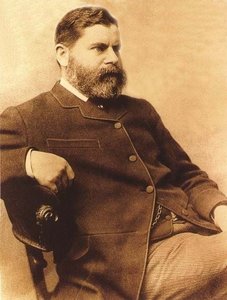
george edward davis
1850 - 1907 , United Kingdom
Lyhyesti esiteltynä
- Artistic Movement Or Style: Chemical engineering art
- Artists Or Movements Influenced By This Artist:
- George Chinnery
- Sir Alfred James Munnings
- Artists Who Influenced This Artist: ['Nicholas Leblanc']
- Date Of Birth: July 27, 1850
- Date Of Death: April 20, 1907
- Full Name: George Edward Davis
- Nationality: British
- Notable Artworks: ['Wolf Point']
- Place Of Birth: Eton, United Kingdom

