

 Katso seinällä
 Lähetä
 Jaa
Jaa
 Tarkemmat tiedot
 Opas
Opas

 Lataa kuva
 Samanlaisia kohteita
 Röntgenkuvaus
 Diaesitys
 Tilastot
Williamstown Landscape


 Lue lisää
Käsinmaalattu öljyvärinen jäljennös
Käsinmaalattu öljyväri kankaalle haluamassasi koossa ja kehyksissä, taiteilijoidemme valmistamana tilauksesta. ( Vaihda tulosteeseen Siirry digitaaliseen kuvaan)




P118B $10

P118H $10

P118W $10

P438Z $10

P508JH $12

P508YH $12

P805H $10

P805Z $10

P919BZ $10

P919G $10

P919XJ $10

P959ZH $10

P968JZ $12

W106C $8

W218G $10

W218JH $8

W218Y $10

W307PJ $10

W316G $10

W316PJ $8

W316Y $10

W398PJ $8

W4111J $10

W500HY $15

W500JH $15

W692G $12

W849H $8

W940BG $15

W953PJ $8




Valitse valmiista mitoistamme sellaiset, jotka vastaavat teoksen alkuperäisiä mittasuhteita.

Voit syöttää omat mitat sopimaan tiettyyn kehykseen tai tilaan. Jos valitsemasi koko ei vastaa alkuperäisen kuvan mittasuhteita, rajaamme taideteoksen tai jatkamme maalausta käsin maalatuilla elementeillä. Digitaalinen esikatselu lähetetään hyväksyttäväksi ennen tuotannon aloittamista.
Huomioithan, että näytöllä oleva esikatselu ei vastaa todellista rajausta tai jatkamista. Vain digitaalinen mallikuva näyttää lopullisen sommittelun tarkasti.
Vaikka mittatilaustyöt ovat mahdollisia, suosittelemme valitsemaan mitan ennalta määritetystä listasta alkuperäisten mittasuhteiden säilyttämiseksi.
Tilauksen jälkeen OriginalUniqueArt.com -tiimi lähettää asiakkaalle sähköpostitse ohjeet ja esikatselukuvan.
Maailmanlaajuinen toimitus () 3–4 viikossa tavallisen 5 viikon sijaan. (27 syyskuu). Laadusta ei tingitä.

Ilmainen pikatoimitus ympäri maailman

Korkealaatuinen pellavakangas

Kattava kuljetusvakuutus

Tulliveron palautustakuu

Takuu täydellisestä värien vastaavuudesta

100 päivän palautusoikeus valmistusvirhetapauksissa

100% rahat takaisin -takuu

Määräalennus saatavilla
 Lasivaihtoehto on saatavilla vain alle 110 cm kokoisille teoksille

Williamstown Landscape
Reproduktiotapa
Replikaatin koko
-


Kokonaishinta
$ 300
A Serene Glimpse into Australian Life
To gaze upon Williamstown Landscape is to step directly into a moment suspended in time—a quintessential portrait of early 20th-century Australian leisure. Frederick McCubbin, the master chronicler of the continent's burgeoning identity, has gifted us a scene steeped in pastoral tranquility. The composition immediately draws the eye across the expansive body of water, where a graceful pier extends like an invitation into the shimmering expanse. This is not merely a depiction of a waterfront; it is an evocation of peace, capturing the gentle rhythm of life played out between land and tide.
Mastery in Light and Brushwork
McCubbin’s technique here is nothing short of masterful. His handling of oil on canvas allows the light to breathe across the scene. Observe how the sand meets the water's edge, a delicate transition rendered with palpable texture. The brushstrokes themselves seem imbued with the very quality of sunlight filtering through the air. While the subject matter—the beach, the pier, the scattered figures enjoying the day—is idyllic, it is McCubbin’s ability to capture the atmospheric quality that elevates this work beyond mere documentation. The inclusion of two boats adds depth and narrative potential, suggesting journeys undertaken or moments paused in contemplation.
Historical Echoes of a Changing Landscape
Painted in 1910, Williamstown Landscape sits at a fascinating juncture in Australian history. It reflects a period of burgeoning settlement and the establishment of leisure as an art form itself. McCubbin was deeply invested in portraying the unique character of the Australian environment, moving beyond mere topographical record to capture the spirit of its inhabitants. For the modern collector or designer, owning a reproduction allows one to connect with this tangible piece of national heritage, bringing the romance and enduring spirit of early 20th-century Melbourne life into contemporary spaces.
Symbolism of Place and Passage
The pier itself serves as a powerful symbolic element. It represents connection—the link between the solid ground and the vast unknown of the water, mirroring perhaps the human journey itself. The people scattered across the beach are engaged in quiet communion with their surroundings, suggesting themes of community, repose, and the enduring appeal of nature's embrace. This sense of calm is palpable; it whispers of slow mornings, shared moments, and the restorative power of a picturesque setting.
Bringing Tranquility Home
For those seeking art that soothes the modern eye, Williamstown Landscape offers profound emotional resonance. Whether displayed in a formal drawing-room or a sunlit coastal retreat, its soft palette and harmonious composition act as an instant balm. Reproducing this work allows one to curate not just a wall hanging, but a mood—a permanent echo of McCubbin’s vision of Australian serenity.
Taiteilijan elämäkerta
A Life Rooted in the Australian Landscape
Frederick McCubbin, born February 25th, 1855, in Melbourne, Australia, stands as a cornerstone of Australian art—a figure inextricably linked to the nation’s evolving identity and its distinctive visual language. His journey from humble beginnings—the son of bakers who instilled in him a profound work ethic—to becoming a pivotal voice within the Heidelberg School is testament to his unwavering dedication and artistic vision. McCubbin's formative years were marked by diverse experiences; he served as solicitor’s clerk, assisting in the family bakery before fully embracing his calling as a painter. These seemingly disparate influences imbued him with an unparalleled understanding of everyday Australian life—a theme that would permeate throughout his oeuvre. He received foundational training at the National Gallery of Victoria's School of Design, studying under esteemed artists like Eugene von Guerard and George Folingsby, honing his skills in landscape painting while absorbing the prevailing artistic currents of the time. A decisive turning point arrived with his enduring friendship with Tom Roberts—a bond that would shape the trajectory of Australian art history.The Heidelberg School: Defining a National Aesthetic
In 1885, McCubbin and Roberts established Box Hill Artists’ Camp—a landmark event propelling the development of the Heidelberg School movement. This plein air collective—soon bolstered by Arthur Streeton and Charles Conder—pursued an unprecedented ambition: to capture the essence of Australian life and landscapes with breathtaking immediacy and authenticity. Rejecting the conventions of European academic painting, they ventured into the bush, embracing its raw beauty alongside its harsh realities—a deliberate defiance of artistic norms. McCubbin’s contributions during this period were instrumental in establishing a uniquely Australian aesthetic. His paintings from this era—such as *Down on His Luck* (1889), *On the Wallaby Track* (1896), and *The Pioneer* (1904)—became iconic representations of pioneering life, portraying the struggles and resilience of early settlers against the backdrop of a vast and often unforgiving landscape. These works weren’t merely depictions of scenery; they were narratives imbued with social commentary—exploring themes of solitude, hardship, and the complex relationship between European settlers and the Indigenous land. Heidelberg School artists sought to portray Australia as it truly was—moving away from imported styles and subjects—resulting in canvases brimming with vibrant color and evocative atmosphere.Early Influences and Artistic Training
McCubbin’s artistic education began at William Willmett's West Melbourne Common School and St Paul’s School, Swanston Street. He subsequently gained practical experience as a solicitor’s clerk and worked in his family’s bakery business—experiences that fostered an acute awareness of the Australian vernacular. Crucially, he enrolled at the National Gallery of Victoria Art School under Eugène von Guerard and George Folingsby—studying landscape painting alongside fellow artists who would become lifelong companions. This formative training instilled him with a deep appreciation for artistic technique and exposed him to the stylistic innovations emerging from Europe during that time. Notably, his friendship with Tom Roberts proved pivotal; Roberts’ return from art studies in Paris brought European Impressionism into McCubbin's orbit—a catalyst for stylistic evolution.Major Achievements: Iconic Landscapes and Artistic Legacy
McCubbin achieved lasting renown through his masterful depictions of the Australian bush—particularly *Down on His Luck*, *On the Wallaby Track*, and *The Pioneer*. These paintings exemplify the Heidelberg School’s commitment to capturing the spirit of Australia with unparalleled honesty and vibrancy. They are celebrated for their luminous color palettes, expressive brushstrokes, and evocative compositions—elements that convey not only visual beauty but also profound emotional resonance. Furthermore, McCubbin served as president of both the Victorian Artists' Society and the Australian Art Association—demonstrating his commitment to fostering artistic excellence within Australia. His influence extended beyond his own paintings; he mentored aspiring artists and championed a distinctly Australian artistic vision. Frederick McCubbin’s legacy continues to inspire artists today—his ability to convey the grandeur and melancholy of the bush landscape securing his place as one of Australia's most revered painters.
Frederick McCubbin
1855 - 1917 , Australia
Tietoa taiteilijasta
- Artistic Movement Or Style: Heidelberg School
- Artists Or Movements Influenced By This Artist:
- J.M.W. Turner
- French Impressionists
- Artists Who Influenced This Artist:
- Eugene von Guerard
- George Folingsby
- Date Of Birth: Feb 25, 1855
- Date Of Death: Dec 20, 1917
- Full Name: Frederick McCubbin
- Nationality: Australian
- Notable Artworks:
- On the Wallaby Track
- Down on His Luck
- The Pioneer
- Place Of Birth: Melbourne, Australia
Aiheeseen liittyvät artikkelit
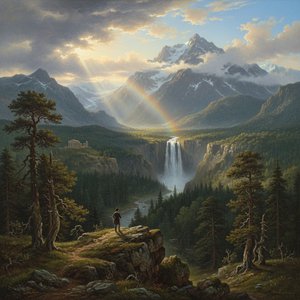
Evoking Nature's Sublime: A Comprehensive Exploration of 19th-Century Landscape Painting
Explore the captivating world of 19th-century landscape painting! Discover renowned artists like Friedrich & Monet, key movements, and find the perfect artwork to bring nature's serenity into your home. Expert insights at OriginalUniqueArt.

William James Müller: Navigating Victorian Sentiment & Realism in British Landscape Painting
Explore the captivating landscapes of William James Müller, the leading artist of the Bristol School. Discover his Victorian masterpieces, Egyptian travels & Lycian sketches – a journey through 19th-century art and technique.

Romanttisen maisemamaalauksen mestariteokset: Taidetta ja inspiraatiota kotiin
Uppoudu romanttisen maisemamaalauksen maailmaan! Tutustu Caspar David Friedrichin, Turnerin ja muiden mestareiden ikonisiin teoksiin. Löydä inspiraatiota kotiisi taiteen avulla OriginalUniqueArt.comista – laadukkaat taideprintit ja sisustusideoita.

Evocations of Place: A Historical Journey Through Landscape Art
Explore the rich history of landscape art with OriginalUniqueArt. Discover renowned artists, movements like Impressionism & tonalism, and expert guidance for collecting timeless pieces. Find your perfect serene escape today!

Evocations of Place: A Historical Journey Through Landscape Art
Explore the rich history of landscape art with OriginalUniqueArt. Discover renowned artists, movements like Impressionism & Romanticism, and expert guidance for collecting timeless pieces. Find your perfect serene escape today!
