Öljyvärimaalaus-versio
 Kaikki teoksesta SALES COUNTER







































 Teoksille tai reproduktioille, joiden mikä tahansa sivu on suurempi kuin 105 cm (noin 41 tuumaa), kehys toimitetaan osina purettuna sarjana. Tämä menetelmä varmistaa turvallisen toimituksen ja ehkäisee vaurioita kuljetuksen aikana.


A Glimpse into Mid-Century Commerce
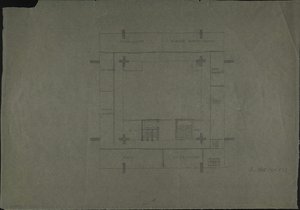
In the delicate lines of "SALES COUNTER," created in 1957 by the visionary German artist Franz Ehrlich, we are transported to a moment frozen in time. This captivating drawing serves as more than just a depiction of a commercial space; it is a window into the social fabric of the mid-2'0s. The composition captures a meticulously arranged sales counter, divided into distinct sections that guide the viewer's eye through a landscape of 1950s utility and design. Within this scene, the presence of chairs scattered near the counter and a central dining table suggests a space where commerce and community intersect. The inclusion of two figures—one standing poised on the left and another positioned toward the right—adds a layer of human narrative, transforming a structural study into a living, breathing vignette of daily life.
The artwork breathes with the unmistakable influence of the Bauhaus, an institution that shaped Ehrlich’s very soul. One can sense the architectural precision in the way the counter is rendered, reflecting his training in Dessau. The style is characterized by a clean, graphic clarity that emphasizes form and function, yet it avoids the coldness often associated with industrial design. Instead, there is a rhythmic quality to the placement of objects—the mounted television, the arrangement of seating, and the spatial relationship between the people and the furniture—that creates a sense of balanced harmony. For the collector or interior designer, this piece offers a sophisticated interplay of geometry and atmosphere, making it an ideal focal point for spaces that celebrate modernism and structural elegance.
Beyond its aesthetic appeal, "SALES COUNTER" carries a profound historical weight. Having survived the turbulence of the Nazi regime and the complexities of his political affiliations, Ehrlich’s work often reflects a resilient spirit of reconstruction and order. This drawing, produced in 1957, embodies a period of post-war stabilization, where the design of everyday objects became a way to rebuild a sense of normalcy and progress. The emotional impact of the piece lies in this quiet tension between the rigid lines of architecture and the soft, transient presence of human interaction. It invites the viewer to contemplate the beauty found in the mundane and the enduring strength of organized design.
For those seeking to adorn a contemporary interior with a sense of history and intellectual depth, a high-quality reproduction of this masterpiece offers an unparalleled opportunity. Whether placed in a minimalist gallery setting or a warm, classic study, "SALES COUNTER" brings with it the prestige of the Bauhaus legacy and the evocative charm of a bygone era. It is a piece that does not merely decorate a wall; it starts a conversation about the intersection of art, life, and the enduring power of the graphic line.
Kysymykset ja vastaukset
Onko teos SALES COUNTER käsinmaalattu vai painettu?
Käsinmaalattu: ammattitaitoinen taiteilija kopioi teoksen SALES COUNTER öljyväreillä pellavalle.
Mikä koko SALES COUNTER -teokselle kannattaa valita?
Alkuperäisen teoksen koko on 51 x 66 cm. Koot vaihtelevat välillä 27.9 x 35.8 cm (€179) – 194.3 x 248.7 cm (€1587); tämän sivun taulukossa on lueteltu tärkeimmät vaiheet ja niiden hinnat.
Kuinka kauan toimitus kestää?
Toimitusaika on 4–5 viikkoa, ja tarjoamme ilmaisen pikatoimituksen ympäri maailmaa; tällä sivulla on saatavilla myös kiireellinen tuotantovaihtoehto. Voit palauttaa tuotteen 100 päivän kuluessa täyden hyvityksen saamiseksi ilman mitään ehtoja.
Missä teoksen SALES COUNTER alkuperäinen sijaitsee?
Alkuperäinen teos kuuluu Bauhaus Dessau Foundation -museon kokoelmaan, Dessau-Roßlau.
Onko alkuperäinen SALES COUNTER piirustus vai maalaus?
Piirros: Franz Ehrlich teki sen materiaalilla Drawing.
 Esikatselu

 Jaa teos
 Jaa
 Tiedot
 Tiedot-arkki


 Lataa kuva
 Samanlaisia kohteita
 Röntgenkuvaus
 Diaesitys
 Kysymykset ja vastaukset

 Tilastot