

 Katso seinällä
 Lähetä
 Jaa
Jaa
 Tarkemmat tiedot
 Opas
Opas

 Lataa kuva
 Samanlaisia kohteita
 Röntgenkuvaus
 Diaesitys
 Tilastot
Madonna with Child
 Oil On Panel
- Renaissance Early Renaissance
 1514
1514 93.0 x 68.0 cm
 Ermitažin museo
 Lue lisää
Käsinmaalattu öljyvärinen jäljennös
Käsinmaalattu öljyväri kankaalle haluamassasi koossa ja kehyksissä, taiteilijoidemme valmistamana tilauksesta. ( Vaihda tulosteeseen Siirry digitaaliseen kuvaan)




P118B €10

P118H €10

P118W €10

P438Z €10

P508JH €12

P508YH €12

P805H €10

P805Z €10

P919BZ €10

P919G €10

P919XJ €10

P959ZH €10

P968JZ €12

W106C €8

W218G €10

W218JH €8

W218Y €10

W307PJ €10

W316G €10

W316PJ €8

W316Y €10

W398PJ €8

W4111J €10

W500HY €15

W500JH €15

W692G €12

W849H €8

W940BG €15

W953PJ €8




Valitse valmiista mitoistamme sellaiset, jotka vastaavat teoksen alkuperäisiä mittasuhteita.

Kirjoita tarvitsemasi leveys ja korkeus, jotta teos sopii kehyskehyksiisi tai seinällesi. Koska kyseessä on käsinmaalattu teos, taiteilija voi maalata hieman enemmän kuvan ympärille tai rajata sitä hieman, jos haluat eri muotoisen koon — valinta on sinun. Lähetämme sinulle digitaalisen mallikuvan hyväksyttäväksi ennen kuin maalaus alkaa. Tällä sivulla näkyvä kuva ei vastaa lopullista tulosta — vain mallikuva näyttää sen.
Tilauksen jälkeen OriginalUniqueArt.com -tiimi lähettää asiakkaalle sähköpostitse ohjeet ja esikatselukuvan.
Maailmanlaajuinen toimitus () 3–4 viikossa tavallisen 5 viikon sijaan. (26 lokakuu). Laadusta ei tingitä.

Ilmainen pikatoimitus ympäri maailman

Korkealaatuinen pellavakangas

Kattava kuljetusvakuutus

Tulliveron palautustakuu

Takuu täydellisestä värien vastaavuudesta

100 päivän palautusoikeus valmistusvirhetapauksissa

100% rahat takaisin -takuu

Määräalennus saatavilla
 Lasivaihtoehto on saatavilla vain alle 110 cm kokoisille teoksille

Madonna with Child
Reproduktiotapa
Replikaatin koko
-


Kokonaishinta
€ 263
A Portrait of Devotion: Unveiling the Madonna with Child
Within the hallowed halls of the Hermitage Museum in St. Petersburg resides a painting that transcends mere representation, offering instead a profound glimpse into the heart of Renaissance faith and artistry – the Madonna with Child by Francesco Bigi, more commonly known as Franciabigio. Completed around 1514, this oil on panel is not simply a depiction of Mary cradling her infant son; it’s a carefully constructed tableau brimming with symbolism, technical mastery, and an undeniable emotional resonance that continues to captivate viewers centuries later.
Franciabigio, a Florentine artist born around 1482 and tragically passing in 1525, carved out a unique niche within the artistic landscape of his time. Unlike many of his contemporaries who focused primarily on grand religious commissions, Franciabigio distinguished himself through his evocative portraits and masterful frescoes. His work is characterized by an intimate quality, a remarkable ability to capture not just physical likeness but also the subtle nuances of human emotion – qualities that are powerfully evident in this Madonna with Child.
The Anatomy of Faith: Symbolism and Composition
At first glance, the painting presents a serene scene: Mary, depicted as a youthful woman radiating grace and composure, holds the infant Jesus close. His gaze is direct, engaging the viewer with an innocent curiosity that belies his divine status. However, beneath this surface tranquility lies a complex web of symbolism. The dove hovering above the Madonna – a frequent motif in Christian art – represents the Holy Spirit, signifying divine guidance and blessing. The small object held by the infant Jesus, often interpreted as a bird or a small dove, further reinforces this theme of peace and spiritual grace.
Franciabigio’s compositional choices are equally deliberate. The figures are arranged within a balanced, harmonious space, creating a sense of stability and tranquility. The soft, rounded forms, characteristic of the High Renaissance style, lend a lifelike quality to the subjects, while the gentle use of light and shadow imbues the scene with an ethereal glow. The background landscape, rendered in muted greens and blues, provides a subtle yet effective contrast to the vibrant colors of Mary’s robe – a rich red that speaks to her role as Mother of God.
A Master's Touch: Technique and Historical Context
Francibigio’s technical skill is undeniable. His use of color is remarkably sophisticated, particularly in his rendering of textures—the delicate folds of Mary’s robe, the soft curls of the infant Jesus’ hair. The painting demonstrates a keen understanding of perspective and anatomy, reflecting the influence of artists like Leonardo da Vinci, whose anatomical studies profoundly impacted Renaissance art.
The Madonna with Child was created during a period of significant artistic innovation in Florence, a time when artists were pushing the boundaries of realism and exploring new ways to represent religious subjects. Franciabigio’s work stands as a testament to this dynamic creative environment, showcasing his ability to synthesize classical influences with contemporary trends. The painting's creation coincided with the rise of the Medici family, who commissioned numerous works of art to glorify their lineage and demonstrate their patronage of the arts.
A Timeless Legacy: Reproduction and Inspiration
Today, reproductions of the Madonna with Child continue to inspire artists and interior designers alike. Its serene beauty, profound symbolism, and masterful technique make it a timeless masterpiece that transcends its historical context. Whether displayed in a grand gallery or cherished within a private home, this painting offers a powerful reminder of the enduring power of faith, art, and human connection.
Kysymykset ja vastaukset
Mikä on suositeltu tulostuskoko teokselle Franciabigio:n "Madonna with Child"?
Suositeltu tulostuskoko teokselle Franciabigio:n "Madonna with Child" on Medium.
Kuinka voimakkaita ovat teoksen "Madonna with Child" värit?
Teoksen Franciabigio:n "Madonna with Child" värit ilmentävät Subtle Color kylläisyyttä ja Monochromatic voimakkuutta.
Minkälaisen tunteen Franciabigio:n "Madonna with Child" värit luovat?
Franciabigio:n "Madonna with Child" yhdistää Earthy väripaletin ja Tranquil tunnelman.
Taiteilijan elämäkerta
Franciabigio: Firentiläinen renessanssin muotokuvittaja
Franciabigio (n. 1482 – 24. tammikuuta 1525) nousee esiin ainutlaatuisena hahmona korkearenessanssin kukoistavassa firentiläisessä taidehistoriassa. Hänen perintönsä ei lepää suurissa uskonellisissa tilaustöissä, vaan pikemminkin hänen ilmeikkäissä muotokuvissaan ja mestarillisissa freskoissaan. Vaikka tarkat elämäkerralliset tiedot ovat edelleen arvoituksellisia, tutkijat uskovat hänen syntyneen Firenzeen, Italiaan, todennäköisesti nimellä Francesco di Cristofano, vaikka historiallisissa asiakirjoissa esiintyykin vaihteluita, kuten Marcantonio Franciabagia tai Francia Bigiota. Hänen varhaiset taiteelliset opintonsa tapahtuivat Alberto Altramonten johdolla, mikä loi perustan hänen myöhemmille yhteistyösuhteilleen ja tyylilliselle kehitykselleen. Noin vuonna 1506 Franciabigio siirtyi Andrea del Sarton studioon, mikä merkitsi käännekohtaa hänen urallaan. Tämä kumppanuus synnytti innovaatioiden ja kokeilujen ilmapiirin, joka huipentui heidän yhteiseen työpajansa perustamiseen Piazza del Granoon – taiteellisen toiminnan keskukseen, joka houkutteli puoleensa myös muita merkittäviä taiteilijoita, kuten Rosso Fiorentino, Pontormo, Francesco Indaco ja Baccio Bandinelli. Franciabigio saavutti nopeasti mainetta poikkeuksellisesta freskotekniikansa hallinnasta, ja hänet tunnettiin jopa aikalaistensa ylivertaisena tässä vaativassa taidossa. Juuri tässä välineessä Franciabigion taiteellinen loisto todella välkehti, kun hän kykeni vangitsemaan vivahteikkaita ilmeitä ja välittämään psykologista syvyyttä hämmästyttävällä herkkyydellä. Hänen maineensa vahvistui muotokuvien kautta, jotka olivat täynnä käsinkosketeltavaa naturalismia, erottaen hänet monista vertaisistaan, jotka suosivat idealisoituja esitystapoja. Toisin kuin Santa Maria della Annunziatan luostarin monumentaaliset freskot, joissa Andrea del Sarto johti laajempaa projektia Franciabigion rinnalla – yhteistyö, joka jäi del Sarton kuuluisan ”Venuksen syntymän” varjoon – Franciabigion työ keskittyi yksilöllisen luonteen ja tunteen tavoittamiseen. Vuonna 1513 valmistunut Neitsyen avioliitto on tästä erinomainen esimerkki, näyttäen Franciabigion kyvyn täyttää raamatulliset kertomukset humanistisella realismilla. Firenzen Convento della Calzan luostariin tilattu Viimeinen ehtoollinen (1514) vahvisti entisestään hänen mainettaan. Kyseessä oli monumentaalinen hanke, jota valvoi Andrea del Sarto ja johon osallistui joukko taiteilijoita, kuten Pontormo ja Indaco. Franciabigion panos tässä kunnianhimmaisessa projektissa oli kuitenkin huomattavasti hillitympi verrattuna del Sarton mestariteokseen, mikä korosti hänen mentorinsa tyylillistä hallitsevuutta. Samoin Convento della Salzossa (1518–19) Franciabigio teki yhteistyötä Andrea del Sarton kanssa teoksissa ”Pyhän Johannes Kastajan lähtö erämaahan” ja ”Pyhän Johannes Kastajan ja Jeesuksen kohtaaminen”, mikä osoitti hänen jatkuvaa sitoutumistaan innovatiivisiin taiteellisiin pyrkimyksiin. Hänen taiteellinen matkansa huipentui Villa Mediciin Poggio a Caianossa (1520–21), jossa hän toteutti ”Ciceron triumfin” freskot – projektin, joka paljasti Franciabigion tyylilliset yhtäläisyydet Pontormon kanssa, mikä näkyy erityisesti lunetissa, joka esittää Vertumnusta ja Pomonaa. Toisin kuin Pontormon valoisa tapa kuvata mytologisia hahmoja, Franciabigion sommitelma välitti melankoliaa ja levottomuutta, heijastaen proto-manneristista herkkyyttä, joka poikkesi hienovaraisesti aikakauden vallitsevista esteettisistä ihanteista. Erityisen merkittävä on hänen vuonna 1516 valmistunut Pyhän Jobin alttaritaulunsa, joka osoittaa hänen teknisen mestaruutensa ja taiteellisen vision. Franciabigion vaikutus ulottui kauas hänen välittömistä aikalaistensa ulkopuolelle; Raphael Sanzion tyylillinen jälki on nähtävissä useissa häneen liitetyissä maalauksissa, kuten tunnetussa Madonna ja lapsi -teoksessa, mikä korostaa renessanssin taiteellisten periaatteiden laajaa vaikutusvaltaa. Franciabigion pysyvä perintö perustuu hänen kykyynsä kääntää humanistiset ihanteet visuaaliseen muotoon ja vangita inhimillisen tunteen monimutkaisuus vertaansa vailla olevalla taidolla – todiste hänen ainutlaatuisesta panoksestaan firentiläiseen taidehistoriaan.
Franciabigio
1482 - 1525 , Italia
Tietoa taiteilijasta
- Artistic Movement Or Style: Renessanssi
- Artists Or Movements Influenced By This Artist: ['Renessanssi']
- Artists Who Influenced This Artist:
- Andrea del Sarto
- Raphael Sanzio
- Date Of Birth: Firenze, Italia (1482)
- Date Of Death: 24. tammikuuta 1525
- Full Name: Francesco Cristofano
- Nationality: italialainen
- Notable Artworks:
- Miehen muotokuva
- Madonna
- Enkeli
- Pyhän Jobin alttaritaulu
- Neitsyen häät
- Viimeinen ehtoollinen
- Johannes Kastajan lähtö
- Johannes Kastajan kohtaaminen
- Ciceron triumfi
- Vertumnus ja Pomona
- Place Of Birth: Firenze
Aiheeseen liittyvät artikkelit
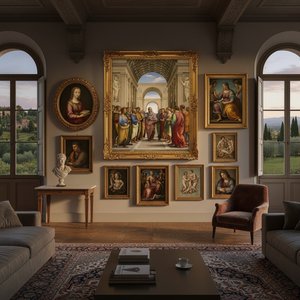
Rafaelin 25 mestariteosta: Taidetta kotiisi OriginalUniqueArtilta
Tutustu Rafaelin 25 upeimpaan mestariteokseen! Uppoudu renessanssitaiteen maailmaan, opi maalauksien tarinat ja löydä inspiraatiota kotiisi. Laadukkaat taideprintit OriginalUniqueArtilta – tutki kokoelma verkossa!
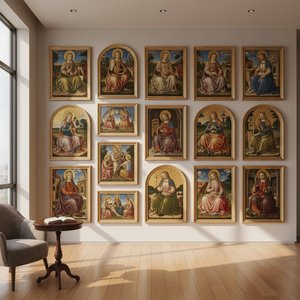
Fra Angelicon 25 mestariteosta: Taidetta ja hengellisyyttä kotiisi – OriginalUniqueArt.com
Tutustu Fra Angelicon 25 mestariteokseen – varhaisen renessanssin lumoavia freskoja ja alttaritauluja. Uppoudu italialaisen taidemaalarin hengelliseen maailmaan OriginalUniqueArt.comissa! Taidekopiokuvia ja sisustusideoita.

The Enduring Power of Painting: A Historical & Contemporary Exploration of Form and Emotion
Explore the rich history & enduring techniques of oil painting with OriginalUniqueArt. Discover masterpieces, learn about art collecting, and find authentic handmade reproductions crafted by skilled artists.

The Enduring Legacy of Oil on Canvas: Technique, History & Aesthetic Impact
Explore the rich history & techniques of oil painting – from Renaissance masters to Impressionism. Discover pigments, layering methods, and why this timeless medium endures. Expert insights for artists & art enthusiasts.

Oil on Canvas: A Historical & Technical Exploration of a Timeless Artistic Medium
Explore the rich history & enduring techniques of oil painting on canvas. Discover the science behind its longevity, conservation practices, and contemporary relevance. Expert insights for art enthusiasts.