Vaihda tulosteeseen
 Lue lisää







































 Teoksille tai reproduktioille, joiden mikä tahansa sivu on suurempi kuin 105 cm (noin 41 tuumaa), kehys toimitetaan osina purettuna sarjana. Tämä menetelmä varmistaa turvallisen toimituksen ja ehkäisee vaurioita kuljetuksen aikana.


Fra Angelico’s Crucifixion: A Vision of Sacrifice
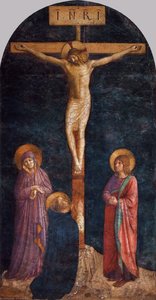
Fra Angelico's *Crucifixion*, painted around 1420 and now residing at the Metropolitan Museum of Art, stands as a cornerstone of Early Renaissance art—a testament to faith, meticulous craftsmanship, and profound emotional resonance. More than just an illustration of Christ’s suffering, this tempera painting on panel is a carefully constructed meditation designed to inspire contemplation and evoke a deep sense of spiritual reverence. Its enduring appeal lies in its ability to transcend time, continuing to captivate viewers centuries after its creation.Composition and Artistic Style
The artist's genius shines through in the remarkably balanced composition—despite the densely populated scene. At its heart hangs Jesus Christ, his figure elongated yet imbued with a quiet dignity. Surrounding him are figures reacting to the event: kneeling worshippers expressing grief, others standing with solemn contemplation. Fra Angelico skillfully employs linear perspective, albeit still nascent at this time, creating depth within the architectural space—a Roman-inspired cloister—that draws the eye upwards towards the crucifix. This stylistic choice reflects a deliberate move away from the flattened perspectives of Gothic art and toward the burgeoning realism championed by artists like Masaccio. The overall aesthetic is characterized by clarity of form, delicate modeling achieved through subtle glazing techniques, and a restrained emotional palette—a conscious rejection of dramatic theatricality in favor of conveying profound emotion through nuanced gestures and expressions.Symbolism Woven into the Narrative
Beyond the central image of Christ’s sacrifice, *Crucifixion* is rich with symbolic elements that deepen its theological significance. A bowl positioned near the bottom left corner subtly references the collection of Christ's blood—a poignant reminder of his martyrdom. The book resting on the ground symbolizes scripture and divine knowledge—inviting viewers to reflect on the Gospel narrative. Angels flanking the crucifix represent divine compassion and intervention, offering solace amidst suffering. These details aren’t merely decorative; they contribute to a larger tapestry of meaning that speaks to the core tenets of Christian faith.Historical Context & Fra Angelico's Unique Position
Painted during a pivotal moment in artistic history—the dawn of the Renaissance—*Crucifixion* bridges the gap between medieval and modern sensibilities. Fra Angelico (born Guido di Pietro, c. 1395-1455) was not merely a gifted painter but also a Dominican friar whose unwavering devotion profoundly influenced his art. He served as Prior of San Marco Monastery in Florence for many years—a position that afforded him considerable influence and fostered an environment conducive to artistic innovation. His work distinguishes itself from its contemporaries through its spiritual intensity and uncompromising commitment to religious subject matter—a hallmark of the Florentine Renaissance. The 1420s witnessed experimentation with perspective and realism, as exemplified by Masaccio’s groundbreaking frescoes in Santa Maria Novella—yet Fra Angelico maintained a distinctive lyrical quality that resonated deeply with his audience.Emotional Resonance & Interior Design Considerations
*Crucifixion* evokes a palpable sense of solemnity and reverence—a deliberate aim to inspire contemplation on themes of sacrifice, faith, and redemption. The muted color palette—dominated by blues, golds, and reds—harmoniously lends itself to various interior design schemes—creating focal points that imbue spaces with spiritual warmth and beauty. Its relatively small size makes it particularly suitable for intimate settings like studies or libraries—where its contemplative power can be fully appreciated. A high-quality reproduction of this artwork serves as a powerful reminder of the enduring legacy of Renaissance art—a timeless masterpiece destined to inspire awe and reflection for generations to come.Kysymykset ja vastaukset
Mikä sijoittelu sopii teoksen Fra Angelico:n "Kristus ristillä" formaattiin?
Muoto (Neliömuotoinen) ja suositeltu tila (Olohuone) ovat teokselle Fra Angelico:n "Kristus ristillä" ilmoitetut sijoittelutiedot.
Voinko nähdä teoksen Fra Angelico:n "Kristus ristillä" eri valaistuksissa?
Teosta "Kristus ristillä" voi tutkia kerros kerrokselta sen Röntgentutkimus -sivulla, joka on konservointityön valupöytää mukaillen luotu interaktiivinen katselija ja sisältää yksitoista kuvan optista kerrosta.
Mitä aihetta ja tunnelmaa Fra Angelico:n "Kristus ristillä" yhdistää?
"Kristus ristillä" esittää aiheita crucifixion, religious art, renaissance painting, faith, sacrifice, medieval art, florence, fra angelico, ja sen tunnelmaksi on tallennettu Seesteinen.
 Esikatselu
 Jaa teos
 Jaa
Jaa
 Tiedot
 Opas
Opas

 Lataa kuva
 Samanlaisia kohteita
 Röntgenkuvaus
 Diaesitys
 Kysymykset ja vastaukset
 Tilastot