Cubism · 1924
Three Characters (Fernand Léger, 1924)
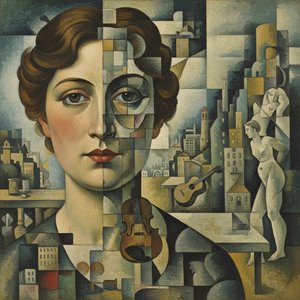
Fernand Léger (1881–1955) on luonut teoksen Three Characters. Se on peräisin vuodelta 1924. Se kuuluu Cubism-liikkeeseen. Se on valmistettu materiaalilla Acrylic On Canvas.
- 1924
- Acrylic On Canvas

 Esikatselu

 Käsinmaalattu öljymaalaus
 Jaa teos
 Jaa
 Opas


 Lataa kuva
 Samanlaisia kohteita
 Röntgenkuvaus
 Diaesitys
 Kysymykset ja vastaukset

 Tilastot
Three Characters: tärkeimmät tiedot
- Otsikko
- Three Characters
- Taiteilija
- Fernand Léger (1881–1955)
- Taiteilija syntynyt
- Argentan, Ranska
- Päivämäärä
- 1924
- Tekniikka
- Acrylic On Canvas
- Tyylisuunta
- Cubism
- Aikakausi
- Modern
- Aihe
- geometric figures, modern composition, cubist style art, human interaction, bold color palette, everyday objects
Mitä Three Characters esittää?
A Symphony of Form and Feeling: Exploring Fernand Léger’s “Three Characters”
Fernand Léger's 1924 painting, *“Three Characters,”* is a pivotal work exemplifying his distinctive contribution to Cubism – a style he uniquely evolved into what became known as ‘Tubism.’ More than just an exercise in geometric abstraction, this piece offers a compelling glimpse into the artist’s vision of modern life and human connection amidst industrialization.Deconstructing the Composition: Style & Technique
Léger masterfully employs simplified, cylindrical forms to depict three figures positioned closely together. This isn't about realistic representation; it’s a deliberate fragmentation and reassembly of reality through a Cubist lens. The painting eschews traditional perspective, presenting multiple viewpoints simultaneously within a flattened picture plane. The technique is characterized by smooth brushstrokes and carefully blended colors, creating a polished surface despite the angularity of the forms. This creates a sense of solidity and monumentality, grounding the abstracted figures.A Palette of Modernity: Color & Symbolism
While rooted in Cubism’s analytical approach, *“Three Characters”* distinguishes itself through its vibrant color palette. Léger moves beyond the muted tones often associated with early Cubism, embracing bold hues that inject energy and warmth into the composition. The inclusion of symbolic objects – a baseball bat and a book – adds layers of meaning. These aren’t merely decorative elements; they represent facets of everyday life, leisure, and intellectual pursuit, hinting at Léger's interest in portraying the modern individual within their environment. The figures themselves are not portraits but archetypes, representing universal aspects of human experience.Historical Context: Cubism & Beyond
Created in the aftermath of World War I, *“Three Characters”* reflects a broader cultural shift towards embracing modernity and industrialization. Léger, alongside Picasso and Braque, was at the forefront of the Cubist revolution, challenging traditional artistic conventions. However, he diverged from his peers by incorporating elements of machine aesthetics and popular culture into his work. His style evolved toward “Crystal Cubism,” emphasizing large, overlapping geometric planes and a strong focus on surface activity. This painting stands as a testament to that evolution, bridging the gap between abstract experimentation and representational form.Emotional Resonance & Lasting Influence
*“Three Characters”* evokes a sense of quiet contemplation and interconnectedness. Despite their abstracted forms, the figures possess a palpable presence, suggesting a shared experience or unspoken dialogue. The painting’s enduring appeal lies in its ability to resonate with viewers on an emotional level, prompting reflection on themes of identity, community, and the human condition. Léger's work profoundly influenced subsequent art movements, including Futurism, Abstract Art, and Surrealism, solidifying his legacy as a visionary artist who redefined the possibilities of painting in the 20th century.Collecting & Interior Design Considerations
- Style Compatibility: This artwork complements modern, minimalist, or Art Deco interiors. Its geometric forms and bold colors create a striking focal point.
- Color Palette Integration: The painting’s color scheme can be echoed in accent furniture, textiles, or wall colors to create a cohesive design aesthetic.
- Placement Suggestions: Ideal for living rooms, dining areas, or home offices. Consider pairing it with contemporary sculptures or abstract artwork.
- Investment Potential: As a seminal work by a highly influential artist, a high-quality reproduction of *“Three Characters”* represents not only an aesthetic addition but also a potential investment in art history.
Three Characters korkealla resoluutiolla

Tekijänoikeudet: taiteilija kuoli vuonna 1955.
Lisää kokoja, rajauksia ja viittauksia →Fernand Léger, Three Characters (1924). Tekijänoikeudet vapaat.
Digitaalinen asiantuntija vertaa värit alkuperäiseen maalaukseen ja jälkikäsittelee tiedoston taiteilijan siveltimenjälkiä uskollisesti noudattaen.
Osta korkearesoluutioinen kuvaKysymyksiä teoksesta Three Characters
Mikä on suositeltu tulostuskoko teokselle Fernand Léger:n "Three Characters"?
Suositeltu tulostuskoko teokselle Fernand Léger:n "Three Characters" on Large.
Mikä on teoksen Fernand Léger:n "Three Characters" valmistumisvuosi ja tyylisuunta?
"Three Characters" on tehty vuonna 1924 Cubism-suuntauksen piirissä.
Ovatko "Three Characters" värit voimakkaita vai pehmeitä?
Teoksen Fernand Léger:n "Three Characters" värit ovat Monochromatic voimakkuudeltaan.
Miksi teoksen "Three Characters" tekijänoikeustila on sellainen kuin se on?
Fernand Léger:n "Three Characters" on vapaasti käytettävissä – tekijänoikeussuoja on päättynyt. Tekijänoikeuden voimassaolo lasketaan taiteilijan kuolinvuodesta, joka oli 1955.
Mikä hallitseva sävy lävistää teoksen Fernand Léger:n "Three Characters"?
"Three Characters" vivahtaa Ochre to Sepia sävyyn.
Mistä voin ladata teoksen Fernand Léger:n "Three Characters"?
Teoksen Fernand Léger:n "Three Characters" digitaalisen kuvan voi ladata muodossa korkearesoluutioinen digitaalinen kuvalataus teoksen Lataa digitaalinen kuva -sivulta.
Miten "Three Characters" sijoittuu Fernand Léger'n toistuvien aiheiden joukkoon?
Fernand Léger:n toistuvia teemoja ovat exploration of flat planes, expansion of color usage, cubism's geometric forms, early 20th-century modernism, urban life & modernity, human connection & interaction; "Three Characters" keskittyy aiheisiin geometric figures, modern composition, cubist style art, human interaction, bold color palette, everyday objects, abstract forms.
Voinko tutkia teosta "Three Characters" yksityiskohtaisemmin?
Fernand Léger:n "Three Characters" -teoksen Röntgentutkimus -sivu on interaktiivinen katseluohjelma, jonka avulla voit selata teoksen kuvaa yhdennellätoista optisella kerroksella, mukaan lukien röntgenkuvamainen näkymä.
Miten "Three Characters" sijoittuu taidehistoriallisesti?
Historiallisesti "Three Characters" on laajemman Modern aikakauden Cubism-tyylinen teos.
Tietoa taiteilijasta, Fernand Léger

1881–1955, Ranska
Fernand Léger
Fernand Légerin elämä Fernand Légerin tarina saa alkunsa Argentanin kylästä, joka sijaitsee Lower Normandian Ornen alueella. Hän saapui tähän maailmaan 4. helmikuuta 1881 ainoana poikana. Hänen varhaislapsuutensa muovautui Ranskan maaseudun hiljaisuudessa ja äitinsä, Marie-Adèle Daunoun, läsnäolossa.
Tietoa kohteesta Fernand Léger Fernand Légern merkittävimpiä teoksia
Myös Fernand Léger -teoksia
 Kaupunki1919
 Mekaanikko1920
 Kolme naista1921
 Nudet metsässä1910

Esseitä teoksesta Three Characters
 Fernand Légerin 25 mestariteosta: Modernismin ikoniset muodot seinillesiTutustu Fernand Légerin 25 ikonista mestariteosta – kubismin ja koneajan taiteen huiput. Taidehistoriaa, värikkäitä maalauksia ja inspiraat…
 Deconstructing Reality: Cubism's Revolutionary Impact on 20th-Century ArtExplore the revolutionary world of Cubism with OriginalUniqueArt. Discover Picasso & Braque's groundbreaking techniques, its philosophical …
 Teollisuuden tunnelmaa taiteessa: 10 mestariteosta kotiisi – OriginalUniqueArt.comTutustu 10 mestariteokseen, jotka vangitsevat teollisuuden tunnelman! Impressionismista kubismiin – taidemaalausten tarinat ja inspiraatio …