Cubist Style
Mechanical Elements (Fernand Léger)
Fernand Léger (1881–1955) on luonut teoksen Mechanical Elements. Se kuuluu Cubist Style-liikkeeseen. Se on valmistettu materiaalilla Oil On Canvas. Teos sijaitsee Metropolitan Museum of Art -museossa paikassa New York, Yhdysvallat.
- Oil On Canvas
- Metropolitan Museum of Art, New York

 Esikatselu

 Käsinmaalattu öljymaalaus
 Jaa teos
 Jaa
 Tiedot-arkki


 Lataa kuva
 Samanlaisia kohteita
 Röntgenkuvaus
 Diaesitys
 Kysymykset ja vastaukset

 Tilastot
Mechanical Elements lyhyesti
- Otsikko
- Mechanical Elements
- Taiteilija
- Fernand Léger (1881–1955)
- Taiteilija syntynyt
- Argentan, Ranska
- Tekniikka
- Oil On Canvas
- Missä teos on nähtävissä
- Metropolitan Museum of Art, New York, Yhdysvallat
- Tyylisuunta
- Cubist Style
- Aikakausi
- Modern
- Aihe
- mechanical elements, cubism, geometry, industrial design, abstraction, assemblage
Mitä Mechanical Elements esittää?
A Vision of Industrial Harmony
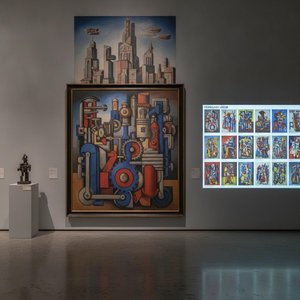
Fernand Léger’s “Mechanical Elements,” painted in 1924, stands as a striking testament to the burgeoning fascination with technology during the interwar period. More than just a depiction of gears and pipes—though undeniably prominent—the artwork embodies Léger's ambitious goal: to synthesize Cubist fragmentation with the dynamism of the machine age, creating an aesthetic that simultaneously challenged artistic conventions and reflected the transformative realities of modern life.
Born Joseph Fernand Henri Léger in Argentan, Normandy, 1881, Léger embarked on a journey from rural landscapes to the epicenter of Parisian avant-garde. Initially drawn to architecture, his artistic path swiftly pivoted toward painting after arriving in Paris around 1900, fueled by an unwavering conviction that art could engage with the complexities of its time.
Cubism Revisited: Geometric Precision
Léger’s stylistic evolution is inextricably linked to Cubism. Influenced profoundly by Picasso and Braque, he adopted the fractured perspective and simultaneous viewpoints characteristic of this revolutionary movement—a deliberate rejection of traditional representation in favor of exploring spatial relationships through geometric forms. However, Léger didn't simply replicate Cubist principles; he pushed them further, distilling them into a simplified vocabulary of circles, squares, and lines.
“Mechanical Elements” exemplifies this approach brilliantly. The canvas is dominated by interlocking geometric shapes—primarily circles and squares—arranged in a rhythmic pattern that evokes the precision and repetition found in industrial machinery. These forms aren’t merely decorative; they actively contribute to conveying a sense of movement and energy, mirroring the ceaseless pace of urban life.
Symbolism Beyond Mechanism
While the artwork's visual language speaks directly to the influence of technology, Léger imbued “Mechanical Elements” with deeper symbolic resonance. The repetition of geometric shapes isn’t merely a stylistic device; it represents an attempt to capture the impersonal logic and order inherent in industrial processes—a deliberate contrast to the organic forms favored by Impressionism and Post-Impressionism.
Furthermore, Léger's use of color – predominantly shades of gray punctuated by vibrant accents – underscores this thematic preoccupation. Gray symbolizes the materiality of metal and concrete, while bursts of color represent human vitality and creativity—a harmonious blend reflecting Léger’s belief that art could coexist with technological advancement without sacrificing beauty or emotional depth.
A Legacy of Innovation
"Mechanical Elements" cemented Léger's position as a pioneer of Tubism – a variant of Cubism developed by Léger himself—characterized by the use of tubular forms to represent objects and figures. This innovative technique anticipated developments in Pop Art decades later, demonstrating Léger’s enduring influence on subsequent generations of artists.
Today, reproductions of “Mechanical Elements” continue to captivate audiences with their bold aesthetic and intellectual ambition. They serve as a powerful reminder that art can not only reflect the spirit of its time but also actively shape our understanding of it—a timeless masterpiece celebrating both geometric precision and human resilience.
Missä museossa teos Mechanical Elements on?
Metropolitan Museum of Art
New York, Yhdysvallat
Metropolitan Museum of Art: Alkuperä ja historia Metropolitan Museum of Art sai alkunsa visioista, joita kohtasivat joukko liikemiehiä, rahoittajia sekä johtavia taiteilijoita ja ajattelijoita. Perustamisensa jälkeen vuonna 1870 instituutio alkoi etsiä pysyvää kotia kasvavalle kokoelmalleen. Ennen nykyiselle paikalleen asettumista museo majoittui lyhyen aikaa West 14th Streetillä sijaitsevassa Douglas Mansion -kartanossa.


Mechanical Elements korkearesoluutioiset kuvat

Fernand Léger, Mechanical Elements, Metropolitan Museum of Art. Tekijänoikeudet vapaat.
Digitaalisen asiantuntijan toimesta alkuperäisen teoksen väreihin sovitettu, huolellisesti jälkikäsitelty tiedosto, joka on uskollinen taiteilijan siveltimenjäljille.
Osta korkearesoluutioinen tiedostoKysymyksiä teoksesta Mechanical Elements, vastaukset
Missä museossa alkuperäinen "Mechanical Elements" on esillä?
Alkuperäinen Fernand Léger:n "Mechanical Elements" on osa Metropolitan Museum of Art, New York, Yhdysvallat-museon kokoelmaa. Reproduktio mahdollistaa teoksen näyttämisen kotona.
Mitä tekniikkaa Fernand Léger:n "Mechanical Elements" on käytetty?
Teoksen Fernand Léger:n "Mechanical Elements" tekniikka on Oil On Canvas. Vedosten tavoitteena on jäljitellä tämän tekniikan ulkoasua.
Mitä aiheita teoksessa Fernand Léger:n "Mechanical Elements" esiintyy?
Fernand Léger:n "Mechanical Elements" esittää: mechanical elements, cubism, geometry, industrial design, abstraction, assemblage, modern art.
Onko teoksen Fernand Léger:n "Mechanical Elements" kuva vapaasti käytettävissä?
Tekijänoikeustiedot teokselle Fernand Léger:n "Mechanical Elements": teos on vapaasti käytettävissä – tekijänoikeussuoja on päättynyt. Tämä määrittää, voidaanko kuvasta tehdä vapaasti jäljennöksiä.
Kuka on teoksen "Mechanical Elements" taiteilija?
"Mechanical Elements" on Fernand Léger:n luoma teos. Tällä sivulla olevat tiedot kuvaavat Fernand Léger:n alkuperäistä työtä.
Mihin taidesuuntaukseen Fernand Léger:n "Mechanical Elements" kuuluu?
Fernand Léger:n "Mechanical Elements" kuuluu Cubist Style-suuntaukseen. Tämä tyylisuunta antaa teokselle sen tyylillisen kontekstin.
Mihin vaiheeseen Fernand Légerin kehityksestä "Mechanical Elements" edustaa?
"Mechanical Elements" edustaa taiteilijan Fernand Léger tuotantokautta Mechanical Period."
Mikä selittää teoksen Fernand Léger:n "Mechanical Elements" tekijänoikeustilanteen?
Teoksen "Mechanical Elements" tekijänoikeustilanne (vapaasti käytettävissä – tekijänoikeussuoja on päättynyt) määräytyy taiteilijan kuolinvuoden 1955 perusteella.
Onko "Mechanical Elements" säilytetty taiteilijansa kotimaassa?
Ei - teos sijaitsee ulkomailla. Fernand Léger syntyi maassa Ranska, ja alkuperäinen teos "Mechanical Elements" on osa Yhdysvallat museon kokoelmaa.
Tietoa taiteilijasta, Fernand Léger

1881–1955, Ranska
Fernand Léger
Fernand Légerin elämä Fernand Légerin tarina saa alkunsa Argentanin kylästä, joka sijaitsee Lower Normandian Ornen alueella. Hän saapui tähän maailmaan 4. helmikuuta 1881 ainoana poikana. Hänen varhaislapsuutensa muovautui Ranskan maaseudun hiljaisuudessa ja äitinsä, Marie-Adèle Daunoun, läsnäolossa.
Tietoa kohteesta Fernand Léger Fernand Légern merkittävimpiä teoksia
Myös Fernand Léger -teoksia
 Kaupunki1919
 Mekaanikko1920
 Kolme naista1921
 Nudet metsässä1910

Esseitä teoksesta Mechanical Elements
 Cubism Unveiled: How Picasso and Braque Redefined Modern Art through Geometric RevolutionExplore the revolutionary world of Cubism. Discover how Pablo Picasso and Georges Braque dismantled perspective to redefine modern art thro…
 Mastering the Machine Age: The 25 Best Artworks by Fernand LégerImmerse yourself in the vibrant world of Fernand Léger. Explore 25 iconic masterpieces of Cubism and Tubism, from bold geometric forms to m…
 Teollisuuden tunnelmaa taiteessa: 10 mestariteosta kotiisi – OriginalUniqueArt.comTutustu 10 mestariteokseen, jotka vangitsevat teollisuuden tunnelman! Impressionismista kubismiin – taidemaalausten tarinat ja inspiraatio …