Esikatselu
 Jaa
Jaa Jaa
Jaa
 Tarkemmat tiedot

 Lataa
Lataa
 Samanlaisia
 Röntgenkuva
 Diaesitys
 Tilastot
Memory of Norderney
 Oil On Canvas
- WallArt
- Surrealism
 1929
1929- Modern
 98.0 x 110.0 cm
 Kulturgeschichtliche Museum Osnabrück
 Näytä lisää
Käsinmaalattu öljykopio
Käsinmaalattu öljyväri kankaalle haluamassasi koossa ja kehyksissä, taiteilijoidemme valmistamana tilauksesta. ( Vaihda tulosteeseen Siirry digitaaliseen kuvaan)




P118B $10

P118H $10

P118W $10

P438Z $10

P508JH $12

P508YH $12

P805H $10

P805Z $10

P919BZ $10

P919G $10

P919XJ $10

P959ZH $10

P968JZ $12

W106C $8

W218G $10

W218JH $8

W218Y $10

W307PJ $10

W316G $10

W316PJ $8

W316Y $10

W398PJ $8

W4111J $10

W500HY $15

W500JH $15

W692G $12

W849H $8

W940BG $15

W953PJ $8




Valitse valmiista mitoistamme sellaiset, jotka vastaavat teoksen alkuperäisiä mittasuhteita.

Voit syöttää omat mitat sopimaan tiettyyn kehykseen tai tilaan. Jos valitsemasi koko ei vastaa alkuperäisen kuvan mittasuhteita, rajaamme taideteoksen tai jatkamme maalausta käsin maalatuilla elementeillä. Digitaalinen esikatselu lähetetään hyväksyttäväksi ennen tuotannon aloittamista.
Huomioithan, että näytöllä oleva esikatselu ei vastaa todellista rajausta tai jatkamista. Vain digitaalinen mallikuva näyttää lopullisen sommittelun tarkasti.
Vaikka mittatilaustyöt ovat mahdollisia, suosittelemme valitsemaan mitan ennalta määritetystä listasta alkuperäisten mittasuhteiden säilyttämiseksi.
Tilauksen jälkeen OriginalUniqueArt.com -tiimi lähettää asiakkaalle ohjeet ja esikatselukuvan.
Maailmanlaajuinen toimitus () 3–4 viikossa tavallisen 5 viikon sijaan. (11 syyskuu). Laadusta ei tingitä.

Ilmainen pikatoimitus ympäri maailman

Korkealaatuinen pellavakangas

Kattava kuljetusvakuutus

Tulliveron palautustakuu

Täydellinen värien vastaavuustakuu

100 päivän palautusoikeus (vain valmistusvirheet)

100% rahat takaisin -takuu

Määräalennus tarjous
 Lasivaihtoehto on saatavilla vain alle 110 cm kokoisina teoksina

Memory of Norderney
Reproduktiotekniikka
Replikaatin koko
-


Kokonaishinta
$ 300
A Glimpse into a Vanished Era
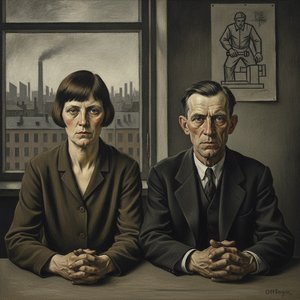
In the hauntingly beautiful oil on canvas, Memory of Norderney, Felix Nussbaum invites us into a world that feels simultaneously vibrant and ghostly. Painted in 1929, this large-scale masterpiece captures a moment of serene leisure, yet it is imbued with a profound sense of nostalgia that transcends its literal subject matter. The scene unfolds before a stately building, perhaps a grand hotel or a coastal mansion, characterized by its classical columns that lend an air of architectural permanence to the composition. Scattered throughout this picturesque setting are various figures, some engaged in quiet conversation while others drift through the landscape, creating a rhythmic movement across the canvas. A solitary boat rests near the periphery, serving as a subtle reminder of the maritime connection and the transient nature of the seaside retreat.
The technique employed by Nussbaum is nothing short of masterful, utilizing the rich, tactile qualities of oil paint to build a sense of depth and atmosphere. His brushwork, while controlled, possesses an expressive fluidity that breathes life into the figures and the surrounding environment. The interplay of light and shadow across the architectural elements and the human forms creates a soft, almost dreamlike luminosity, characteristic of the New Objectivity movement. This stylistic choice allows the artist to balance a certain level of realism with a surreal, emotive quality, making the scene feel less like a mere snapshot of a holiday and more like a reconstructed fragment of a precious, lost memory.
The Weight of History and Symbolism
To look upon Memory of Norderney is to engage with the complex psychological landscape of an artist whose life would later be defined by exile and tragedy. While the painting depicts a scene of relaxation, there is an underlying tension—a subtle melancholy that lingers in the spaces between the figures. For the viewer aware of Nussbaum’s biography, the piece takes on a much deeper symbolic resonance. The gathering of people, seemingly unaware of the darkening political tides in Germany during the late 1920s, becomes a poignant meditation on innocence and the fragility of peace. The columns of the building stand as symbols of a structured, civilized world that was soon to be dismantled by the forces of nationalism.
For collectors and interior designers, this artwork offers a sophisticated emotional depth that is rare in contemporary decor. It is not merely a decorative piece; it is a conversation starter that brings a sense of historical gravity and intellectual curiosity to any space. The composition’s balance of light, color, and subject matter makes it an ideal centerpiece for a curated gallery wall or a prominent position in a study or salon. A high-quality reproduction of this work allows one to possess not just a beautiful image, but a window into the soul of a master who documented the human condition with unparalleled honesty.
Whether you are drawn to its classical architectural elegance, its evocative use of color, or the profound historical narrative it carries, Memory of Norderney remains an enduring testament to the power of memory. It serves as a reminder that even in the most tranquil moments, there is a profound story waiting to be told—a story of beauty, of presence, and of the indelible marks left by time upon our collective consciousness.
Taiteilijan elämäkerta
Felix Nussbaum (1904-1944) – A Life Etched in Exile: The Haunting Vision of Felix Nussbaum
Felix Nussbaum’s story is a stark and profoundly moving testament to the power of art born from unimaginable suffering. Born in Osnabrück, Germany, in 1904, his life unfolded against the backdrop of rising nationalism and escalating persecution, culminating in the horrors of the Holocaust. He wasn't simply a victim *of* history; he was an artist who meticulously documented its impact on his soul, creating a body of work that stands as both a personal lament and a universal warning. Nussbaum’s paintings offer a rare, unflinching glimpse into the psychological landscape of displacement, fear, and ultimately, annihilation – a perspective often absent from broader historical narratives. His father, Philipp Nussbaum, a World War I veteran with an early passion for painting himself, recognized and nurtured his son's talent, providing encouragement that would prove vital in the darkening years to come. This initial support fostered a lifelong dedication to art, even as political realities increasingly constricted his path.Formative Years and Artistic Influences
Nussbaum’s artistic journey began with formal studies in Hamburg and Berlin in 1920, continuing for as long as circumstances allowed. His early work reveals a clear debt to the Post-Impressionist masters, particularly Vincent van Gogh and Henri Rousseau. The vibrant colors and expressive brushwork of these artists provided a foundation upon which Nussbaum would later build his unique style. However, he wasn’t content with mere imitation. He actively sought out new influences, drawn to the unsettling dreamscapes of Giorgio de Chirico and Carlo Carrà, pioneers of the *pittura metafisica* movement. The careful attention to color demonstrated by Carl Hofer's expressionist paintings also left a lasting impression on Nussbaum’s approach. These diverse inspirations coalesced into what would become known as his “New Objectivity” style – a blend of realism and surrealism, characterized by precise detail, unsettling compositions, and a pervasive sense of alienation. This period was marked by experimentation and growth, but the looming shadow of Nazi ideology soon threatened to extinguish his artistic promise.The Rise of Nazism and Exile
The ascent of the Nazis in 1933 irrevocably altered Nussbaum’s life. Studying on a scholarship in Rome at the Berlin Academy of the Arts, he witnessed firsthand the chilling pronouncements of Hitler's propaganda minister, outlining the tenets of Nazi art – glorification of heroism and the Aryan race. It became painfully clear that as a Jew, his place within the German artistic establishment was untenable. This realization forced him into exile, first to Paris and then to Belgium, where he married Felka Platek in 1937. The following decade was defined by fear and isolation. Despite finding some measure of safety, Nussbaum lived under constant threat, haunted by the knowledge of his parents’ perilous situation back in Germany. They had initially resisted his pleas to join them in exile, clinging to a misguided hope that things would improve, but ultimately returned home only to face the full force of Nazi persecution. This loss – the severing of his spiritual and financial support – deeply impacted Nussbaum's work, infusing it with an increasingly desperate and melancholic tone. He continued to paint prolifically during this period, finding solace and purpose in his art even as his world crumbled around him.Major Achievements and Artistic Legacy
Nussbaum’s artistic output during his exile was remarkable—a defiant assertion of creativity amidst crushing oppression. His paintings explored themes of displacement, loss, and the disintegration of identity, reflecting the profound psychological trauma inflicted by persecution. Notable works include *Self Portrait with Jewish Identity Card*, a haunting depiction of vulnerability and resilience; *Triumph of Death*, a symbolic meditation on mortality and decay; *Felka Platek Painting*, capturing his wife’s likeness in an expressionist style; *Masquerade*, exploring the complexities of social roles and concealment; and *Gypsy*, portraying a poignant scene of human compassion amidst wartime hardship. Nussbaum's unwavering commitment to art—his refusal to abandon his vocation despite insurmountable obstacles—solidifies his position as one of the most important artists of his generation. His work continues to resonate with audiences today, serving as a powerful reminder of the importance of artistic expression in confronting injustice and preserving human dignity. ## The Final Years and Tragic End The Nazi invasion of Belgium in 1940 brought Nussbaum’s exile to an abrupt halt. He was arrested as a “hostile alien” and interned at Saint-Cyprien camp in France, an experience that profoundly shaped his artistic vision. Despite the horrors he endured—the confiscation of his possessions, the constant surveillance, and the pervasive atmosphere of fear—Nussbaum persevered, continuing to paint in secret with Felka Platek. They sought refuge in a second apartment, concealing their hiding place from watchful eyes. However, a betrayal led to their deportation to Mechelen transit camp, and ultimately to Auschwitz itself, where Felix Nussbaum was murdered upon arrival in August of 1944. His wife Felka Platek tragically perished shortly thereafter. Though his family was annihilated—his parents murdered at Auschwitz—Nussbaum’s artistic legacy endures as a testament to the enduring power of creativity and compassion in the face of unimaginable adversity. His work remains an indelible record of a life lived under siege, forever etched with the pain and beauty of exile.
Felix Nussbaum
1904 - 1945 , Saksa
Pikatiedot
- Artistic Movement Or Style: Surrealismi, Uusi objektiivisuus
- Artists Who Influenced This Artist:
- Vincent van Gogh
- Henri Rousseau
- Giorgio De Chirico
- Date Of Birth: 1904
- Date Of Death: 1944
- Full Name: Felix Nussbaum
- Nationality: Saksa-juutalainen
- Notable Artworks:
- Itsensä kuvitelma juutalaisen henkilöllisyyskortin kanssa
- Kuoleman voitto
- Felka Platek maalauksesta
- Place Of Birth: Osnabrück, Saksa
Liittyvät artikkelit

Grahame Sydney: Evoking Otago's Soul Through Light & Landscape
Explore the captivating landscapes of Sir Grahame Sydney, a leading New Zealand artist renowned for his magic realism & evocative depictions of Otago's beauty. Discover key works and delve into his artistic legacy.

Geometrisen abstraktion mestariteokset: Taidetta kotiin OriginalUniqueArtilta
Tutustu geometrisen abstraktion 10 mestariteokseen! Piet Mondrian, Kandinsky ja muut taiteilijat muovasivat modernin taiteen historiaa. Löydä inspiraatiota kotiisi OriginalUniqueArtilta – laadukkaat taideprintit ja sisustusehdotukset odottavat. Tutki kokoelma verkossa!

Karl Blossfeldt's 'Urformen der Kunst': Pioneering Botanical Photomicrography & Aesthetic Form
Explore Karl Blossfeldt's groundbreaking *Urformen der Kunst* & pioneering botanical photography. Discover the aesthetic power of nature, New Objectivity influences, and his lasting impact on modern art. Learn about collecting key works.

The Cultivation of Idleness: Leisure as Subject & Symbol in Western Art History
Explore the fascinating history of leisure in Western art! From Renaissance contemplation to Impressionist moments, discover how artists depicted otium & its cultural significance. Expert insights for collectors & enthusiasts.