

 Esikatselu
 Jaa
Jaa Jaa
Jaa
 Tarkemmat tiedot

 Lataa
Lataa
 Samanlaisia
 Röntgenkuva
 Diaesitys
 Tilastot
Pierrot the Photographer


 Näytä lisää
Giclée-printit ja taideprintit
Museolaatuisia giclée- tai kankaitaulun tulosteita nopealla tuotannolla ja joustavilla viimeistelyvaihtoehdoilla. ( Osta käsintehty maalaus Siirry digitaaliseen kuvaan)




P118B $10

P118H $10

P118W $10

P438Z $10

P508JH $12

P508YH $12

P805H $10

P805Z $10

P919BZ $10

P919G $10

P919XJ $10

P959ZH $10

P968JZ $12

W106C $8

W218G $10

W218JH $8

W218Y $10

W307PJ $10

W316G $10

W316PJ $8

W316Y $10

W398PJ $8

W4111J $10

W500HY $15

W500JH $15

W692G $12

W849H $8

W940BG $15

W953PJ $8




Valitse valmiista mitoistamme sellaiset, jotka vastaavat teoksen alkuperäisiä mittasuhteita.

Voit syöttää omat mitat sopiaksesi tiettyyn kehykseen tai tilaan. Jos valittu koko ei vastaa alkuperäisen kuvan mittasuhteita, rajaamme teosta tai laajennamme kuvaa peilatulla tai yhtenäisellä reunalla. Digitaalinen mallikuva lähetetään hyväksyttäväksi ennen tuotannon aloittamista.
Huomaathan, että näytöllä näkyvä esikatselu ei vastaa lopullista rajausta tai laajennusta. Vain mallikuva näyttää lopullisen sommittelun tarkasti.
Vaikka räätälöityjä kokoja on saatavilla, suosittelemme valitsemaan mitat valmiista listasta alkuperäisten mittasuhteiden säilyttämiseksi.
Toimitus maailmanlaajuisesti () kahdessa viikossa tavallisen 4–5 viikon sijaan. (17 syyskuu)

Ilmainen pikatoimitus ympäri maailman

Korkealaatuinen pellavakangas

Kattava kuljetusvakuutus

Tulliveron palautustakuu

Täydellinen värien vastaavuustakuu

100 päivän palautusoikeus (vain valmistusvirheet)

100% rahat takaisin -takuu

Määräalennus tarjous
 Lasivaihtoehto on saatavilla vain alle 110 cm kokoisina teoksina

Pierrot the Photographer
Giclée-printit ja taideprintit
Replikaatin koko
-


Kokonaishinta
$ 80
The Enigmatic Figure: Unveiling “Pierrot the Photographer”
Félix Nadar’s “Pierrot the Photographer,” created in 1854, isn't merely a portrait; it’s a meticulously constructed tableau vivant—a staged scene brimming with quiet observation and subtle commentary on the burgeoning world of photography. The image immediately draws the eye to Pierrot, a figure both familiar and unsettlingly modern, holding a camera poised as if capturing not just a likeness but an essence. He embodies the nascent spirit of the photographer himself – a blend of artist, observer, and documentarian, all wrapped in the playful guise of a traditional clown. The photograph’s power lies not simply in its technical execution, but in the carefully orchestrated narrative it presents, inviting us to contemplate the very nature of representation and identity.
The work's historical context is crucial to understanding its significance. Nadar was a pioneer, pushing against the conventions of portraiture prevalent during the mid-19th century. He rejected the opulent backdrops and theatrical poses favored by his contemporaries, instead opting for natural light and an intimate approach that prioritized capturing the sitter’s personality. “Pierrot the Photographer” exemplifies this shift—a deliberate departure from traditional formality, suggesting a new era of visual storytelling.
A Dance of Light and Shadow: Technical Details & Artistic Choices
Examining the photographic process reveals layers of artistry. “Pierrot the Photographer” was undoubtedly produced using one of the early wet collodion techniques, a demanding method requiring immediate development after exposure. This explains the image’s distinctive grainy texture—a hallmark of photographs from this period—and the subtle variations in tone that contribute to its aged and evocative quality. The careful control of light is particularly noteworthy; diffused illumination creates a soft, almost melancholic atmosphere, highlighting the textures of Pierrot's costume and casting gentle shadows that add depth and dimension.
Nadar’s compositional choices further enhance the photograph’s impact. The tripod, a stark vertical element, anchors the scene while simultaneously creating a sense of formality and precision. Pierrot’s slight tilt of his head—a subtle gesture of engagement—draws us into the frame, inviting us to share in his moment of observation. The two indistinct figures in the background offer a hint of context without disrupting the central focus, suggesting a studio setting and hinting at the collaborative nature of photographic production.
Symbolism & Emotional Resonance: Beyond the Surface
“Pierrot the Photographer” is rich with symbolic meaning. The clown costume itself—a traditional symbol of playfulness and theatricality—contrasts sharply with the seriousness of the act of photography, creating a fascinating tension. The camera becomes an extension of Pierrot’s personality, transforming him into both subject and observer. The image speaks to the evolving role of the photographer in society – moving from mere recorder of reality to active participant in shaping it.
Furthermore, the photograph evokes a sense of nostalgia and timelessness. Its aged appearance—the subtle imperfections and tonal variations—suggests that it has witnessed countless moments, carrying with it the weight of history. “Pierrot the Photographer” is not simply a portrait; it’s a meditation on memory, identity, and the enduring power of visual representation.
A Legacy in Reproduction: Bringing Nadar's Vision to Life
Reproductions of “Pierrot the Photographer” offer a unique opportunity to experience the artistry of Félix Nadar firsthand. The meticulous detail captured in this early photograph—the textures of the costume, the subtle nuances of light and shadow—are faithfully reproduced in high-quality prints, allowing viewers to appreciate the depth and complexity of Nadar’s vision. Whether displayed as a statement piece in a contemporary interior or studied as an historical artifact, this iconic image continues to captivate and inspire.
Taiteilijan elämäkerta
Félix Nadar: Valokuvauksen uranuurtaja
Varhaiset vuodet ja alkuvaiheet
- Syntyi: Gaspard-Félix Tournachon 5. huhtikuuta 1820 Pariisissa (vaikka jotkut lähteet viittaavat Lyoniin).
- Hänen isänsä, Victor Tournachon, oli kirjapainaja ja kirjanmyyjä.
- Opiskeli alun perin lääketiedettä, mutta joutui keskeyttämään opinnot isänsä kuoleman jälkeen taloudellisten vaikeuksien vuoksi.
- Nadar, kuten hän myöhemmin tuli tuntemaan, aloitti uransa karikatyyristinä ja romaanikirjailijana kirjoittaen useisiin sanomalehtiin.
Karikatyyreistä valokuvaukseen
- Aloitti kokeilut valokuvauksen parissa noin vuonna 1853.
- Avasi ensimmäisen valokuvausstudionsa vuonna 1854 osoitteessa 113 rue St. Lazare, ja siirtyi myöhemmin Boulevard des Capucinesin numeroon 35 vuonna 1860.
- Saavutti nopeasti tunnustusta pysäyttävistä ja psykologisesti syvällisistä muotokuvistaan.
- Perinteiden hylkääminen: Nadar vältti muotokuvauksessa yleisiä prameita taustoja ja suosi sen sijaan luonnonvaloa sekä keskittymistä kuvattavan persoonallisuuteen.
Ilmavalokuvauksen edelläkävijä
- Vuonna 1858 Nadarstä tuli ensimmäinen ihminen, joka otti ilmavalokuvia kuumailmapallojen avulla.
- Hän voitti korkealla ilmanalassa kehitettävien valokuva-levyjen tekniset haasteet keksimällä kaasunkestävän puuvillakannen pallokoreihinsa.
- Hän oli myös valokuvauksen keinotekoisen valaistuksen uranuurtaja, erityisesti Pariisin katakombeissa.
- Le Géant: Tilasi vuonna 1863 valtavan pallon nimeltä ”Le Géant” (Jättiläinen), joka toimi inspiraationa Jules Vernen teokselle *Viisikymmentä viikkoa ilmassa*.
Merkittävät saavutukset ja vaikutusvalta
- Muotokuvaus: Hän kuvasi lukuisia merkittäviä henkilöitä, kuten Victor Hugon, Charles Baudelairen, Sarah Bernhardtin ja Gustave Courbetin.
- Perusti maailman ensimmäisen ilmailun postipalvelun Pariisin piirityksen aikana (1870–71) käyttämällä kuumailmapallolentoja.
- Toimi ensimmäisen impressionistisen näyttelyn isäntänä studiossaan vuonna 1874, tarjoten ratkaisevan alustan nouseville taiteilijoille.
- Julkaisi vuonna 1886 sen, mitä pidetään ensimmäisenä valokuva-haastatteluna, jossa esiintyi kemisti Michel Eugène Chevreul.
Myöhäisvuodet ja perintö
- Siirsi studionsa Marseilleen vuosien 1895 ja 1909 välillä.
- Kuoli 20. maaliskuuta 1910 Pariisissa ja hänet on haudattu Père Lachaise -hautausmaalle.
- Hänen poikansa, Paul Nadar, jatkoi studion toimintaa isänsä kuoleman jälkeen.
- Quand j’étais photographe: Julkaisi muistelmat, joissa hän pohti elämäänsä ja työtään, tarjoten arvokkaita näkemyksiä 1800-luvun valokuvaukseen.
- Historiallinen merkitys: Nadarin innovatiiviset tekniikat ja taiteellinen visio vaikuttivat syvästi valokuvauksen kehittymiseen taidemuotona. Hänen muotokuvansa säilyvät Pariisin älyllisen ja taiteellisen piirin ikonisina edustajina.
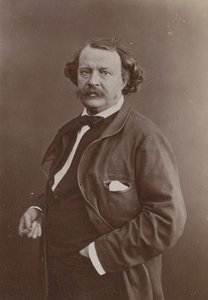
Félix Nadar
1820 - 1910
Pikatiedot
- Birth Date: 5. huhtikuuta 1820
- Death Date: 20. maaliskuuta 1910
- Influenced: ['Jules Verne']
- Influenced By: Ei kukaan
- Movement:
- Valokuvaus
- Karikatyyri
- Impressionismi (liittyvä)
- Name: Félix Nadar
- Nationality: Ranskalainen
- Notable Works:
- Baudelairen, Hugon ja Delacroixin muotokuvat
- Ilmavalokuvaus
- Valokuva-haastattelu Chevreulin kanssa
Liittyvät artikkelit

Beyond the Lens: Photography's Enduring Influence on Modern & Contemporary Art
Explore photography's pivotal role in shaping modern & contemporary art. Discover key movements, influential artists like Stieglitz, and expert collecting advice from OriginalUniqueArt.
Beyond Color: The Timeless Power and Artistry of Black and White Photography
Explore the profound artistry of black and white photography. From the chemistry of gelatin silver to the chiaroscuro of the Old Masters, discover how monochrome captures the eternal essence of light, form, and emotion for the discerning art collector.
Timeless Shadows: The Artistry, History, and Emotional Resonance of Black and White Photography
Explore the profound artistry of black and white photography. From historical mastery to the interplay of light and shadow, discover how monochrome captures timeless emotion and form through a sophisticated lens of art history.

Beyond the Portrait: Félix Nadar & the Psychological Depths of 19th-Century Photography
Explore the revolutionary photography of Félix Nadar – pioneer of portraiture, aerial imaging & psychological depth. Discover his iconic portraits of Baudelaire, Hugo & more. A deep dive into 19th-century art history.

Monochrome Visions: Exploring the Aesthetic & Historical Significance of Black & White Photography
Explore the rich history & artistic power of black and white photography. From early techniques to iconic masters like Ansel Adams, discover why monochrome continues to captivate art lovers today. Expert insights for collectors.