Expressionism
Prophet (Emil Nolde)
Emil Nolde (1867–1956) on luonut teoksen Prophet. Se kuuluu Expressionism-liikkeeseen. Se on valmistettu materiaalilla Woodcut.
- Woodcut

 Esikatselu

 Käsinmaalattu öljymaalaus
 Jaa teos
 Jaa
 Opas


 Lataa kuva
 Samanlaisia kohteita
 Röntgenkuvaus
 Diaesitys
 Kysymykset ja vastaukset

 Tilastot
Prophet: tärkeimmät tiedot
- Otsikko
- Prophet
- Taiteilija
- Emil Nolde (1867–1956)
- Taiteilija syntynyt
- Nolde, Tanska
- Tekniikka
- Woodcut
- Tyylisuunta
- Expressionism
- Aikakausi
- Modern
- Aihe
- man, face, beard, black and white, portrait, eyes
Mitä Prophet esittää?
The Portrait of Prophet by Emil Nolde
In Prophet, the German Expressionist painter Emil Nolde captures a man who exists between the physical and the divine. The subject is a portrait of a man likely intended to represent a prophet, a figure carved from shadow and light. His beard and hairstyle suggest a man from a distant past or a religious leader, a person shaped by the weight of revelation. The face is a landscape of heavy lines and stark contrasts.
The man’s intense gaze pierces through the grain of the medium. A furrowed brow carries the imprint of deep emotion, perhaps a mixture of sadness, concern, or a singular, driving determination. This is not a likeness of a person in repose, but a study of a soul under pressure. The features are simplified, stripped of unnecessary detail to reveal the raw essence of the subject's internal state.
Emil Nolde uses the starkness of the form to emphasize this spiritual tension. Every line serves the gravity of the man's expression. The eyes do not merely look; they witness. The stillness of the portrait holds a quiet, heavy ache.
Composition and Visual Elements
The man's face occupies the center, a heavy presence that fills most of the frame. His head tilts slightly, caught in a moment of quiet anguish or deep contemplation. Around him, the background remains largely empty, a void that forces the eye back to the subject's features. There is no horizon, only the weight of the gaze.
Bold, thick lines carve the anatomy of the man. They define the coarse texture of his beard, the sharp ridge of his nose, and the deep-set hollows of his eyes. These lines are not smooth; they are angular and sharp, cutting through the space to shape his hair and facial structure. The geometry is simplified, reducing the man to essential, striking forms.
The color palette is stripped of all distraction. It exists in a narrow world of black and white, bridged only by subtle shades of grey. This lack of color heightens the dramatic tension, turning the portrait into a study of light and shadow. The starkness leaves no room for anything but the raw emotion of the expression.
Technique and Artistic Medium
The work emerges from the physical resistance of wood. This woodcut print relies on the deliberate act of carving lines into a solid block to define its form. Each stroke is a subtraction, a removal of material that leaves behind a sharp, angular topography. The artist works with wood, ink, and paper to translate a vision into a permanent, tactile presence.
Ink meets the paper through the pressure of the press. This contact creates a grainy texture across the surface, a subtle roughness that speaks of the material's origin. The depth of the shadows and the brightness of the highlights depend entirely on the variation of the lines. Thicker cuts hold more ink to create heavy shadows, while thinner, delicate lines allow the paper to breathe through the composition. The result is a stark, high-contrast landscape of light and dark.
The medium demands a directness of hand. There is no blending here, only the immediate impact of the carved edge. The grain of the wood and the weight of the ink settle into the fibers of the paper, creating a surface that feels both raw and finished. It is a quiet collision of tool and grain.
Prophet korkealla resoluutiolla
Tekijänoikeudet: taiteilija kuoli vuonna 1956.
Emil Nolde, Prophet. Tekijänoikeudet vapaat.
Digitaalinen asiantuntija vertaa värit alkuperäiseen maalaukseen ja jälkikäsittelee tiedoston taiteilijan siveltimenjälkiä uskollisesti noudattaen.
Osta korkearesoluutioinen kuvaKysymyksiä teoksesta Prophet
Minkälaisen tunnelman Emil Nolde:n "Prophet" välittää?
"Prophet" välittää Dramatic tunnelman. Emotionaalinen sävy kuvaa teoksen antamaa vaikutelmaa.
Kuka on teoksen "Prophet" taiteilija?
"Prophet" on Emil Nolde:n luoma teos. Tällä sivulla olevat tiedot kuvaavat Emil Nolde:n alkuperäistä työtä.
Mihin taidesuuntaukseen ja mihin aikakauteen Emil Nolde:n "Prophet" kuuluu?
Teoksessa Emil Nolde:n "Prophet" Expressionism-suuntaus ja luku-aikakausi kohtaavat.
Onko teoksessa "Prophet" voimakkaita valon ja varjon kontrasteja?
Teoksessa Emil Nolde:n "Prophet" on Statement kontrasti vaaleiden ja tummien alueiden välillä.
Ovatko teoksen Emil Nolde:n "Prophet" värit kylläisiä vai hillittyjä?
Teoksen Emil Nolde:n "Prophet" värikylläisyys on Muted.
Millaista tunnelmaa Emil Nolde:n "Prophet" välittää Expressionism-suuntauksessa?
"Prophet" välittää Dramatic tunnetilan Expressionism-tyylisuunnan sisällä.
Miten teoksen Emil Nolde:n "Prophet" tunnelma on kuvattu?
Teoksen Emil Nolde:n "Prophet" tunnelmaa kuvataan olevan Dramatic. Tämä luokittelu voi auttaa löytämään teokselle sopivan ympäristön.
Miten "Prophet" sijoittuu Emil Nolde'n toistuvien aiheiden joukkoon?
Emil Nolde:n toistuvia teemoja ovat post-impressionism, die brücke, religious themes, expressionist style; "Prophet" keskittyy aiheisiin man, face, beard, black and white, portrait, eyes.
Mihin tyylisuuntaan "Prophet" kuuluu?
"Prophet" on Expressionism-tyylisuuntaan kuuluva teos. Tyylisuunta ilmaisee taiteellisen perinteen, johon teos kuuluu.
Tietoa taiteilijasta, Emil Nolde
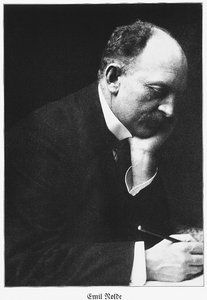
1867–1956, Tanska
Emil Nolde
Emil Nolden elämä ja identiteetti Hans Emil Hanseninä 7. elokuuta 1867 syntynyt mies, joka tulisi tuntemaan maailman nimellä Emil Nolde, kasvoi Schleswigin herttuakunnan Nolden kylän läheisyydessä. Hänen varhaislapsuutensa ja nuoruutensa muovautuivat hänen perheensä maaseutumaisten ja maatalousvaltaisten elämänrytmien tahdissa. Lopulta hän kuitenkin kääntyi pois tästä polusta ja valitsi urakseen puunveiston ja huonekalujen koristelun.
Tietoa kohteesta Emil Nolde Emil Nolden merkittävimpiä teoksia
Myös Emil Nolde -teoksia
 Sunset
 Sea with Red Sky
 Couple on the beach1903
 Masks1911
Esseitä teoksesta Prophet
 Egon Schielen 25 mestariteosta: Voimakas tunne ja taiteellinen syvyys seinillesi | OriginalUniqueArtTutustu Egon Schielen 25 vaikuttavinta teosta! Uppoudu ekspressionismin maailmaan, ihmiskuvauksen syvyyteen ja tunteelliseen taiteeseen. Lö…
 Emile Nolde: A Journey into Expressionist Nature & the Primal SelfExplore the powerful Expressionism of Emile Nolde – a pioneer of emotive landscapes & spiritual themes. Discover his journey, influences, a…
 Master of Emotion: The 25 Greatest Artworks by Rogier van der WeydenImmerse yourself in the profound emotion of Rogier van der Weyden. Explore 25 iconic Early Netherlandish masterpieces, from intricate textu…