Post-Impressionism
Garden path (Emil Nolde)
Emil Nolde (1867–1956) on luonut teoksen Garden path. Se kuuluu Post-Impressionism-liikkeeseen.

 Esikatselu

 Käsinmaalattu öljymaalaus
 Jaa teos
 Jaa
 Tiedot-arkki


 Lataa kuva
 Samanlaisia kohteita
 Röntgenkuvaus
 Diaesitys
 Kysymykset ja vastaukset

 Tilastot
Garden path lyhyesti
- Otsikko
- Garden path
- Taiteilija
- Emil Nolde (1867–1956)
- Taiteilija syntynyt
- Nolde, Tanska
- Tyylisuunta
- Post-Impressionism
- Aihe
- vibrant flowers, impasto texture, red floral art, nature painting, german art, post-impressionism
Mitä Garden path esittää?
A Symphony of Red: Exploring Emile Nolde’s “Garden Path”
“Garden Path” by German-Danish Expressionist painter Emile Nolde is a captivating oil painting that plunges the viewer into an intensely vibrant floral world. More than a simple depiction of flowers, this artwork is an exploration of color, texture, and emotion – a hallmark of Nolde’s unique artistic vision.Subject & Composition
The composition centers around a dense cluster of brilliantly red blossoms set against a backdrop of lush green foliage. The artist eschews precise botanical representation, instead prioritizing the *feeling* of being immersed within a flourishing garden. There's an almost overwhelming abundance conveyed through the tightly packed forms and energetic brushwork. Nolde doesn’t offer a clear “path” in the traditional sense; rather, the viewer is invited to lose themselves within the floral mass itself – a path into sensation.Style & Technique: A Post-Impressionist Force
Nolde's style firmly aligns with Post-Impressionism, and particularly echoes the expressive power of Vincent van Gogh. The painting is defined by its bold, unrestrained brushstrokes and a palpable sense of movement. Impasto – the thick application of paint – is central to the work’s impact; the surface isn't merely painted *on*, it’s built *up*, creating a nearly sculptural texture that invites tactile engagement. Lines are implied rather than explicitly drawn, contributing to a dreamlike quality and blurring the boundaries between individual forms. The flattened perspective further emphasizes this immersive experience, drawing the viewer directly into the heart of the flowers.Historical Context: A Pioneer of Expressionism
Emile Nolde (1867-1956) was a pivotal figure in early 20th-century art, and a founding member of Die Brücke (“The Bridge”), a group of German Expressionist artists. This movement sought to convey subjective emotion and inner experience rather than objective reality. Nolde’s work, along with that of his contemporaries, represented a radical departure from traditional artistic conventions. Despite facing controversy – his art was deemed “degenerate” by the Nazi regime – Nolde remained committed to his unique vision, pushing the boundaries of color and form.Symbolism & Emotional Impact
The dominant use of red is particularly significant. Red often symbolizes passion, energy, vitality, and even a fleeting moment in time. Within the context of Nolde’s work, it can also be interpreted as representing the raw power of nature and the intensity of emotional experience. The overall effect is one of exuberance and unrestrained joy, yet there's also an underlying sense of wildness and untamed energy.For Collectors & Designers
“Garden Path” offers a powerful statement piece for any collection or interior space. Its vibrant color palette and dynamic texture will inject life and energy into a room. The painting’s expressive quality lends itself well to both modern and traditional settings, adding a touch of artistic sophistication and emotional depth. A high-quality reproduction would capture the essence of Nolde's technique, bringing the vibrancy and passion of this remarkable artwork into your home or office.- Style: Post-Impressionism, Expressionism
- Materials: Oil on Canvas
- Key Features: Impasto technique, vibrant color palette, expressive brushwork, flattened perspective.
Garden path korkearesoluutioiset kuvat

Emil Nolde, Garden path. Tekijänoikeudet vapaat.
Kysymyksiä teoksesta Garden path, vastaukset
Mitä Emil Nolde:n "Garden path" esittää?
Emil Nolde:n "Garden path" esittää: vibrant flowers, impasto texture, red floral art, nature painting, german art, post-impressionism, abstract blooms.
Onko teos "Garden path" tekijänoikeusvapaa?
Tekijänoikeustiedot teokselle Emil Nolde:n "Garden path": teos on vapaasti käytettävissä – tekijänoikeussuoja on päättynyt. Tämä määrittää, voidaanko kuvasta tehdä vapaasti jäljennöksiä.
Kenen teokseksi "Garden path" on merkitty?
Teoksen "Garden path" taiteilija on Emil Nolde. Teos on luetteloitu Emil Nolde nimellä.
Mihin taidesuuntaukseen Emil Nolde:n "Garden path" kuuluu?
"Garden path" on Post-Impressionism-tyylisuuntaan kuuluva teos. Tyylisuunta ilmaisee taiteellisen perinteen, johon teos kuuluu.
Mihin Emil Nolde'n uran vaiheeseen "Garden path" kuuluu?
Emil Nolde'n uralla teos "Garden path" sijoittuu aikakaudelle Mature Period. Tämä vaihe auttaa vertaamaan sitä taiteilijan muihin teoksiin.
Miksi teoksen "Garden path" tekijänoikeustila on sellainen kuin se on?
Teoksen "Garden path" tekijänoikeustilanne (vapaasti käytettävissä – tekijänoikeussuoja on päättynyt) määräytyy taiteilijan kuolinvuoden 1956 perusteella.
Miten "Garden path" asettuu osaksi Emil Nolde'n muuta tuotantoa?
Emil Nolde'n tuotannossa "Garden path" edustaa Post-Impressionism-tyyliä ja kytkeytyy key post-impressional work, exploration of color, emotional intensity, van gogh's brushwork, expressionist color, impressionist texture, passionate energy, fleeting beauty teemoihin.
Onko "Garden path" tyypillinen esimerkki siitä, mitä Emil Nolde yleensä loi?
Emil Nolde:n toistuvia teemoja ovat key post-impressional work, exploration of color, emotional intensity, van gogh's brushwork, expressionist color, impressionist texture, passionate energy, fleeting beauty; "Garden path" keskittyy aiheisiin vibrant flowers, impasto texture, red floral art, nature painting, german art, post-impressionism, abstract blooms.
Tietoa taiteilijasta, Emil Nolde
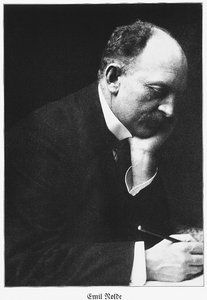
1867–1956, Tanska
Emil Nolde
Emil Nolden elämä ja identiteetti Hans Emil Hanseninä 7. elokuuta 1867 syntynyt mies, joka tulisi tuntemaan maailman nimellä Emil Nolde, kasvoi Schleswigin herttuakunnan Nolden kylän läheisyydessä. Hänen varhaislapsuutensa ja nuoruutensa muovautuivat hänen perheensä maaseutumaisten ja maatalousvaltaisten elämänrytmien tahdissa. Lopulta hän kuitenkin kääntyi pois tästä polusta ja valitsi urakseen puunveiston ja huonekalujen koristelun.
Tietoa kohteesta Emil Nolde Emil Nolden merkittävimpiä teoksia
Myös Emil Nolde -teoksia
 Sunset
 Sea with Red Sky
 Couple on the beach1903
 Masks1911
Esseitä teoksesta Garden path
 25 Masterpieces by Alexej von Jawlensky: The Soul of ExpressionismImmerse yourself in the vibrant world of Alexej von Jawlensky. Explore 25 iconic Expressionist masterpieces, from soulful portraits to bold…
 Expressionism vs. New Objectivity: Emotion vs. Precision in German ArtMaster the tension between Expressionist emotion and New Objectivity precision. Explore the soul of German modern art now.
 Amédée Masclef: Navigating Symbolism & Sentiment in Late 19th-Century French Landscape PaintingExplore the evocative landscapes of Amédée Masclef, a key figure bridging Barbizon realism & Symbolist sentiment. Discover his exquisite bo…