

 Katso seinällä
 Lähetä
 Jaa
Jaa
 Tarkemmat tiedot
 Opas
Opas

 Lataa kuva
 Samanlaisia kohteita
 Röntgenkuvaus
 Diaesitys
 Tilastot
Constanze Mozart


 Lue lisää
Käsinmaalattu öljyvärinen jäljennös
Käsinmaalattu öljyväri kankaalle haluamassasi koossa ja kehyksissä, taiteilijoidemme valmistamana tilauksesta. ( Vaihda tulosteeseen Siirry digitaaliseen kuvaan)




P118B €10

P118H €10

P118W €10

P438Z €10

P508JH €12

P508YH €12

P805H €10

P805Z €10

P919BZ €10

P919G €10

P919XJ €10

P959ZH €10

P968JZ €12

W106C €8

W218G €10

W218JH €8

W218Y €10

W307PJ €10

W316G €10

W316PJ €8

W316Y €10

W398PJ €8

W4111J €10

W500HY €15

W500JH €15

W692G €12

W849H €8

W940BG €15

W953PJ €8




Valitse valmiista mitoistamme sellaiset, jotka vastaavat teoksen alkuperäisiä mittasuhteita.

Kirjoita tarvitsemasi leveys ja korkeus, jotta teos sopii kehyskehyksiisi tai seinällesi. Koska kyseessä on käsinmaalattu teos, taiteilija voi maalata hieman enemmän kuvan ympärille tai rajata sitä hieman, jos haluat eri muotoisen koon — valinta on sinun. Lähetämme sinulle digitaalisen mallikuvan hyväksyttäväksi ennen kuin maalaus alkaa. Tällä sivulla näkyvä kuva ei vastaa lopullista tulosta — vain mallikuva näyttää sen.
Tilauksen jälkeen OriginalUniqueArt.com -tiimi lähettää asiakkaalle sähköpostitse ohjeet ja esikatselukuvan.
Maailmanlaajuinen toimitus () 3–4 viikossa tavallisen 5 viikon sijaan. (25 lokakuu). Laadusta ei tingitä.

Ilmainen pikatoimitus ympäri maailman

Korkealaatuinen pellavakangas

Kattava kuljetusvakuutus

Tulliveron palautustakuu

Takuu täydellisestä värien vastaavuudesta

100 päivän palautusoikeus valmistusvirhetapauksissa

100% rahat takaisin -takuu

Määräalennus saatavilla
 Lasivaihtoehto on saatavilla vain alle 110 cm kokoisille teoksille

Constanze Mozart
Reproduktiotapa
Replikaatin koko
-


Kokonaishinta
€ 263
The Enigmatic Figure: An Exploration of Emil Nolde’s “Constanze Mozart”
Emil Nolde's "Constanze Mozart," painted in 1902, isn’t merely a portrait; it’s a carefully constructed distillation of memory, emotion, and the lingering echoes of a bygone era. Nolde, a pivotal figure within the Die Brücke movement, eschewed photographic realism in favor of an intensely subjective approach to representation – a strategy that profoundly shaped his distinctive visual language. This particular work, housed within the Mozart-Museums of Salzburg, immediately draws the viewer into a world steeped in quiet contemplation and a subtle undercurrent of sadness. The subject herself, Constanze Mozart, is rendered with a remarkable degree of intimacy, her gaze direct yet veiled, suggesting both vulnerability and an inner strength.
Nolde’s technique here is immediately arresting. He employs a bold, almost aggressively applied palette dominated by deep blues and browns – colors that evoke the twilight hours, the shadows of memory, and perhaps even the melancholy associated with Mozart's own life. The brushstrokes are thick and impastoed, creating a tactile surface that invites close inspection. Notice how he utilizes broken color—small, distinct patches of hue rather than smooth transitions—to build up form and texture. This technique isn’t about replicating reality; it’s about conveying feeling – the weight of experience, the fragility of beauty, and the enduring power of a single, poignant image.
Echoes of Salzburg: Historical Context and Artistic Influences
To fully appreciate “Constanze Mozart,” one must consider the artistic climate in which it was created. Nolde’s early career was deeply influenced by the radical Expressionist group Die Brücke, a collective dedicated to rejecting academic conventions and exploring the raw emotions of modern life. This movement sought to capture not just what *was* seen, but what *felt* – a philosophy perfectly embodied in Nolde's work. His use of intense color and distorted forms can be traced back to his encounters with artists like Vincent van Gogh and Paul Gauguin, both of whom championed the expressive potential of color as a vehicle for conveying emotion. Furthermore, Nolde’s fascination with primitive art – particularly masks and carvings from various cultures – is evident in the painting's simplified forms and symbolic weight.
The portrait itself is rooted in a specific historical context: Salzburg during the late 19th century, a city inextricably linked to the legacy of Mozart. Constanze’s presence within this setting adds another layer of complexity to the work. She represents not only a real woman but also an idealized image of feminine grace and resilience – qualities that resonated deeply with Nolde's artistic sensibilities.
Symbolism and Emotional Resonance: A Portrait Beyond Representation
Beyond its formal elements, “Constanze Mozart” is rich in symbolic meaning. The book she holds isn’t simply a prop; it represents knowledge, contemplation, and perhaps even a yearning for understanding. Her direct gaze invites the viewer to engage with her inner world – to share in her thoughts and emotions. The muted lighting and somber color palette contribute to a sense of melancholy, suggesting that this portrait is not merely a likeness but an exploration of memory and loss. It’s a quiet meditation on beauty, fragility, and the enduring power of the past.
Nolde masterfully avoids sentimentality, instead offering a nuanced portrayal of a woman caught between worlds – between the idealized image of Mozart's wife and the complexities of her own life. “Constanze Mozart” is a testament to Nolde’s ability to transform a simple portrait into a profound statement about human experience, leaving the viewer with a lingering sense of both beauty and sadness.
Kysymykset ja vastaukset
Miten voin hankkia teoksen Emil Nolde:n "Constanze Mozart" digitaalisen tiedoston?
Saadaksesi teoksen Emil Nolde:n "Constanze Mozart" digitaalisen tiedoston, tilaa korkearesoluutioinen digitaalinen kuvalataus sen Digitaalinen kuva -sivulta.
Mihin kohtaan Emil Nolde urasta teos "Constanze Mozart" sijoittuu?
Emil Nolde'n uralla teos "Constanze Mozart" sijoittuu aikakaudelle Late Period. Tämä vaihe auttaa vertaamaan sitä taiteilijan muihin teoksiin.
Onko Emil Nolde:n "Constanze Mozart" -teoksesta saatavilla tietolomaketta opiskelijoille?
Teoksesta Emil Nolde:n "Constanze Mozart" on saatavilla Opas -sivu: tulostettava tietolomake teoksesta, joka on suunniteltu opiskelijoita ja luokkahuonekäyttöä varten.
Taiteilijan elämäkerta
Varhainen elämä ja taiteelliset alkuajat
Emil Nolde, tunnettu saksalais-tanskalainen maalaaja, syntyi Hans Emil Hansenina 7. elokuuta 1867 Nollessa, Schleswig-Holsteinissa, Saksassa. Hän oli perheeseen, jolla oli vahvat yhteydet maaseudun elämään ja uskonnollisiin vakaumuksiin, tekijöitä, jotka syvästi vaikuttivat hänen taiteelliseen näkökulmaansa. Vaikka hänen vanhempansa vastustivatkin aluksi hänen intohimoaan taiteeseen, koska he halusivat hänet urakoimaan perinteisemmän ammatin, Nolde pyrki päättäväisesti unelmiinsa. Hän työskenteli aluksi puuseppänä ja huonekalujen valmistajana ennen kuin omisti itsensä täysin maalaamiseen myöhään 20-luvulla.Taiteellinen kehitys ja vaikutteet
Nolden taiteellinen matka oli merkitty itseoppimiseen ja tutkimukseen. Hän matkusti laajasti, imien vaikutteita eri kulttuureista ja taidemuodoista. Varhaiset vaikutteet sisälsivät Vincent van Goghia, Paul Gaugia ja perinteistä kansantaidetta – erityisesti alkuelämän maskien ja kaiverrusten ilmeellinen voima. Nämä kohtaamiset herättivät hänen kiinnostuksensa rohkeisiin väreihin, yksinkertaistettuihin muotoihin ja tunteita herättäviin aiheisiin. Hän kokeili aluksi realismia ja impressionismia, mutta siirtyi nopeasti kohti subjektiivisempaa ja ilmaisuvoimaisempaa tyyliä.Die Brücke ja ekspressionistinen läpimurto
Vuonna 1905 Nolde perusti Die Brücken (The Bridge), merkittävän saksalaisten ekspressionistien ryhmän. Tämä kollektiivi pyrki katkaisemaan akateemisten traditioiden rajoitukset ja ilmaisemaan sisäisiä tunteitaan radikaalilla taiteellisella kokeilulla. Nolden panos Die Brückessä oli merkittävä; hänen intensiivinen värien käyttönsä ja vääristyneet muotinsa repivät esityksen rajoja. Hän säilytti kuitenkin jonkin verran itsenäisen aseman ryhmässä, poiketen usein erilleen aiheista ja tyylistä.Keskeiset teemat ja taiteellinen tyyli
Nolden tuotanto on karakterisoitu useista toistuvista teemoista: uskonnolliset kohtaukset, maisemat, merimaisemat ja muotokuvat. Hän oli erityisen kiinnostunut maskien voimasta – sekä fyysisinä esineinä että symbolisina edustuksina alkutunteista. Hänen taiteellinen tyylinsä on määritelty:- Rohkeat, eloisat värit tunteiden ilmaisemiseen
- Vääristyneet muodot esityksen rajoitusten rikkomiseksi
- Impasto-tekniikka – paksu maalin levittäminen kankaalle luomaan tekstuuria
- Sisäisten psykologisten tilojen vangitseminen
Merkittävät saavutukset ja tunnustukset
Kautta uransa Nolde loi laajan tuotannon. Joistakin hänen kuuluisimmista maalauksistaan ovat:- Maskit (1906-1907) – hänen alkuelämän taiteen ihailun osoitus
- Kristuksen pilkkaaminen (1909) – voimakas ja tunteellisesti latautunut uskonnollinen kohtaus
- Syksyn meri (1908) - hänen ilmaisuvoimaisen maisemamaalauksensa osoitus.
- Kukkapaljun poika ja pesijä (1907)
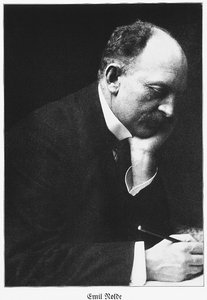
Emil Nolde
1867 - 1956 , Saksa
Tietoa taiteilijasta
- Artistic Movement Or Style: Saksa ekspressionismi, Die Brücke
- Artists Or Movements Influenced By This Artist: ['Die Brücke']
- Artists Who Influenced This Artist:
- Vincent van Gogh
- Paul Gauguin
- Date Of Birth: 7. elokuuta 1867
- Date Of Death: 13. huhtikuuta 1956
- Full Name: Emil Nolde (Hans Emil Hansen)
- Nationality: Saksalais-tanskalainen
- Notable Artworks:
- Kristuksen pilkkaaminen
- Kukkapaljun Poika Ja Pesijä
- Dance around the Golden Calf
- Place Of Birth: Nolde, Schleswig-Holstein
Aiheeseen liittyvät artikkelit

Ephemeral Visions: Exploring the Artistic Legacy & Nuances of Watercolor Painting
Explore the captivating world of watercolor painting! Discover its rich history, essential techniques, influential artists & collecting tips from art experts. A comprehensive guide for enthusiasts.

Ephemeral Visions: Exploring the History & Emotional Resonance of Watercolor Painting
Explore the captivating history of watercolor painting, from ancient techniques to modern masters like Kandinsky & Blake. Discover essential artists, collecting tips & the emotional power of this luminous medium. Expert insights for art enthusiasts.

Ephemeral Visions: Exploring the Artistic Legacy & Contemporary Practice of Watercolor Painting
Explore the captivating world of watercolor painting! Discover its rich history, essential techniques, influential artists & collecting tips. A comprehensive guide for art enthusiasts from OriginalUniqueArt.

10 Vesivärimaalausta, Jotka Muuttivat Taiteen – Inspiroi Sisustuksesi OriginalUniqueArtilla
Tutustu 10 legendaariseen vesivärimaalaukseen, jotka muuttivat taiteen historiaa! Inspiroiva tarina Turnerista Monetiin. Löydä upeita akvarelleja ja sisustusideoita OriginalUniqueArtilla. Tutki kokoelma verkossa!

Vesivärimaalauksen lumo: Historiaa, tekniikoita ja nykypäivän ilmaisua
Tutustu vesivärimaalauksen kiehtovaan maailmaan! Historiaa, tekniikoita ja inspiraatiota nykypäivään. Löydä upeita akvarelleja in valikoimasta.

