
 Esikatselu
 Jaa teos
 Jaa
Jaa
 Tiedot
 Opas
Opas

 Lataa kuva
 Samanlaisia kohteita
 Röntgenkuvaus
 Diaesitys
 Q&A
Q&A Tilastot
Old Church in Delft

- 95.0 x 82.0 cm


 Lue lisää
Giclée- ja taideprintit
Museolaatuisia giclée- tai kankaitaulun tulosteita nopealla tuotannolla ja joustavilla viimeistelyvaihtoehdoilla. ( Osta käsinmaalattu taideteos Siirry digitaaliseen kuvaan)




P118B €10

P118H €10

P118W €10

P438Z €10

P508JH €12

P508YH €12

P805H €10

P805Z €10

P919BZ €10

P919G €10

P919XJ €10

P959ZH €10

P968JZ €12

W106C €8

W218G €10

W218JH €8

W218Y €10

W307PJ €10

W316G €10

W316PJ €8

W316Y €10

W398PJ €8

W4111J €10

W500HY €15

W500JH €15

W692G €12

W849H €8

W940BG €15

W953PJ €8




Valitse valmiista mitoistamme sellaiset, jotka vastaavat teoksen alkuperäisiä mittasuhteita.

Syötä tarvitsemasi leveys ja korkeus, jotta tuloste sopii kehyksiisi tai seinällesi. Tulostetta voidaan vain leikata, sitä ei voida koskaan suurentaa alkuperäistä kuvaa suuremmaksi, joten eri muotoinen koko aiheuttaa osan kuvasta katoamisen. Lähetämme sinulle digitaalisen mallikuvan hyväksyttäväksi ennen kuin aloitamme tulostuksen. Tällä sivulla näkyvä kuva ei näytä lopullista rajausta — vain mallikuva näyttää sen.
Maailmanlaajuinen toimitus () 2 viikossa tavallisen 4–5 viikon sijaan. (1 marraskuu)

Ilmainen pikatoimitus ympäri maailman

Korkealaatuinen pellavakangas

Kattava kuljetusvakuutus

Tulliveron palautustakuu

Takuu täydellisestä värien vastaavuudesta

100 päivän palautusoikeus (vain valmistusvirheet)

100% rahat takaisin -takuu

Määräalennus tarjolla
 Lasivaihtoehto on saatavilla vain alle 110 cm kokoisille teoksille

Old Church in Delft
Giclée- ja taideprintit
Replikaatin koko
-


Kokonaishinta
€ 71
A Breathless Reverie: The Luminous Soul of Delft
In the quiet corners of the Dutch Golden Age, where light performs its most delicate dances, Emanuel de Witte captured something far more profound than mere architecture. His masterpiece, Old Church in Delft, is not simply a record of stone and mortar; it is an invitation into a sacred stillness. While his contemporaries like Pieter Saenredam sought the rigorous precision of architectural truth, De Wiente embarked on a different journey—one of atmosphere and emotion. To stand before this canvas is to enter a world where the boundaries between the physical structure of the Oude Kerk and the spiritual essence of prayer begin to dissolve. The painting breathes with a palpable sense of peace, inviting the viewer to lose themselves in the soft, filtered light that spills through the Gothic windows, illuminating the dust motes of history.
The composition serves as a masterclass in the art of illusionism, a hallmark of De Witte’s unparalleled skill. Through the masterful application of chiaroscuro, he sculpts the vast interior space using nothing but the interplay of deep shadow and brilliant highlights. The eye is drawn through the expansive nave, guided by the rhythmic placement of light that catches the edges of white pillars and the subtle textures of the floor. De Witte does not merely depict a room; he constructs a three-dimensional experience. His brushwork, though remarkably subtle, possesses a decisive strength that lends a profound realism to the scene, making the heavy weight of the Gothic arches feel as tangible as the air itself.
The Human Element and the Drama of Light
Within this grand architectural stage, De Witte introduces a delicate human narrative. Scattered throughout the vastness of the church are small, carefully placed figures—individuals caught in moments of quiet contemplation or casual movement. These figures are not mere decorations; they provide the essential scale necessary to grasp the monumental height of the cathedral's tower and the soaring reaches of its ceiling. Their presence imbues the scene with a sense of lived history, suggesting that these hallowed halls have been the silent witnesses to generations of human hope, grief, and devotion. The way the light falls upon their forms—sometimes highlighting a shoulder, sometimes leaving a face in soft shadow—adds a layer of narrative mystery that keeps the viewer’s gaze wandering through the composition.
For the discerning collector or interior designer, Old Church in Delft offers much more than aesthetic beauty; it offers an atmosphere of timelessness. The painting’s palette, dominated by muted tones, whites, and deep, resonant shadows, provides a sophisticated anchor for any high-end interior. It possesses a unique ability to command attention through its quietude rather than through loud colors. Whether placed in a sunlit gallery or a moody, library-style study, this work brings with it an aura of intellectual depth and spiritual grace. Owning a reproduction of such a piece is an opportunity to curate a space that celebrates the enduring power of light, history, and the sublime beauty of the Dutch Baroque tradition.
Kysymykset ja vastaukset
Kuka on teoksen "Old Church in Delft" tekijä ja mihin taidesuuntaukseen se kuuluu?
Teoksen "Old Church in Delft" takana ovat Emanuel De Witte ja Dutch Baroque-suuntaus.
Kuka on luonut teoksen "Old Church in Delft" ja minä vuonna?
Emanuel De Witte loi teoksen "Old Church in Delft" vuonna 1642.
Mihin kohtaan taidehistoriaa Emanuel De Witte:n "Old Church in Delft" sijoittuu?
Historiallisesti "Old Church in Delft" on laajemman Early Modern aikakauden Dutch Baroque-tyylinen teos.
Taiteilijan elämäkerta
A Life in Perspective: The World of Emanuel de Witte
Emanuel de Witte, nimi joka ei välttämättä ole yhtä tunnettu kuin joistakin 1600-luvun Alankomaiden mestareista, on silti merkittävä ja kiehtova hahmo taiteen historiassa. Syntynyt Alkmaarissa vuonna 1617, De Witten taiteellinen matka oli täynnä sekä huomattavaa lahjakkuutta että merkittävää henkilökohtaista kamppailua – dualismi, joka näemme hienovaraisesti heijastuvan hänen maalauksensa tunnelmaan. Hän ei ollut motivoitunut tarkkaan arkkitehtoniseen dokumentointiin kuten Pieter Saenredam; pikemminkin hän pyrki vangitsemaan tilan *tunteen*, valon laadun ja hiljaisen draaman, joka leimasi uskonnollisia sisätiloja. Hänen maalinsa eivät ole vain kirkkojen esityksiä; ne ovat uppoutumiskokemuksia, kutsuen katsojan rauhaan, pohdiskeluun ja hengelliseen resonanssiin.Delftin Koulutus ja Amsterdamin Otte
De Witten varhaiset elinvaiheet tarjosivat vankan perustan taiteellisille pyrkimyksilleen. Hänen isänsä, koulumestari, opetti hänelle oppimisen arvostusta ja älyllistä uteliaisuutta – piirteitä, jotka myöhemmin ilmeni hänen huolellisena havaintoinaan perspektiivin ja valon suhteen. Hän aloitti uransa taiteessa liittymällä St Luke -veljeskuntaan Alkmaarissa vuonna 1636, mutta hänen seuraava työnsä Evert van Aelstin opastuksella Delftissä osoittautui erityisen muokkaavaksi. Van Aelst, tunnettu still-life -maalari, antoi De Wittelle terävän silmän yksityiskohtiin ja mestarillisen hallinnan valon ja varjon suhteen – taitoja, jotka tulivat hänen kypsän tyylinsä kulmakiviä. Aluksi De Witte kokeili erilaisia genrejä – portreita, myyttisiä kohtauksia, uskonnollisia tarinoita – mutta siirtyminen Amsterdamissa vuonna 1651 merkitsi todellista löytymistä. Kaupungin rikkaus upeissa kirkoissa tarjosi loputtoman inspiraationlähteen, ja hän alkoi erikoistua näiden hämmästyttävien sisätilojen kuvaamiseen.Tunnelman Mestari ja Kuvitteelliset Tilat
Amsterdam osoittautui ratkaisevaksi De Witten taiteelliselle kehitykselle. Hän ei vain kopioinut olemassa olevia kirkkotiloja; pikemminkin hän yhdisteli taitavasti eri rakennusten elementtejä luoden idealisoituja sisätiloja, jotka tuntuvat samalla tutuilta ja hieman muinaisilta. Oude Kerk Amsterdamista tuli usein aihe hänen maalauksissaan eri näkökulmista. Mutta nämä eivät olleet suoria esityksiä; De Witte manipuloi perspektiiviä, leikki valon ja varjon kanssa ja sijoitti tiloihin huolellisesti järjestettyjä hahmoja luomaan tietynlaisen tunnelman tai tunnelman. Kuten Walter Liedtke totesi, hänen ensisijainen kiinnostuksensa ei ollut arkkitehtuuri itsessään, vaan "tila itse – sen valo, väri, laajuus ja tunnelma." Tämä painotus atmosfäärin luomiseen erottaa hänet aikakauden tarkemmin dokumentoivista maalarista. Hän ei ollut huolissaan tarkasta tarkkuudesta; hän oli kiinnostunut luomaan *tunteen* majesteettisuudesta, kunnioituksesta ja hengellisestä syvyydestä.Henkilökohtainen Kamppailu Taiteen Rinnalla
Amsterdamin vaikutus De Witten taiteelliseen kehitykseen oli merkittävä. Hän ei vain maalannut kirkkoja; hän myös tutki niiden historiaa ja uskonnollisia merkityksiä. Hänen maalauksissaan näkyy usein uskonnollisia symboleita, kuten ristiä, enkeleitä ja pyhimyksiä. De Witten taiteellinen tyyli kehittyi ajan myötä, ja hänen varhaisissa arkkitehtuuria kuvaavissaan teoksissaan näkyy vaikutteita Houckgeestiltä. Hän kuitenkin pian kehitti oman tyylinsä ja maalaustekniikkansa. De Witte keskittyi erityisesti luonnollisen valon kuvaamiseen. Hänen kuvaamissaan tiloissa on ihmisiä ja usein myös eläimiä. Maalaukset ovat suuria ja niitä hallitsee voimakas perspektiivi. Väripaletti on usein lähes monokromaattinen. De Witten henkilökohtainen elämä oli kuitenkin täynnä vaikeuksia. Hänen ensimmäisen vaimonsa kuolema toi syvän surun, ja myöhemmät oikeudelliset ongelmat hänen toisen vaimonsa ja tyttärensä kanssa varjostivat hänen myöhempää elämäänsä. Taloudelliset vaikeudet johtivat hänet nöyryyttävään asemaan, kun hän joutui palvelusmiehen asemaan taiteilijalle Joris de Wijsille. Tämä tilanne rikkoi lopulta sopimuksen, mikä johti lisäongelmiin. Aikaansaikaisten kertomusten mukaan De Witte kärsi voimakkaasta masennusjaksoista koko elämänsä ajan ja teki lopulta itsemurhan talvella 1691–1692 Amsterdamissa. Se oli synkkä loppu miehelle, joka omisti elämänsa pyhien tilojen kauneuden ja rauhan vangitsemiseen.Perintö ja Kestävä Vaikutus
Emanuel de Witte seisoo tärkeänä hahmona 1600-luvun arkkitehtuurimaalauksen viimeisessä vaiheessa, yhdistäen tarkkaa dokumentointia ja tunnelman tulkintaa. Hänen innovatiivinen valon ja perspektiivin käytönsä vaikutti myöhemmän sukupolven taiteilijoihin, ja hänen maalauksensa tarjoavat edelleen arvokkaita näkemyksiä 1600-luvun hollantilaisesta uskonnollisesta elämästä ja sosiaalisista tavoista. Hän muistuttaa meitä siitä, että taide ei ole vain sitä, mitä näemme, vaan miten *tuntee*, kun katselemme sitä.
Emanuel De Witte
1617 - 1692 , Alankomaat
Pähkinänkuoressa
- Artistic Movement Or Style: Barokki
- Artists Or Movements Influenced By This Artist: ['Myöhemmät taiteilijat']
- Artists Who Influenced This Artist: ['Evert van Aelst']
- Date Of Birth: 1617
- Date Of Death: 1692
- Full Name: Emanuel de Witte
- Nationality: Alankomainen
- Notable Artworks:
- Oude Kerk
- Uuden kirkon sisä
- Kirkkojen sisätilat
- Place Of Birth: Alkmaar, Alankomaat
Aiheeseen liittyvät artikkelit

Hollantilaisen barokin mestariteokset: Taidetta ja inspiraatiota kotiin
Uppoudu hollantilaisen barokin maailmaan! Tutustu Rembrandtin, Vermeerin ja muiden mestarien ikonisiin teoksiin. Taidetta, historiaa ja inspiraatiota kotiisi – löydä upeat reproduktiot OriginalUniqueArt.comista.

Golden Age Reflections: Dutch Baroque Painting & Cultural Innovation
Explore the Dutch Golden Age of painting! Discover key artists like Vermeer & ter Borch, their innovative techniques, and the rich cultural context behind these Baroque masterpieces. Learn about collecting & appreciating this iconic art period.
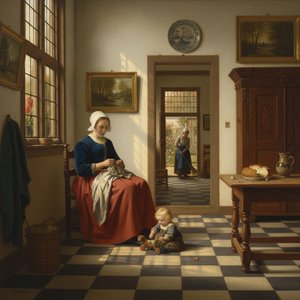
Pieter de Hooch: Illuminating Dutch Domestic Life & Golden Age Charm
Explore the captivating world of Pieter de Hooch, a master of Dutch Golden Age painting. Discover his innovative use of light, intimate domestic scenes, and lasting influence on art history. Learn more at OriginalUniqueArt.

Francisco Goya: 25 mestariteosta – Taidetta kotiisi OriginalUniqueArtilta
Tutustu Francisco Goyan 25 mestariteokseen! Uppoudu espanjalaisen taiteen historiaan, romanttisiin maalauksiin ja vaikuttaviin muotokuviin. Löydä täydellinen seinätaide kotiisi OriginalUniqueArtilta – korkealaatuiset reproduktiot ja inspiroivat sisustusideat. Tutki kokoelma verkossa!

Barokin loisto: Kuinka tuoda ylellisyyttä ja tunnetta nykyaikaiseen sisustukseen
Tutustu barokki sisustuksen loistoon! Opi luomaan ylellistä ja tunnelmallista kotia historiallisen tyylin inspiroimana. Vinkkejä, esimerkkejä ja in apua.