

 Esikatselu
 Jaa
Jaa Jaa
Jaa
 Tarkemmat tiedot

 Lataa
Lataa
 Samanlaisia
 Röntgenkuva
 Diaesitys
 Tilastot
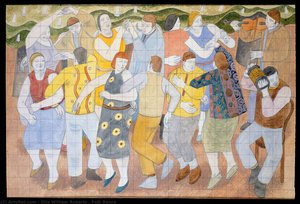
Folk Dance
 Watercolor
- WallArt
 1938
1938- 19th Century
 320.0 x 215.0 cm
 British Council
 Näytä lisää
Osta korkearesoluutioinen, parannettu digitaalikuva, joka on laadultaan huomattavasti parempi kuin verkkosivuston esikatselu.
Jokainen tiedosto valmistellaan huolellisesti omien asiantuntijoidemme toimesta käyttäen edistyneitä työkaluja ja ammattitaitoista manuaalista retusointia. Varmistamme, että jokaisessa kuvassa on poikkeuksellinen selkeys, tarkka värintoisto ja hienovaraiset yksityiskohdat.
Lopputiedosto toimitetaan sähköpostitse 72 tunnin kuluessa, ja se on optimoitu välittömään käyttöön ammattimaisissa, toimituksellisissa ja painoympäristöissä. Laatu on sama, johon huipputason suunnittelustudiot, kustantajat ja galleriat luottavat.
Digitaalinen kuva
Lataa korkearesoluutioinen tiedosto henkilökohtaiseen näyttelyyn, tulostamiseen ja luoviin projekteihin. ( Vaihda tulosteeseen Osta käsintehty maalaus)
Sisältyy jokaiseen digitaalisen kuvan tilaukseen
Asiantunteva digitaalinen toimitus, taattuun laatuun
Kun valitset OriginalUniqueArt.com-palvelun, et saa vain kuvaa – saat ammattimaisesti parannetun digitaalisen taideteoksen, joka on luotu tarkkuudella ja jonka takaa tulee tyytyväisyystakuu. Tässä on kaikki, mitä tilauksesi sisältää, automaattisesti:

Nopea digitaalinen toimitus
Korkearesoluutioinen digitaalinen kuvatiedostosi lähetetään sähköpostiisi 72 tunnin kuluessa tilauksesta – valmiina käytettäväksi välittömästi.

Tekoälyllä parannettu digitaalinen tiedosto
Taiteilijasi teos on optimoitu ammattimaisesti edistyneiden tekoälytyökalujen ja manuaalisen muokkauksen avulla, mikä takaa maksimaalisen yksityiskohtaisuuden, selkeyden ja väritarkkuuden.

Ilmainen elinikäinen uudelleenlähetyspalvelu
Oletko vahingossa poistanut tai kadottanut tiedostosi? Ei hätää – lähetämme sen sinulle uudelleen milloin tahansa täysin maksutta.

Ei tuontimaksuja – koskaan
Nauti taiteestasi välittömästi ilman tulleja, veroja tai toimitusmaksuja – digitaaliset lataukset ovat aina verovapaita.

Värintoiston tarkkuustakuu
Varmistamme, että digitaalinen kuvasi vastaa alkuperäisiä värejä mahdollisimman tarkasti käyttämällä ammattilaistason työkaluja ja värinhallintaa.

100 päivän tyytyväisyystakuu
Jos et ole tyytyväinen digitaaliseen kuvaasi, muokkaamme sitä tai palautamme 100% hinnan 100 päivän kuluessa – kysymystä ei esitetä.

100% Rahat takaisin -takuu
Et ole tyytyväinen? Saat täyden hyvityksen 100 päivän kuluessa digitaalisen tiedostosi vastaanottamisesta – kysymystä ei esitetä.

Suurtilaaja-alennukset
Osta 3 kuvaa, säästä 10% - Osta 5, säästä 15% - Osta 10+, säästä 20%. Erinomainen valinta luoviin projekteihin, gallerioille ja toimistoille.
Taiteilijan elämäkerta
Ellis William Roberts: A Welsh Voice in Victorian Portraiture
Ellis William Roberts (1860-1930) emerges from the artistic landscape of late 19th and early 20th century Wales as a significant, though often overlooked, portrait painter. Born in Burslem, Staffordshire, his journey to becoming a prominent artist was marked by a deliberate shift towards London and a keen observation of Victorian society – particularly its women – reflected in his distinctive satirical and evocative works. Roberts’ career wasn't defined by grand exhibitions or widespread fame initially; instead, it unfolded through a series of commissions, meticulous studies, and a growing reputation for capturing the nuances of character and social standing.
Roberts’ early artistic training began at the Wedgwood Institute in Stoke-on-Trent, a center for ceramic art. This initial exposure to craftsmanship instilled a strong sense of detail and technical skill, which he later applied to his portraiture. However, it was his subsequent studies at the Minton Memorial Art School and, crucially, the Royal College of Art in London that truly shaped his artistic vision. The influence of the Academy’s rigorous training combined with Parisian exposure to Impressionistic techniques provided him with a sophisticated palette and an understanding of light and shadow – elements he skillfully employed to render his subjects with remarkable realism and psychological depth.
A Portrait of Victorian Society
Roberts' subject matter primarily revolved around the women of London society, a demographic he depicted with both admiration and subtle critique. He wasn’t simply producing flattering likenesses; rather, he presented portraits that revealed character, social status, and often, underlying tensions within the Victorian framework. His work frequently employed a satirical edge, subtly exposing the artificiality and constraints placed upon women of the era. Consider his portrait of Susannah West Wilson, later Lady Holford – a commission reflecting his growing success – where the subject’s gaze holds both dignity and a hint of melancholy, suggesting a life lived within the confines of societal expectations.
His depictions weren't limited to the upper echelons of society. Roberts also produced portraits of working-class individuals, offering glimpses into their lives and struggles. These works demonstrate his empathy and ability to capture the essence of ordinary people, showcasing a broader range of subjects than often associated with Victorian portraiture at the time.
Technique and Style
Roberts’ artistic style can be characterized as a blend of realism and Impressionism. He meticulously observed his subjects, rendering their features with remarkable accuracy – a testament to his training at the Royal College of Art. However, he also embraced loose brushstrokes and an emphasis on capturing fleeting moments of light and atmosphere, hallmarks of the Impressionist movement. His use of color was particularly noteworthy; he favored muted tones and subtle gradations, creating a sense of depth and realism while simultaneously conveying mood and emotion.
Roberts’ technique involved layering thin glazes of paint to achieve luminous effects and build up texture. He often worked on toned paper or canvas, allowing the surface to influence his color choices and create a richer visual experience. His portraits are not merely representations of appearance but rather carefully constructed narratives conveyed through subtle details – the angle of a hand, the expression in an eye, the arrangement of clothing – all contributing to a deeper understanding of the subject’s personality and social context.
Legacy and Recognition
Despite his talent and dedication, Roberts' work received relatively little attention during his lifetime. He primarily worked through commissions and smaller exhibitions, never achieving widespread fame or recognition. However, in recent decades, there has been a growing appreciation for his unique artistic vision and the valuable insights he offered into Victorian society. His portraits are now housed in collections such as the Potteries Museum & Art Gallery in Stoke-on-Trent and the National Trust, ensuring that his work continues to be studied and enjoyed by future generations.
Roberts’ legacy lies not only in his individual artworks but also in his contribution to a more nuanced understanding of Victorian portraiture. He was a keen observer of human nature, capable of capturing both the beauty and the complexities of his subjects – a testament to his artistic skill and perceptive eye.
ellis william roberts
1860 - 1930
Lyhyesti esiteltynä
- Artistic Movement Or Style: Portraiture, Satirical Art
- Artists Or Movements Influenced By This Artist: ['Ashcan School']
- Artists Who Influenced This Artist: ['Havelock Ellis']
- Date Of Birth: 1860-10-27
- Date Of Death: 1930-09
- Full Name: Ellis William Roberts
- Nationality: British, English
- Notable Artworks:
- Lady Margaret Scott
- Susannah West Wilson
- Place Of Birth: Burslem, Staffordshire