

 Katso seinällä
 Lähetä
 Jaa
Jaa
 Tarkemmat tiedot
 Opas
Opas

 Lataa kuva
 Samanlaisia kohteita
 Röntgenkuvaus
 Diaesitys
 Tilastot
Florence
 1921
1921 36.0 x 36.0 cm
 Salford Museum - Art Gallery
 Lue lisää
Käsinmaalattu öljyvärinen jäljennös
Käsinmaalattu öljyväri kankaalle haluamassasi koossa ja kehyksissä, taiteilijoidemme valmistamana tilauksesta. ( Vaihda tulosteeseen Siirry digitaaliseen kuvaan)




































Valitse valmiista mitoistamme sellaiset, jotka vastaavat teoksen alkuperäisiä mittasuhteita.

Voit syöttää omat mitat sopimaan tiettyyn kehykseen tai tilaan. Jos valitsemasi koko ei vastaa alkuperäisen kuvan mittasuhteita, rajaamme taideteoksen tai jatkamme maalausta käsin maalatuilla elementeillä. Digitaalinen esikatselu lähetetään hyväksyttäväksi ennen tuotannon aloittamista.
Huomioithan, että näytöllä oleva esikatselu ei vastaa todellista rajausta tai jatkamista. Vain digitaalinen mallikuva näyttää lopullisen sommittelun tarkasti.
Vaikka mittatilaustyöt ovat mahdollisia, suosittelemme valitsemaan mitan ennalta määritetystä listasta alkuperäisten mittasuhteiden säilyttämiseksi.
Tilauksen jälkeen OriginalUniqueArt.com -tiimi lähettää asiakkaalle sähköpostitse ohjeet ja esikatselukuvan.
Maailmanlaajuinen toimitus () 3–4 viikossa tavallisen 5 viikon sijaan. (27 syyskuu). Laadusta ei tingitä.

Ilmainen pikatoimitus ympäri maailman

Korkealaatuinen pellavakangas

Kattava kuljetusvakuutus

Tulliveron palautustakuu

Takuu täydellisestä värien vastaavuudesta

100 päivän palautusoikeus valmistusvirhetapauksissa

100% rahat takaisin -takuu

Määräalennus saatavilla
 Lasivaihtoehto on saatavilla vain alle 110 cm kokoisille teoksille

Florence
Reproduktiotapa
Replikaatin koko
-


Kokonaishinta
$ 300
Taiteilijan elämäkerta
The Architect of the Arts and Crafts Movement
Born into the industrial heart of Middleton on May 17, 1860, Edgar Wood emerged as a defining figure of the British Arts and Crafts movement. His life was shaped by the tension between tradition and individual ambition; while his father, a strict mill owner, envisioned a future for Edgar within the family cotton business, the young man possessed an irrepressible artistic spirit. This early conflict eventually yielded to a compromise that would define his legacy: he would train as an architect, allowing him to marry structural precision with the soulful, decorative aesthetics of a true artist. Educated at the local Queen Elizabeth Grammar School, Wood’s path was paved through his articles at Mills and Murgatroyd, a prestigious Manchester firm where he honed the technical mastery that would later allow him to breathe life into stone and timber.
Wood's creative philosophy was deeply rooted in the vernacular traditions of Lancashire. Unlike architects who sought to impose grand, foreign styles upon the landscape, Wood found beauty in the local, the domestic, and the tactile. His work is characterized by a profound respect for materials and a desire to integrate architecture with the natural environment. As a proponent of the Arts and Crafts movement, he championed the idea that every element of a building—from its structural bones to its smallest ornamental detail—should be crafted with care and integrity. This devotion to craftsmanship saw him focusing primarily on smaller-scale projects, such as domestic residences and churches, which allowed him to maintain personal control over the design process and ensure that his artistic vision remained uncompromised.
A Legacy Carved in Lancashire
The breadth of Wood's influence extended far beyond the borders of a single city, though Manchester remained his spiritual and professional anchor. His architectural footprint can be found scattered across the towns of Rochdale, Oldham, and Middleton, as well as in more outlying districts like Bramhall and Hale. Through his work, he transformed the local landscape, creating buildings that felt both timeless and deeply connected to their surroundings. His contributions were not merely structural but also communal; as a founder of the Northern Art Workers' Guild in 1896, he helped foster a vibrant ecosystem for provincial artists, ensuring that the spirit of craftsmanship would endure in the North of England.
Wood’s professional achievements were marked by leadership and recognition within his field. His tenure as President of the Manchester Society of Architects from 1911 to 1912 stands as a testament to the respect he commanded among his peers. Even as the architectural landscape shifted toward more modern, industrial styles in the early 20th century, Wood remained steadfast in his commitment to the principles of beauty and utility. Today, his legacy is preserved through the many listed buildings that stand as monuments to his skill. To study the work of Edgar Wood is to witness a masterclass in how architecture can serve as an extension of the human soul, blending the ruggedness of industrial Lancashire with the delicate elegance of fine art.
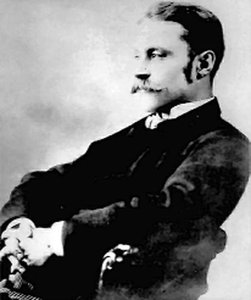
edgar wood
1860 - 1935
Tietoa taiteilijasta
- Artistic Movement Or Style: Arts and Crafts movement
- Artists Or Movements Influenced By This Artist: Arts and Crafts movement
- Date Of Birth: May 17, 1860
- Date Of Death: 1935
- Full Name: Edgar Wood
- Nationality: British