Text size

() ·

A painting made for you, by hand

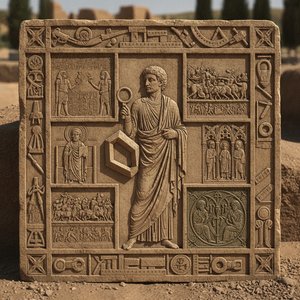
Cantoria (detail)

Käsinmaalattu öljyvärinen jäljennös

Käsinmaalattu öljyväri kankaalle haluamassasi koossa ja kehyksissä, taiteilijoidemme valmistamana tilauksesta. ( Vaihda tulosteeseen Siirry digitaaliseen kuvaan)

Keräilykohteen kuvaus

Witness Donatello's Cantoria – a breathtaking marble relief from Florence’s Duomo! Explore the dynamic artistry & intricate details of this Renaissance masterpiece, sculpted by master Donatello.

Taiteilijan elämäkerta

Donatello (1386–1466): Firenzeen renessanssin varhaisen ajan merkittävä kuvanveistäjä. Tunnettu vapaan vartalon veistosten, kuten Davidin, ilmaisukyvystä ja klassisesta vaikutuksesta. Tutustu hänen mestariteoksiinsa ja perintöönsä!

from ·

Chapter 1

How large should it be?

Slide to change the size; the picture on the left shows the frame at its real width. The proportions of the original are kept.

Vakiokoko
räätälöity
CM
INCH

Valitse valmiista mitoistamme sellaiset, jotka vastaavat teoksen alkuperäisiä mittasuhteita.

leveys
korkeus

Kirjoita tarvitsemasi leveys ja korkeus, jotta teos sopii kehyksiisi tai seinällesi. Koska kyseessä on käsinmaalattu teos, taiteilija voi maalata hieman enemmän kuvan ympärille tai rajata sitä hieman, jos haluat eri muotoisen koon — valinta on sinun. Lähetämme sinulle digitaalisen mallikuvan hyväksyttäväksi ennen kuin maalaus alkaa. Tällä sivulla näkyvä kuva ei vastaa lopullista tulosta — vain mallikuva näyttää sen.

Chapter 2

How should it arrive?

Choose the edges of the stretched canvas

Choose your frame

Corner sample of the WhiteWrap canvas edge finish, stretched on massiivipuu bars
White €1
Corner sample of the BlurSideWrap canvas edge finish, stretched on massiivipuu bars
Blurside €1
Corner sample of the ExtendedWrap canvas edge finish, stretched on massiivipuu bars
Extended €1
Corner sample of the P118B picture frame: valettu polystyreeni, 5 cm wide and 3 cm thick
P118B €10
Corner sample of the P118H picture frame: valettu polystyreeni, 5 cm wide and 3 cm thick
P118H €10
Corner sample of the P118W picture frame: valettu polystyreeni, 5 cm wide and 3 cm thick
P118W €10
Corner sample of the P438Z picture frame: valettu polystyreeni, 5.5 cm wide and 3.5 cm thick
P438Z €10
Corner sample of the P508JH picture frame: valettu polystyreeni, 7 cm wide and 3.5 cm thick
P508JH €12
Corner sample of the P508YH picture frame: valettu polystyreeni, 7 cm wide and 3.5 cm thick
P508YH €12
Corner sample of the P805H picture frame: valettu polystyreeni, 5 cm wide and 3.5 cm thick
P805H €10
Corner sample of the P805Z picture frame: valettu polystyreeni, 5 cm wide and 3.5 cm thick
P805Z €10
Corner sample of the P919BZ picture frame: valettu polystyreeni, 7 cm wide and 3.5 cm thick
P919BZ €10
Corner sample of the P919G picture frame: valettu polystyreeni, 7 cm wide and 3.5 cm thick
P919G €10
Corner sample of the P919XJ picture frame: valettu polystyreeni, 7 cm wide and 3.5 cm thick
P919XJ €10
Corner sample of the P959ZH picture frame: valettu polystyreeni, 5 cm wide and 3 cm thick
P959ZH €10
Corner sample of the P968JZ picture frame: valettu polystyreeni, 6 cm wide and 4 cm thick
P968JZ €12
Corner sample of the W106C picture frame: massiivipuu, 5 cm wide and 3 cm thick
W106C €8
Corner sample of the W218G picture frame: massiivipuu, 5 cm wide and 3 cm thick
W218G €10
Corner sample of the W218JH picture frame: massiivipuu, 5 cm wide and 3 cm thick
W218JH €8
Corner sample of the W218Y picture frame: massiivipuu, 5 cm wide and 3 cm thick
W218Y €10
Corner sample of the W307PJ picture frame: massiivipuu, 6 cm wide and 3 cm thick
W307PJ €10
Corner sample of the W316G picture frame: massiivipuu, 6 cm wide and 3 cm thick
W316G €10
Corner sample of the W316PJ picture frame: massiivipuu, 6 cm wide and 3 cm thick
W316PJ €8
Corner sample of the W316Y picture frame: massiivipuu, 6 cm wide and 3 cm thick
W316Y €10
Corner sample of the W398PJ picture frame: massiivipuu, 5 cm wide and 3 cm thick
W398PJ €8
Corner sample of the W4111J picture frame: massiivipuu, 6.5 cm wide and 3.5 cm thick
W4111J €10
Corner sample of the W500HY picture frame: massiivipuu, 7 cm wide and 5 cm thick
W500HY €15
Corner sample of the W500JH picture frame: massiivipuu, 7 cm wide and 5 cm thick
W500JH €15
Corner sample of the W692G picture frame: massiivipuu, 8 cm wide and 4 cm thick
W692G €12
Corner sample of the W849H picture frame: massiivipuu, 5 cm wide and 3 cm thick
W849H €8
Corner sample of the W940BG picture frame: massiivipuu, 7.5 cm wide and 4.5 cm thick
W940BG €15
Corner sample of the W953PJ picture frame: massiivipuu, 6 cm wide and 3.5 cm thick
W953PJ €8
Corner sample of the H24-GOLD picture frame: kaiverrettua puuta ja gessoa, 10 cm wide and 6 cm thick
H24-GOLD €30
Corner sample of the H24-SILVER picture frame: kaiverrettua puuta ja gessoa, 10 cm wide and 6 cm thick
H24-SILVER €30
Corner sample of the H36-GOLD picture frame: kaiverrettua puuta ja gessoa, 15 cm wide and 6.5 cm thick
H36-GOLD €45
Corner sample of the H36-SILVER picture frame: kaiverrettua puuta ja gessoa, 15 cm wide and 6.5 cm thick
H36-SILVER €45
Kehyksen esikatselu
Kehystetty

Moulding: . Overall size with the frame: .

Chapter 3

Who paints it, and should anything change?

Examples of what can be changed: Replace face with customer photo; Add pet (e.g., replace cat with dog); Include hidden message in background; Change background landscape or elements.
After order, OriginalUniqueArt.com team will email client for instructions and provide a mockup preview

Maailmanlaajuinen toimitus () 3–4 viikossa tavallisen 5 viikon sijaan. (1 marraskuu). Laadusta ei tingitä.

Chapter 4

The finishing touches

A nameplate, as in a museum?

Kaiverretun pronssilaatan tiedot

This elegant plaque features the artist's name and the title of the artwork, finely engraved for a timeless presentation.

It is made from bronze with a refined, elegant finish. The text is precisely laser-engraved for a sharp and permanent result. Measuring 9x2 cm, the plaque is compact yet easy to read. It's built to be durable and scratch-resistant, offering a professional, museum-quality look. Mounting is simple thanks to the included adhesive backing.

Läpinäkyvän akryylilaatan tiedot

The plaque includes essential engraved details such as the artist's name, the title of the artwork, the date it was created, the type of media used-like oil on canvas or watercolor-a brief description of the piece, and a QR code that links to the complete artwork information.

It is crafted from clear acrylic, offering a sleek, modern appearance. The text is UV-engraved in black to ensure strong visual contrast. With a size of 10x15 cm, it ensures optimal readability. It comes equipped with two metal hooks for secure wall mounting. The plaque is designed to be weather-resistant, making it suitable for various environments, and it includes interactive features that work seamlessly with smartphone scanning.

Mustan akryylilaatan tiedot

This elegant plaque includes engraved information such as the artist's name, the title of the artwork, the date it was created, the type of media used (like oil on canvas or watercolor), a short description of the artwork, and a QR code for quick access to more information.

The plaque itself is made from refined black acrylic with a premium finish. The text is laser-engraved in white for high contrast and readability. Its size is 10x15 cm, designed to be easy to read. It comes with two metal hooks for professional mounting. The design is sleek and fits any interior style. It is also weather-resistant and durable, with built-in digital integration for mobile compatibility.

A protective varnish?

When do you need it?

Chapter 5

Your painting, as you ordered it

Cantoria (detail)

Reproduktiotekniikka

Replikaatin koko

-

Kokenut huipputaiteilija

Lisää yksityiskohtia, hienostuneisuutta ja enemmän aikaa tuotantoon

-

Reproduktion kehystysvaihtoehdot

-

-

Teoksille tai reproduktioille, joiden mikä tahansa sivu on suurempi kuin 105 cm (noin 41 tuumaa), kehys toimitetaan osina purettuna sarjana. Tämä menetelmä varmistaa turvallisen toimituksen ja ehkäisee vaurioita kuljetuksen aikana.

Vaatii ammattimaista kokoamista – kyseessä ei ole tee-se-itse-tuote.
Sarja on koottava ja kangas kiristettävä kokeneen kehystysammattilaisen toimesta käyttäen puuliimaa (ei sisälly pakkaukseen), kangaspinnetteitä ja puristimia, jotta kehyksen kulmat pysyvät suorina liiman kuivuessa. Virheellinen kokoaminen tai epätasainen kankaan kiristys voi vaurioittaa teosta pysyvästi, eikä tällaiset vauriot ala takuun piiriin.

  • Kaikki massiivipuupalat sisältyvät, tarkasti mittojen mukaan leikattuina.

  • Kootaan mukana tulevilla ruuveilla sekä kulmaliitoksia varten tarvittavalla puuliimalla, jota ei toimiteta, joten se on hankittava kehystäjältä.

  • Vaatii ammattilaisvälineitä, jotka eivät sisälly pakkaukseen: kankaan venytyspihdit (kiristin) ja puristimet, joilla pidetään kehyksen puut suorassa liiman kuivuessa.

Tärkeää:
Kulmaliitoksissa tarvitaan puuliimaa, kehyksien osat on pidettävä puristimilla, kunnes liima on täysin kuivunut, ja koottuun kehykseen jännitettävän kankaan kiristämiseen tarvitaan kangaspenssipihti. Mikään näistä ei sisälly pakkaukseen. Suosittelemme varmistamaan kokeneen kehystäjän saatavuuden ennen tämän kokoisen kehyksen tilaamista.

Nimilaatta

-

-

Suojalakkaus

Kiiltävä lakka (syventää värejä, suojaa valolta ja kosteudelta)

-

Mukauta taideteokseni

Esimerkkejä muokattavista asioista: Vaihda kasvot asiakkaan omaan valokuvaan; Lisää lemmikki (esim. vaihda kissa koiraan); Lisää taustalle piilotettu viesti; Muuta taustan maisemaa tai elementtejä.

-

Pikatoimitus

Maailmanlaajuinen toimitus () 3–4 viikossa tavallisen 5 viikon sijaan. (1 marraskuu). Laadusta ei tingitä.

-

Pikatoimitus

Maailmanlaajuinen toimitus () 5 viikon kuluessa. (8 marraskuu).

Sisältyy hintaan

Kokonaishinta

€ 267

Kokonaishinta € 267

Lasivaihtoehto on saatavilla vain alle 110 cm kokoisille teoksille

Included with every order

  • Ilmainen pikatoimitus ympäri maailman
  • Korkealaatuinen pellavakangas
  • Kattava kuljetusvakuutus
  • Tulliveron palautustakuu
  • Takuu täydellisestä värien vastaavuudesta
  • 100 päivän palautusoikeus (vain valmistusvirheet)
  • 100% rahat takaisin -takuu
  • Määräalennus tarjolla

The Echoes of Florence: Donatello’s Cantoria

Donatello's "Cantoria," a breathtaking detail from the larger marble relief adorning the south sacristy doors of the Duomo in Florence, isn’t merely a sculpture; it’s a vibrant snapshot of Renaissance exuberance and spiritual aspiration. Crafted between 1433 and 1439 during a pivotal moment in Florentine art history, this fragment captures the dynamism of a celestial choir – angels dancing with an almost ecstatic joy, their forms rendered with a masterful blend of classical restraint and intensely expressive emotion. The sheer scale of the original work—a monumental frieze spanning nearly sixty feet—is immediately apparent even in this detailed section, hinting at the grandeur and ambition of Cosimo de’ Medici, who commissioned it as a testament to his patronage of the arts.

The technique employed is nothing short of revolutionary for its time. Donatello masterfully utilized a complex layering of materials: gleaming white marble forms the foundation, punctuated by strategically placed glass paste – a shimmering, iridescent substance that catches and refracts light with astonishing effect – and lavish inlays of gold. These elements aren’t simply decorative; they contribute to an overall sense of ethereal beauty, elevating the scene beyond mere representation and into the realm of pure visual delight. The subtle gradations of color achieved through the manipulation of these materials create a remarkable depth and luminosity, drawing the viewer into the heart of this animated tableau.

A Symphony of Movement and Symbolism

What immediately strikes the eye is the sheer energy contained within the figures. Donatello abandons the static formality often associated with early Renaissance sculpture, opting instead for a dynamic choreography of movement. The angels aren’t posed; they *dance*, their limbs outstretched in graceful arcs, their faces alight with expressions ranging from joyous laughter to rapturous contemplation. This deliberate embrace of motion reflects the humanist ideals that were gaining momentum during this period – a shift towards celebrating earthly experience and human potential. The composition itself is carefully balanced, creating a sense of visual harmony while simultaneously conveying a feeling of unrestrained vitality.

Beyond the purely aesthetic, “Cantoria” is rich in symbolic meaning. The angels themselves represent the heavenly choir, singing praises to God. Their gestures – holding instruments, raising their hands in adoration – are direct references to biblical texts and musical traditions. The swirling patterns of their movement evoke a sense of divine harmony and the interconnectedness of all things. The inclusion of children amongst the angelic figures suggests innocence, purity, and the promise of eternal life—a potent message for a society grappling with questions of faith and morality.

Contextualizing a Florentine Masterpiece

To fully appreciate “Cantoria,” it’s crucial to understand its historical context. Donatello was a pivotal figure in the transition from the Gothic to the Renaissance style, rejecting the elongated figures and stylized poses of his predecessors in favor of a more naturalistic and emotionally charged approach. His work profoundly influenced subsequent generations of artists, including Michelangelo and Raphael. The Cantoria itself was intended for the Duomo’s sacristy doors, a space dedicated to prayer and reflection – a fitting setting for such a visually arresting and spiritually evocative artwork.

The commission by Cosimo de' Medici underscores the importance of patronage in shaping Florentine art during this era. The Medici family were avid collectors and supporters of the arts, playing a key role in fostering an environment where creativity could flourish. “Cantoria” stands as a testament to their commitment to beauty, innovation, and the celebration of human achievement – a legacy that continues to resonate today.

A Timeless Vision

Even in this detailed fragment, “Cantoria” retains its power to captivate and inspire. Donatello’s masterful use of light, color, and movement creates an immersive experience for the viewer, transporting them to the heart of Renaissance Florence. The sculpture's enduring appeal lies not only in its technical brilliance but also in its profound exploration of human emotion and spiritual aspiration – a timeless vision that continues to resonate with audiences centuries later. Reproductions offer a remarkable opportunity to bring this extraordinary artwork into your home or office, allowing you to experience the beauty and energy of Donatello’s masterpiece firsthand.

Kysymykset ja vastaukset

Mikä koko "Cantoria (detail)"-teokselle suositellaan Living Room-tilaan?

Suositeltu yhdistelmä teokselle Donatello:n "Cantoria (detail)": Large kokoinen vedos tilaan Living Room.

Onko teoksella Donatello:n "Cantoria (detail)" pysty- vai vaakasuuntainen orientaatio?

Donatello:n "Cantoria (detail)" on Landscape-muotoinen sommitelma. Suhteet kannattaa tarkistaa ennen tulostekoon valitsemista.

Miten teosta Donatello:n "Cantoria (detail)" voidaan käyttää sisustuksessa?

"Cantoria (detail)" sopii erinomaisesti Statement-käyttöön, ja suositeltu tila teokselle on Living Room.

More about this painting

Esikatselu Esikatsele AR-tilassa Vaihda tulosteeseen Siirry digitaaliseen kuvaan Jaa teos
Tiedot Opas Lisää suosikkeihin Lataa kuva Samanlaisia kohteita Röntgenkuvaus Diaesitys Q&A Tilastot

In numbers

  • 1439the year it was painted
  • 29frames to choose from
  • standard sizes, in its own proportions
  • 5weeks to paint and deliver it
Donatello

Donatello

1386 - 1466, Italia

Quick facts about Donatello

  • Artistic Movement Or Style: Varhainen renessanssi
  • Artists Or Movements Influenced By This Artist: ['Italian renessanssi']
  • Artists Who Influenced This Artist: ['Antiikin veistokset']
  • Date Of Birth: c. 1386
  • Date Of Death: 1466
  • Full Name: Donato di Niccolò
  • Nationality: Italian
  • Notable Artworks:
    • Daavid
    • St. Louis
    • Sacifika Isaac
  • Place Of Birth: Firenze, Italia

Taiteilijan elämäkerta

Early Life and Artistic Beginnings

Donatello, oikealta nimeltään Donato di Niccolò di Betto Bardi, syntyi Firenzeen noin vuonna 1386. Hänen elämänsä ja uransa olivat tiiviisti sidoksissa Firenzessä vallinneeseen taiteelliseen ilmapiiriin ja kaupungin nousuun merkittävänä kulttuurikeskuksena. Donatellon isä, Niccolò di Betto Bardi, oli kankaanvärjäjä, mikä antoi pojalle aluksi mahdollisuuden päästä kosketukseen taiteen maailmaan työskentelemällä paikallisten käsityöläisten kanssa. Donatello aloitti uransa todennäköisesti opiskellen kivinmurtamista yhden Firenzessä työskentelevän veistäjän oppilaana, ja hän sai vaikutteita kaupungin katedraalin (Duomo) rakennustyöstä. Tämä aikakausi oli merkittävä, sillä se sijoittui Italian renessanssin alkumetreille, jolloin taiteessa alkoi tapahtua radikaaleja muutoksia ja klassisen kauden ihanteet herättivät uudelleen kiinnostusta. Donatellon varhaisimmista töistä on marmoriveistos Daavid, joka edustaa vielä goottilaisen tyylin vaikutteita. Tämä veistos oli merkittävä, sillä se oli ensimmäinen itsenäinen miesnuken veistoksen vuosisatoihin palannut klassisen ajan jälkeen. Veiston taustalla oli Medicien tilaus, ja se osoitti Donatellon innovatiivista tyyliä ja teknistä osaamista. Muita merkittäviä varhaisia teoksia ovat muun muassa St. John the Evangelist -veistos Duomon julkisivussa sekä ulkokuoren koristeet Or San Michele -kirkossa. Nämä veistokset osoittavat Donatellon kasvavaa kykyä luoda eloisia ja tunteita herättäviä hahmoja, jotka poikkesivat aiemmista, usein tyyliteltyistä kuvauksista.

Key Works and Artistic Innovations

Donatellon ura kukoisti 1400-luvulla, jolloin hän kehitti oman ainutlaatuisen tyylinsä yhdistämällä klassisen ja goottilaisen taiteen elementtejä. Hänen tunnetuin teoksensa, pronssinen Daavid, on yksi renessanssin merkittävimmistä veistoksista. Tämä veistos, jonka tarkka valmistusaika on epäselvä, edusti radikaalia muutosta, sillä se oli ensimmäinen itsenäisesti seisova miesveistos vuosisatoihin palannut antiikin aikaan. Daavid-veistoksen kuvaus nuoresta Daavidista, joka seisoo Goljatuksen surmaamansa pään päällä, oli täynnä tunteita ja symboliikkaa. Veistoksessa yhdistyivät klassisen kauden ihanteet ja renessanssin realistinen lähestymistapa. Donatello ei ainoastaan kehittänyt uusia veiston tekniikoita, vaan myös kokeili erilaisia materiaaleja, kuten marmoria ja pronssia. Hänen työnsä oli vaikuttavaa monipuolisuudessaan ja hänen kyvyssään yhdistää eri elementtejä luovasti. Donatellon innovaatioihin kuuluu muun muassa "schiacciato"-tekniikka, joka mahdollisti syvemmän ja realistisemman veistoksen pinnan. Tämä tekniikka oli keskeinen hänen monissa teoksissaan, kuten St. George -veistoksessa, jossa hän onnistui luomaan dramaattisen ja elävän kuvan taistelusta.

Artistic Style and Influences

Donatellon tyyli kehittyi useita vaiheita, alkaen klassisesta monumentaaliudesta ja expressiivisyydestä. Hänen työnsä ei heti saanut laajaa hyväksyntää, mutta se tuli lopulta suosituimmaksi ja vaikutti muihin italialaisiin aatelisiin ja eurooppalaisiin taiteilijoihin. Donatellon tyyliin vaikuttivat vahvasti hänen lukemansa antiikin kirjalliset teokset sekä hänen ihailunsa klassisen kauden taiteeseen. Hän pyrki jäljittelemään antiikin veistosten anatomista tarkkuutta ja tunteiden ilmaisua, mutta samalla hän loi oman, ainutlaatuisen tyylinsä. Donatellon vaikutus muihin taiteilijoihin on merkittävä. Hänen työnsä inspiroi monia renessanssin aikaisia taiteilijoita, kuten Michelangeloa ja Leonardo da Vinciä. Donatello oli myös merkittävä vaikuttaja arkkitehtuuriin, sillä hänen veistoksensa olivat usein osa rakennusten koristeellisia elementtejä.

Personal Life and Legacy

Donatello oli tunnettu ystävällisyydestään ja suosiosta, mutta hänellä oli vaikeuksia taloudenhallinnassa. Hän otti usein vastaan enemmän tilauksia kuin pystyi hoitamaan, mikä johti siihen, että hän usein jätti työt valmiiksi tai antoi ne muiden veistäjien käsiin. Donatellon elämä oli monimutkainen ja täynnä ristiriitoja. Hän oli tunnettu siitä, että hänellä oli temperamentti, mutta samalla hän oli myös hyvin suosittu ja arvostettu taiteilija. Hänen perintönsä on valtava, sillä Donatello on edelleen yksi renessanssin merkittävimmistä taiteilijoista. Hänen teoksensa ovat edelleen esillä museoissa ympäri maailmaa, ja hänestä on tullut ikoninen hahmo italialaisessa taiteen historiassa.

Pikaista tietoa

  • Notable elements: Dynamic figures, music
  • Artistic style: Neoclassical relief
  • Artist: Donatello
  • Subject or theme: Religious narrative
  • Title: Cantoria (detail)

Taidevisat

Jokaisessa kysymyksessä on vain yksi oikea vastaus.

Kysymys 1:
What is the primary subject depicted in Donatello’s ‘Cantoria’?
Kysymys 2:
In what year was Donatello's ‘Cantoria’ created?
Kysymys 3:
The ‘Cantoria’ is located within which landmark?
Kysymys 4:
What material is predominantly used in the construction of Donatello’s ‘Cantoria’?
Kysymys 5:
The ‘Cantoria’ is notable for its use of which technique?
Tutustu teoksiin, jotka on järjestetty aiheiden, tyylien ja ominaisuuksien mukaan.