
 Esikatselu
 Jaa teos
 Jaa
Jaa
 Tiedot
 Opas
Opas

 Lataa kuva
 Samanlaisia kohteita
 Röntgenkuvaus
 Diaesitys
 Kysymykset ja vastaukset
 Tilastot
St Lucy


 Lue lisää
Giclée- ja taideprintit
Museolaatuisia giclée- tai kankaitaulun tulosteita nopealla tuotannolla ja joustavilla viimeistelyvaihtoehdoilla. ( Osta käsinmaalattu taideteos Siirry digitaaliseen kuvaan)




P118B €10

P118H €10

P118W €10

P438Z €10

P508JH €12

P508YH €12

P805H €10

P805Z €10

P919BZ €10

P919G €10

P919XJ €10

P959ZH €10

P968JZ €12

W106C €8

W218G €10

W218JH €8

W218Y €10

W307PJ €10

W316G €10

W316PJ €8

W316Y €10

W398PJ €8

W4111J €10

W500HY €15

W500JH €15

W692G €12

W849H €8

W940BG €15

W953PJ €8




Valitse valmiista mitoistamme sellaiset, jotka vastaavat teoksen alkuperäisiä mittasuhteita.

Syötä tarvitsemasi leveys ja korkeus, jotta tuloste sopii kehyksiisi tai seinällesi. Tulostetta voidaan vain leikata, sitä ei voida koskaan suurentaa alkuperäistä kuvaa suuremmaksi, joten eri muotoinen koko aiheuttaa osan kuvasta katoamisen. Lähetämme sinulle digitaalisen mallikuvan hyväksyttäväksi ennen kuin aloitamme tulostuksen. Tällä sivulla näkyvä kuva ei näytä lopullista rajausta — vain mallikuva näyttää sen.
Maailmanlaajuinen toimitus () 2 viikossa tavallisen 4–5 viikon sijaan. (8 marraskuu)

Ilmainen pikatoimitus ympäri maailman

Korkealaatuinen pellavakangas

Kattava kuljetusvakuutus

Tulliveron palautustakuu

Takuu täydellisestä värien vastaavuudesta

100 päivän palautusoikeus (vain valmistusvirheet)

100% rahat takaisin -takuu

Määräalennus tarjolla
 Lasivaihtoehto on saatavilla vain alle 110 cm kokoisille teoksille

St Lucy
Giclée- ja taideprintit
Replikaatin koko
-


Kokonaishinta
€ 72
A Portrait of Mystery: Unveiling Domenico Beccafumi’s *St Lucy*
Domenico di Pace Beccafumi's 1521 painting, *St Lucy*, is not merely a portrait; it’s an enigmatic encounter. This captivating work, depicting a woman with flowing hair and a serene gaze, immediately draws the viewer into a world of quiet contemplation. The subject, identified as Saint Lucy – a figure renowned for her martyrdom and association with light and vision – presents a compelling study in restrained elegance and burgeoning Mannerist sensibilities. Beccafumi’s approach, rooted in the traditions of Siena yet infused with a distinctly personal vision, reveals a pivotal moment in the evolution of Renaissance art, bridging the stylistic shifts between High Renaissance idealism and the increasingly complex explorations of emotion and form that would characterize the later years of the 16th century.
Technical Mastery and Sienese Roots
- Oil on Panel: Executed in oil paint on a wooden panel, a technique common at the time, allows for rich color saturation and subtle gradations of tone – hallmarks of Beccafumi’s skill.
- Detailed Rendering: The artist demonstrates meticulous attention to detail, particularly evident in the rendering of the woman's hair, fabric folds, and the delicate plate she holds. This precision reflects his training with Mechero, a local Sienese artist who instilled in him a strong foundation in traditional portraiture.
- Compositional Balance: The composition is carefully balanced, utilizing the black frame as a dramatic device that not only defines the subject but also creates a sense of depth and spatial recession. This technique was influenced by developments in perspective during this period.
Symbolism and Religious Context
The identification of the sitter as Saint Lucy is crucial to understanding the painting’s deeper meaning. Lucy, a martyr who famously refused to marry and sacrificed her eyes for her faith, became associated with light, vision, and protection from evil. The plate she holds – a recurring motif in depictions of the saint – symbolizes her severed eyes, serving as a potent reminder of her unwavering devotion. The woman’s direct gaze invites the viewer into a spiritual dialogue, prompting reflection on themes of sacrifice, faith, and the pursuit of enlightenment. The overall effect is one of solemn beauty and profound religious significance.
A Bridge Between Styles
*St Lucy* exemplifies Beccafumi’s transitional style. While retaining elements of High Renaissance clarity and grace – particularly in his rendering of the figure's anatomy and drapery – he introduces a subtle distortion of form, a hallmark of Mannerism. The elongated proportions of the woman’s hands, for example, and the slightly unsettling gaze contribute to an atmosphere of psychological intensity that anticipates the stylistic innovations of artists like Pontormo and Bronzino. This blending of traditional techniques with emerging artistic trends makes *St Lucy* a significant work in its own right, offering a valuable glimpse into the evolving landscape of Italian Renaissance art.
Capturing the Essence: A Hand-Painted Reproduction
OriginalUniqueArt offers meticulously crafted hand-painted reproductions of Domenico Beccafumi’s *St Lucy*, ensuring that you possess an authentic representation of this remarkable artwork. Our skilled artisans employ traditional techniques and archival materials to faithfully recreate every detail, color nuance, and textural element of the original painting. Whether for your private collection or interior design project, a OriginalUniqueArt reproduction of *St Lucy* will bring a touch of Renaissance elegance and profound artistic contemplation to any space.
Kysymykset ja vastaukset
Miten teoksen Domenico Di Pace Beccafumi:n "St Lucy" tunnelma on kuvattu?
"St Lucy"-teoksessa on Elegant tunnelma.
Mikä painokoko on suositeltava teokselle Domenico Di Pace Beccafumi:n "St Lucy"?
Teokselle "St Lucy" suositeltu tulostuskoko on Large. Muita kokoja on saatavilla samoissa mittasuhteissa.
Onko teoksen Domenico Di Pace Beccafumi:n "St Lucy" kuva vapaasti käytettävissä?
Tekijänoikeustiedot teokselle Domenico Di Pace Beccafumi:n "St Lucy": teos on vapaasti käytettävissä – tekijänoikeussuoja on päättynyt. Tämä määrittää, voidaanko kuvasta tehdä vapaasti jäljennöksiä.
Taiteilijan elämäkerta
Domenico Beccafumi (1486 Siena – 1551 Siena)
A Sienese Visionary: The Life and Art of Domenico Beccafumi Domenico di Pace Beccafumi, a name that resonates less immediately than those of his Florentine contemporaries, nonetheless occupies a pivotal position in the narrative of Italian Renaissance art. Born around 1486 in the small Tuscan town of Montaperto, near Siena, Beccafumi’s artistic journey was one of remarkable development, culminating in a style that bridged the High Renaissance and the burgeoning complexities of Mannerism. His story isn't simply about technical skill; it is about a deeply individual vision—a sensibility steeped in the traditions of his Sienese heritage yet boldly reaching towards new expressive possibilities. His origins were humble: the son of Giacomo di Pace, a peasant who worked on the estate of Lorenzo Beccafumi, his talent was recognized by Lorenzo Beccafumi, who adopted him and provided for his initial artistic training with Mechero, a local Sienese artist. This early grounding in the Sienese school would prove foundational, even as he ventured beyond its established conventions. The Sienese tradition, already diverging from the classical ideals embraced elsewhere in Italy, fostered an environment where emotional intensity and decorative detail were valued, qualities that would become hallmarks of Beccafumi’s unique style.Early Life and Artistic Training
Domenico’s formative years instilled within him a profound appreciation for Sienese artistic sensibilities—a preference for vibrant color palettes, intricate ornamentation, and a certain melancholic beauty that distinguished it from the more austere aesthetic of Florence. Lorenzo Beccafumi, recognizing his son's innate aptitude for drawing, ensured he received comprehensive instruction under Mechero, a respected Sienese artist who honed Beccafumi’s skills in perspective and composition—skills crucial to mastering the burgeoning techniques of Renaissance painting. This early exposure to established artistic principles would serve as an indispensable springboard for his subsequent explorations into Mannerist innovation. The influence of Fra Bartolommeo and Pacchiarotto, masters of Sienese art, particularly shaped Beccafumi’s understanding of expressive gesture and emotional depth—elements that would become central to his distinctive style.Rome and the Encounter with Renaissance Giants
Around 1509, Domenico embarked on a transformative journey to Rome, a city pulsating with artistic dynamism and brimming with the legacies of Raphael and Michelangelo. These monumental figures had revolutionized painting through their mastery of anatomy, composition, and dramatic storytelling—principles that captivated Beccafumi’s imagination and profoundly impacted his artistic development. Unlike many artists of his time who sought to slavishly imitate Roman ideals, Beccafumi skillfully synthesized these influences through his own singular perspective—a perspective informed by the Sienese tradition yet propelled forward by an eagerness to embrace new stylistic horizons. He didn't merely copy; he filtered—he internalized—the grandeur and precision of Rome’s artistic achievements, transforming them into something uniquely his own. This process resulted in a style characterized by unsettling distortions, luminous colorations, and a palpable sense of psychological tension—a stylistic hallmark that distinguished him from the more balanced compositions favored by his Florentine counterparts.Major Works and Artistic Innovations
Domenico Beccafumi’s artistic output spanned diverse mediums—painting, sculpture, mosaic design, and printmaking—demonstrating his remarkable versatility as an artist and craftsman. Among his most celebrated achievements are the frescoes adorning the Oratory of St. Benedict in Siena—a testament to his narrative prowess and expressive mastery. The Trinity Triptych, housed in the Pinacoteca Nazionale di Siena, exemplifies Beccafumi’s command of oil painting and his ability to convey religious devotion with both solemn grandeur and subtle intimacy. Similarly, *The Annunciation*, also residing within the Pinacoteca Nazionale, showcases his distinctive use of color and composition—creating a scene that is simultaneously serene and imbued with an undercurrent of unease. However, perhaps Beccafumi’s most ambitious undertaking was his direction of the pavement for Siena Cathedral between 1517 and 1544—a monumental project involving intricate designs inlaid with marble and mosaics depicting scenes from biblical narratives. He meticulously crafted these compositions, incorporating innovative techniques to achieve unprecedented levels of visual impact—solidifying his reputation as a pioneer of Mannerist aesthetics. His prints, executed in both engraving and woodcut, disseminated his stylistic innovations across Italy and beyond, influencing artists who would come after him.Legacy: A Singular Voice Amidst Renaissance Trends
Domenico Beccafumi died in Siena in 1551, marking a poignant conclusion to his artistic life—a life dedicated to exploring the expressive possibilities of Mannerism while simultaneously honoring the traditions of his Sienese heritage. He stands apart from the prevailing stylistic currents of his era—rejecting the harmonious balance and idealized beauty championed by High Renaissance artists—embracing instead a style characterized by irrationality, emotional intensity, and unsettling distortions. This courageous defiance of convention foreshadowed later developments in art history—inspiring subsequent generations with its innovative techniques and profound psychological depth. Domenico Beccafumi’s enduring legacy resides not merely in his impressive oeuvre but also in his singular artistic vision—a vision that continues to captivate viewers today as a testament to the transformative power of individual creativity within the broader context of Renaissance culture.
Domenico Di Pace Beccafumi
1486 - 1551 , Italia
Pähkinänkuoressa
- Artistic Movement Or Style: Mannerism
- Artists Who Influenced This Artist:
- Raphael
- Michelangelo
- Date Of Birth: c. 1486
- Full Name: Domenico di Pace Beccafumi
- Nationality: Italian
- Notable Artworks:
- Trinity Triptych
- The Annunciation
- Place Of Birth: Montaperto, Italia
Aiheeseen liittyvät artikkelit

The Enduring Legacy of Fine Art Prints: Technique, History & Aesthetic Impact
Explore the rich history & techniques of fine art prints. Discover investment potential, assess authenticity, and learn how to preserve your collection with expert guidance. Trusted insights for discerning collectors.
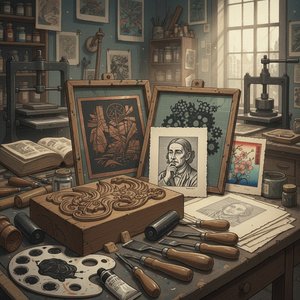
The Enduring Legacy of Printmaking: Techniques, Themes & Artistic Innovation Across Centuries
Explore the rich history of printmaking with OriginalUniqueArt. Discover techniques from intaglio to lithography, learn about collecting valuable prints & find museum-quality reproductions. Expert insights for art enthusiasts and collectors.

Golden Glow: How to Use Metallic Gold Artworks to Elevate Your Home Decor with Timeless Luxury
Discover how to elevate your home with the timeless elegance of metallic gold artworks. From sculptural metal pieces to gilded oil paintings, learn expert interior design tips for integrating luxurious gold accents into your space with sophistication and grace.

Giclée Prints: Archival Quality & Aesthetic Nuances for the Discerning Collector
Explore the world of giclée prints with OriginalUniqueArt. Learn about archival quality, aesthetic nuances & investment potential. Expert guidance for discerning art collectors seeking museum-quality reproductions and lasting value.

Echoes of Time: Exploring the Enduring Appeal & Historical Context of Vintage Art Prints
Explore the captivating world of vintage art prints! Discover their history, collecting tips & enduring appeal. Expert insights on chromolithography and building a legacy collection with OriginalUniqueArt.

