

 Katso seinällä
 Lähetä
 Jaa
Jaa
 Tarkemmat tiedot
 Opas
Opas

 Lataa kuva
 Samanlaisia kohteita
 Röntgenkuvaus
 Diaesitys
 Tilastot
Three Trees near Thixendale

 Lue lisää
Tällä sivulla esitettyä taideteosta suojaa tekijänoikeuslaki, mikä tarkoittaa, ettemme voi laillisesti luoda tai myydä täsmälleen samanlaista jäljennöstä. Tämä suoja toteutetaan kansainvälisten sopimusten, kuten esimerkiksi Berne-konventio ja kansallisilla laeilla, mukaan lukien niillä määritellyt Yhdysvaltain tekijänoikeuslaki – Luku 17. Kaikki oikeudet pidätetään. Luvaton kopiointi tai jäljittely on kielletty.
Tämä menetelmä noudattaa täysin tekijänoikeussäännöksiä, sillä se ei sisällä suojatun taideteoksen kopioimista tai jäljentämistä. Sen sijaan kyseessä on luova uudelleentulkinta – uusi maalaus, joka ammentaa vaikutteita alkuperäisestä, mutta ei ole sen identtinen kopio.
Giclée- ja taideprintit
Museolaatuisia giclée- tai kankaitaulun tulosteita nopealla tuotannolla ja joustavilla viimeistelyvaihtoehdoilla. ( Tilaa käsinmaalattu jäljennös Siirry digitaaliseen kuvaan)




P118B €10

P118H €10

P118W €10

P438Z €10

P508JH €12

P508YH €12

P805H €10

P805Z €10

P919BZ €10

P919G €10

P919XJ €10

P959ZH €10

P968JZ €12

W106C €8

W218G €10

W218JH €8

W218Y €10

W307PJ €10

W316G €10

W316PJ €8

W316Y €10

W398PJ €8

W4111J €10

W500HY €15

W500JH €15

W692G €12

W849H €8

W940BG €15

W953PJ €8




Valitse valmiista mitoistamme sellaiset, jotka vastaavat teoksen alkuperäisiä mittasuhteita.

Voit syöttää omat mitat sopiaksesi tiettyyn kehykseen tai tilaan. Jos valittu koko ei vastaa alkuperäisen kuvan mittasuhteita, rajaamme teosta tai laajennamme kuvaa peilatulla tai yhtenäisellä reunalla. Digitaalinen mallikuva lähetetään hyväksyttäväksi ennen tuotannon aloittamista.
Huomaathan, että näytöllä näkyvä esikatselu ei vastaa lopullista rajausta tai laajennusta. Vain mallikuva näyttää lopullisen sommittelun tarkasti.
Vaikka räätälöityjä kokoja on saatavilla, suosittelemme valitsemaan mitat valmiista listasta alkuperäisten mittasuhteiden säilyttämiseksi.
Maailmanlaajuinen toimitus () 2 viikossa tavallisen 4–5 viikon sijaan. (11 lokakuu)

Ilmainen pikatoimitus ympäri maailman

Korkealaatuinen pellavakangas

Kattava kuljetusvakuutus

Tulliveron palautustakuu

Takuu täydellisestä värien vastaavuudesta

100 päivän palautusoikeus valmistusvirhetapauksissa

100% rahat takaisin -takuu

Määräalennus saatavilla
 Lasivaihtoehto on saatavilla vain alle 110 cm kokoisille teoksille

Three Trees near Thixendale
Giclée- ja taideprintit
Replikaatin koko
-


Kokonaishinta
€ 69
David Hockney’s “Three Trees near Thixendale”: A Celebration of Light and Landscape
The Yorkshire countryside holds a particular fascination for British artist David Hockney, whose seminal painting "Three Trees near Thixendale" embodies this enduring connection to place. Completed in 1983, the artwork isn't merely a depiction of trees; it’s an immersive experience rendered in Hockney’s signature style—a bold departure from traditional landscape painting that prioritizes luminosity and simplification.Style and Technique: Embracing Optical Illusion
Hockney’s approach distinguishes itself through his masterful manipulation of optical illusion, a technique he honed throughout his prolific career. Rather than striving for photographic realism, he employs a vibrant palette dominated by yellows and oranges—colors chosen deliberately to capture the fleeting effects of sunlight filtering through the branches. The trees themselves are rendered in broad, gestural strokes, reducing their complexity to essential forms while retaining an undeniable sense of dynamism. This simplification isn’t about diminishing beauty; it's about distilling it down to its purest essence, allowing viewers to perceive the underlying structure and rhythm of the scene. Hockney famously described his method as “painting with light,” a statement that encapsulates the core philosophy guiding this remarkable piece.Historical Context: Postmodern Reflections on Tradition
“Three Trees near Thixendale” emerged during a pivotal moment in British art history—the rise of postmodernism. Rejecting the grand narratives and stylistic conventions of Modernism, Hockney embraced experimentation and challenged established artistic hierarchies. The painting’s influence can be seen in subsequent landscape artists who sought to capture atmospheric conditions with comparable boldness and expressive freedom. It stands as a testament to Hockney's unwavering commitment to pushing boundaries while simultaneously honoring the legacy of Romantic landscape painters like Turner—a dialogue between past and present that underscores the enduring power of observation and artistic intuition.Symbolism: The Trees as Vessels of Memory
Beyond its aesthetic qualities, “Three Trees near Thixendale” resonates with deeper symbolic meanings. Trees have long been associated with resilience, growth, and connection to the natural world—themes central to Hockney’s broader artistic vision. In this specific instance, the three trees may represent interconnectedness and harmony within the landscape, mirroring Hockney's own belief in capturing fleeting moments of beauty before they vanish. Furthermore, the painting evokes memories of Yorkshire summers—a nostalgic yearning for simpler times and a celebration of the enduring spirit of place.Emotional Impact: A Moment Frozen in Time
Ultimately, “Three Trees near Thixendale” succeeds in transporting viewers to the Yorkshire countryside, capturing not just what is seen but also how it feels. The radiant colors evoke warmth and optimism, while the expressive brushstrokes convey a sense of immediacy and spontaneity. It’s a painting that invites contemplation—a reminder that true beauty lies in embracing imperfection and appreciating the transformative power of light. This artwork continues to inspire collectors and interior designers alike who seek to infuse their spaces with a touch of Hockney's distinctive vision, ensuring that “Three Trees near Thixendale” remains a cherished emblem of British landscape art for generations to come.Kysymykset ja vastaukset
Mistä voin ostaa käsin maalatun jäljennöksen teoksesta David Hockney:n "Three Trees near Thixendale"?
David Hockney:n "Three Trees near Thixendale"-teoksen käsinmaalattuja kopioita myydään tämä verkkosivusto-sivustolla: käsinmaalattu öljyvärireproduktio pellavakankaalle, tilattavissa osoitteesta tämä sivu.
Minkä kokoisena minun kannattaisi tulostaa "Three Trees near Thixendale" huoneeseeni?
Living Room-tilaan "Three Trees near Thixendale"-teokselle suositellaan Large-kokoista tulostetta.
Mihin sävyyn "Three Trees near Thixendale" kallistuu?
Teoksen David Hockney:n "Three Trees near Thixendale" hallitseva sävy on Green to Violet Spectrum. Tämä sävy on paletin perussävy.
Mihin suuntaukseen ja mihin aikakauteen David Hockney:n "Three Trees near Thixendale" sijoittuu?
David Hockney:n "Three Trees near Thixendale" kuuluu Contemporary Realism-suuntaukseen ja sijoittuu tekijänsä Modernismi aikakaudelle.
Käyttääkö teos David Hockney:n "Three Trees near Thixendale" voimakkaita kontrasteja vai pehmeitä harmonioita?
Teoksen David Hockney:n "Three Trees near Thixendale" värianalyysi osoittaa Balanced kontrastin ja Strong Color Unity harmonian.
Kuka on luonut "Three Trees near Thixendale"?
Teoksen "Three Trees near Thixendale" taiteilija on David Hockney. Teos on luetteloitu David Hockney nimellä.
Onko teos "Three Trees near Thixendale" saatavilla taidepainoksena?
Tilataksesi painoksen teoksesta David Hockney:n "Three Trees near Thixendale", voit tehdä tilauksen suoraan osoitteessa tämä sivu: taideteosvedos puuvillakangas- tai arkistoluokan kankaalle painettuna.
Taiteilijan elämäkerta
A Life Painted in Light: The World of David Hockney
David Hockney, born July 9, 1937, in Bradford, England, is more than simply a painter; he’s a visual polymath whose career has spanned painting, drawing, printmaking, stage design, and photography. His story begins amidst the grit and determination of Bradford, a landscape that instilled within him a keen observational eye, even as his father, Kenneth Hockney, fostered a spirit of independent thought through conscientious objection during World War II. This early environment shaped a young artist who would consistently challenge conventions and forge his own path. Formal education at Wellington Primary School and Bradford Grammar School laid the foundation for a career that would redefine British art in the 20th and 21st centuries, culminating in studies at Bradford College of Art and later, the prestigious Royal College of Art in London. It was during these formative years that Hockney began to articulate a unique artistic voice, one that blended Pop sensibilities with a distinctly British perspective.The Rise of a Pop Icon and Beyond
The 1960s witnessed Hockney’s ascent as a pivotal figure within the burgeoning Pop Art movement. However, unlike some contemporaries who wholeheartedly embraced American commercial culture, Hockney brought a uniquely British sensibility to the genre. His work exploded with vibrant color and bold lines, depicting scenes that were both familiar and subtly subversive. A Bigger Splash (1966), perhaps his most iconic early piece, encapsulates this perfectly – a seemingly simple depiction of a swimming pool becomes a meditation on Californian leisure, artifice, and the very act of seeing. This wasn’t merely representation; it was an exploration of how we perceive reality. Critics noted Hockney's masterful use of color theory, mirroring developments in American Pop Art while simultaneously retaining a distinctly British aesthetic rooted in Yorkshire landscapes. His double portraits, like American Collectors (Fred and Marcia Weisman), demonstrate his remarkable ability to capture not just likeness but also the essence of personality and relationship—a technique that foreshadowed later explorations into psychological portraiture. Hockney’s stylistic choices reflected a broader trend toward simplification and abstraction within British art during this period.Experimentation, Innovation, and The Rescue Of Painting
Hockney's artistic curiosity has never been confined to a single medium. Throughout his career, he relentlessly experimented with new technologies and approaches. From his early embrace of lithography and etching to his later explorations of photography – particularly his use of Polaroid composites in the 1980s – Hockney consistently pushed the boundaries of what art could be. He famously declared painting wasn’t dead but needed “rescuing” from its own conventions, leading him to develop innovative techniques like perspective distortions and fragmented viewpoints. This desire to revitalize painting led to ambitious projects such as Pearblossom Hwy., 11–18th April 1986, a complex photomontage that challenged traditional notions of space and representation—a bold statement against the prevailing artistic trends of the time. His stage designs for opera, including sets for Mozart's The Magic Flute and Stravinsky’s The Rake’s Progress, further demonstrate his versatility and ability to translate his visual language into a different artistic realm. Hockney’s meticulous attention to detail combined with daring compositional choices cemented his reputation as one of Britain’s most inventive artists.Recognition, Legacy, and Enduring Influence
David Hockney’s contributions to the art world have been widely recognized throughout his illustrious career. He was appointed Order of the Companion of Honour (CH) in 2018, a testament to his profound impact on British culture—a prestigious honor bestowed upon him for his lifetime achievements. Prior to that, he was elected a Fellow of the Royal Society (FRS) in 2003 and received the Laureate of the Praemium Imperiale for Painting in 2000—a globally acclaimed award recognizing excellence in artistic creation. His works are held in major museum collections worldwide, ensuring his art continues to inspire new generations. Hockney’s influence extends beyond the visual arts; he has become a cultural icon, celebrated for his wit, intelligence, and unwavering commitment to artistic exploration. He remains an active force in the art world, continually challenging expectations and inspiring artists across disciplines—a figure whose legacy will undoubtedly endure for decades to come.Notable Works
- A Bigger Splash (1966): An iconic image of Californian leisure, showcasing Hockney’s masterful use of color and composition.
- Portrait of an Artist (Pool with Two Figures) (1970–1): A seminal work exploring the relationship between artist and subject, characterized by airy space and simplified forms.
- American Collectors (Fred and Marcia Weisman) (1968): Demonstrates Hockney’s ability to capture personality and relationships through portraiture—a technique that foreshadowed later explorations into psychological representation.
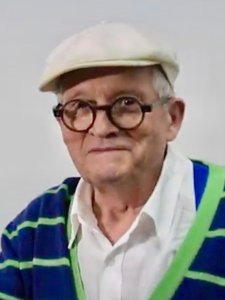
David Hockney
1937 - , Englanti
Tietoa taiteilijasta
- Artistic Movement Or Style: Pop Art
- Artists Or Movements Influenced By This Artist: ['Pauline Boty']
- Artists Who Influenced This Artist: ['Francis Bacon']
- Date Of Birth: 9 heinäkuuta 1937
- Full Name: David Hockney
- Nationality: Brittiläinen
- Notable Artworks:
- A Bigger Splash
- Portrait of an Artist
- We Two Boys Together
- Place Of Birth: Bradford, UK
Aiheeseen liittyvät artikkelit

Arboreal Echoes: A Historical & Artistic Exploration of Trees in Painting
Explore the rich history of trees in painting! Discover symbolism, Romantic masterpieces by Caspar David Friedrich & beyond. A curated journey for art enthusiasts.
David Hockney: A Retrospective on Pop Art's Chronicler of Light, Space, and the Everyday
Explore the life & work of David Hockney, Pop Art's master chronicler. Discover his iconic paintings, Californian landscapes, and lasting influence on modern art. Expert analysis for collectors.

Romanttisen maisemamaalauksen mestariteokset: Taidetta ja inspiraatiota kotiin
Uppoudu romanttisen maisemamaalauksen maailmaan! Tutustu Caspar David Friedrichin, Turnerin ja muiden mestareiden ikonisiin teoksiin. Löydä inspiraatiota kotiisi taiteen avulla OriginalUniqueArt.comista – laadukkaat taideprintit ja sisustusideoita.

Paul Cézannen 25 mestariteosta: Taidetta kotiisi – OriginalUniqueArt.com
Tutustu Paul Cézannen 25 vaikuttavinta mestariteosta! Postimpressionismin huipputeoksia, still life -maalauksia ja ikonisia maisemia. Löydä taiteen tarinat ja inspiroi kotisi sisustusta OriginalUniqueArt.com:ssa. Tutki kokoelma verkossa!

Evocations of Place: A Historical Journey Through Landscape Art
Explore the rich history of landscape art with OriginalUniqueArt. Discover renowned artists, movements like Impressionism & Romanticism, and expert guidance for collecting timeless pieces. Find your perfect serene escape today!


