

 Katso seinällä
 Lähetä
 Jaa
Jaa
 Tarkemmat tiedot
 Opas
Opas

 Lataa kuva
 Samanlaisia kohteita
 Röntgenkuvaus
 Diaesitys
 Tilastot
Tectonic,
 Oil On Canvas
- WallArt
- Abstract Expressionism
 1993
1993 191.0 x 101.0 cm
 Serpentine Galleries
 Lue lisää
Tällä sivulla esitettyä taideteosta suojaa tekijänoikeuslaki, mikä tarkoittaa, ettemme voi laillisesti luoda tai myydä täsmälleen samanlaista jäljennöstä. Tämä suoja toteutetaan kansainvälisten sopimusten, kuten esimerkiksi Berne-konventio ja kansallisilla laeilla, mukaan lukien niillä määritellyt Yhdysvaltain tekijänoikeuslaki – Luku 17. Kaikki oikeudet pidätetään. Luvaton kopiointi tai jäljittely on kielletty.
Tämä menetelmä noudattaa täysin tekijänoikeussäännöksiä, sillä se ei sisällä suojatun taideteoksen kopioimista tai jäljentämistä. Sen sijaan kyseessä on luova uudelleentulkinta – uusi maalaus, joka ammentaa vaikutteita alkuperäisestä, mutta ei ole sen identtinen kopio.
Giclée- ja taideprintit
Museolaatuisia giclée- tai kankaitaulun tulosteita nopealla tuotannolla ja joustavilla viimeistelyvaihtoehdoilla. ( Tilaa käsinmaalattu jäljennös Siirry digitaaliseen kuvaan)




P118B €10

P118H €10

P118W €10

P438Z €10

P508JH €12

P508YH €12

P805H €10

P805Z €10

P919BZ €10

P919G €10

P919XJ €10

P959ZH €10

P968JZ €12

W106C €8

W218G €10

W218JH €8

W218Y €10

W307PJ €10

W316G €10

W316PJ €8

W316Y €10

W398PJ €8

W4111J €10

W500HY €15

W500JH €15

W692G €12

W849H €8

W940BG €15

W953PJ €8




Valitse valmiista mitoistamme sellaiset, jotka vastaavat teoksen alkuperäisiä mittasuhteita.

Kirjoita tarvitsemasi leveys ja korkeus, jotta tuloste sopii kehyskokoon tai seinällesi. Tulostetta voidaan vain leikata, sitä ei voi koskaan tehdä suuremmaksi kuin alkuperäinen kuva, joten eri muotoinen koko aiheuttaa osan kuvasta katoamisen. Lähetämme sinulle digitaalisen mallikuvan hyväksyttäväksi ennen kuin aloitamme tulostuksen. Tällä sivulla näkyvä kuva ei näytä lopullista leikkausta — vain mallikuva näyttää sen.
Maailmanlaajuinen toimitus () 2 viikossa tavallisen 4–5 viikon sijaan. (26 lokakuu)

Ilmainen pikatoimitus ympäri maailman

Korkealaatuinen pellavakangas

Kattava kuljetusvakuutus

Tulliveron palautustakuu

Takuu täydellisestä värien vastaavuudesta

100 päivän palautusoikeus valmistusvirhetapauksissa

100% rahat takaisin -takuu

Määräalennus saatavilla
 Lasivaihtoehto on saatavilla vain alle 110 cm kokoisille teoksille

Tectonic,
Giclée- ja taideprintit
Replikaatin koko
-


Kokonaishinta
€ 70
A Fractured Cosmos: Unveiling the Dynamic Vision of Zaha Hadid’s “Tectonic”
Zaha Hadid's "Tectonic," a striking acrylic and watercolour study on cartridge paper from 1993, isn’t merely a depiction of architectural forms; it’s an embodiment of tectonic forces – the very processes that shape our planet. Born amidst the intellectual currents of Baghdad and nurtured by a family steeped in both artistic sensibility and political influence, Hadid's early life instilled within her a profound fascination with spatial relationships and the interplay between structure and movement. This piece, created during a pivotal period of her career, reveals a nascent exploration of abstraction that would later define her revolutionary architectural style – a style characterized by fluid geometries, dynamic curves, and an unapologetic embrace of the unexpected.
The artwork immediately commands attention with its monochromatic palette, primarily shades of grey ranging from near-white to deep charcoal. This deliberate restraint serves not to diminish the piece’s impact, but rather to amplify the underlying dynamism. Geometric shapes – cubes, rectangles, and subtly curved elements – are arranged in a deliberately asymmetrical composition, reminiscent of a geological cross-section or perhaps even a stylized map of tectonic plates. The central structure, resembling a fragmented bicycle frame, anchors the image while radiating outwards with other forms, creating a sense of controlled chaos that mirrors the complex processes occurring within the Earth’s crust. It's a visual representation of forces in constant motion, a testament to Hadid’s fascination with the underlying mechanics of both architecture and nature.
Deconstructing Form: The Influence of Suprematism and Malevich
Hadid’s approach to “Tectonic” is deeply rooted in her early artistic explorations. Inspired by the pioneering Russian avant-garde, particularly Kazimir Malevich's Suprematist paintings, she sought a way to move beyond traditional architectural representation. Malevich’s emphasis on pure geometric forms and their spatial relationships profoundly influenced Hadid’s thinking, encouraging her to explore abstraction as a means of conveying complex ideas about space and movement. The piece echoes this influence through its simplified shapes and the deliberate distortion of perspective – a departure from conventional realism. This deconstruction of form wasn't simply an aesthetic choice; it was a conscious effort to reveal the underlying structure and energy within the depicted subject matter.
The use of acrylic and watercolour paints contributes significantly to the artwork’s textural quality. The layering and blending create subtle tonal variations, suggesting depth without resorting to traditional shading techniques. While the surface appears relatively smooth, a closer examination reveals a delicate balance between precision in rendering the geometric shapes and an expressive quality in the flowing lines. This combination of technical skill and artistic intuition is characteristic of Hadid’s work – a seamless integration of logic and emotion.
Symbolism of Earth's Processes
Beyond its formal qualities, “Tectonic” resonates with powerful symbolic meaning. The fragmented forms can be interpreted as representations of tectonic plates shifting and colliding, mirroring the geological processes that shape our planet. The swirling lines evoke a sense of dynamism and transformation, suggesting the constant flux of energy within the Earth’s interior. The central bicycle frame, a recurring motif in Hadid's work, may symbolize human ingenuity and its interaction with the natural world – a reminder of humanity’s capacity to both create and be shaped by forces beyond our control. The muted color palette reinforces this connection to the earth, evoking images of stone, sediment, and the vastness of geological time.
Furthermore, the artwork's ambiguity invites multiple interpretations. It could be seen as an exploration of form, space, and movement, or a meditation on themes of chaos and order, creation and destruction. Ultimately, “Tectonic” is a testament to Hadid’s visionary approach to architecture – a bold and innovative work that continues to inspire awe and provoke thought.
Kysymykset ja vastaukset
Voinko käyttää lisättyä todellisuutta nähdäkseni teoksen Zaha Hadid:n "Tectonic," omassa huoneessani?
Teoksen Zaha Hadid:n "Tectonic," voi esikatsella omalla seinällään teoksen AR-esikatselu -sivun kautta käyttämällä lisättyä todellisuutta yhteensopivalla laitteella.
Mihin vaiheeseen Zaha Hadidin kehityksestä "Tectonic," edustaa?
"Tectonic," kuuluu Zaha Hadid uran Late Period-vaiheeseen. Tämä luokittelu yhdistää teoksen taiteilijan kehitysvaiheeseen.
Minkä tunteen kanssa "Tectonic," yhdistetään?
Teoksen Zaha Hadid:n "Tectonic," tunnetila on määritelty olevan Energetic. Se tiivistää teoksen välittämän tunnelman.
Taiteilijan elämäkerta
Vallankumous: Zaha Hadidin elämä ja perintö
Bagdadissa, Irakissa, vuonna 1950 syntynyt Dame Zaha Mohammad Hadid nousi yhdeksi aikamme merkittävimmistä arkkitehtonisista voimista. Hänen matkansa ei alkanut taiteellisen kasvatuksen perinteisten rajojen sisältä, vaan stimuloivassa älyllisessä ympärikulmassa; hänen isänsä, Muhammad al-Hajj Husayn Hadid, oli menestynyt teollisuusyrittäjä ja poliitikko, kun taas hänen äitinsä, Wajiha al-Sabunji, vaali intohimoa taiteeseen. Tästä pragmaattisuuden ja luovuuden ainutlaatuisesta sekoituksesta muovautui nuoren Zahan maailmankuva. Vaikka hän aloitti opintonsa matematiikan parissa Beirutin amerikkalaisessa yliopistossa, hän huomasi pian todellisen kutsumuksensa olevan tilasuunnittelun piirissä. Tämä johti hänet Lontooseen vuonna 1972, jossa hän aloitti opintonsa Architectural Association School of Architecture -arkkitehtikoulussa. Juuri täällä, vaikutusvaltaisten hahmojen, kuten Rem Koolhaasin, Elia Zenghelisin ja Bernard Tschumin ohjauksessa, Hadidin radikaali arkkitehtoninen ajattelu alkoi ottaa muotonsa. Nämä mentorit kannustivat kyseenalaistamaan vakiintuneita normeja ja loivat ympäristön, jossa kokeilu ja innovaatio kukoistivat – perustan, jonka päälle hän rakensi poikkeuksellisen uransa.Konventioiden purkaminen: Tyyli ja vaikutteet
Zaha Hadid ei ainoastaan suunnitellut rakennuksia; hän veisti kokemuksia. Dekonstruktivismin uranuurtajana häntä juhlitaan laajasti, ja hänen työnsä hylkäsi rohkeasti jäykät geometriat ja perinteiset muodot, jotka olivat pitkään määritelleet arkkitekhtonista toimintaa. Sen sijaan hän syleili fragmentaatiota, dynaamisia kaaria ja liikkeen tuntua, luoden rakenteita, jotka näyttivät uhmaavan itse painovoimaa. Hänen suunnitelmansa eivät olleet pelkkiä toiminnallisia tiloja; ne olivat taiteellisia lausuntoja – muodon ja energian voimakkaita ilmauksia. 20. vuosisadan alun avantgarde-liikkeiden, erityisesti suprematismin ja Kazimir Malevitšin työn, vaikutus on selvästi nähtävissä hänen varhaisissa tutkimuksissaan. Itse asiassa hänen valmistumisprojektinsa ”Malevich’s Tektonik” toimi voimakkaana osoituksena hänen sitoutumisestaan abstraktiin periaatteeseen ja epäsuoraviivaisiin muotoihin. Mutta Hadid ei ollut pelkkä jäljittelijä; hän yhdisti nämä vaikutteet omaan ainutlaatuiseen visioonsa, vapauttaen arkkitehtonista geometriaa ja antaen sille uuden ekspressiivisen identiteetin. Ratkaisevaa oli se, etteivät maalaaminen ja piirtäminen olleet Hadidille vain valmistavia työkaluja – ne olivat olennainen osa itse suunnitteluprosessia, mahlistaen hänelle tilallisten konseptien tutkimisen ja monimutkaisten muotojen visualisoinnin ennen kuin ne toteutuivat betonina ja teräksenä.Maamerkkiteokset: Globaali vaikutus
Hadid perusti oman toimistonsa Lontooseen vuonna 1980, mutta tunnustus ei tullut helposti. Hänen varhaisia suunnitelmiaan pidettiin usein liian radikaaleina ja haastavina vallitsevaan arkkitehtuuriseen ilmapiiriin nähden. Hän kuitenkin päätti periksi, ja vähitellen hänen innovatiivinen lähestymistapansa alkoi saada jalansijaa. Hong Kong Peak Club (1983) oli varhainen näyte hänen nousevasta tyylistään, ennustaen upeita rakenteita, joita seurasi. Seuraavien vuosikymmenten aikana Hadidin toimisto suoritti sarjan maamerkkiprojekteja, jotka määritelivät uudelleen kaupunkimaisemia ympäri maailmaa. Näihin kuuluivat muun muassa dynaaminen London Aquatics Centre vuoden 2012 olympialaisiin, todiste hänen kyvystään luoda tiloja, jotka inspiroivat liikettä ja urheilullisuutta; Broad Art Museum Michiganissa, USA:ssa, sen silmiinpistävällä poimutetulla ruostumattomasta teräksestä valmistetulla julkisivulla; MAXXI – 21. vuosisadan taiteen kansallinen museo Roomassa, Italiassa, joka on volyymien ja tyhjyyden monimutkainen vuorovaikutus; Guangzhou Opera House Kiinassa, joka muistuttaa kahta sileää kiveä Pearl-joella; sekä Heydar Aliyev Center Bakussa, Azerbaidžanissa, henkeäsalpaava aaltomainen rakenne, joka ilmentää hänen tunnusomaista kaarevaa estetiikkaansa. Nämä projektit eivät olleet vain rakennuksia – ne olivat kulttuurisia ikoneita, jotka työnsivät arkkitehtonisten mahdollisuuksien rajoja.Tunnustus ja kestävä vaikutus
Zaha Hadidille uran aikana myönnetyt kunnianosoitukset ovat todiste hänen poikkeuksellisesta lahjakkuudestaan ja pysyvästä vaikutuksestaan. Hän sai lukuisia palkintoja, joista huipentumana oli Pritzker-arkkitehtuuripalkinto vuonna 2004 – arkkitehtuurin korkein kunnianosoitus – tehden hänestä ensimmäisen naisen, joka sai tämän arvostetun tunnustuksen yksilönä. Muita kunnianosoituksia olivat Stirling Prize (myönnetty kahdesti, vuosina 2010 ja 2011) sekä postuumisti myönnetty Royal Gold Medal Royal Institute of British Architectsilta vuonna 2016, mikä oli jälleen historiallinen ensi nainen. Arkkitehtonisten saavutustensa lisäksi Hadid rikkoi esteitä naisarkkitehtina historiallisesti miesvaltaisella alalla, tullen inspiraatioksi lukemattomille tuleville suunnittelijoille. Hänen perintönsä ulottuu pidemmälle kuin hänen luomansa fyysiset rakenteet; se piilee hänen muuntavassa vaikutuksessaan arkkitehtoniseen ajatteluun ja käytäntöön. Jopa hänen ennenaikaisen kuolemansa jälkeen vuonna 2016, Zaha Hadid Architects jatkaa toimintaansa kantaen hänen visioitaan ja periaatteitaan järkähtämättömällä omistautumisella. Hänen tutkimuksensa arkkitehtuurin ulkopuolisiin taiteen muotoihin – kuten teokset ”Tatlin Tower and Tectonic” – osoittaa ainutlaatuista synergiaa suunnittelun asiantuntemuksen ja taiteellisen ilmaisun välillä. Zaha Hadidin rakennukset seisovat pysyvinä monumentteina hänen innovatiiviselle hengelleen, muovaten rakennettua ympäristöä sukupolviksi eteenpäin.Rakennusten tuolla puolen: Pysyvä taiteellinen perintö
Vaikka hänet tunnetaan ensisijaisesti arkkitehtonisista saavutuksistaan, Zaha Hadidin luova visio ulottui paljon pidemmälle kuin rakennussuunnittelun piiriin. Hän tutki jatkuvasti taiteellisia välineitä, kuten maalausta ja tuotesuunnittelua, nähden ne eivät erillisinä aloina vaan toisiinsa kytkeytyneinä ilmauksina ainutlaatuisesta esteettisestä herkkyydestään. Hänen maalauksensa, joille on tyypillistä dynaamiset sommitelmat ja abstraktit muodot, toimivat käsitteellisinä tutkimuksina, jotka antoivat suoraa pohjaa hänen arkkitehtonisille projekteilleen. Nämä teokset eivät olleet pelkkiä luonnoksia tai esityksiä; ne olivat olennainen osa ideoidensa kehittämistä, antaen hänelle mahdollisuuden kokeilla tilasuhteita ja visuaalisia tekstuureja ennen niiden kääntämistä kolmiulotteisiksi rakenteiksi.- Varhaiset maalaukset: Hänen varhaiset maalauksensa, kuten ”Orange Explosion on White”, osoittavat kiehtoutumista fragmentoituneita muotoja ja eloisia värejä kohtaan, ennustaen dekonstruktivistisia periaatteita, jotka määrittelivät hänen arkkitehtonista tyyliään.
- Suunnitteluesineet: Hadid ryhtyi myös tuotesuunnittelun pariin luoden huonekaluja, valaisimia ja muita esineitä, jotka kaikuivat hänen rakennustensa sulavia linjoja ja veistoksellisia laatua. Chanel Mobile Art Pavilion Tokiossa on erinomainen esimerkki tästä monialaisesta lähestymistavasta, näyttäen hänen kykynsä kääntää arkkitehtoniset konseptit kannettavaksi, upottavaksi ympäristöksi.
- Käsitteelliset tutkimukset: Teokset kuten ”Interpretation of Tatlin” paljastavat hänen sitoutumisensa historiallisiin avantgarde-liikkeisiin ja halunsa tulkita modernistisia periaatteita uudelleen nykykontekstissa.
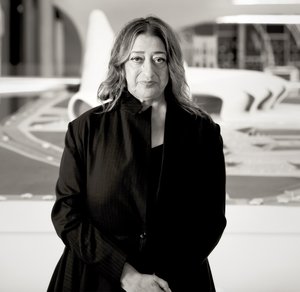
Zaha Hadid
1950 - 2016 , Irak
Tietoa taiteilijasta
- Artistic Movement Or Style: Dekonstruktivismi
- Artists Or Movements Influenced By This Artist: ['Suprematism']
- Artists Who Influenced This Artist:
- Kazimir Malevich
- Rem Koolhaas
- Date Of Birth: 31. lokakuuta 1950
- Date Of Death: 31. maaliskuuta 2016
- Full Name: Zaha Mohammad Hadid
- Nationality: Irakilainen ja brittiläinen
- Notable Artworks: ['Peak Club']
- Place Of Birth: Bagdad, Irak
Aiheeseen liittyvät artikkelit

Wassily Kandinskin 25 mestariteosta: Värien ja muodon syvä maailma | OriginalUniqueArt
Tutustu Wassily Kandinskin 25 vaikuttavinta teosta! Uppoudu abstraktin taiteen maailmaan, värien symboliikkaan ja modernin ekspressionismin historiaan. Löydä inspiraatiota kodin sisustukseen OriginalUniqueArt.com:ista – laadukkaat taideprintit ja reproduktiot.

Beyond Form & Color: Geometric Abstraction's Evolution in 20th/21st Century Art
Explore the evolution of geometric abstraction from Cubism to contemporary art. Discover key artists like Malevich & Mondrian, investment insights, and expert collecting advice at OriginalUniqueArt.

Neo-Abstract Art: The High-Impact Evolution of Modern Visual Energy and Geometric Sophistication
Discover the power of Neo-Abstract art. Explore how bold geometric forms and high-impact visual energy are redefining modern design. Learn to curate sophisticated, high-energy spaces with the latest trends in contemporary abstraction and structural color.
Beyond Form & Color: Geometric Abstraction's Enduring Legacy in Art History
Explore the captivating world of geometric abstraction! Discover its origins, key artists like Malevich & Mondrian, and why this movement remains highly valued by art collectors today. Expert insights at OriginalUniqueArt.

Geometrisen abstraktion mestariteokset: Taidetta kotiin OriginalUniqueArtilta
Tutustu geometrisen abstraktion 10 mestariteokseen! Piet Mondrian, Kandinsky ja muut taiteilijat muovasivat modernin taiteen historiaa. Löydä inspiraatiota kotiisi OriginalUniqueArtilta – laadukkaat taideprintit ja sisustusehdotukset odottavat. Tutki kokoelma verkossa!