
 Esikatselu
 Jaa teos
 Jaa
Jaa
 Tiedot
 Opas
Opas

 Lataa kuva
 Samanlaisia kohteita
 Röntgenkuvaus
 Diaesitys
 Kysymykset ja vastaukset
 Tilastot
Metropolis

- 239.0 x 548.0 cm


 Lue lisää
Tällä sivulla esitettyä taideteosta suojaa tekijänoikeuslaki, mikä tarkoittaa, ettemme voi laillisesti luoda tai myydä täsmälleen samanlaista jäljennöstä. Tämä suoja toteutetaan kansainvälisten sopimusten, kuten esimerkiksi Berne-konventio ja kansallisilla laeilla, mukaan lukien niillä määritellyt Yhdysvaltain tekijänoikeuslaki – Luku 17. Kaikki oikeudet pidätetään. Luvaton kopiointi tai jäljittely on kielletty.
Tämä menetelmä noudattaa täysin tekijänoikeussäännöksiä, sillä se ei sisällä suojatun taideteoksen kopioimista tai jäljentämistä. Sen sijaan kyseessä on luova uudelleentulkinta – uusi maalaus, joka ammentaa vaikutteita alkuperäisestä, mutta ei ole sen identtinen kopio.
Giclée- ja taideprintit
Museolaatuisia giclée- tai kankaitaulun tulosteita nopealla tuotannolla ja joustavilla viimeistelyvaihtoehdoilla. ( Osta käsinmaalattu taideteos Siirry digitaaliseen kuvaan)




P118B €10

P118H €10

P118W €10

P438Z €10

P508JH €12

P508YH €12

P805H €10

P805Z €10

P919BZ €10

P919G €10

P919XJ €10

P959ZH €10

P968JZ €12

W106C €8

W218G €10

W218JH €8

W218Y €10

W307PJ €10

W316G €10

W316PJ €8

W316Y €10

W398PJ €8

W4111J €10

W500HY €15

W500JH €15

W692G €12

W849H €8

W940BG €15

W953PJ €8




Valitse valmiista mitoistamme sellaiset, jotka vastaavat teoksen alkuperäisiä mittasuhteita.

Syötä tarvitsemasi leveys ja korkeus, jotta tuloste sopii kehyksiisi tai seinällesi. Tulostetta voidaan vain leikata, sitä ei voida koskaan suurentaa alkuperäistä kuvaa suuremmaksi, joten eri muotoinen koko aiheuttaa osan kuvasta katoamisen. Lähetämme sinulle digitaalisen mallikuvan hyväksyttäväksi ennen kuin aloitamme tulostuksen. Tällä sivulla näkyvä kuva ei näytä lopullista rajausta — vain mallikuva näyttää sen.
Maailmanlaajuinen toimitus () 2 viikossa tavallisen 4–5 viikon sijaan. (4 marraskuu)

Ilmainen pikatoimitus ympäri maailman

Korkealaatuinen pellavakangas

Kattava kuljetusvakuutus

Tulliveron palautustakuu

Takuu täydellisestä värien vastaavuudesta

100 päivän palautusoikeus (vain valmistusvirheet)

100% rahat takaisin -takuu

Määräalennus tarjolla
 Lasivaihtoehto on saatavilla vain alle 110 cm kokoisille teoksille

Metropolis
Giclée- ja taideprintit
Replikaatin koko
-


Kokonaishinta
€ 72
A City’s Fever Dream: Zaha Hadid's ‘Metropolis’
Zaha Hadid’s “Metropolis,” painted in 1988, isn’t merely a cityscape; it’s a visceral representation of urban anxiety and the relentless expansion of modern life. Created during a pivotal period of her architectural career – a time when she was forging a radical new aesthetic that defied conventional spatial thinking – the painting captures a frenetic energy rarely found in traditional cityscapes. It's a work brimming with dynamism, a fever dream rendered in acrylic on canvas, and a surprisingly intimate reflection on the complexities of urban existence.
Hadid’s early artistic explorations were deeply rooted in mathematics and geometry, disciplines she approached with an almost obsessive precision. This intellectual rigor is immediately apparent in “Metropolis.” The city isn't presented as a harmonious whole but rather as a fractured mosaic of interconnected villages, each pulsating with its own distinct rhythm. These individual units – rendered in varying shades of red, ochre, and yellow – seem to be vying for dominance, creating a sense of chaotic competition. The River Thames, a vital artery of London, is depicted as a vibrant orange streak, acting as both a divider and a connector between these disparate zones.
Deconstructing the Metropolis: Style and Technique
The painting’s style is undeniably deconstructivist, anticipating many of the principles that would later define Hadid's architectural designs. The sharp angles, fragmented forms, and deliberate distortions challenge traditional notions of perspective and spatial coherence. Unlike a realistic depiction, “Metropolis” prioritizes emotional impact over photographic accuracy. Hadid employs bold brushstrokes and layered colors to build up texture and create a sense of movement—as if the city itself is constantly shifting and evolving.
Technically, the painting showcases Hadid’s early experimentation with acrylic on canvas. The medium lends itself beautifully to her fluid, dynamic style, allowing for both precise detailing and broad washes of color. Notice how she uses layering – building up colors in thin glazes—to create a luminous quality and suggest depth within the fragmented composition. The deliberate use of red isn’t simply decorative; it's symbolic, representing the intensity, urgency, and even the potential danger inherent in urban life.
Symbolism and Emotional Resonance
“Metropolis” is rich with symbolism, offering a commentary on the social and psychological pressures of modern city living. The prevalence of red—often associated with fire, passion, and conflict—suggests a simmering tension beneath the surface of the urban landscape. The individual villages represent not just physical spaces but also distinct communities, each grappling with its own challenges and aspirations. The painting subtly critiques the homogenization of urban experience, highlighting the fragmentation and isolation that can arise within densely populated areas.
Despite its somewhat unsettling depiction, “Metropolis” is ultimately a powerful and evocative work. It’s not simply a portrayal of London; it's an exploration of the human condition—our desire for connection, our struggles with identity, and our constant negotiation with the overwhelming forces of urban life. The painting invites viewers to contemplate their own relationship to the city, prompting questions about its beauty, its chaos, and its enduring allure.
A Legacy in Reproduction
Today, “Metropolis” stands as a testament to Zaha Hadid’s visionary talent and her profound impact on contemporary art and architecture. High-quality reproductions capture much of the original's dynamism and emotional intensity, offering a compelling addition to any collection or interior space. When selecting a reproduction, consider the materials used – archival quality prints on canvas or fine art paper will ensure that the colors remain vibrant for years to come, preserving the essence of this remarkable work.
Kysymykset ja vastaukset
Onko teoksesta Zaha Hadid:n "Metropolis" saatavilla diashow-esitystä?
Teoksen "Metropolis" diaporama on katsottavissa teoksen Diaesitys -sivulla.
Mitä Zaha Hadid:n "Metropolis" esittää ja millainen on sen tunnelma?
Zaha Hadid:n "Metropolis" esittää aiheita cityscape, birds, red background, hadid, architecture, urban, metropolis Dramatic tunnelmassa. Aihe ja ilmapiiri kuvaavat teosta yhdessä.
Mikä on teoksen Zaha Hadid:n "Metropolis" tekniikka ja mitat?
Alkuperäinen Zaha Hadid:n "Metropolis" on Acrylic On Canvas-teos, jonka mitat ovat 239 x 548 cm. Tekniikka ja koko kuvaavat alkuperäistä teosta.
Taiteilijan elämäkerta
Vallankumous: Zaha Hadidin elämä ja perintö
Bagdadissa, Irakissa, vuonna 1950 syntynyt Dame Zaha Mohammad Hadid nousi yhdeksi aikamme merkittävimmistä arkkitehtonisista voimista. Hänen matkansa ei alkanut taiteellisen kasvatuksen perinteisten rajojen sisältä, vaan stimuloivassa älyllisessä ympärikulmassa; hänen isänsä, Muhammad al-Hajj Husayn Hadid, oli menestynyt teollisuusyrittäjä ja poliitikko, kun taas hänen äitinsä, Wajiha al-Sabunji, vaali intohimoa taiteeseen. Tästä pragmaattisuuden ja luovuuden ainutlaatuisesta sekoituksesta muovautui nuoren Zahan maailmankuva. Vaikka hän aloitti opintonsa matematiikan parissa Beirutin amerikkalaisessa yliopistossa, hän huomasi pian todellisen kutsumuksensa olevan tilasuunnittelun piirissä. Tämä johti hänet Lontooseen vuonna 1972, jossa hän aloitti opintonsa Architectural Association School of Architecture -arkkitehtikoulussa. Juuri täällä, vaikutusvaltaisten hahmojen, kuten Rem Koolhaasin, Elia Zenghelisin ja Bernard Tschumin ohjauksessa, Hadidin radikaali arkkitehtoninen ajattelu alkoi ottaa muotonsa. Nämä mentorit kannustivat kyseenalaistamaan vakiintuneita normeja ja loivat ympäristön, jossa kokeilu ja innovaatio kukoistivat – perustan, jonka päälle hän rakensi poikkeuksellisen uransa.Konventioiden purkaminen: Tyyli ja vaikutteet
Zaha Hadid ei ainoastaan suunnitellut rakennuksia; hän veisti kokemuksia. Dekonstruktivismin uranuurtajana häntä juhlitaan laajasti, ja hänen työnsä hylkäsi rohkeasti jäykät geometriat ja perinteiset muodot, jotka olivat pitkään määritelleet arkkitekhtonista toimintaa. Sen sijaan hän syleili fragmentaatiota, dynaamisia kaaria ja liikkeen tuntua, luoden rakenteita, jotka näyttivät uhmaavan itse painovoimaa. Hänen suunnitelmansa eivät olleet pelkkiä toiminnallisia tiloja; ne olivat taiteellisia lausuntoja – muodon ja energian voimakkaita ilmauksia. 20. vuosisadan alun avantgarde-liikkeiden, erityisesti suprematismin ja Kazimir Malevitšin työn, vaikutus on selvästi nähtävissä hänen varhaisissa tutkimuksissaan. Itse asiassa hänen valmistumisprojektinsa ”Malevich’s Tektonik” toimi voimakkaana osoituksena hänen sitoutumisestaan abstraktiin periaatteeseen ja epäsuoraviivaisiin muotoihin. Mutta Hadid ei ollut pelkkä jäljittelijä; hän yhdisti nämä vaikutteet omaan ainutlaatuiseen visioonsa, vapauttaen arkkitehtonista geometriaa ja antaen sille uuden ekspressiivisen identiteetin. Ratkaisevaa oli se, etteivät maalaaminen ja piirtäminen olleet Hadidille vain valmistavia työkaluja – ne olivat olennainen osa itse suunnitteluprosessia, mahlistaen hänelle tilallisten konseptien tutkimisen ja monimutkaisten muotojen visualisoinnin ennen kuin ne toteutuivat betonina ja teräksenä.Maamerkkiteokset: Globaali vaikutus
Hadid perusti oman toimistonsa Lontooseen vuonna 1980, mutta tunnustus ei tullut helposti. Hänen varhaisia suunnitelmiaan pidettiin usein liian radikaaleina ja haastavina vallitsevaan arkkitehtuuriseen ilmapiiriin nähden. Hän kuitenkin päätti periksi, ja vähitellen hänen innovatiivinen lähestymistapansa alkoi saada jalansijaa. Hong Kong Peak Club (1983) oli varhainen näyte hänen nousevasta tyylistään, ennustaen upeita rakenteita, joita seurasi. Seuraavien vuosikymmenten aikana Hadidin toimisto suoritti sarjan maamerkkiprojekteja, jotka määritelivät uudelleen kaupunkimaisemia ympäri maailmaa. Näihin kuuluivat muun muassa dynaaminen London Aquatics Centre vuoden 2012 olympialaisiin, todiste hänen kyvystään luoda tiloja, jotka inspiroivat liikettä ja urheilullisuutta; Broad Art Museum Michiganissa, USA:ssa, sen silmiinpistävällä poimutetulla ruostumattomasta teräksestä valmistetulla julkisivulla; MAXXI – 21. vuosisadan taiteen kansallinen museo Roomassa, Italiassa, joka on volyymien ja tyhjyyden monimutkainen vuorovaikutus; Guangzhou Opera House Kiinassa, joka muistuttaa kahta sileää kiveä Pearl-joella; sekä Heydar Aliyev Center Bakussa, Azerbaidžanissa, henkeäsalpaava aaltomainen rakenne, joka ilmentää hänen tunnusomaista kaarevaa estetiikkaansa. Nämä projektit eivät olleet vain rakennuksia – ne olivat kulttuurisia ikoneita, jotka työnsivät arkkitehtonisten mahdollisuuksien rajoja.Tunnustus ja kestävä vaikutus
Zaha Hadidille uran aikana myönnetyt kunnianosoitukset ovat todiste hänen poikkeuksellisesta lahjakkuudestaan ja pysyvästä vaikutuksestaan. Hän sai lukuisia palkintoja, joista huipentumana oli Pritzker-arkkitehtuuripalkinto vuonna 2004 – arkkitehtuurin korkein kunnianosoitus – tehden hänestä ensimmäisen naisen, joka sai tämän arvostetun tunnustuksen yksilönä. Muita kunnianosoituksia olivat Stirling Prize (myönnetty kahdesti, vuosina 2010 ja 2011) sekä postuumisti myönnetty Royal Gold Medal Royal Institute of British Architectsilta vuonna 2016, mikä oli jälleen historiallinen ensi nainen. Arkkitehtonisten saavutustensa lisäksi Hadid rikkoi esteitä naisarkkitehtina historiallisesti miesvaltaisella alalla, tullen inspiraatioksi lukemattomille tuleville suunnittelijoille. Hänen perintönsä ulottuu pidemmälle kuin hänen luomansa fyysiset rakenteet; se piilee hänen muuntavassa vaikutuksessaan arkkitehtoniseen ajatteluun ja käytäntöön. Jopa hänen ennenaikaisen kuolemansa jälkeen vuonna 2016, Zaha Hadid Architects jatkaa toimintaansa kantaen hänen visioitaan ja periaatteitaan järkähtämättömällä omistautumisella. Hänen tutkimuksensa arkkitehtuurin ulkopuolisiin taiteen muotoihin – kuten teokset ”Tatlin Tower and Tectonic” – osoittaa ainutlaatuista synergiaa suunnittelun asiantuntemuksen ja taiteellisen ilmaisun välillä. Zaha Hadidin rakennukset seisovat pysyvinä monumentteina hänen innovatiiviselle hengelleen, muovaten rakennettua ympäristöä sukupolviksi eteenpäin.Rakennusten tuolla puolen: Pysyvä taiteellinen perintö
Vaikka hänet tunnetaan ensisijaisesti arkkitehtonisista saavutuksistaan, Zaha Hadidin luova visio ulottui paljon pidemmälle kuin rakennussuunnittelun piiriin. Hän tutki jatkuvasti taiteellisia välineitä, kuten maalausta ja tuotesuunnittelua, nähden ne eivät erillisinä aloina vaan toisiinsa kytkeytyneinä ilmauksina ainutlaatuisesta esteettisestä herkkyydestään. Hänen maalauksensa, joille on tyypillistä dynaamiset sommitelmat ja abstraktit muodot, toimivat käsitteellisinä tutkimuksina, jotka antoivat suoraa pohjaa hänen arkkitehtonisille projekteilleen. Nämä teokset eivät olleet pelkkiä luonnoksia tai esityksiä; ne olivat olennainen osa ideoidensa kehittämistä, antaen hänelle mahdollisuuden kokeilla tilasuhteita ja visuaalisia tekstuureja ennen niiden kääntämistä kolmiulotteisiksi rakenteiksi.- Varhaiset maalaukset: Hänen varhaiset maalauksensa, kuten ”Orange Explosion on White”, osoittavat kiehtoutumista fragmentoituneita muotoja ja eloisia värejä kohtaan, ennustaen dekonstruktivistisia periaatteita, jotka määrittelivät hänen arkkitehtonista tyyliään.
- Suunnitteluesineet: Hadid ryhtyi myös tuotesuunnittelun pariin luoden huonekaluja, valaisimia ja muita esineitä, jotka kaikuivat hänen rakennustensa sulavia linjoja ja veistoksellisia laatua. Chanel Mobile Art Pavilion Tokiossa on erinomainen esimerkki tästä monialaisesta lähestymistavasta, näyttäen hänen kykynsä kääntää arkkitehtoniset konseptit kannettavaksi, upottavaksi ympäristöksi.
- Käsitteelliset tutkimukset: Teokset kuten ”Interpretation of Tatlin” paljastavat hänen sitoutumisensa historiallisiin avantgarde-liikkeisiin ja halunsa tulkita modernistisia periaatteita uudelleen nykykontekstissa.
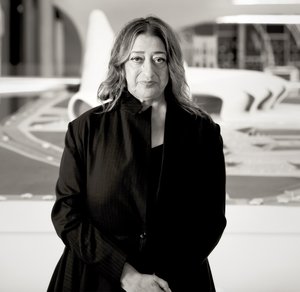
Zaha Hadid
1950 - 2016 , Irak
Pähkinänkuoressa
- Artistic Movement Or Style: Dekonstruktivismi
- Artists Or Movements Influenced By This Artist: ['Suprematism']
- Artists Who Influenced This Artist:
- Kazimir Malevich
- Rem Koolhaas
- Date Of Birth: 31. lokakuuta 1950
- Date Of Death: 31. maaliskuuta 2016
- Full Name: Zaha Mohammad Hadid
- Nationality: Irakilainen ja brittiläinen
- Notable Artworks: ['Peak Club']
- Place Of Birth: Bagdad, Irak
Aiheeseen liittyvät artikkelit

Crimson Threads of Narrative: Exploring Symbolism & Representation in Artworks Featuring the Red Dress
Explore the rich symbolism of the red dress in art history! From ancient power displays to iconic portraits like Cézanne’s 'Madame Cezanne', discover the cultural and artistic significance behind this captivating color. Expert analysis & insights.
Urban Visions: A Historical & Artistic Exploration of the Cityscape in Painting
Explore the evolution of cityscape painting from historical maps to Impressionist masterpieces. Discover artists like Caillebotte, Utrillo & Matsumoto Shunsuke. Find museum-quality reproductions at OriginalUniqueArt.
Feathered Visions: A Historical & Artistic Exploration of Birds in Painting
Explore the rich history of birds in painting! Discover symbolism, artistic movements & master artists like Audubon. High-quality reproductions available at OriginalUniqueArt.

Mark Rothkon 25 mestariteosta: Värien syvyydessä – Taidetta kotiisi OriginalUniqueArtilta
Tutustu Mark Rothkon 25 mestariteokseen ja syvälliseen maailmaan abstraktin ekspressionismin parissa. Löydä tunteelliset väritaulut, taidehistorian helmet ja inspiraatiota kotiisi OriginalUniqueArtilta. Tutki kokoelma verkossa!

Lontoon National Galleryn 25 mestariteosta: Taidetta kotiisi OriginalUniqueArtilta
Tutustu Lontoon National Galleryn 25 kuuluisimpaan mestariteokseen! Uppoudu Renessanssin, impressionismin ja barokin maailmaan. Löydä Van Goghin, Rembrandtin ja Monetin tarinat sekä inspiroivia sisustusideoita OriginalUniqueArtilta. Tutustu kokoelma verkossa!