

 Esikatselu
 Jaa teos
 Jaa
Jaa
 Tiedot
 Opas
Opas

 Lataa kuva
 Samanlaisia kohteita
 Röntgenkuvaus
 Diaesitys
 Q&A
Q&A Tilastot
Returning home through the snow
 1455
1455 168.0 x 83.0 cm
 Lue lisää
Giclée- ja taideprintit
Museolaatuisia giclée- tai kankaitaulun tulosteita nopealla tuotannolla ja joustavilla viimeistelyvaihtoehdoilla. ( Osta käsinmaalattu taideteos Siirry digitaaliseen kuvaan)




































Valitse valmiista mitoistamme sellaiset, jotka vastaavat teoksen alkuperäisiä mittasuhteita.

Syötä tarvitsemasi leveys ja korkeus, jotta tuloste sopii kehyksiisi tai seinällesi. Tulostetta voidaan vain leikata, sitä ei voida koskaan suurentaa alkuperäistä kuvaa suuremmaksi, joten eri muotoinen koko aiheuttaa osan kuvasta katoamisen. Lähetämme sinulle digitaalisen mallikuvan hyväksyttäväksi ennen kuin aloitamme tulostuksen. Tällä sivulla näkyvä kuva ei näytä lopullista rajausta — vain mallikuva näyttää sen.
Maailmanlaajuinen toimitus () 2 viikossa tavallisen 4–5 viikon sijaan. (30 lokakuu)

Ilmainen pikatoimitus ympäri maailman

Korkealaatuinen pellavakangas

Kattava kuljetusvakuutus

Tulliveron palautustakuu

Takuu täydellisestä värien vastaavuudesta

100 päivän palautusoikeus (vain valmistusvirheet)

100% rahat takaisin -takuu

Määräalennus tarjolla
 Lasivaihtoehto on saatavilla vain alle 110 cm kokoisille teoksille

Returning home through the snow
Giclée- ja taideprintit
Replikaatin koko
-


Kokonaishinta
€ 71
Kysymykset ja vastaukset
Onko teoksella Dai Jin:n "Returning home through the snow" pysty- vai vaakasuuntainen orientaatio?
Dai Jin:n "Returning home through the snow" on Tall-muotoinen sommitelma. Suhteet kannattaa tarkistaa ennen tulostekoon valitsemista.
Mitkä värit hallitsevat teosta Dai Jin:n "Returning home through the snow"?
"Returning home through the snow"-teokselle ominainen Earthy väripaletti saa pääroolin Black (#0e0d0e)-värin johdolla.
Milloin teos Dai Jin:n "Returning home through the snow" on luotu?
Dai Jin:n "Returning home through the snow" on luotu vuonna 1455.
Taiteilijan elämäkerta
early life and career
dai jin, a renowned chinese artist, was born in 1388 and passed away in 1462. he was a leading figure in the early ming revival of the ma-xia style, also known as the zhe school, which emerged from the landscape painting traditions of the southern song. as a young man, dai jin traveled to the capital, nanjing, with his father, who worked in an official capacity. although he failed to establish himself in the capital, he returned to qiantang and resumed his study of painting, likely under the guidance of a local zhejiang artisan.rise to prominence
dai jin's reputation grew significantly around 1425, when he was recommended to the xuande emperor. he traveled to beijing in hopes of securing an academy appointment. however, his plans were thwarted by established painters, particularly xie huan, who claimed to detect anti-government bias in dai's works. one notable example is dai jin's painting, seven worthies passing the barrier (c. 1425-35), which was based on an old tale recounting the flight of seven men from a tumultuous state. this work, along with another piece depicting a fisherman in a red coat, led to dai jin's downfall.notable works and legacy
* dai jin's landscapes, showcasing the four seasons, were initially well-received by the xuande emperor. * seven worthies passing the barrier (c. 1425-35), a painting that led to dai jin's persecution.- view dai jin's artworks on OriginalUniqueArt.com
- learn more about dai jin on wikipedia
- explore the zhe school and its influence on chinese landscape painting on the museum destroyed by fire (united states)
conclusion
despite facing challenges and persecution, dai jin's contributions to the zhe school and chinese landscape painting remain significant. his works continue to be celebrated for their unique style and innovative techniques. important: to learn more about dai jin and his artworks, visit dai jin's page on OriginalUniqueArt.com.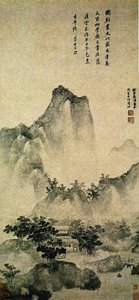
Dai Jin
1388 - 1462 , China
Pähkinänkuoressa
- Full Name: Dai Jin
- Nationality: Chinese
- Date Of Birth: 1388
- Date Of Death: 1462
- Place Of Birth: Quzhou, China
- Notable Artworks: ['Bamboo paintings']
- Artistic Movement Or Style: Ink bamboo painting
- Artists Who Influenced This Artist: ['Wang Fu']