
 Esikatselu
 Jaa teos
 Jaa
Jaa
 Tiedot
 Opas
Opas

 Lataa kuva
 Samanlaisia kohteita
 Röntgenkuvaus
 Diaesitys
 Kysymykset ja vastaukset
 Tilastot
Pillbox hat


 Lue lisää
Tällä sivulla esitettyä taideteosta suojaa tekijänoikeuslaki, mikä tarkoittaa, ettemme voi laillisesti luoda tai myydä täsmälleen samanlaista jäljennöstä. Tämä suoja toteutetaan kansainvälisten sopimusten, kuten esimerkiksi Berne-konventio ja kansallisilla laeilla, mukaan lukien niillä määritellyt Yhdysvaltain tekijänoikeuslaki – Luku 17. Kaikki oikeudet pidätetään. Luvaton kopiointi tai jäljittely on kielletty.
Tämä menetelmä noudattaa täysin tekijänoikeussäännöksiä, sillä se ei sisällä suojatun taideteoksen kopioimista tai jäljentämistä. Sen sijaan kyseessä on luova uudelleentulkinta – uusi maalaus, joka ammentaa vaikutteita alkuperäisestä, mutta ei ole sen identtinen kopio.
Giclée- ja taideprintit
Museolaatuisia giclée- tai kankaitaulun tulosteita nopealla tuotannolla ja joustavilla viimeistelyvaihtoehdoilla. ( Osta käsinmaalattu taideteos Siirry digitaaliseen kuvaan)




P118B €10

P118H €10

P118W €10

P438Z €10

P508JH €12

P508YH €12

P805H €10

P805Z €10

P919BZ €10

P919G €10

P919XJ €10

P959ZH €10

P968JZ €12

W106C €8

W218G €10

W218JH €8

W218Y €10

W307PJ €10

W316G €10

W316PJ €8

W316Y €10

W398PJ €8

W4111J €10

W500HY €15

W500JH €15

W692G €12

W849H €8

W940BG €15

W953PJ €8




Valitse valmiista mitoistamme sellaiset, jotka vastaavat teoksen alkuperäisiä mittasuhteita.

Syötä tarvitsemasi leveys ja korkeus, jotta tuloste sopii kehyksiisi tai seinällesi. Tulostetta voidaan vain leikata, sitä ei voida koskaan suurentaa alkuperäistä kuvaa suuremmaksi, joten eri muotoinen koko aiheuttaa osan kuvasta katoamisen. Lähetämme sinulle digitaalisen mallikuvan hyväksyttäväksi ennen kuin aloitamme tulostuksen. Tällä sivulla näkyvä kuva ei näytä lopullista rajausta — vain mallikuva näyttää sen.
Maailmanlaajuinen toimitus () 2 viikossa tavallisen 4–5 viikon sijaan. (4 marraskuu)

Ilmainen pikatoimitus ympäri maailman

Korkealaatuinen pellavakangas

Kattava kuljetusvakuutus

Tulliveron palautustakuu

Takuu täydellisestä värien vastaavuudesta

100 päivän palautusoikeus (vain valmistusvirheet)

100% rahat takaisin -takuu

Määräalennus tarjolla
 Lasivaihtoehto on saatavilla vain alle 110 cm kokoisille teoksille

Pillbox hat
Giclée- ja taideprintit
Replikaatin koko
-


Kokonaishinta
€ 72
A Study in Sculptural Simplicity: The 1962 Pillbox Hat
The image before you presents a captivating study in form and restraint – a black pillbox hat, meticulously crafted by Cristóbal Balenciaga Eizaguirre in 1962. More than just an accessory, this piece embodies the couturier’s signature style: a masterful blend of architectural precision, understated elegance, and a subtle hint of subversive playfulness. The photograph, with its diffused lighting and neutral background, allows the hat's inherent geometry to command attention, highlighting the smooth, almost velvety texture of the fabric – likely silk or velvet – that defines its structure. The stark contrast between the matte black surface and the vibrant white feather immediately draws the eye, creating a dynamic tension within the composition.
Balenciaga’s genius lay in his ability to elevate the mundane into the extraordinary. The pillbox shape itself, initially conceived as a practical solution for holding pills, was transformed by him into a symbol of sophistication and modernity. It's a testament to his skill that he could imbue such a seemingly simple form with an aura of timelessness. The hat’s circular silhouette speaks to a sense of contained elegance, while the upward thrust of the feather introduces an element of unexpected drama – a whisper of whimsy against the backdrop of formal restraint.
The Master's Influence: Balenciaga and the Avant-Garde
Cristóbal Balenciaga’s position as “the master of us all” wasn’t simply due to his impeccable craftsmanship; it stemmed from his profound engagement with the artistic currents of his time. Influenced by the geometric rigor of Cubism, the starkness of Surrealism, and even the naive art movement – evidenced in his early work like "Study to 'Song of Songs IV'" – Balenciaga pushed the boundaries of fashion design. His designs weren’t merely garments; they were sculptural statements, exploring form and space with an artist's eye. The 1962 pillbox hat is a prime example of this approach: its clean lines and precise construction reflect a commitment to architectural principles, while the feather adds a touch of unexpected visual interest, echoing the organic forms found in nature – a subtle nod to his earlier explorations of botanical motifs.
Consider, too, Balenciaga’s rivalry with other leading designers. His uncompromising standards and refusal to compromise on quality earned him respect (and sometimes animosity) from contemporaries like Dior and Chanel. He was a true couturier, meticulously overseeing every detail of his creations, from the selection of fabrics to the final stitching. This dedication to perfection is evident in the flawless execution of this particular hat – a testament to Balenciaga’s unparalleled skill and vision.
Symbolism and Emotional Resonance
The monochromatic palette—primarily black and white with subtle grays—contributes significantly to the hat's overall impact. It evokes a sense of formality, sophistication, and even a touch of melancholy. The starkness of the colors amplifies the drama created by the feather, making it appear almost luminous against the dark fabric. The feather itself can be interpreted as a symbol of grace, beauty, or perhaps even a hint of rebellion – a small flourish that disrupts the hat’s otherwise rigid structure. It suggests an element of surprise and individuality, reflecting Balenciaga's desire to create designs that were both elegant and memorable.
Ultimately, this pillbox hat is more than just a fashion accessory; it’s a miniature masterpiece – a distillation of Balenciaga’s artistic vision and technical expertise. It speaks to the power of simplicity, the beauty of restraint, and the enduring legacy of one of the 20th century's most influential designers. A reproduction captures not only its visual elegance but also the spirit of innovation that defined Balenciaga’s remarkable career.
Kysymykset ja vastaukset
Onko teoksesta Cristóbal Balenciaga:n "Pillbox hat" saatavilla diashow-esitystä?
Katso kuvagalleria: Cristóbal Balenciaga:n "Pillbox hat" -teoksen Diaesitys -sivu.
Onko teoksesta "Pillbox hat" saatavilla korkearesoluutioinen lataus?
Teoksen Cristóbal Balenciaga:n "Pillbox hat" digitaalisen kuvan voi ostaa sen Digitaalinen teos -sivulta: korkearesoluutioinen digitaalinen kuvalataus.
Missä teosta Cristóbal Balenciaga:n "Pillbox hat" voidaan tällä hetkellä nähdä?
Voit nähdä alkuperäisteoksen "Pillbox hat" kohteessa Cristóbal Balenciagan museo, Getaria, Espanja.
Taiteilijan elämäkerta
Early Life and Artistic Beginnings
Cristóbal Balenciaga Eizaguirre, a name synonymous with revolutionary elegance in the world of haute couture, was born in 1895 in Getaria, a picturesque fishing village nestled on the rugged coast of Basque Country, Spain. His early life was deeply intertwined with the rhythms of the sea and the traditions of his family – his father, José Balenciaga Basurto, a skilled skipper and local mayor, and his mother, Martina Eizaguirre Embil, a talented seamstress who instilled in him an appreciation for meticulous craftsmanship from a very young age. Balenciaga’s childhood was spent amidst the sounds of the waves and the scent of salt air, experiences that would profoundly shape his artistic sensibilities. He began his apprenticeship at the tender age of twelve, learning the fundamentals of tailoring under the guidance of a local master craftsman, absorbing techniques and developing an innate understanding of fabric and form. A pivotal moment in his formative years occurred when he was presented with a challenge by the marchioness of Casa Torres, a prominent figure in Getaria society – to recreate one of her exquisite gowns using the finest materials available. This commission not only honed his skills but also introduced him to the world of aristocratic patronage, an experience that would prove crucial to his future success. Balenciaga’s early exposure to both the practicalities of tailoring and the refined aesthetics of high fashion laid the foundation for his groundbreaking career.The Rise in San Sebastián and Early Parisian Influence
Following his apprenticeship, Balenciaga moved to San Sebastián, a vibrant coastal city known for its artistic community and fashionable clientele. There, he established his first couture house, Eisa, in 1917, quickly gaining recognition for his impeccable tailoring and innovative designs. His early collections were heavily influenced by the Spanish Renaissance, evident in the opulent fabrics, intricate embroidery, and dramatic silhouettes that defined his style. The patronage of Queen María Cristina further elevated his status, solidifying his position as a leading designer within Spain’s elite circles. However, Balenciaga's ambition extended beyond the borders of his homeland. In 1937, amidst the turmoil of the Spanish Civil War, he bravely relocated to Paris, the undisputed center of the fashion world. This move marked a significant turning point in his career, exposing him to new influences and allowing him to collaborate with some of the most influential figures in the industry. He quickly established himself as a respected couturier, attracting discerning clients from across Europe. His time in Paris was also characterized by a deep appreciation for the work of other masters, including Coco Chanel and Elsa Schiaparelli, whose innovative approaches to design inspired him to push the boundaries of traditional couture.Revolutionizing Silhouette and Defining Modern Style
Balenciaga’s genius lay not merely in his technical skill but in his ability to fundamentally reshape women's silhouettes. Rejecting the prevailing hourglass shapes popularized by Christian Dior after World War II, he introduced a series of groundbreaking designs that redefined elegance and sophistication. His signature “balloon” jackets, with their voluminous sleeves and sculpted forms, created an illusion of height and movement, while his sack dresses – simple, straight-cut garments devoid of a waistline – challenged conventional notions of femininity. Balenciaga’s influence extended beyond individual garments; he pioneered new construction techniques, utilizing innovative draping methods and experimenting with unconventional fabrics to achieve breathtaking results. He was a master of volume, expertly manipulating fabric to create shapes that were both sculptural and fluid. His designs were characterized by their understated elegance, a testament to his belief that true style lay in simplicity and refinement. Balenciaga’s willingness to experiment and challenge established norms cemented his reputation as a visionary designer who consistently pushed the boundaries of fashion.Legacy and Lasting Impact
Cristóbal Balenciaga's career spanned several decades, culminating in his retirement in 1968. Despite the rise of ready-to-wear and changing trends, his designs continued to be admired for their timeless elegance and impeccable craftsmanship. His influence can still be seen in contemporary fashion, with designers frequently referencing his iconic silhouettes and innovative techniques. Balenciaga’s legacy extends far beyond the world of haute couture; he is regarded as a true artist whose work transcends mere clothing—it's an exploration of form, texture, and movement. His meticulous attention to detail, combined with his unwavering commitment to quality, established him as one of the greatest couturiers of all time. Balenciaga’s name remains synonymous with sophistication, innovation, and enduring style, a testament to his remarkable talent and lasting impact on the world of fashion.
Cristóbal Balenciaga
1895 - 1972 , Espanja
Pähkinänkuoressa
- Artistic Movement Or Style: Avant-garde / Surrealismi
- Artists Or Movements Influenced By This Artist: ['Velázquez']
- Artists Who Influenced This Artist:
- Chanel
- Dior
- Date Of Birth: 21. tammikuuta 1895
- Date Of Death: 23. maaliskuuta 1972
- Full Name: Cristóbal Balenciaga Eizaguirre
- Nationality: Espanjalainen
- Notable Artworks:
- Song of Songs IV
- Tree Roots
- Acrobat
- Place Of Birth: Getaria, Espanja
Aiheeseen liittyvät artikkelit

Echoes of Time: Nostalgia, Technique & Cultural Significance in Vintage Paintings
Explore the captivating world of vintage paintings! Discover key styles, cultural significance & collecting tips from art experts at OriginalUniqueArt. Find authentic reproductions and elevate your home décor.

Mustan sävyt taiteessa: 10 kuuluisinta mestariteosta ja niiden tarinat
Tutustu 10 kuuluisimpaan mustasävyiseen mestariteokseen! Rembrandtista Manetiin, syvenny taiteen historiaan ja synkkiin tunnetiloihin. Laadukkaat taidevedokset sisustukseesi OriginalUniqueArt.com:ssa. Tutustu kokoelmaamme verkossa!

Cristóbal Balenciaga: Deconstructing Haute Couture's Architectural Legacy
Explore the revolutionary world of Cristóbal Balenciaga, the 'couturier's couturier'. Discover his architectural designs, lasting influence on haute couture, and guide to collecting rare pieces. A connoisseur’s resource.
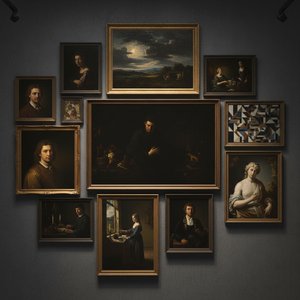
Mustan sävyt taiteessa: 10 kuuluisinta mestariteosta ja niiden tarinat | OriginalUniqueArt
Tutustu 10 kuuluisimpaan mestariteokseen, joita hallitsee lampimusta. Rembrandtista Manetiin – taiteen historiaa ja inspiraatiota sisustukseesi. Laadukkaat öljyvärimaalaukset OriginalUniqueArt.com:ssa! Tutki kokoelma verkossa.

Mustan sävyt taiteessa: 10 kuuluisinta mestariteosta ja niiden tarinat
Tutustu 10 kuuluisimpaan maalaukseen, joita hallitsee syvä musta sävy. Rembrandtista Manetiin – taidemaalareiden tarinat ja mestariteosten merkitys. Löydä inspiraatiota sisustukseesi OriginalUniqueArt.com:sta! Tutki kokoelma verkossa.

