

 Lähetä
 Jaa
Jaa
 Tarkemmat tiedot
 Opas
Opas

 Lataa kuva
 Samanlaisia kohteita
 Diaesitys
 Tilastot
Brooch


 Lue lisää
Tällä sivulla esitettyä taideteosta suojaa tekijänoikeuslaki, mikä tarkoittaa, ettemme voi laillisesti luoda tai myydä täsmälleen samanlaista jäljennöstä. Tämä suoja toteutetaan kansainvälisten sopimusten, kuten esimerkiksi Berne-konventio ja kansallisilla laeilla, mukaan lukien niillä määritellyt Yhdysvaltain tekijänoikeuslaki – Luku 17. Kaikki oikeudet pidätetään. Luvaton kopiointi tai jäljittely on kielletty.
Tämä menetelmä noudattaa täysin tekijänoikeussäännöksiä, sillä se ei sisällä suojatun taideteoksen kopioimista tai jäljentämistä. Sen sijaan kyseessä on luova uudelleentulkinta – uusi maalaus, joka ammentaa vaikutteita alkuperäisestä, mutta ei ole sen identtinen kopio.
Giclée- ja taideprintit
Museolaatuisia giclée- tai kankaitaulun tulosteita nopealla tuotannolla ja joustavilla viimeistelyvaihtoehdoilla. ( Tilaa käsinmaalattu jäljennös Siirry digitaaliseen kuvaan)




































Valitse valmiista mitoistamme sellaiset, jotka vastaavat teoksen alkuperäisiä mittasuhteita.

Kirjoita tarvitsemasi leveys ja korkeus, jotta tuloste sopii kehyskokoon tai seinällesi. Tulostetta voidaan vain leikata, sitä ei voi koskaan tehdä suuremmaksi kuin alkuperäinen kuva, joten eri muotoinen koko aiheuttaa osan kuvasta katoamisen. Lähetämme sinulle digitaalisen mallikuvan hyväksyttäväksi ennen kuin aloitamme tulostuksen. Tällä sivulla näkyvä kuva ei näytä lopullista leikkausta — vain mallikuva näyttää sen.
Maailmanlaajuinen toimitus () 2 viikossa tavallisen 4–5 viikon sijaan. (26 lokakuu)

Ilmainen pikatoimitus ympäri maailman

Korkealaatuinen pellavakangas

Kattava kuljetusvakuutus

Tulliveron palautustakuu

Takuu täydellisestä värien vastaavuudesta

100 päivän palautusoikeus valmistusvirhetapauksissa

100% rahat takaisin -takuu

Määräalennus saatavilla
 Lasivaihtoehto on saatavilla vain alle 110 cm kokoisille teoksille

Brooch
Giclée- ja taideprintit
Replikaatin koko
-


Kokonaishinta
€ 70
The Architecture of Elegance: A Study in Couture Form
To stand before this depiction of a Balenciaga coat is to encounter fashion elevated to the realm of pure sculpture. It is not merely an article of clothing, but a carefully considered architectural statement, frozen in time by the lens of masterful photography. The subject matter itself—a garment displayed upon a mannequin—forces the viewer to look beyond mere wearability and instead appreciate the structure, the drape, and the inherent geometry conceived by Cristóbal Balenciaga. His genius lay in understanding volume; he seemed to sculpt with fabric, allowing the material to suggest forms that defied gravity or convention. The coat, rendered here in stark monochrome, becomes a study in negative space as much as it is a celebration of its own silhouette.
Mastery of Light and Shadow: Photographic Technique
The technical brilliance underpinning this image is undeniable. The photographer has employed dramatic, directional lighting that carves the form out of the surrounding void. Observe how the strong highlights catch the subtle nap or matte quality of the material, while the deep shadows pool in the folds, giving the piece an almost tangible weight. This interplay between illumination and obscurity—the chiaroscuro effect applied to fashion—is what lends the image its profound depth. The background, a textured gray expanse punctuated by dynamic diagonal light streaks, serves not as mere setting, but as an active compositional element, guiding the eye across the garment's planes and suggesting movement even in this static display.
A Timeless Dialogue: Symbolism and Historical Context
The choice of black and white is perhaps the most potent symbolic gesture. By stripping away the distraction of color, the image achieves a timeless quality, allowing the viewer to focus solely on line, texture, and form—the very elements that define Balenciaga's enduring legacy. This piece speaks to an era where couture was treated as high art; it evokes the sophisticated glamour of mid-20th century fashion photography. It whispers tales of Parisian ateliers and uncompromising standards, connecting the viewer directly to the avant-garde spirit that defined modern design. Owning a reproduction of this work is acquiring a piece of that cultural memory.
Interior Inspiration: Integrating Art into Living Space
For the collector or interior designer, this artwork offers more than just visual appeal; it provides an aesthetic anchor. Its strong verticality and dramatic contrast make it exceptionally versatile for creating focal points in sophisticated settings. Imagine it displayed above a console table or within a gallery wall dedicated to design history. The inherent drama of the lighting translates beautifully into physical space, adding depth and intellectual gravitas without overwhelming the room's natural palette. It suggests an appreciation for craftsmanship that transcends fleeting trends.
Kysymykset ja vastaukset
Ovatko teoksen Cristóbal Balenciaga:n "Brooch" värit kylläisiä vai hillittyjä?
Teoksen "Brooch" väripaletti on kylläisyydeltään Muted.
Mikä on teoksen Cristóbal Balenciaga:n "Brooch" tunnelma?
Teoksen Cristóbal Balenciaga:n "Brooch" tunnetila on määritelty olevan Romantic. Se tiivistää teoksen välittämän tunnelman.
Miten teoksen "Brooch" aihe liittyy Cristóbal Balenciaga'n tavallisiin teemoihin?
"Brooch" esittää aiheita fashion, balenciaga, couture, brooch, 1950s, black & white, mannequin, kun taas Cristóbal Balenciaga tunnetaan teemoistaan avant-garde art movement, basque heritage, regional identity, high fashion, couture legacy, sculptural design, architectural forms, innovative tailoring. Näiden kahden vertaaminen osoittaa, miten teos liittyy taiteilijan tavallisiin aiheisiin.
Taiteilijan elämäkerta
Early Life and Artistic Beginnings
Cristóbal Balenciaga Eizaguirre, a name synonymous with revolutionary elegance in the world of haute couture, was born in 1895 in Getaria, a picturesque fishing village nestled on the rugged coast of Basque Country, Spain. His early life was deeply intertwined with the rhythms of the sea and the traditions of his family – his father, José Balenciaga Basurto, a skilled skipper and local mayor, and his mother, Martina Eizaguirre Embil, a talented seamstress who instilled in him an appreciation for meticulous craftsmanship from a very young age. Balenciaga’s childhood was spent amidst the sounds of the waves and the scent of salt air, experiences that would profoundly shape his artistic sensibilities. He began his apprenticeship at the tender age of twelve, learning the fundamentals of tailoring under the guidance of a local master craftsman, absorbing techniques and developing an innate understanding of fabric and form. A pivotal moment in his formative years occurred when he was presented with a challenge by the marchioness of Casa Torres, a prominent figure in Getaria society – to recreate one of her exquisite gowns using the finest materials available. This commission not only honed his skills but also introduced him to the world of aristocratic patronage, an experience that would prove crucial to his future success. Balenciaga’s early exposure to both the practicalities of tailoring and the refined aesthetics of high fashion laid the foundation for his groundbreaking career.The Rise in San Sebastián and Early Parisian Influence
Following his apprenticeship, Balenciaga moved to San Sebastián, a vibrant coastal city known for its artistic community and fashionable clientele. There, he established his first couture house, Eisa, in 1917, quickly gaining recognition for his impeccable tailoring and innovative designs. His early collections were heavily influenced by the Spanish Renaissance, evident in the opulent fabrics, intricate embroidery, and dramatic silhouettes that defined his style. The patronage of Queen María Cristina further elevated his status, solidifying his position as a leading designer within Spain’s elite circles. However, Balenciaga's ambition extended beyond the borders of his homeland. In 1937, amidst the turmoil of the Spanish Civil War, he bravely relocated to Paris, the undisputed center of the fashion world. This move marked a significant turning point in his career, exposing him to new influences and allowing him to collaborate with some of the most influential figures in the industry. He quickly established himself as a respected couturier, attracting discerning clients from across Europe. His time in Paris was also characterized by a deep appreciation for the work of other masters, including Coco Chanel and Elsa Schiaparelli, whose innovative approaches to design inspired him to push the boundaries of traditional couture.Revolutionizing Silhouette and Defining Modern Style
Balenciaga’s genius lay not merely in his technical skill but in his ability to fundamentally reshape women's silhouettes. Rejecting the prevailing hourglass shapes popularized by Christian Dior after World War II, he introduced a series of groundbreaking designs that redefined elegance and sophistication. His signature “balloon” jackets, with their voluminous sleeves and sculpted forms, created an illusion of height and movement, while his sack dresses – simple, straight-cut garments devoid of a waistline – challenged conventional notions of femininity. Balenciaga’s influence extended beyond individual garments; he pioneered new construction techniques, utilizing innovative draping methods and experimenting with unconventional fabrics to achieve breathtaking results. He was a master of volume, expertly manipulating fabric to create shapes that were both sculptural and fluid. His designs were characterized by their understated elegance, a testament to his belief that true style lay in simplicity and refinement. Balenciaga’s willingness to experiment and challenge established norms cemented his reputation as a visionary designer who consistently pushed the boundaries of fashion.Legacy and Lasting Impact
Cristóbal Balenciaga's career spanned several decades, culminating in his retirement in 1968. Despite the rise of ready-to-wear and changing trends, his designs continued to be admired for their timeless elegance and impeccable craftsmanship. His influence can still be seen in contemporary fashion, with designers frequently referencing his iconic silhouettes and innovative techniques. Balenciaga’s legacy extends far beyond the world of haute couture; he is regarded as a true artist whose work transcends mere clothing—it's an exploration of form, texture, and movement. His meticulous attention to detail, combined with his unwavering commitment to quality, established him as one of the greatest couturiers of all time. Balenciaga’s name remains synonymous with sophistication, innovation, and enduring style, a testament to his remarkable talent and lasting impact on the world of fashion.
Cristóbal Balenciaga
1895 - 1972 , Espanja
Tietoa taiteilijasta
- Artistic Movement Or Style: Avant-garde / Surrealismi
- Artists Or Movements Influenced By This Artist: ['Velázquez']
- Artists Who Influenced This Artist:
- Chanel
- Dior
- Date Of Birth: 21. tammikuuta 1895
- Date Of Death: 23. maaliskuuta 1972
- Full Name: Cristóbal Balenciaga Eizaguirre
- Nationality: Espanjalainen
- Notable Artworks:
- Song of Songs IV
- Tree Roots
- Acrobat
- Place Of Birth: Getaria, Espanja
Aiheeseen liittyvät artikkelit

Timeless Elegance: Unveiling the Chic Allure and Artistic Legacy of Black Dress Artworks
Immerse yourself in the timeless allure of black dress artworks. Explore a curated collection of fine art reproductions and bespoke oil paintings that blend fashion history with modern elegance. Discover how OriginalUniqueArt.com transforms memories into exquisite, hand-painted masterpieces.
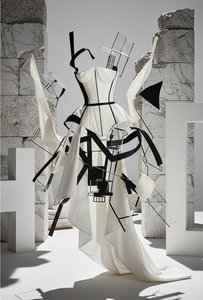
Gianfranco Ferré: Deconstructing Haute Couture – A Legacy of Architectural Form
Explore the revolutionary world of Gianfranco Ferré, 'the architect of fashion.' Discover his architectural approach to haute couture, iconic Dior designs, and lasting influence on luxury style. A deep dive for collectors & enthusiasts.
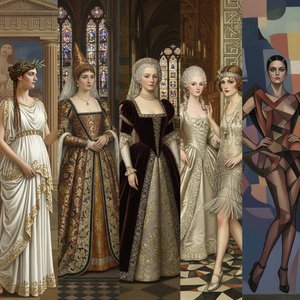
Style Through the Ages: Iconic Artworks That Defined the Evolution of Fashion Design
Explore the breathtaking intersection of fine art and high fashion. Discover how iconic masterpieces from Art Deco to Impressionism have shaped the world of luxury couture and timeless design in this curated visual journey.

Mustan sävyt taiteessa: 10 kuuluisinta mestariteosta ja niiden tarinat
Tutustu 10 kuuluisimpaan mustasävyiseen mestariteokseen! Rembrandtista Manetiin, syvenny taiteen historiaan ja synkkiin tunnetiloihin. Laadukkaat taidevedokset sisustukseesi OriginalUniqueArt.com:ssa. Tutustu kokoelmaamme verkossa!

Cristóbal Balenciaga: Deconstructing Haute Couture's Architectural Legacy
Explore the revolutionary world of Cristóbal Balenciaga, the 'couturier's couturier'. Discover his architectural designs, lasting influence on haute couture, and guide to collecting rare pieces. A connoisseur’s resource.

