

 Katso seinällä
 Lähetä
 Jaa
Jaa
 Tarkemmat tiedot
 Opas
Opas

 Lataa kuva
 Samanlaisia kohteita
 Röntgenkuvaus
 Diaesitys
 Tilastot
Roman Ruins
 Oil
Oil- WallArt
- Dutch Golden Age
 1620
1620- Early Modern
 23.0 x 31.0 cm
 Lue lisää
Käsinmaalattu öljyvärinen jäljennös
Käsinmaalattu öljyväri kankaalle haluamassasi koossa ja kehyksissä, taiteilijoidemme valmistamana tilauksesta. ( Vaihda tulosteeseen Siirry digitaaliseen kuvaan)




P118B €10

P118H €10

P118W €10

P438Z €10

P508JH €12

P508YH €12

P805H €10

P805Z €10

P919BZ €10

P919G €10

P919XJ €10

P959ZH €10

P968JZ €12

W106C €8

W218G €10

W218JH €8

W218Y €10

W307PJ €10

W316G €10

W316PJ €8

W316Y €10

W398PJ €8

W4111J €10

W500HY €15

W500JH €15

W692G €12

W849H €8

W940BG €15

W953PJ €8




Valitse valmiista mitoistamme sellaiset, jotka vastaavat teoksen alkuperäisiä mittasuhteita.

Kirjoita tarvitsemasi leveys ja korkeus, jotta teos sopii kehyskehyksiisi tai seinällesi. Koska kyseessä on käsinmaalattu teos, taiteilija voi maalata hieman enemmän kuvan ympärille tai rajata sitä hieman, jos haluat eri muotoisen koon — valinta on sinun. Lähetämme sinulle digitaalisen mallikuvan hyväksyttäväksi ennen kuin maalaus alkaa. Tällä sivulla näkyvä kuva ei vastaa lopullista tulosta — vain mallikuva näyttää sen.
Tilauksen jälkeen OriginalUniqueArt.com -tiimi lähettää asiakkaalle sähköpostitse ohjeet ja esikatselukuvan.
Maailmanlaajuinen toimitus () 3–4 viikossa tavallisen 5 viikon sijaan. (24 lokakuu). Laadusta ei tingitä.

Ilmainen pikatoimitus ympäri maailman

Korkealaatuinen pellavakangas

Kattava kuljetusvakuutus

Tulliveron palautustakuu

Takuu täydellisestä värien vastaavuudesta

100 päivän palautusoikeus valmistusvirhetapauksissa

100% rahat takaisin -takuu

Määräalennus saatavilla
 Lasivaihtoehto on saatavilla vain alle 110 cm kokoisille teoksille

Roman Ruins
Reproduktiotapa
Replikaatin koko
-


Kokonaishinta
€ 263
A Window into Antiquity: The Timeless Allure of Roman Ruins
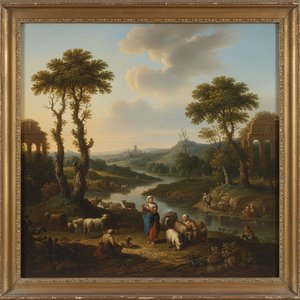
In the delicate, circular embrace of this exquisite tondo, Cornelis van Poelenburgh invites us to step through a portal into a bygone era. Painted around 1620, Roman Ruins is far more than a mere depiction of architectural decay; it is a profound meditation on the passage of time and the enduring relationship between humanity and the remnants of greatness. The composition, framed by its characteristic round format, focuses our gaze upon a landscape where the grandeur of the Roman Empire has softened into a pastoral sanctuary. Within this intimate space, the heavy stone arches and crumbling pillars serve as silent witnesses to history, now providing a backdrop for the quiet, rhythmic pulse of rural life.
The scene unfolds with a masterful use of light and shadow, reminiscent of the Dutch Golden Age's obsession with atmospheric truth. As we gaze upon the foreground, we encounter a world in gentle motion: a shepherd tending his flock, a laborer with his oxen, and figures caught in quiet contemplation. These small-scale inhabitants of the landscape bring a sense of warmth and vitality to the otherwise somber ruins. The artist employs a subtle, earthy palette—rich ochres, muted greens, and soft umbers—to weave a tapestry of textures that feels both tactile and ethereal. The hazy, overcast sky suggests the fleeting light of dawn or dusk, casting a melancholic yet peaceful glow over the entire vista, evoking a sense of nostalgia for a lost civilization.
The Mastery of the Italianate Style
Cornelis van Poelenburgh was a pivotal figure in the first generation of Dutch landscape painters who found profound inspiration in Italy. His travels to Rome allowed him to infuse his Northern training with the classical elegance of the Mediterranean. In Roman Ruins, we see this synthesis perfected. The technique is characterized by an incredible attention to detail; every crack in the ancient masonry and every distant bird in flight is rendered with a precision that draws the viewer deeper into the frame. This meticulousness does not feel clinical, however, but rather serves to enhance the three-dimensional depth of the scene, making the archway feel like a real threshold through which one might walk.
For the discerning collector or interior designer, this piece offers a unique emotional resonance. It possesses a "Caravaggesque" drama tempered by a serene, pastoral tranquility. The symbolism of the ruins—representing the inevitable cycle of rise and fall—is balanced by the resilience of the natural world and the simplicity of the human spirit. Such a work is an ideal centerpiece for a sophisticated interior, providing a conversational focal point that inspires reflection. Whether placed in a sunlit study or a grand gallery, this reproduction captures a moment of eternal stillness, offering any space it inhabits a touch of historical majesty and poetic grace.
Kysymykset ja vastaukset
Kuka on luonut teoksen "Roman Ruins" ja minä vuonna?
Roman Ruins on Cornelis Van Poelenburghn luoma teos vuodelta 1620.
Mitä Cornelis Van Poelenburgh:n "Roman Ruins" esittää?
Teoksen Cornelis Van Poelenburgh:n "Roman Ruins" teemoihin kuuluvat figures, sheep, cow, archway, ruins, trees, birds, earth tones. Yhdessä ne tiivistävät teoksen aiheen.
Kuinka voimakkaita ovat teoksen "Roman Ruins" värit?
Teoksen Cornelis Van Poelenburgh:n "Roman Ruins" värit ilmentävät Muted kylläisyyttä ja Balanced voimakkuutta.
Taiteilijan elämäkerta
Varhaiset elämänvaiheet ja koulutus
Cornelis van Poelenburgh, merkittävä hollantilainen maisemamaalari, syntyi Utrechtissä, Alankomaissa vuonna 1594. Hän aloitti koulutuksensa tunnetun taiteilijan Abraham Bloemaertin johdolla. Tämä perustavanlaatuinen koulutus loi pohjan van Poelenburghille tulevaisuuden menestykselle.Taiteellinen ura ja vaikutteet
Van Poelenburghin matkat Roomaan 1600-luvun alussa vaikuttivat merkittävästi hänen teoksiinsa, tehden hänestä johtavan edustajan ensimmäisestä sukupolvesta hollantilaisia maisemamaalareita, jotka olivat aktiivisia Italiassa. Hänen pienoiskokoiset maalauksensa, joissa usein esiintyy italialaisvaikutteisia maisemia pienillä hahmoilla, jotka elävöittävät Raamatun tai mytologiset kohtaukset, korostivat hänen ainutlaatuista tyyliään. Huomionarvoisia teoksia:- Satyrit salaahtelemassa nimfiä (1627 jälkeen), tyypillinen esimerkki van Poelenburghin teoksesta, jossa esiintyy arhaisia maisemia uimilla hahmoja. (Katso OriginalUniqueArtsta)
- Gummenien neuvosto (n. 1630), maalaus, joka esittelee van Poelenburghin idealisoitua kumpuilevaa maisemaa ja Roomaa muistuttavia jumalattaria, joka on nyt Mauritshuisissa (Hagentamassa, Alankomaat). (Katso OriginalUniqueArtsta)
Perintö ja myöhempi elämä
Van Poelenburghin teokset olivat erittäin arvostettuja hänen aikalaistensa keskuudessa, mukaan lukien Tuscaniin kruununprinssi ja hollantilainen staatholder. Hän palasi myöhemmin Utrechtiin, missä hän kuoli vuonna 1667, vain muutaman vuoden kuluttua vanhan opettajansa Abraham Bloemaertin jälkeen. Tärkeimmät kohdat:- Syntynyt Utrechtissä, Alankomaissa vuonna 1594
- Koulutettu Abraham Bloemaertin johdolla
- Vaikuttunut ajastaan Roomassa
- Tunnettu pienoiskokoisista italialaisvaikutteisista maisemista hahmoilla
- Kuollut Utrechtissä vuonna 1667 Katso Cornelis van Poelenburghin teokset OriginalUniqueArtsta Lue lisää Cornelis van Poelenburghista Wikipediassa

Cornelis Van Poelenburgh
1594 - 1667 , Alankomaat
Tietoa taiteilijasta
- Artistic Movement Or Style: Hollantilaismaisema, Roomaaninen
- Artists Or Movements Influenced By This Artist: ['Claude Lorraine']
- Artists Who Influenced This Artist: ['Abraham Bloemaert']
- Date Of Birth: 1594, Utrecht, Alankomaat
- Date Of Death: 1667, Utrecht, Alankomaat
- Full Name: Cornelis van Poelenburgh
- Nationality: Hollantilainen
- Notable Artworks:
- Satyrs spying on nymphs
- Council of the gods
- Place Of Birth: Utrecht, Alankomaat
Aiheeseen liittyvät artikkelit

Golden Light & Dutch Skies: The Timeless Magic of Dutch Golden Age Landscapes
Discover the breathtaking beauty of Dutch Golden Age landscapes. Explore the mastery of light, chiaroscuro, and 17th-century realism through an expert art history lens, celebrating the enduring legacy of the Dutch Masters for discerning collectors and art lovers.

Golden Age Reflections: Dutch Baroque Painting & Cultural Innovation
Explore the Dutch Golden Age of painting! Discover key artists like Vermeer & ter Borch, their innovative techniques, and the rich cultural context behind these Baroque masterpieces. Learn about collecting & appreciating this iconic art period.

Mastering Light & Shadow: A Journey Through the Dutch Golden Age's Luminous Legacy
Embark on a cultural journey through the Dutch Golden Age. Explore the masterful interplay of light and shadow in 17th-century masterpieces, from Rembrandt to Vermeer, and discover how this era of profound realism continues to inspire fine art collectors today.

Hollantilaisen kultakauden 10 mestariteosta – Taidetta kotiisi OriginalUniqueArt.com
Uppoudu hollantilaisen kultakauden taiteen maailmaan! Tutustu Rembrandtin, Vermeerin ja muiden mestareiden ikonisiin maalauksiin. Löydä inspiraatiota kotiisi OriginalUniqueArt.com:ista – laadukkaat taidevedokset ja sisustustaulut jokaiseen tilaan. Explore the full collection online!
Nicolaes Berchem: Dutch Golden Age Pastoralism & the Evolution of Landscape Painting
Explore the captivating world of Nicolaes Berchem, a leading Dutch Golden Age painter. Discover his idyllic landscapes, masterful technique & lasting influence on art history. Learn more at OriginalUniqueArt.